

Finding Reliable Commercial Cleaners in Maryland
Table of Contents
- Why Finding Reliable Commercial Cleaners in Maryland Takes More Than a Google Search
- How to Vet Commercial Cleaners in Maryland: A Step-by-Step Checklist
- The Janitorial Service Checklist Every Facility Manager Should Use
- Building a Commercial Cleaning Scope of Work That Prevents Disputes
- What Commercial Cleaning Company Reviews Actually Tell You
- Commercial Floor Maintenance: What to Expect From a Dependable Provider
- What to Look for in Contract Terms, Communication, and Quality Control
- Frequently Asked Questions
Last Updated: October 4, 2026
Why Finding Reliable Commercial Cleaners in Maryland Takes More Than a Google Search
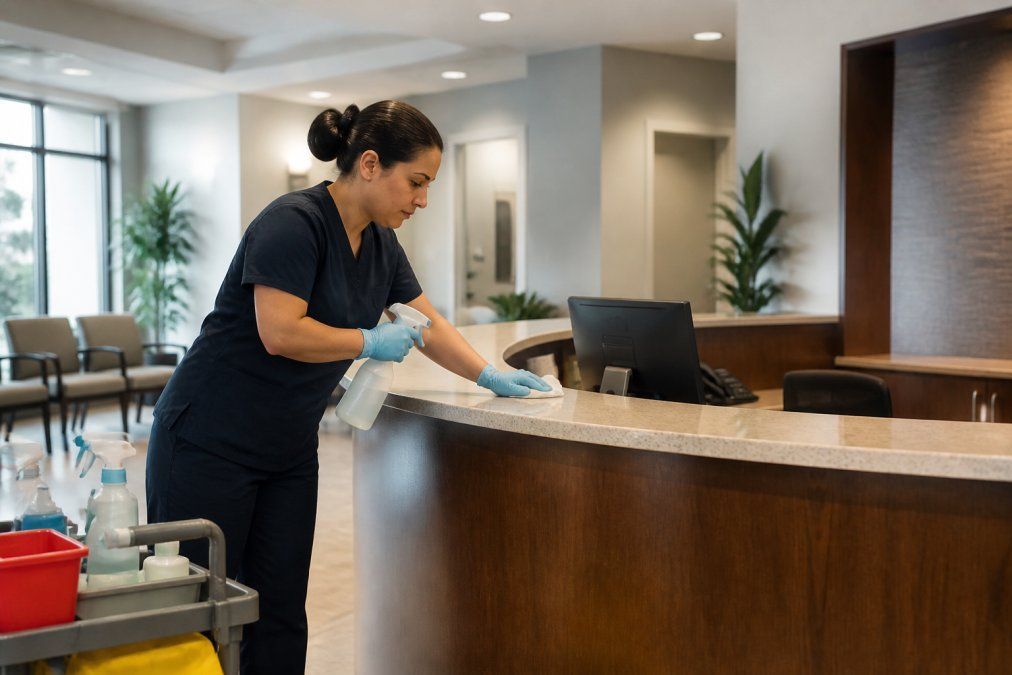
Finding reliable commercial cleaners in Maryland comes down to verification, not visibility. The best search ranking doesn't guarantee a provider that shows up on week three.
A dependable commercial cleaning company communicates before you chase it, staffs your building consistently, and documents what it did, three traits that matter more than a polished proposal.
Our vetting framework has five checkpoints: insurance and references, staffing stability, quote transparency, scope clarity, and quality control.
How to Vet Commercial Cleaners in Maryland: A Step-by-Step Checklist
Vetting a commercial cleaning provider means checking five things in order: coverage and references, insurance documentation, staffing model, quote structure, and quality control. Work through them before you sign anything.
- Confirm service coverage. Ask which towns and counties the company actually serves, not which appear on its website. Ask which day your building would be serviced and who the backup crew is if the regular team is out.
- Request three references from similar facilities. A medical office should hear from another medical office. Ask each reference how long the provider has serviced them and whether the same crew lead has stayed on the account.
- Ask for a certificate of insurance. Request it directly from the insurer or broker, not as a forwarded PDF. Confirm the policyholder name matches the company you're hiring and the dates are current.
- Ask how crews are assigned. You want to know whether the same people return each visit, who supervises them, and how the company handles vacation and turnover.
- Get the quote in writing with line items. A single lump sum tells you nothing about what's included. Ask for the task list by frequency alongside the number.
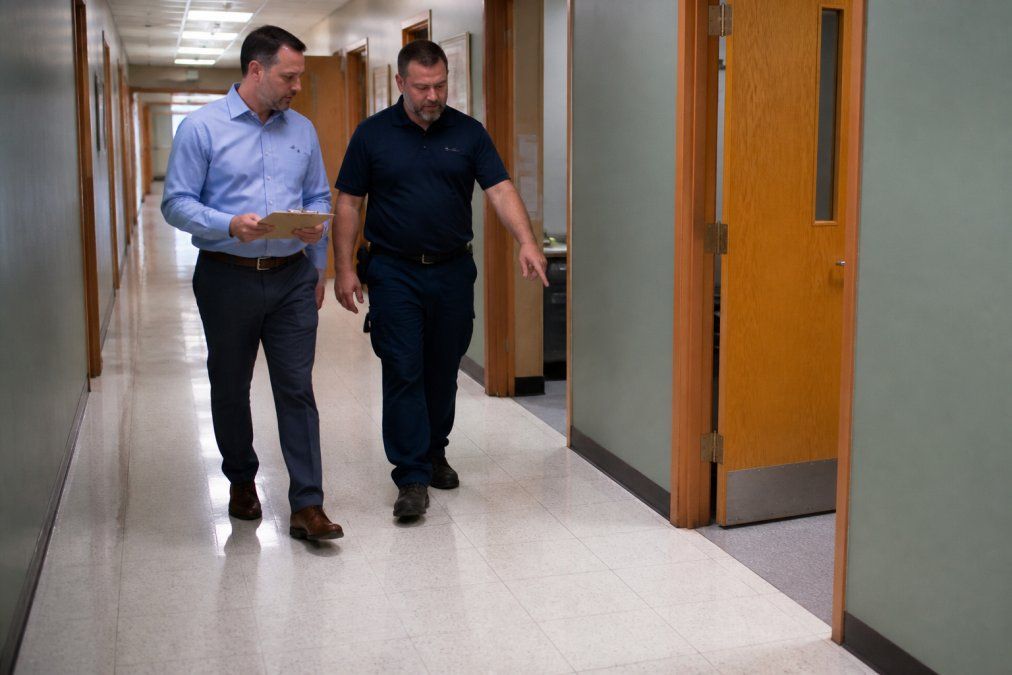
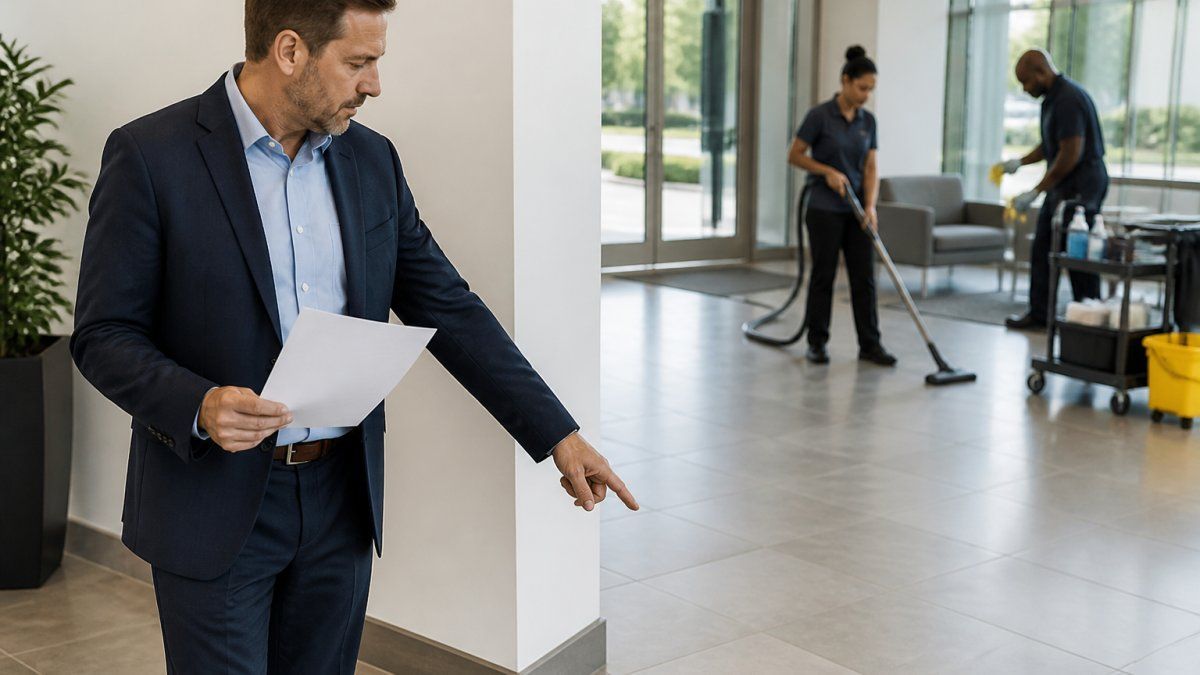
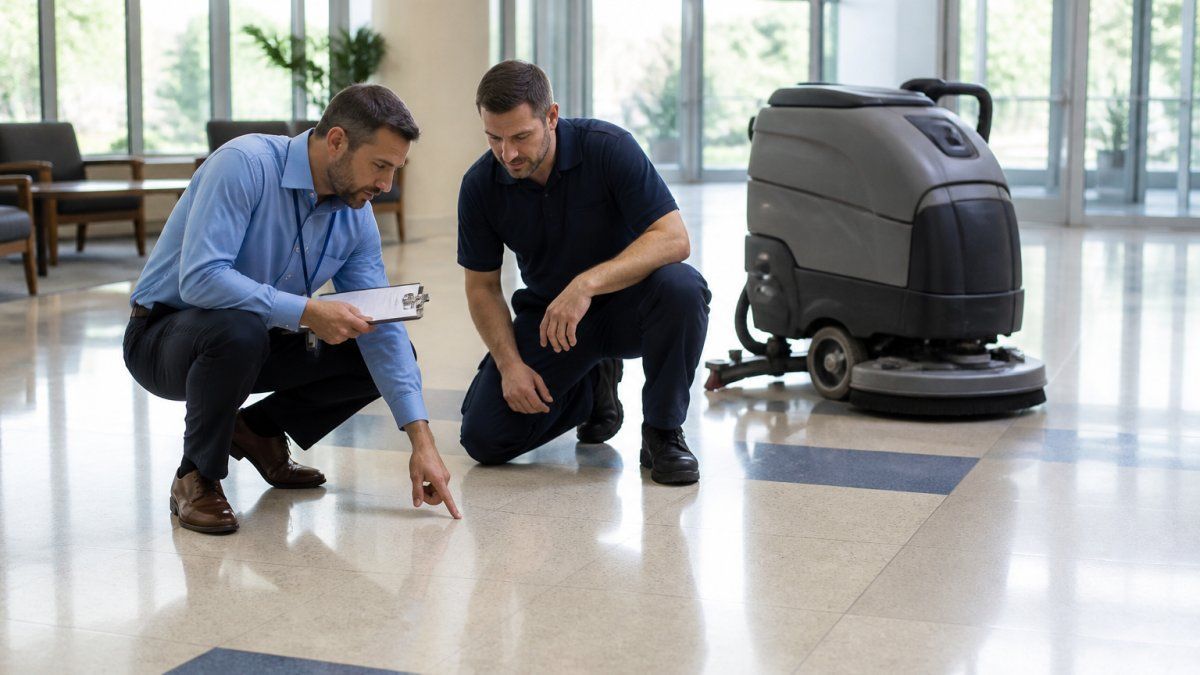
- Walk the building together. A provider who quotes without seeing your space is guessing. Point out problem areas, entryway tile, restroom grout, break room floors, and watch whether the walkthrough changes the proposal.
- Read the cancellation and termination terms. Know your exit before you need it. Ask what notice period applies and whether floor care projects are billed separately from recurring janitorial.
Screening Providers: Insurance, References, and Staffing Stability
Insurance is the first filter. Ask for general liability coverage and a workers' compensation certificate, and verify the dates are current.
References deserve specific questions: "Has this provider ever missed a scheduled visit, and how did they handle it?" Every company misses a visit eventually, what separates providers is whether you hear about it before you notice it.
Staffing stability is the quiet differentiator. High turnover means new faces every month, and new faces mean your scope of work gets relearned from scratch.
Comparing Quotes Without Getting Lost in the Numbers
Quotes are only comparable when they describe the same work. Two proposals for "nightly janitorial" can differ wildly in what's actually covered.
Ask each provider to break the quote into these categories:
| Quote Line Item | What to Confirm |
|---|---|
| Recurring janitorial | Frequency, hours on site, tasks per visit |
| Restroom cleaning and disinfection | Daily or weekly, product type |
| Floor care | Method, frequency, separate or bundled |
| Consumables | Included or billed separately |
| Specialty work | Triggered by request or scheduled |
If one quote bundles floor care and another lists it separately, you're comparing two different scopes, not prices.
Also ask each provider what triggers additional charges. Extra floor work, holiday coverage, and one-time deep cleans are common add-ons, and knowing how each provider handles them keeps the comparison honest.
The Janitorial Service Checklist Every Facility Manager Should Use
A janitorial service checklist turns a vague promise into a measurable standard. Build it before you send out requests for quotes, then require every provider to price against it.
Your checklist should cover:
- Daily tasks: trash removal, restroom cleaning and restocking, spot mopping, entry glass
- Weekly tasks: vacuuming under furniture, detail dusting, floor buffing where scheduled
- Quarterly or seasonal: carpet cleaning, tile and grout cleaning, floor stripping and waxing
Two columns matter as much as the task list: who performs each item, and how completion gets verified. A checklist without verification is just a wish list.
For medical and dental offices, add a section covering treatment rooms and waiting areas, and specify which products are acceptable.
Building a Commercial Cleaning Scope of Work That Prevents Disputes
A commercial cleaning scope of work defines exactly what gets cleaned, how often, and to what standard. It is the most valuable document in the relationship, and the one most buyers skip.
A scope that prevents disputes includes six elements:
- Task list by frequency , daily, weekly, monthly, quarterly
- Square footage and space types , offices, restrooms, lobbies, break rooms, storage
- Floor care schedule , which surfaces, which method, which months
- Supplies and equipment , who provides what
- Communication protocol , who to contact, through which channel, expected reply window
- Quality standard , how "clean" is defined and how it gets checked
That last item is where most scopes fall apart. "Clean to a professional standard" means nothing in a dispute. "Restrooms cleaned and restocked nightly, inspected weekly against the attached checklist" means something.
What Commercial Cleaning Company Reviews Actually Tell You
Commercial cleaning company reviews are useful for spotting patterns, not for making the final call. One glowing review proves nothing; a repeated complaint across multiple reviews tells you something real. Read them as a record of how a provider behaves when something goes wrong.
Read for these signals:
- Consistency complaints. "Great the first month, then stopped showing up" is a staffing problem. Two or three reviews describing the same drop-off pattern is a stronger signal than any single rating.
- Communication complaints. Slow replies show up in reviews before they show up in your building. Look for phrases like "hard to reach" or "never called back."
- Response to criticism. How a company replies to a negative review reveals more than the review itself. A reply that names a specific fix reads differently than a defensive one.
Turning Reviews Into Reference Questions
The most useful thing a review does is give you a question to ask a reference. If a review mentions a missed visit, ask your reference how the provider handled theirs.
Ask for references you can call. A provider confident in its work will hand over names without hesitation. Keep each call short and specific: how long have they serviced you, has the crew lead changed, and what happens when something is missed.
What Reviews Can't Tell You
Reviews rarely describe contract terms, insurance documentation, or how a provider handles a scope dispute, the areas where a relationship actually breaks. Use reviews to narrow your list, then use the vetting checklist and written scope of work to decide.
Commercial Floor Maintenance: What to Expect From a Dependable Provider
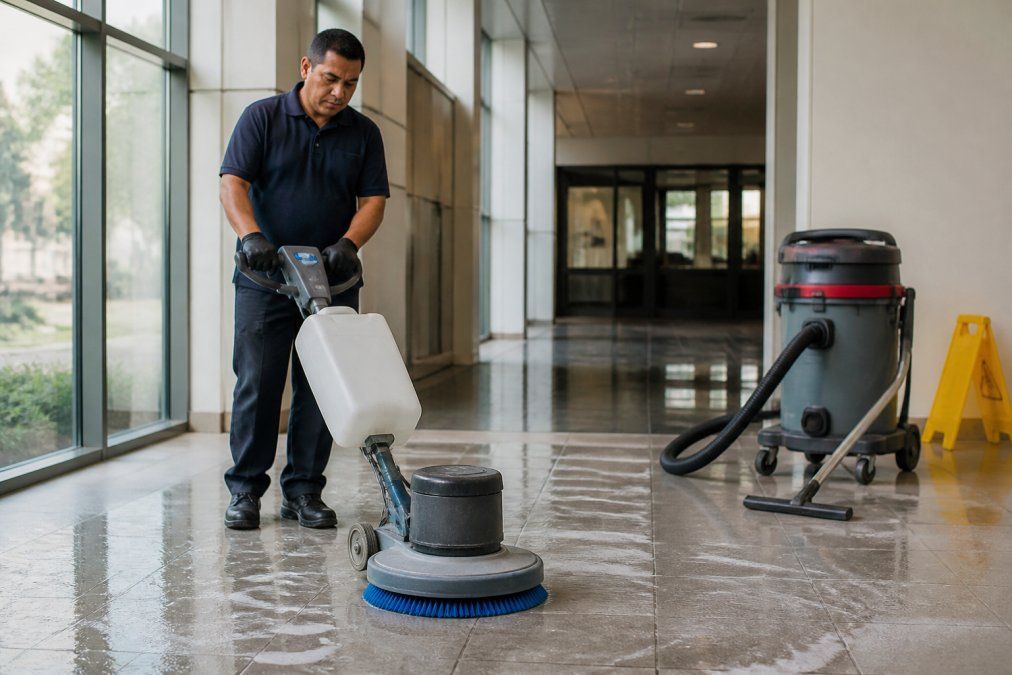
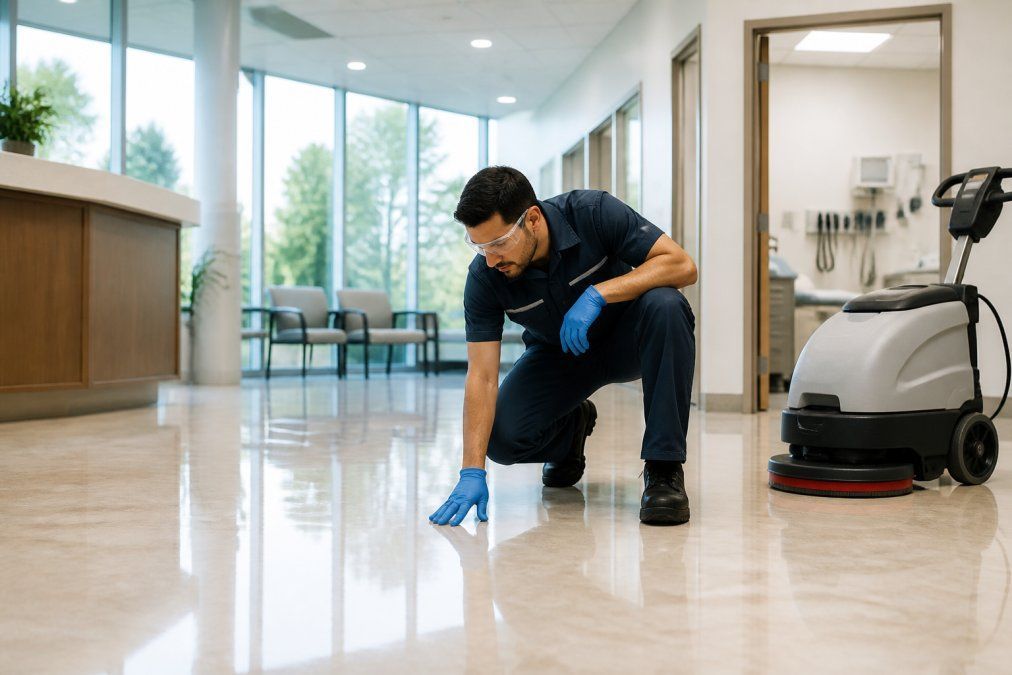
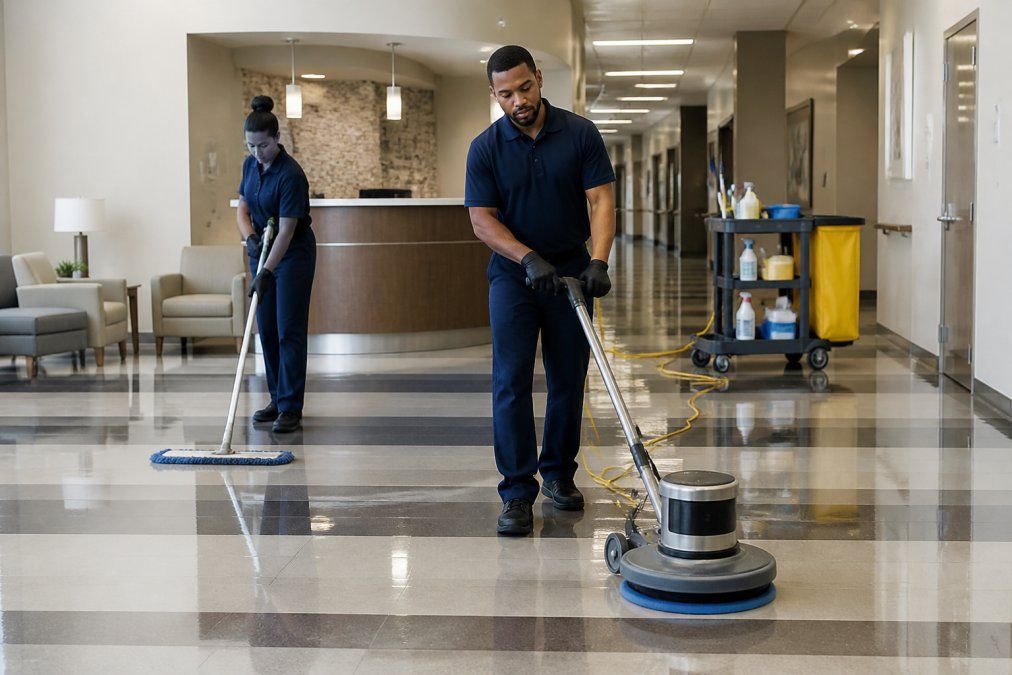
Commercial floor maintenance is where cheap cleaning contracts quietly fall apart. Floors are the most visible asset in your building and the most expensive to restore once neglected. A provider that only mops will cost you more over three years than one that maintains surfaces on schedule.
Different floors need different programs:
- VCT: stripping and waxing on a scheduled cycle, with scrub-and-recoat and burnishing between full strips to extend finish life
- LVT and LVP: routine cleaning with manufacturer-appropriate products, since harsh chemicals can dull or damage wear layers
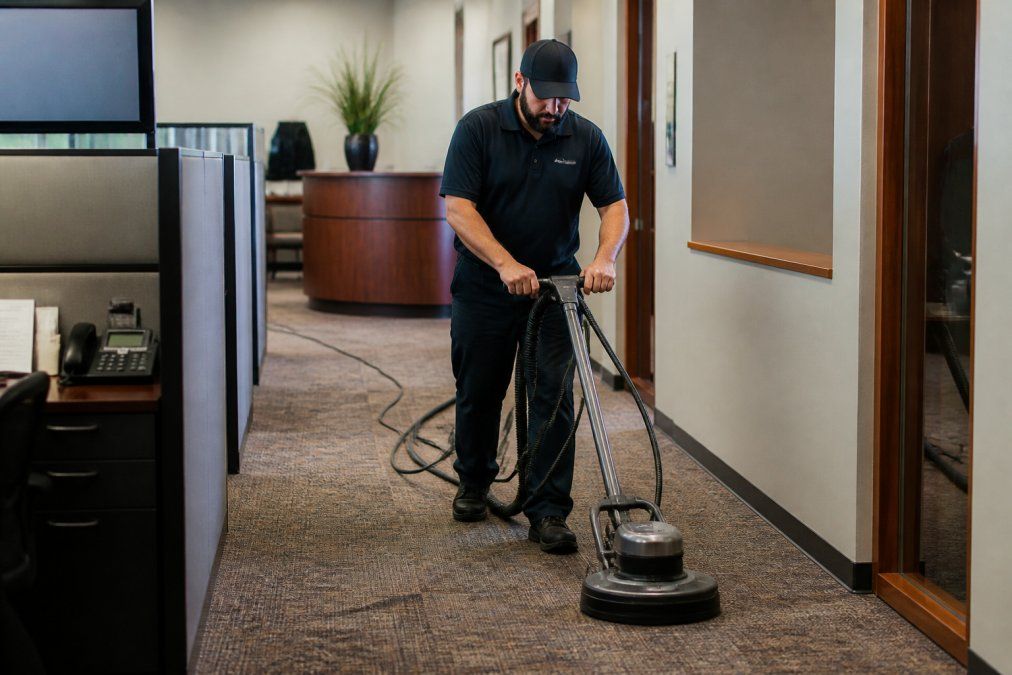
- Carpet: scheduled cleaning, with low-moisture methods often preferred in occupied commercial spaces because they reduce downtime
The right cadence depends on foot traffic, entryway conditions, and your facility type. A provider should walk your space and propose a schedule, not quote a generic frequency.
Scheduling Floor Care Around Your Business Hours
Floor care should not shut your building down. Stripping and waxing, carpet cleaning, and burnishing can be scheduled outside operating hours, and a provider offering nightly, weekly, or monthly programs can usually fit floor work into the same window.
Ask two questions before you book any floor project:
- How long will each area be out of service? Low-moisture carpet methods typically shorten this considerably compared with traditional extraction.
- What's the phasing plan? A good provider works in sections so the rest of your facility stays open.
Get the floor care calendar in writing alongside your recurring janitorial schedule. When both live in one document, nothing gets lost between visits.
What to Look for in Contract Terms, Communication, and Quality Control
Contract terms, communication, and quality control are where a cleaning relationship either holds or breaks. Price gets you in the door; these three keep the service working twelve months later.
Contract terms to review carefully:
- Term length and renewal conditions
- Cancellation notice period and any early termination language
- Whether floor care is included or billed as a separate project
Communication standards to set:
- A named point of contact, not a general phone number
- A defined reply window for non-urgent requests
- A written process for reporting missed tasks or damage
Quality control to expect:
- Scheduled inspections, not just complaint-driven visits
- A written report or checklist confirming completed work
- A named person accountable for correcting problems
At A Smarter Clean, we build recurring janitorial programs and floor care schedules around each facility's actual hours and traffic patterns, with nightly, weekly, and monthly options. We work with medical offices, schools, churches, banks, and commercial properties across Maryland's Eastern Shore and Delaware, and we'd rather walk your building with you than quote it blind.
Most facility managers don't get a second chance at a first impression with their building's cleanliness. A Smarter Clean provides recurring janitorial services and specialized floor care, including VCT stripping and waxing, LVT and LVP maintenance, commercial low- moisture carpet cleaning, tile and grout cleaning, and concrete cleaning and sealing, with flexible nightly, weekly, or monthly scheduling and a focus on safer, cost-effective cleaning practices.
Frequently Asked Questions
How do I choose a reliable commercial cleaning company for my Maryland facility?
Start by verifying insurance and references, then request a walkthrough so the provider can see your space firsthand. Ask how they handle staffing turnover, how they measure quality, and what happens when something is missed. Get a written scope of work that lists every task, frequency, and area covered. Compare at least three providers on communication, not just price. A dependable commercial cleaning company will welcome your questions and put commitments in writing before you sign.
What should a commercial cleaning scope of work include?
A solid commercial cleaning scope of work lists each area (offices, restrooms, lobbies, breakrooms), the specific tasks for each, and how often they occur. It should also cover floor care schedules, supplies, who provides them, and how extra requests are handled. Include start times, security procedures, and a process for reporting problems. Vague scopes lead to disputes, so ask for room-by-room detail. Review it quarterly and update it as your facility needs change.
How can I check the quality of a commercial cleaning service after hiring?
Set up a simple inspection routine. Walk your facility weekly using the same checklist your provider uses, and note any missed items. Ask for a point of contact who responds within a business day. Track recurring issues over a month to spot patterns. If your commercial floor maintenance schedule includes stripping, waxing, or burnishing, inspect results right after each service. Consistent documentation gives you facts to discuss at review meetings instead of one-off complaints.
What insurance should a commercial cleaning company carry?
Ask any commercial cleaning company for a certificate of insurance before work begins. General liability and workers' compensation are the two core coverages to confirm. Request that your business be listed as an additional insured on the general liability policy. Verify the certificate directly with the insurer if you want extra assurance. Coverage limits vary by provider, so review the certificate and ask questions rather than assuming. Keep a current copy on file and request updates at renewal.