

A red metal shed with a white door and window, set against a backdrop of green pine trees and a clear blue sky.

How to Choose the Right Floor Finish for Commercial VCT and LVT

Editorial Team • November 9, 2026

Last Updated: November 9, 2026

Quick Summary

Choosing the right floor finish for commercial facilities means matching the finish to the floor material, facility use, and traffic level rather than repeating a habit. VCT commonly uses a protective floor finish, while many LVT products have manufacturer-specific requirements and should not automatically be waxed or finished like VCT.

  • A Texas A&M literature review found 11 different floor finish types in use across healthcare facilities alone.
  • Traffic level differs from occupancy: concentration, grit sources, wheeled traffic, and surge patterns all change wear.
  • Commercial VCT care follows a cycle: apply finish, scrub-and-recoat, burnish, and strip when buildup wins.
  • Recoating over a dirty floor traps soil under the finish, and it shows.
  • Build your maintenance schedule around traffic, floor condition, and appearance goals, not a copied calendar.

Not sure which finish your floors need? We walk your facility and recommend the right floor-care plan for your building.
Request a Floor-Care Estimate

Table of Contents

Why Floor Finish Selection Goes Wrong in Commercial Facilities

Choosing the right floor finish for commercial facilities fails most often because the decision is made by habit instead of by evidence. A literature review out of Texas A&M University's floor finish selection study found 11 different floor finish types in use across healthcare facilities alone, which tells you there is no single default answer.

At A Smarter Clean, we see the same pattern across medical offices, schools, and commercial buildings: the wrong finish system applied to the right floor. The result is dullness, scuffing, and money spent twice.

Below, we break down the eight mistakes that do the most damage, and what to do instead. Most of them come down to one idea: match the finish to the floor, not the other way around.

Match the Finish to Facility Use and Traffic Level

Floor finish selection starts with two questions: what happens on this floor, and how many people walk it each day? Get those wrong and every later decision compounds the error. A hospital corridor, a school gym, and a quiet bank lobby need different answers, and the gap between them is wider than most building managers expect.

The reason a single default fails is that facility use changes the wear mechanism, not just the wear rate.

A facility-specific starting point

Use this as a conversation starter, not a prescription. The right answer for any one building still depends on the actual floor material, the manufacturer's instructions, and a walkthrough.

Facility type

Dominant wear pattern

Selection priority

Medical and dental offices

Wheeled equipment, repeated disinfection, sensitive occupants

Chemical resistance and compatibility with facility cleaning products; verify slip performance in wet conditions

Schools and churches

High-volume foot traffic, grit, spills, event surges

Scuff and abrasion resistance; a maintenance routine the in-house or contract crew can actually sustain

Banks and professional offices

Appearance-driven, moderate traffic, furniture point loads

Consistent appearance and recoatability; gloss that can be restored without full stripping

Retail

Mixed traffic, cart wheels, display moves

Wear resistance under concentrated traffic lanes; appearance retention at entrances

Food service

Wet floors, grease, frequent cleaning

Slip resistance in wet conditions and compatibility with the cleaning chemicals in use

Traffic level is not the same as occupancy

Two buildings with the same headcount can wear floors very differently. A 40-person office where everyone sits at a desk most of the day puts far less abrasion on a corridor than a 40-person clinic where staff move between rooms constantly. When you assess traffic, look at:

  • Concentration: a narrow path from entrance to service counter wears faster than the same square footage spread across a lobby.
  • Grit sources: entrances without adequate matting track abrasive soil onto the finish, and that soil acts like sandpaper underfoot.
  • Wheeled traffic: carts, gurneys, and luggage wheels concentrate load and can scuff finish in ways foot traffic does not.
  • Surge patterns: schools, churches, and event venues see bursts that a daily-average traffic count hides.

Where the decision actually gets made

The mistake is copying a finish system from a building that looks similar but behaves nothing alike. A finish that performs well in a low-traffic professional office may be the wrong choice for a school corridor that sees hundreds of pairs of shoes before 9 a.m. Traffic level, facility use, and service-life expectations have to drive the choice together, and the manufacturer's documentation for the specific floor product has the final say.

Commercial VCT Floor Care: Finish, Strip, Recoat, Burnish

Vinyl composition tile commonly uses a protective floor finish, and that finish is a wear layer, not a permanent coating.

A bearded man in a blue shirt operates a yellow and black floor scrubber across a large white tiled floor in a bright interior.

The cycle looks like this:

  1. Surface preparation: clean the floor fully before any finish goes down
  2. Finish application: build thin, even coats and let each one dry
  3. Scrub-and-recoat: clean and add a fresh layer before wear reaches the tile
  4. Burnishing: restore gloss and remove light scuffs
  5. Stripping: remove old finish when recoating no longer holds up

Watch out: recoating over a dirty floor traps soil under the finish, and it shows. For the full maintenance and restoration routine, see our guide to commercial VCT and LVT floor care.

LVT Floor Maintenance: Follow the Manufacturer, Not the VCT Playbook

Many luxury vinyl tile and plank products carry manufacturer-specific maintenance requirements, and those instructions override any general habit. LVT floor maintenance is not VCT care with a different label.

How to Select the Best Floor Finish for Your Facility

Imperial Brady

A traditional finish applied to LVT simply because that is what the building always did can conflict with the manufacturer's guidance, which may call for something else entirely.

  • Read the manufacturer's maintenance documentation first
  • Confirm whether finish is recommended, optional, or not advised
  • Match cleaning products to the wear layer
  • Keep a written record of what was applied and when

For high-traffic buildings, our best practices for maintaining high-traffic VCT and LVT floors covers the routines in more detail. The principle is simple: the floor's maker sets the rules, and your schedule follows them.

Build a Commercial Floor Maintenance Schedule That Fits Your Building

A commercial floor maintenance schedule should be built around traffic, floor condition, and appearance goals, not around a calendar someone copied from another building. Matching service intervals to traffic, floor condition, and appearance goals keeps upkeep responsive, and a commercial floor care maintenance guide can help frame those decisions.

Start by walking the floors and grading condition by area. Entrances and main corridors usually need attention sooner than back offices. Then set frequency per zone.

Zone

Traffic Level

Typical Focus

Entrances and lobbies

Highest

Frequent cleaning, regular burnishing

Main corridors

High

Scheduled scrub-and-recoat

Offices and admin

Moderate

Routine cleaning, periodic recoat

Storage and back areas

Low

Basic cleaning, condition checks

Watch out: a schedule that ignores condition leads to stripping floors that only needed a recoat, or recoating floors that needed stripping. If you are unsure whether your floors are due, review the signs your commercial floors need stripping and waxing before booking work.

Safety, Slip Resistance, and Indoor Air Quality

Slip resistance and indoor air quality are not side issues in floor finish selection. They are selection criteria. A finish that looks right but raises slip risk in a wet area is the wrong finish, and a finish that offends occupants during application can cost more in disruption than it saves in product.

Slip resistance: test, don't assume

Slip resistance is the measure of how well a floor surface resists slipping under expected conditions. Texture, finish buildup, moisture, and contamination all affect it, so the only reliable approach is to assess the floor as it will actually be used rather than judging by appearance.

A few practical points matter more than any single number:

  • Dry and wet are different conditions. A floor that feels secure when dry can be hazardous when wet, and wet-area performance is what matters in food service, entrances, and restroom approaches.
  • Gloss and traction are unrelated. More shine does not mean more grip, and a high-gloss finish is not automatically slippery. Judging safety by how a floor looks is a common and costly mistake.
  • Buildup changes the surface. Excess finish, trapped soil, and uneven coats can create slick spots that were not present when the floor was new.
  • Test results need context. Slip-test methods and thresholds vary, and a single test result does not guarantee performance across every condition. Ask what was tested, under what conditions, and how it relates to your facility's actual use.

When a manufacturer or vendor makes a slip-resistance claim, ask for the test method and the conditions it covers. Treat any claim as one input among several, not as a guarantee.

Indoor air quality and product selection

Facilities with occupants who are sensitive to fumes, including medical offices and schools, should ask what is being applied, how the space is ventilated during and after application, and how long the area needs to be closed before normal use resumes.

A few questions worth putting to any provider before work begins:

  • What products will be applied, and what do their safety data sheets say about VOC content and required ventilation?
  • How will occupied areas be isolated, and what is the expected re-entry window?
  • Are the cleaning products used afterward compatible with the finish, so that routine cleaning does not degrade either the finish or the air quality gains?

The selection takeaway

Safety and air quality belong in the selection conversation from the start, not as a final check. A finish that performs well on wear but creates slip risk in wet areas, or that requires ventilation your building cannot provide during occupied hours, is the wrong finish for that building regardless of how it looks on day one. Bring these questions to a walkthrough so the recommendation accounts for how your facility actually operates.

Lifecycle Budgeting: What Floor Care Really Costs

Floor care is a lifecycle cost, not a one-time purchase. The cheapest finish to apply can be the most expensive to maintain if it fails early or demands frequent stripping.

Total cost of ownership includes labor, product, downtime, and the cost of replacing a floor sooner than necessary. As Imperial Dade's floor finish guidance notes, there is no single best finish for every facility; the right choice depends on the building's needs, resources, and budget.

The practical approach:

  • Compare finish systems over their full maintenance cycle, not just application
  • Factor in labor hours for stripping and recoating
  • Account for downtime in occupied buildings
  • Weigh phased installation against closing a space entirely

For a detailed breakdown of the strip-and-wax side of the budget, our floor stripping and waxing cost guide walks through the variables. Pricing depends on square footage, floor condition, and access, so we quote after a walkthrough rather than guessing.

Request a Walkthrough and Floor-Care Estimate

The right floor finish for your building is a decision, not a default.

A Smarter Clean provides commercial floor care across Sussex and Kent Counties in Delaware and Maryland's Eastern Shore, including VCT stripping and waxing, LVT and LVP care, concrete floor cleaning and sealing, and tile and grout cleaning.

Get started with A Smarter Clean and request a floor restoration walkthrough for a floor-care estimate built around your building.


If your floors are dull, scuffed, or overdue for attention, guessing at the finish system usually costs more than asking.

Frequently Asked Questions

Does commercial VCT need to be stripped and waxed?

VCT is a vinyl composition tile with a porous surface, so it commonly relies on protective floor finish to resist scuffs and wear. Stripping and waxing is not required on a fixed calendar; it depends on traffic, soil load, and how many coats remain. Many facilities run scrub-and-recoat cycles between full strips. A professional walkthrough can tell you whether your floor needs a full strip or just a recoat.

Can you wax or apply floor finish to LVT or LVP?

Not automatically. Many LVT and LVP products carry manufacturer-specific maintenance requirements, and some finishes or waxes can void warranties or dull the wear layer. Check the manufacturer's care guide before any finish is applied. LVT floor maintenance usually centers on pH-appropriate cleaning, prompt spill removal, and protective pads under furniture rather than a wax program.

How do traffic levels affect commercial floor-care choices?

Higher traffic means more soil tracked in and more abrasion, so finish systems and cleaning frequency need to match. Entrances, corridors, and break rooms often need more frequent attention than back offices. A commercial floor maintenance schedule should be built around traffic patterns, not a single building-wide interval.

What should facility managers check before choosing a floor-care system?

Start with the flooring material and substrate, the manufacturer's care requirements, traffic levels, facility use, desired appearance, and your cleaning budget. Confirm that any product is compatible with the floor and safe for occupants.

By Editorial Team • November 8, 2026
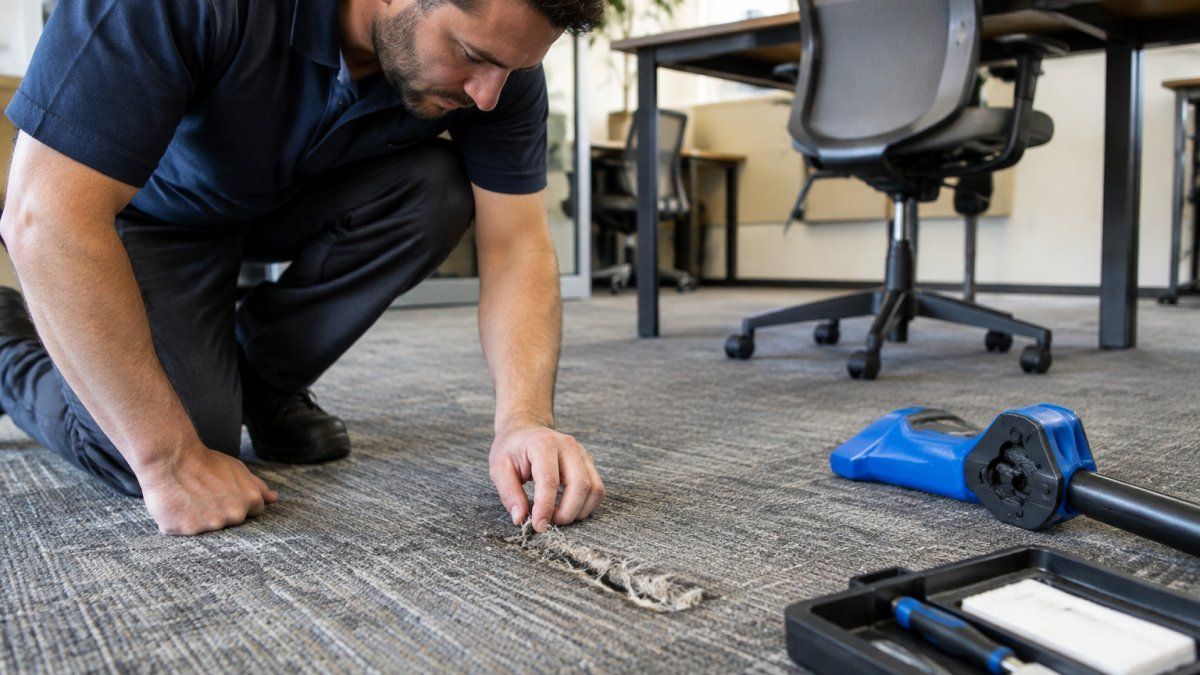
Commercial carpet damage like tears, seams and stains is often fixable. Learn how to spot each type, which repair works, and how to prevent it.
By Editorial Team • November 5, 2026
Proper PPE protocols for dental cleaning crews, task by task: glove choice, donning and doffing order, and floor-care steps that cut exposure risk.
By Editorial Team • November 4, 2026
Floor buffing restores shine and removes light scuffs, often without a full refinish. Choose buffing when the finish is healthy but dull or lightly marked.
By Editorial Team • November 2, 2026
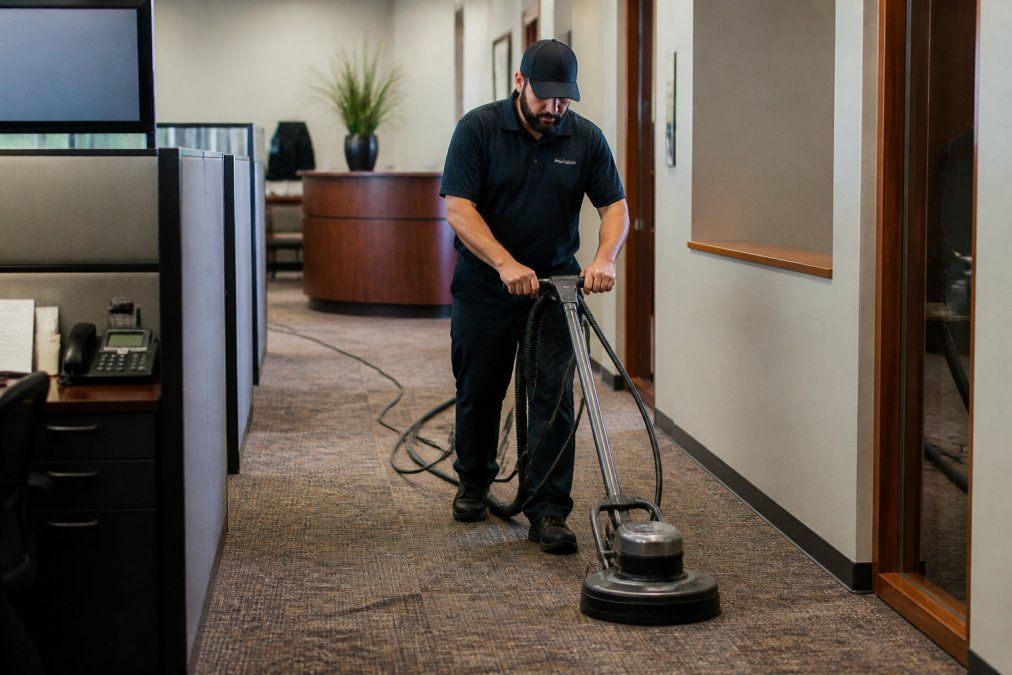
Plan commercial carpet care for medical waiting rooms with a written schedule, entrance matting and low-moisture cleaning. Request a walkthrough.
By Editorial Team • October 30, 2026
See how janitorial quality is managed with clear scopes, inspection checklists, and floor-care schedules. Get the full framework for facility managers.
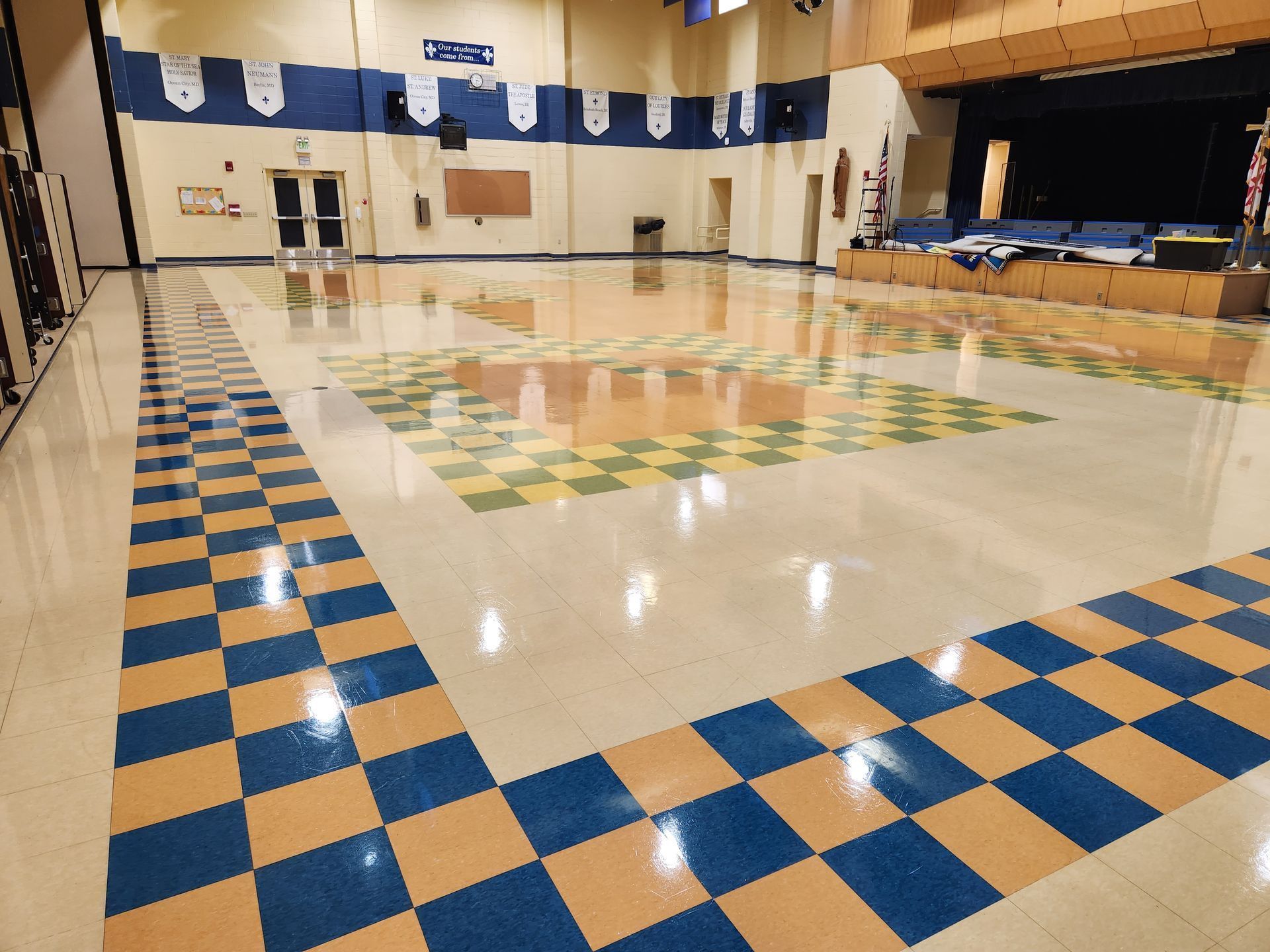
By Dawn Stewart • October 29, 2026
How to decide which floor-care tasks belong in-house and when it makes sense to bring in a professional
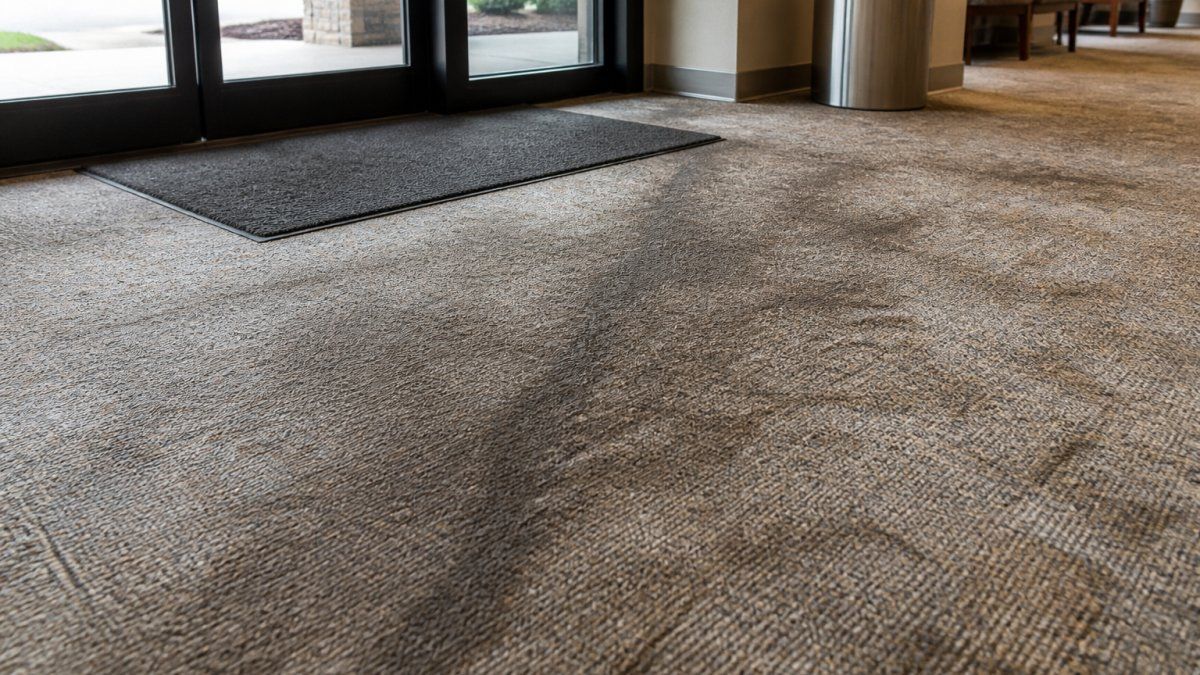
By Editorial Team • October 28, 2026
Heavy traffic carpet stains need more than spot cleaning. Learn why traffic lanes darken and how professional cleaning restores commercial carpet.
By Editorial Team • October 26, 2026
Retail floors need a cleaning schedule built around traffic, store hours, and surface type. Learn how often to sweep, scrub, and restore each floor.
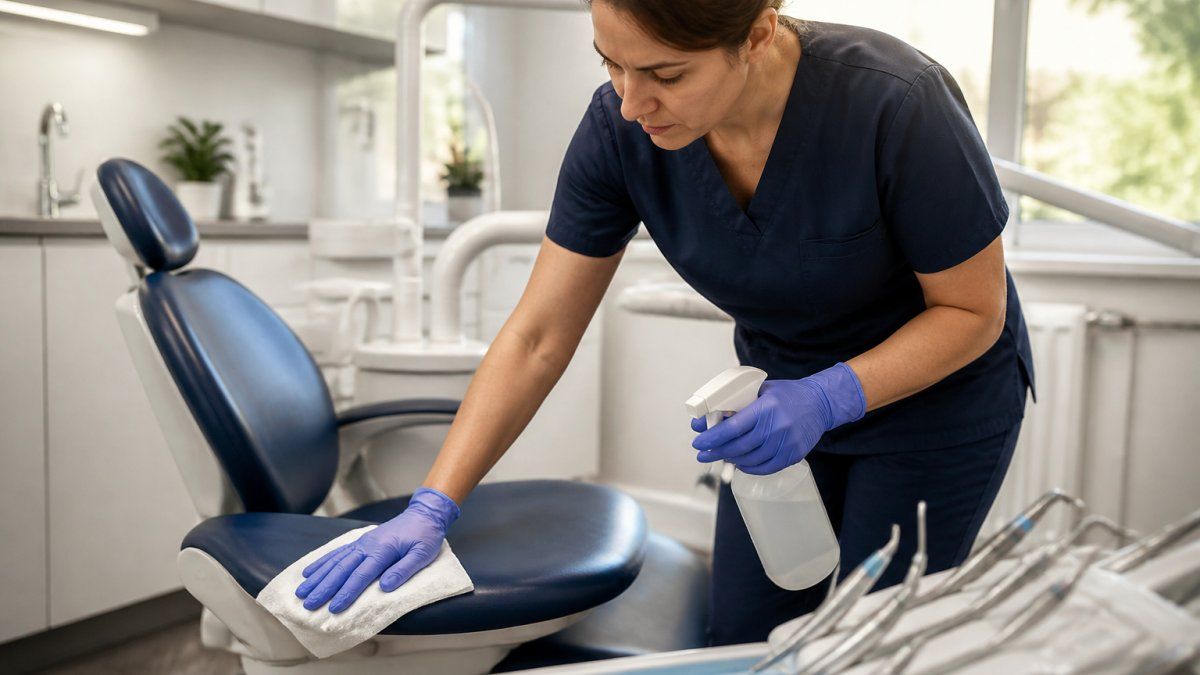
By Editorial Team • October 25, 2026
Clinical disinfection is not janitorial work. Learn where routine cleaning ends and dental infection control begins, plus a room-by-room checklist.
By Dawn Stewart • October 24, 2026
“Free Commercial Floor Maintenance Checklist”
Show More