


How Often Should You Clean Retail Floors?
Last Updated: October 26, 2026
Quick Summary
Build a commercial floor cleaning schedule for retail spaces around three inputs: traffic level, operating hours, and surface type. Retail floors need daily safety-focused care, weekly appearance work, and periodic deep cleaning, with VCT stripped and re-waxed one to two times a year.
- Split the sales floor into four zones and assign each a daily, weekly, and periodic owner.
- Spot-sweep checkout and entrance zones every two to four hours on busy days.
- Most retail floors need a full strip and re-wax one to two times a year.
- Damp mop vinyl plank with a pH-neutral cleaner; standing water can lift adhesive.
- Reserve one closed day per quarter for strip-and-recoat and grout work.
Table of Contents
- Start With Traffic, Hours, and Floor Type
- Build a Retail Store Cleaning Checklist by Shift
- Set a VCT Floor Stripping and Waxing Schedule
- LVT and LVP Floor Maintenance for High-Traffic Aisles
- Low-Moisture Encapsulation Carpet Cleaning in Retail Settings
- Schedule Floor Work Around Store Operating Hours
- Request a Walkthrough and Custom Floor-Maintenance Schedule
- Frequently Asked Questions
Start With Traffic, Hours, and Floor Type
A commercial floor cleaning schedule for retail spaces should match cleaning frequency to foot traffic, store hours, and floor material, not to a generic calendar.
Here is the core problem: most stores copy a schedule from a template and never adjust it. The result is worn VCT in the entrance aisle and over-scrubbed LVT in the back stockroom.
At A Smarter Clean, we build retail floors plans around three inputs:
- Traffic level: entrances and checkout lanes take far more abuse than back aisles.
- Operating hours: work happens before opening, after closing, or on closed days.
- Surface type: VCT, LVT/LVP, carpet, tile, and concrete each need different care.
Get those three right and the calendar almost writes itself.
Build a Retail Store Cleaning Checklist by Shift
A retail store cleaning checklist works best when it is split by shift and by zone, with each crew knowing exactly what to finish before the doors open, during operating hours, and after close.
Assign Tasks by Zone, Not Just by Day
Most generic checklists list tasks but never say who owns which part of the floor. Split the sales floor into four working zones and assign each to a named role on each shift:
- Zone 1, Entrance and vestibule: entry mats, first 10 to 15 feet of floor, door tracks, and any hard-surface transition. This zone collects the most tracked-in grit and moisture.
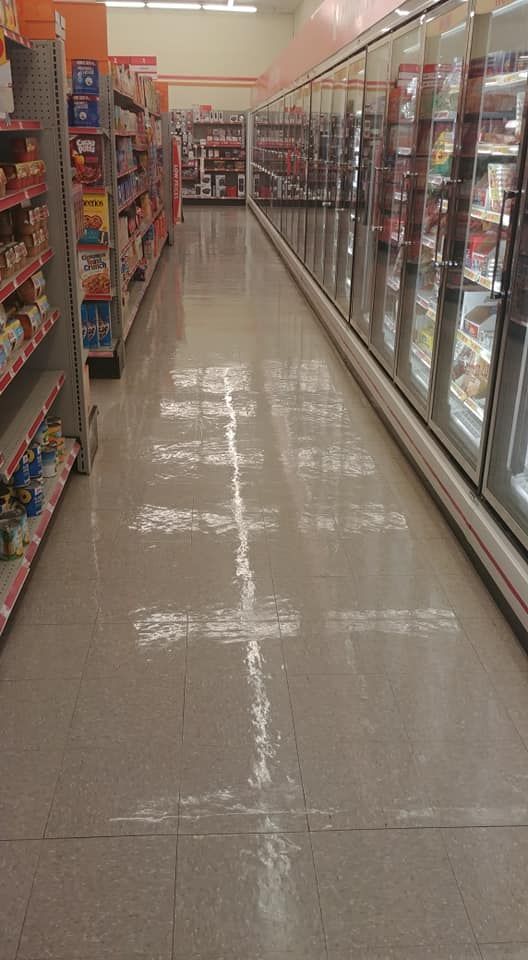
- Zone 2, Main aisles and checkout: high footfall, cart traffic, and spill risk. Checkout lanes generate receipt paper, hangers, and small debris.
- Zone 3, Department and back aisles: lower traffic but more product debris, cardboard dust, and occasional spills.
A simple rule: every zone gets a daily owner, a weekly deep-clean owner, and a periodic project owner. When a task has no owner, it becomes everyone's job and no one's responsibility.
Daily Tasks and Opening Duties
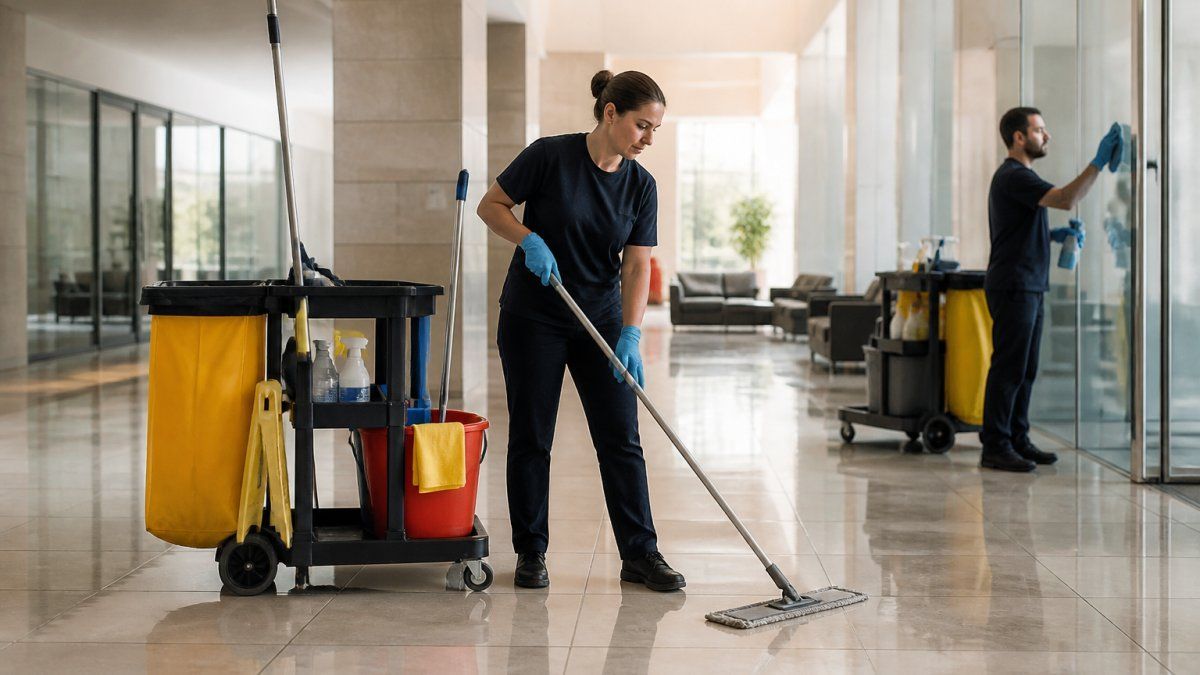
Daily floor care is about safety and appearance, in that order. Before opening, the closing crew or an early-morning team should handle the basics:
- Sweep or dust-mop entrances, aisles, and checkout zones
- Spot-mop spills and sticky patches
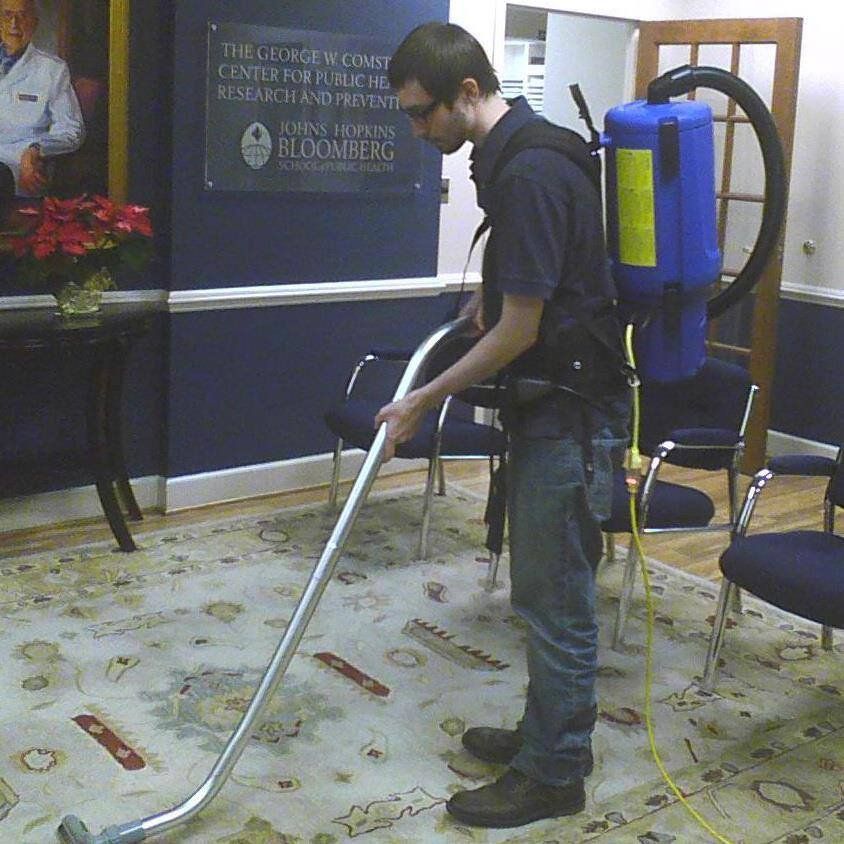
- Vacuum entry mats and carpet runners
Opening duties take priority at entrances. Dirt tracking from the sidewalk lands in the first few meters, so that zone gets attention every single day. A common pattern is to dust-mop Zone 1 twice before opening on wet-weather days and once on dry days.
Operating-Hours Tasks
During store hours, the goal is presentable floors without creating slip hazards in customer paths. Assign a floor attendant or cross-trained associate to:
- Spot-sweep checkout and entrance zones every two to four hours on busy days
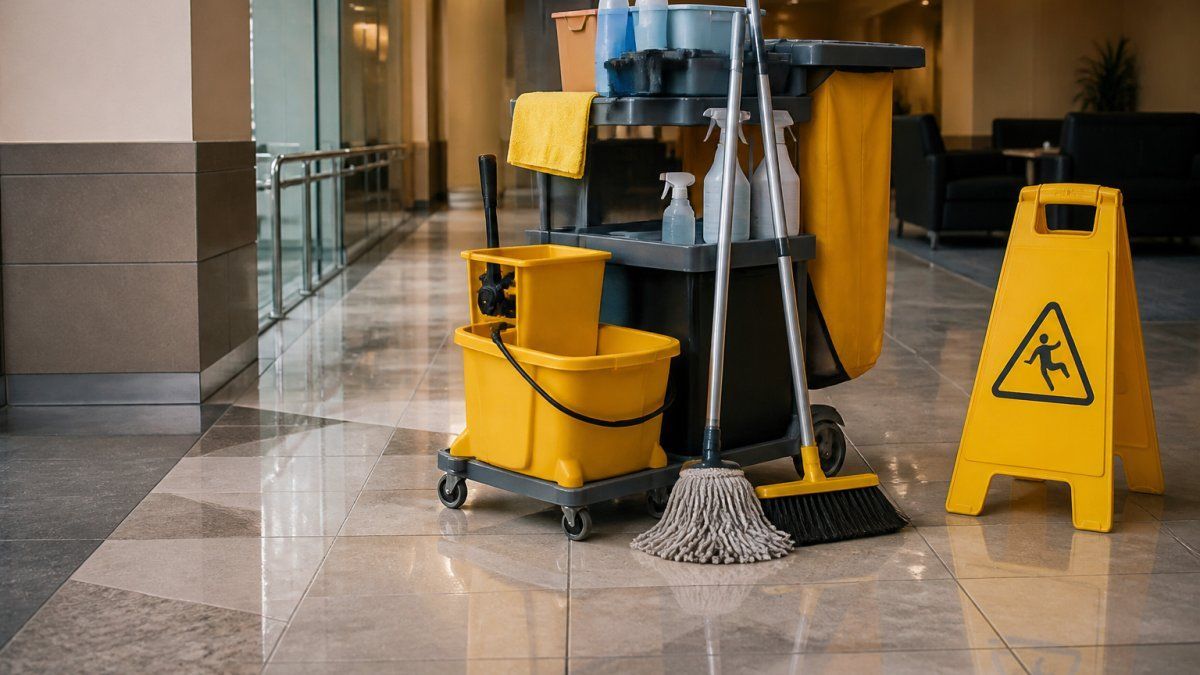
- Respond to spills immediately with a wet-floor sign and a dry mop or absorbent pad
- Keep aisles clear of boxes, pallets, and loose hangers that hide floor debris
Do not run machine scrubbing, burnishing, or wet mopping in open customer aisles. Those tasks belong in closed sections or off-hours windows.
Weekly and Periodic Deep Cleaning
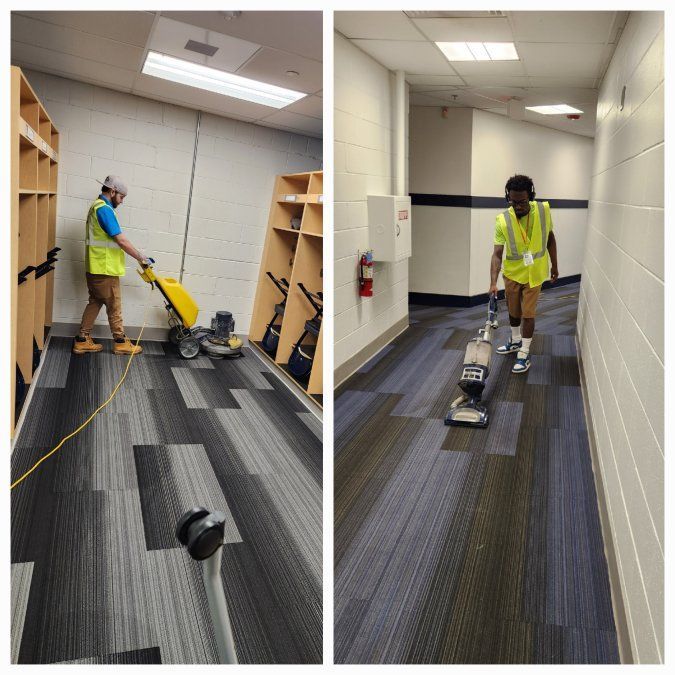
Weekly cleaning goes beyond the surface. Machine scrubbing, burnishing, and detail work on corners and baseboards belong here. Monthly or quarterly tasks handle what daily work cannot: deep cleaning on carpet, grout cleaning on tile, and scrub-and-recoat cycles on VCT.
A simple rule: daily tasks protect safety, weekly tasks protect appearance, and periodic tasks protect the floor itself.
Completion Logs and Quality Checks
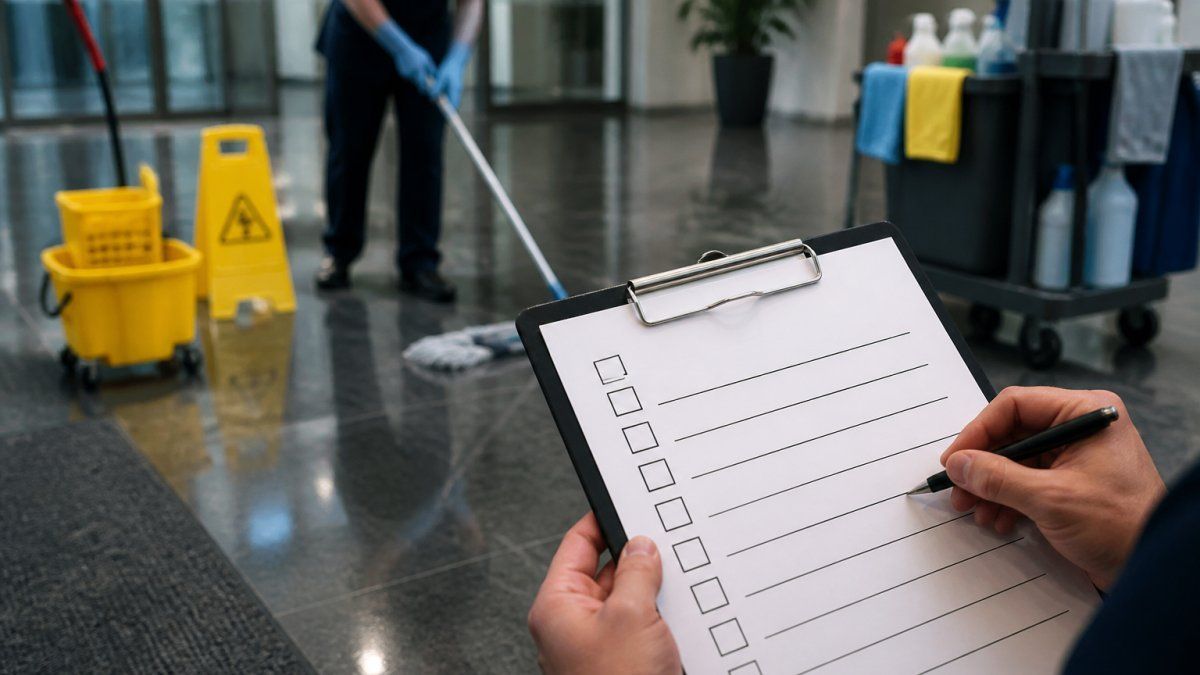
A checklist only works if someone verifies it. Keep a simple completion log per zone and shift, with initials and time stamps. Once a week, walk the sales floor with the log in hand and check three things:
- Entrance zone: no grit under mats, no standing moisture, mats flat and dry
- Aisles: no visible debris, no scuff buildup along the main path, no curled edges on vinyl plank
- Checkout: no sticky residue, no paper or hanger debris under counters
Record any repeat issue, a mat that keeps curling, a spill that keeps recurring in the same aisle, and adjust the schedule or the equipment rather than just cleaning harder. For a deeper look at how shift-based duties fit together, our customizable cleaning schedules for trained staff show the pattern in practice.
Set a VCT Floor Stripping and Waxing Schedule
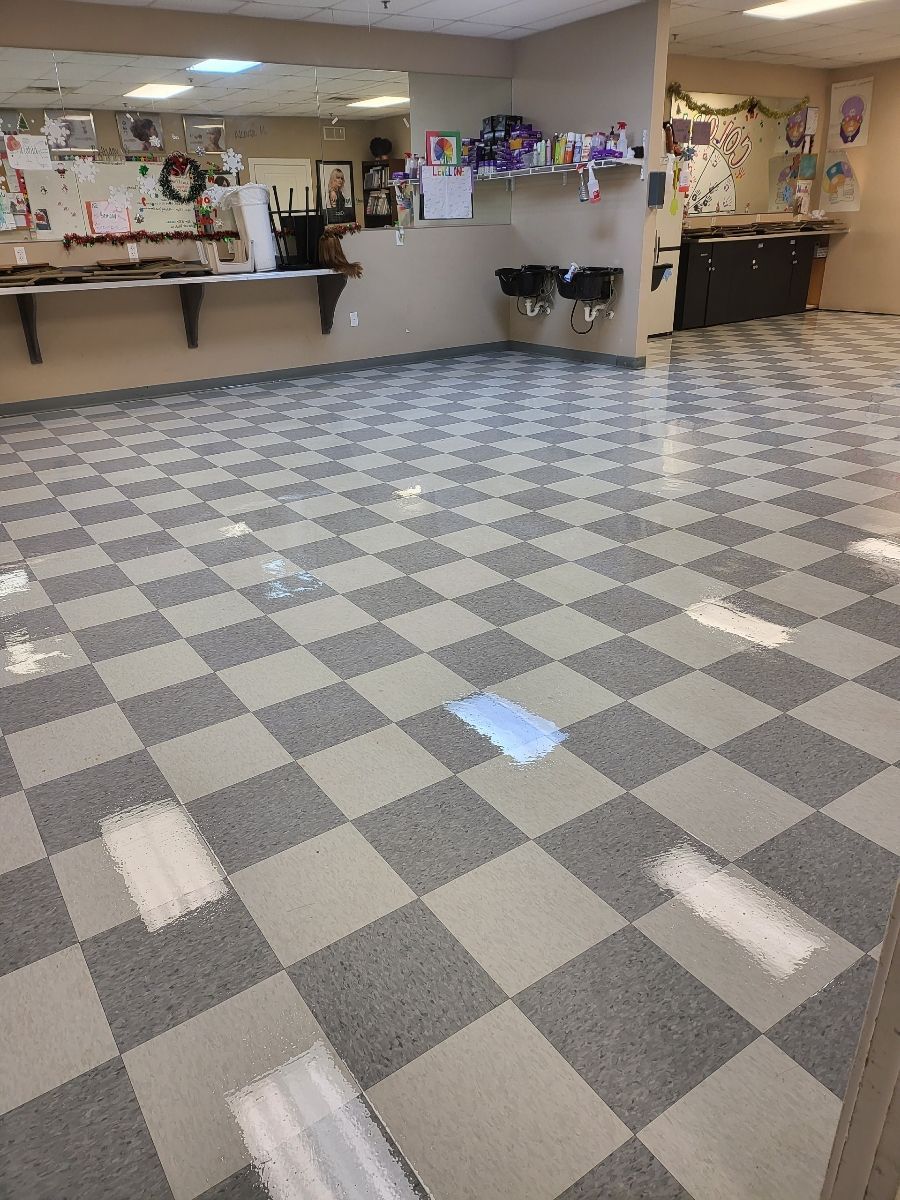
VCT floor stripping and waxing is a cycle, not a one-time job.
The schedule depends on traffic. An entrance-heavy big-box store may need two strips a year. A low-traffic bank branch may hold a finish far longer.
Between strips, plan:
- Scrub-and-recoat: refreshes the top layer of finish without a full strip
- Burnishing: restores gloss and removes scuff marks
- Daily dust mopping: keeps grit from grinding into the finish
For a deeper walkthrough of the cycle, our facility manager's guide to maintaining VCT floors covers the steps between and during strip-and-wax projects.
LVT and LVP Floor Maintenance for High-Traffic Aisles
LVT and LVP floor maintenance looks simple until an aisle takes constant cart traffic.
Daily care means sweeping or dust mopping to remove abrasive dirt.
Watch out: too much water is the most common mistake with vinyl plank.
For step-by-step guidance, our article on how to clean commercial LVT flooring properly walks through the right products and methods for high-traffic aisles.
Low-Moisture Encapsulation Carpet Cleaning in Retail Settings
Low-moisture encapsulation carpet cleaning is a method that traps soil in a crystalline polymer and lifts it with a machine brush, leaving carpet ready to walk on in a fraction of the time wet extraction needs ( Low-Moisture Techniques Gaining In Popularity).
Encapsulation suits high-traffic carpet and entry zones. It also fits stores that cannot afford long drying windows during operating hours. Periodic deep cleaning still matters, but encapsulation keeps carpet presentable between full cleanings.
If you are weighing it against other methods, our piece on the benefits of low-moisture carpet cleaning for facilities explains where it fits in a maintenance plan.
Schedule Floor Work Around Store Operating Hours
The best floor schedule is invisible to shoppers. That means early-morning, evening, weekend, or other pre-arranged low-traffic windows, chosen around your store hours and your floor's drying needs.
Facility managers increasingly separate routine cleaning from appearance management for floors. That distinction helps here: routine tasks can happen during off-hours, while appearance work like burnishing may need a closed section of the sales floor.
Match Each Task to the Right Window
Not every floor task needs the same window. Use this as a starting framework and adjust to your store hours and access:
- Before opening: dust mopping, spot mopping, mat vacuuming, trash removal, and a quick safety walk. These are low-moisture tasks that dry fast and leave the floor ready for customers.
- After closing: machine scrubbing, damp mopping, and burnishing in the main aisles. These need drying time and should not run while shoppers are present.
- Closed days or pre-arranged low-traffic blocks: VCT strip-and-recoat, tile and grout cleaning, and low-moisture encapsulation carpet cleaning in high-traffic carpet zones. These are project tasks that need access, drying time, and a clear floor.
A common pattern is to reserve one closed day per quarter for strip-and-recoat and grout work, and to keep the weekly burnishing and scrubbing in the after-close window.
Manage Wet-Floor Risk During Operating Hours
Wet floors are the biggest safety exposure in retail floor care. When any task leaves moisture on a customer path:
- Set out wet-floor signs at both ends of the affected area, not just one
- Use a blower or air mover to speed drying in entrances and checkout zones
- Keep customers out of the wet zone with a physical barrier, not just a sign
Slip-and-fall claims are a real cost for retail operators, and most of them trace back to a wet floor that was signed but not barricaded, or a sign that was pulled too early.
Use Traffic Triggers to Adjust Frequency
A fixed calendar will not keep up with real store conditions. Watch for observable triggers that mean the schedule needs to tighten:
- Weather: rain, snow, or salt on the sidewalk means entrance dust-mopping moves from once to two or three times per shift, and mats get swapped more often.
- Footfall: a store that sees a sharp seasonal traffic increase should add a mid-day spot-sweep in checkout and entrance zones.
- Spill rate: if the same aisle has repeated spills, add a mid-shift check rather than waiting for the next scheduled pass.
- Entrance exposure: a store with an uncovered exterior entrance tracks in more grit than one with a vestibule, and needs more frequent entrance care.
Write these triggers into the schedule so the crew knows when to escalate frequency without waiting for a manager's approval.
Plan Around Access and Drying Requirements
Scheduling depends on the project, facility access, drying requirements, and availability.
Our team offers flexible early-morning, evening, weekend, and pre-arranged low-traffic programs, built around your hours rather than ours. Our customizable cleaning schedules for trained staff show how shift-based duties fit together in practice.
Match each floor task to the window where it fits, based on drying needs and customer access.
| Window | Tasks | Note |
|---|---|---|
| Before opening | Dust mopping, spot mopping, mat vacuuming, trash removal, safety walk | Low-moisture tasks that dry fast |
| After closing | Machine scrubbing, damp mopping, burnishing in main aisles | Need drying time, no shoppers present |
| Closed days or low-traffic blocks | VCT strip-and-recoat, tile and grout cleaning, encapsulation carpet cleaning | Project tasks needing access and drying time |
| One closed day per quarter | Strip-and-recoat and grout work | Common pattern |
| Weekly | Burnishing and scrubbing | Kept in the after-close window |
Request a Walkthrough and Custom Floor-Maintenance Schedule
A written schedule only works if it fits your actual floor.
Before you hire any floor-care provider, know what to ask. Our free 10 questions to ask before hiring a commercial floor cleaning company checklist covers the details that separate a reliable partner from a recurring headache.
Retail floors take a beating, and a schedule copied from a template will not keep up with your traffic.
Frequently Asked Questions
How often should retail floors be cleaned?
Daily sweeping or dust mopping is standard for retail floors, with spot mopping as spills happen. Weekly tasks typically include machine scrubbing or damp mopping, and periodic work like burnishing, scrub-and-recoat, or carpet extraction runs monthly to quarterly. Traffic level decides the pace: entrances and main aisles need more frequent attention than back stockrooms. A written schedule with stated task frequencies, as retail cleaning guidance recommends, keeps the plan consistent across shifts.
How often should VCT floors be stripped and waxed?
Most retail VCT floors need a full strip and re-wax every six to twelve months, depending on foot traffic and how well the finish holds up. Between strips, scrub-and-recoat and burnishing keep the shine and extend the finish life. High-traffic stores may need stripping closer to twice a year, while lower-traffic offices stretch further. Scheduling depends on facility access and drying requirements, so plan strip work during low-traffic windows.
How can a store schedule floor cleaning without disrupting customers?
Move the heavy work to pre-arranged low-traffic windows: early morning before opening, evening after close, or weekends. Daily sweeping and spot mopping fit naturally into opening and closing duties. For scrub-and-recoat, stripping, or carpet cleaning, confirm access and drying time in advance so the floor is ready when customers arrive. Flexible programs built around your store hours keep the schedule predictable without pulling staff off the sales floor.
What factors affect a commercial floor-maintenance schedule?
Foot traffic volume, floor material, store hours, entrance placement, weather and dirt tracking, and the condition of the existing finish all shape the schedule. VCT, LVT/LVP, tile and grout, concrete, and carpet each carry different care needs and service intervals. High-traffic zones like entrances and main aisles often need more frequent cleaning than back areas. A walkthrough lets a provider match task frequency to how your store actually operates.