


Commercial Cleaning Outsourcing Checklist for Facility Managers
Table of Contents
- Why an Outsourcing Checklist Saves You Money and Headaches
- Start With a Commercial Cleaning Scope of Work Checklist
- Build a Commercial Cleaning Frequency Schedule
- Use a Commercial Cleaning Vendor Evaluation Checklist
- Plan a Commercial Floor Maintenance Program
- Put Your Facility Management Outsourcing Checklist Into Action
- Conclusion: A Checklist You Can Reuse Every Contract Cycle
- Frequently Asked Questions
Last Updated: October 15, 2026
Why an Outsourcing Checklist Saves You Money and Headaches
A facility management outsourcing checklist is a written list of every cleaning task, floor-care need, access rule, and quality standard your building requires before you sign with a service provider.
Vague contracts cost money. When a scope is unclear, you pay for work you did not need and chase work that never got done.
This guide shows you how to build a facility management outsourcing checklist you can reuse every contract cycle. We cover scope, frequency, vendor screening, and floor care.
Start With a Commercial Cleaning Scope of Work Checklist
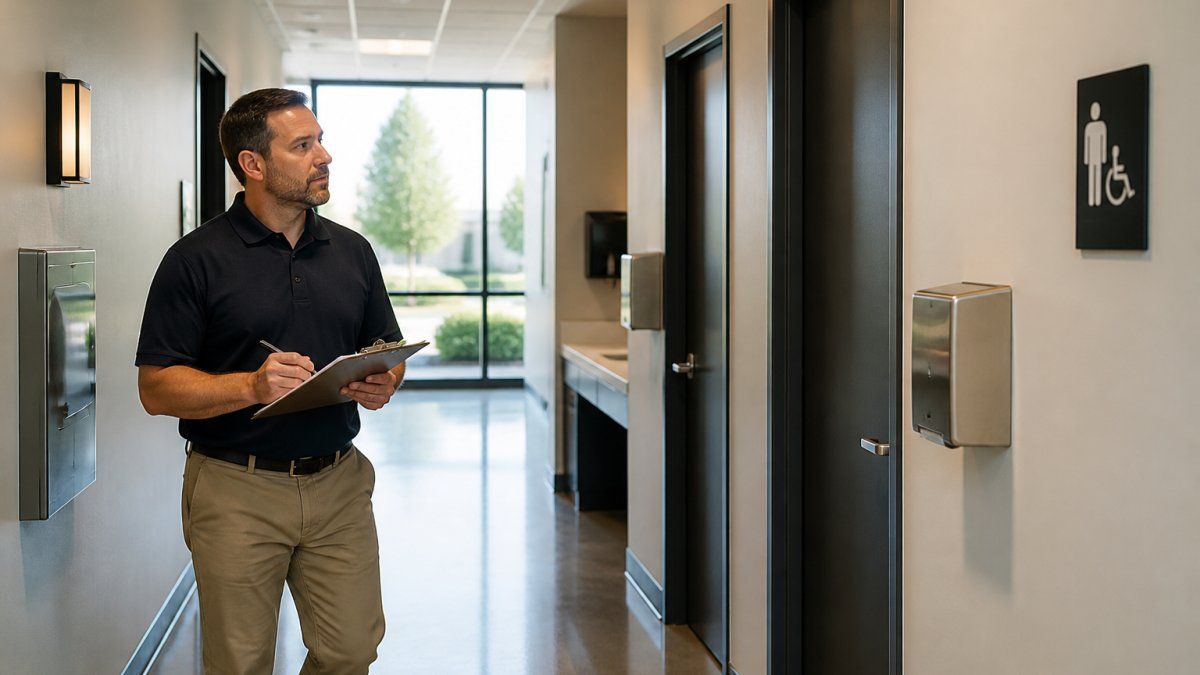
A commercial cleaning scope of work checklist lists every area of your building and what "clean" means in each one. Start with a walkthrough. Write down what you see, room by room.
Do not rely on a generic template alone. Every building is different. A dental office has treatment rooms and sterilization areas. A school has cafeterias and gyms. A bank branch has lobbies and teller lines.
What to List for Each Area of Your Building
- Restrooms: fixtures, mirrors, partitions, floors, restocking
- Offices and cubicles: desks, floors, trash, high-touch points
- Lobbies and entrances: glass, mats, hard floors, seating
- Break rooms: counters, sinks, appliances, tables
- Medical or clinical areas: exam rooms, waiting rooms, high-touch surfaces
- Hallways and stairwells: floors, rails, corners, light switches
- Exterior entries: walkways, entry glass, trash areas
Access, Security, and Operating Hours
Access rules belong in the checklist. Note who opens the building, when staff may enter, and how alarms are handled. List any rooms that stay locked. Add your operating hours so the schedule fits around patients, students, or customers.
Include a contact list for after-hours issues. This one page prevents most day-one confusion.
Build a Commercial Cleaning Frequency Schedule
A commercial cleaning frequency schedule sets how often each task happens: nightly, weekly, monthly, or quarterly. Frequency drives cost more than any other line item. Match it to real traffic, not habit.
- Nightly: restrooms, trash, floors in high-traffic areas
- Weekly: detailed dusting, glass, break room deep clean
- Monthly: vents, baseboards, light fixtures, storage areas
- Quarterly: floor care, deep carpet work, window cleaning
Use a Commercial Cleaning Vendor Evaluation Checklist
A commercial cleaning vendor evaluation checklist is how you compare providers on the same terms. Ask every vendor the same questions. Score the answers side by side. This keeps the decision about service, not sales pitches.
Before you send a request for proposal, write down what your facility actually needs. Facility size, operating hours, access rules, and floor types should all be in the document.
Insurance, References, and Quality-Control Questions
- Are you insured, and can you provide a certificate of insurance naming your facility?
- What general liability and workers' compensation limits do you carry?
- Can you share references from similar facilities, same building type, similar square footage, similar hours?
- How do you inspect completed work, and how often?
- Who is our main point of contact, and what is the escalation path?
- How do you handle a missed task or a complaint?
- Can you adjust the schedule for busy seasons?
Scope, Service Levels, and Performance Remedies
A written scope of work should state what is included, what is excluded, and how often each task happens. Pair it with a service-level agreement that defines measurable expectations. For example: restrooms serviced nightly, floors swept and damp-mopped in high-traffic areas, trash removed before opening. The SLA should also state what happens when a task is missed, a re-service window, a credit, or another remedy you both agree on.
Ask each vendor to confirm in writing:
- Tasks included and tasks excluded
- Frequency for each task
- Inspection routine and reporting format
- Term length, renewal terms, and cancellation notice
- Whether pricing is fixed or subject to adjustment, and on what basis
Contract Governance and Ongoing Oversight
Outsourcing does not end at signature. Assign one person on your side to own the relationship. That person reviews inspection reports, tracks complaints, and holds a short check-in with the vendor contact on a regular cadence.
Keep a simple log of issues and how fast they were resolved. Over a few months, that log tells you more about a vendor than any proposal.
| Checklist Area |
What to Confirm |
Why It Matters |
|---|---|---|
| Insurance |
Current certificate on file, limits stated |
Protects your facility and your organization |
| References |
Similar building types and hours |
Shows real experience, not just sales reach |
| Quality control |
Inspection routine and reporting format |
Keeps standards steady over time |
| Communication |
Named contact and escalation path |
Fixes issues before they grow |
| Scheduling |
Flexibility for your operating hours |
Fits your operations, not the vendor's route |
| Subcontractors |
Who they are and who manages them |
Keeps accountability clear |
| Contract terms |
Term, renewal, cancellation, remedies |
Prevents surprises at renewal |
Facility Size, Access, and Security Details to Confirm
Give every vendor the same building facts so their proposals are comparable. Include total square footage, number of restrooms, number of entrances, floor types by area, and any rooms that stay locked.
If your facility handles sensitive information or restricted areas, a bank branch, a medical or dental office, a school office, say so up front. Ask how the vendor assigns staff to those areas and how access is tracked.
Plan a Commercial Floor Maintenance Program
A commercial floor maintenance program maps out care for every floor type in your building across a full year. Floors take the hardest wear of any surface. They also show dirt first.
Most facilities run a mix of floor types. Walk the building and note what is where: entryways, corridors, restrooms, break rooms, offices, clinical areas, gyms, cafeterias. Then match the method to the material.
Match the Method to the Floor Type
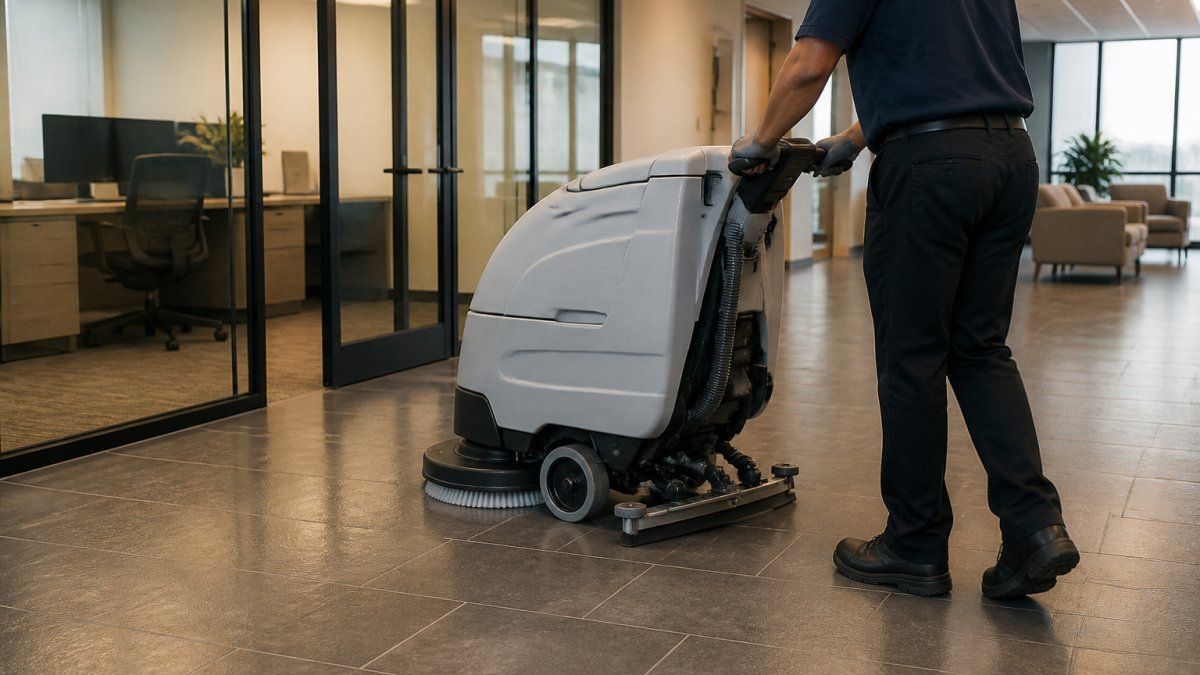
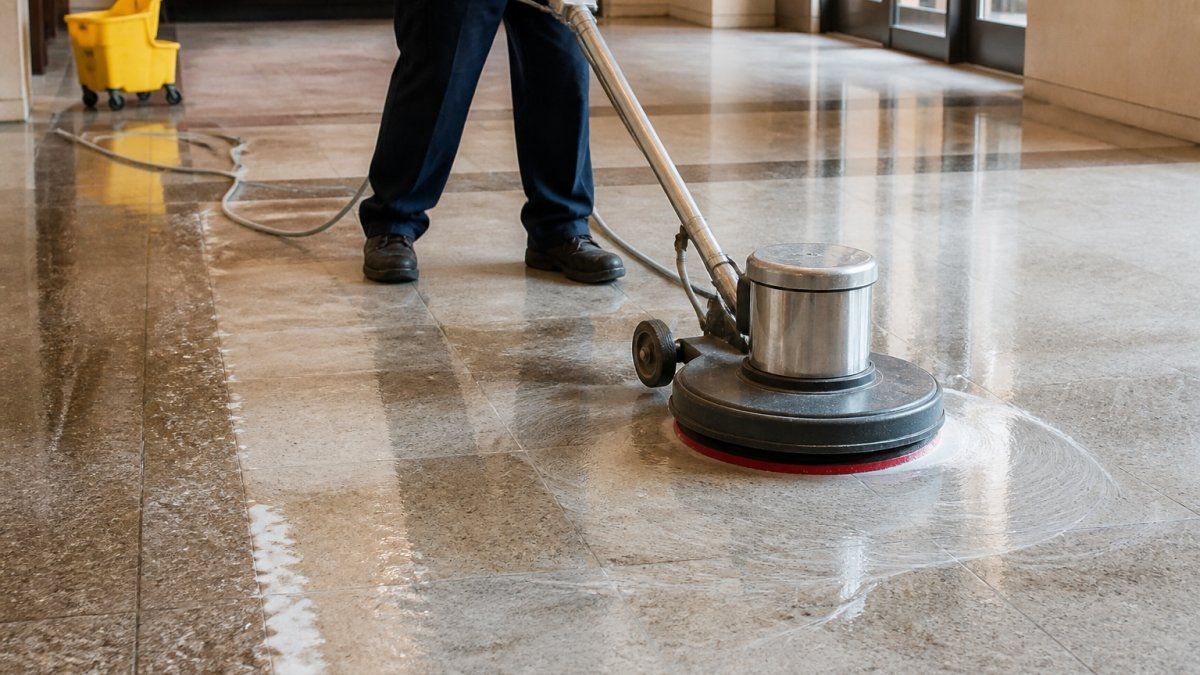
- VCT: stripping and waxing to reset the finish, scrub-and-recoat to refresh between full cycles, and burnishing to bring up gloss without adding finish
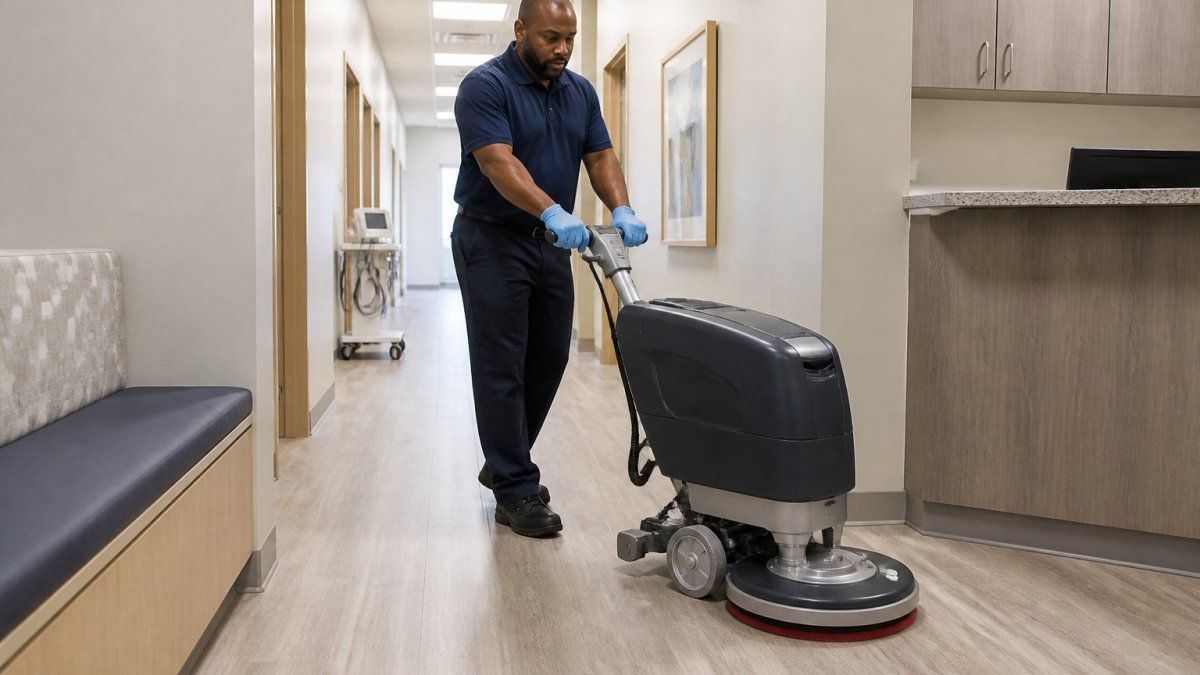
- LVT and LVP: routine cleaning with products made for wear layers, plus attention to seams and edges where soil collects
- Carpet: low-moisture encapsulation for fast dry times in occupied spaces, plus periodic deep cleaning on a schedule tied to traffic
- Tile and grout: scheduled deep cleaning to lift soil from grout lines before it sets
- Concrete: cleaning and sealing to control dust and staining
Ask each vendor how they handle specialty floor care. Some crews clean floors. Others restore them. Know which one you are hiring.
Build a Scheduled Floor-Maintenance Calendar
A floor program works best when it is tied to a calendar, not to a complaint. A common pattern looks like this:
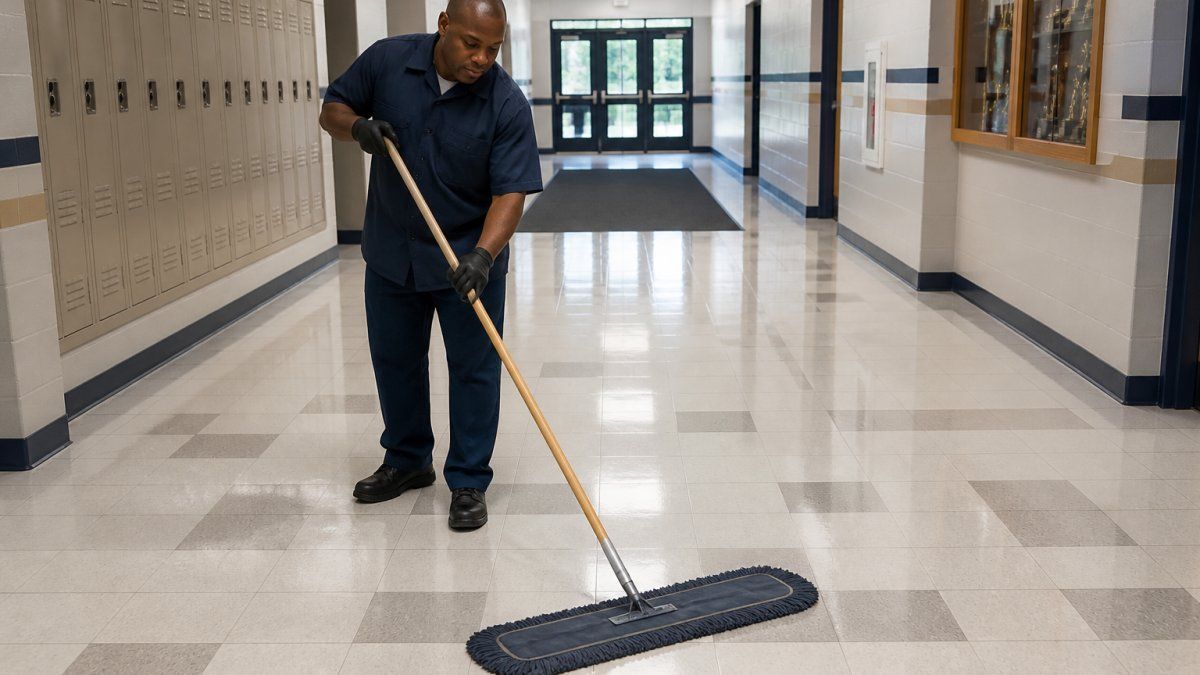
- Weekly or biweekly: dust-mop and damp-mop hard floors in high-traffic areas; vacuum carpeted entries and corridors
- Monthly: burnish finished hard floors where traffic is heaviest; spot-treat carpeted areas
- Quarterly: scrub-and-recoat VCT in main corridors; deep-clean tile and grout in restrooms and break rooms
- Annually: strip and wax VCT on a full cycle; schedule commercial low moisture carpet cleaning across the building in phases so occupied areas are not all disrupted at once
Adjust the calendar to your building. A school gym and a bank lobby wear differently even if they are the same square footage. Traffic, moisture, and entryway soil load all shift the schedule.
How Floor Care Fits Into Your Outsourcing Decision
Floor care is often the line item that decides whether outsourcing makes sense. Routine cleaning is predictable. Floor restoration is cyclical and skill-dependent.
A few questions to ask:
- Which floor-care methods are included in the base scope, and which are billed separately?
- How do you decide when a floor needs scrub-and-recoat versus a full strip and wax?
- What equipment do you use for burnishing, encapsulation, and tile and grout work?
- How do you protect adjacent areas during floor work?
- What is your process for drying time and re-opening a space?
If a vendor cannot explain the difference between these methods, that is a signal. Floor care is where shortcuts show up first, and where a poorly planned program costs more over a year than a well-planned one.
Total Cost of Floor Care Over a Full Cycle
Floor care is not a one-time purchase. It is a cycle. A VCT floor that is stripped and waxed on schedule usually needs less frequent full cycles than one that is neglected and then restored under pressure. Carpet that is cleaned on a traffic-based schedule tends to last longer than carpet cleaned only after it looks bad.
When you compare in-house versus outsourced floor care, look at the full cycle, not the single visit. Include:
- Labor and supervision for routine and periodic tasks
- Equipment and chemical costs
- Disruption to your operations during floor work
- The cost of premature replacement if floors are not maintained
A written program with dates and methods makes this comparison possible. Without it, you are guessing.
Put Your Facility Management Outsourcing Checklist Into Action
Turning the checklist into a contract takes one more pass. Review the scope, frequency, and floor plan together. Then set a start date and a walkthrough.
- Finalize the scope of work and service-level agreement
- Confirm insurance and references in writing
- Set the start date and a transition plan
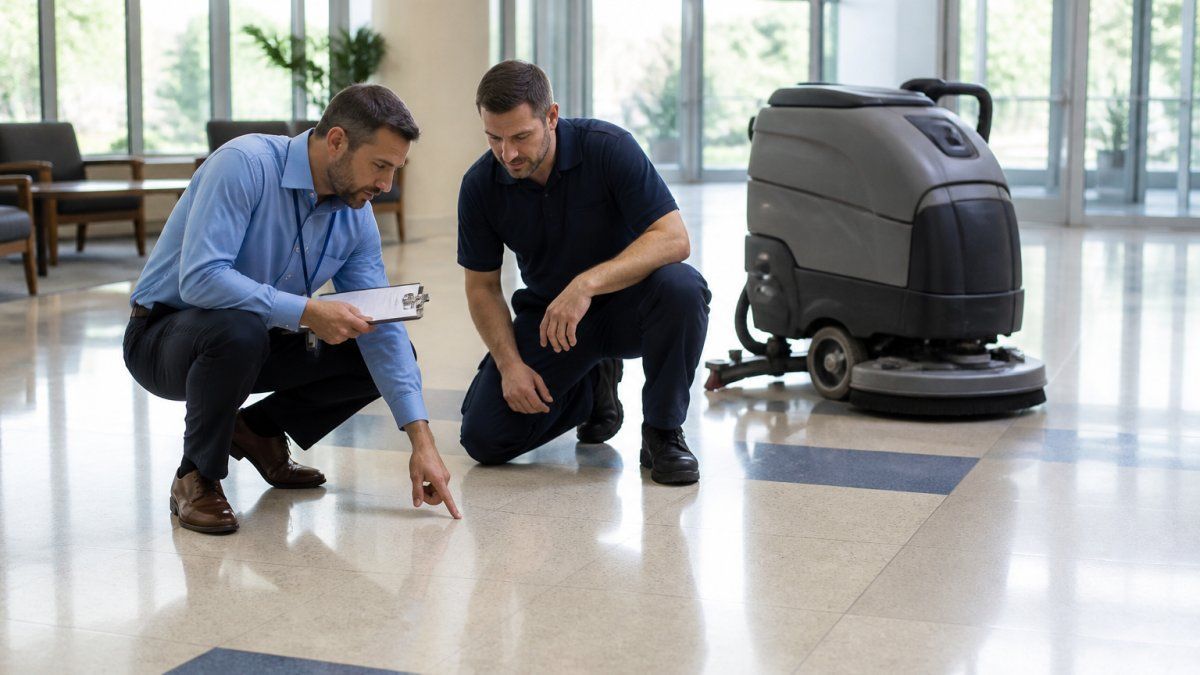
- Schedule a kickoff walkthrough with the crew
- Review performance at 30 and 90 days
Conclusion: A Checklist You Can Reuse Every Contract Cycle
The hard part is not writing the checklist. It is finding a provider who follows it. A Smarter Clean LLC is a professional commercial janitorial and floor-care partner serving Delaware and Maryland's Eastern Shore. We offer flexible nightly, weekly, or monthly programs, specialized floor restoration and maintenance, and responsive communication. Request a walkthrough and a customized cleaning proposal, and we will build the scope around your building.
Frequently Asked Questions
What should a commercial cleaning scope of work include?
A scope of work should list every area of your building, the tasks required in each one, and how often they need to happen. Include restrooms, lobbies, break rooms, offices, hallways, and floor surfaces. Spell out access instructions, security procedures, and operating hours. Note any specialty needs like VCT stripping and waxing, LVT/LVP maintenance, or tile and grout cleaning. The more specific your scope, the easier it is to compare proposals and hold a provider accountable.
How do you decide how often a commercial facility should be cleaned?
Cleaning frequency depends on foot traffic, facility type, and operating hours. A medical or dental office typically needs daily attention, while a small office might do well with three visits per week. Schools, churches, and banks each have their own patterns. Build your commercial cleaning frequency schedule around peak usage times and high-touch surfaces. Walk your building at different times of day to see where soil builds up fastest, then set frequencies that match what you actually see.
What insurance should a commercial cleaning provider carry?
Ask for a certificate of insurance showing general liability coverage and workers' compensation. General liability protects your property if a crew member damages something. Workers' compensation covers injuries on your premises. Request these documents before signing a contract and verify they stay current. If a provider cannot produce a certificate, that is a red flag. Your facility management outsourcing checklist should include an insurance verification step so nothing slips through.
What should a scheduled floor-maintenance program include?
A commercial floor maintenance program should map out tasks by floor type. For VCT, that means stripping and waxing on a set cycle plus scrub-and-recoat and burnishing between full strip-outs. For LVT/LVP, plan regular cleaning and protective treatments. For carpet, schedule low-moisture encapsulation based on traffic. Tile and grout need periodic deep cleaning. Put every task on a calendar with dates and frequencies so you can track what was done and when.