


A red metal shed with a white door and window, set against a backdrop of green pine trees and a clear blue sky.

How Outsourcing Commercial Cleaning Helps Facility Managers Control Costs

Editorial Team • September 19, 2026

Table of Contents

Last Updated: September 19, 2026

The Real Cost Drivers Behind In-House Cleaning

Why facility management outsourcing saves money comes down to one hard truth: most in-house cleaning budgets hide costs that never show up on a single invoice. At A Smarter Clean, we see this constantly with medical offices, schools, and commercial buildings across Sussex and Kent Counties and Maryland's Eastern Shore. The payroll looks fixed. The supplies look minor. Then the real numbers surface.

  • Payroll taxes and benefits on every cleaning hire
  • Overtime and coverage when staff call out
  • Equipment repairs, replacements, and storage
  • Supply ordering, stocking, and waste
  • Manager time spent supervising and fixing problems

How Facility Management Outsourcing Saves Money on Labor and Operations

Facility management outsourcing saves money by converting unpredictable in-house costs into a fixed, predictable service fee. You stop paying for downtime, turnover, and idle equipment. You pay for completed work.

Turning Fixed Payroll Into Predictable Operational Expenditure

In-house cleaning turns labor into a fixed cost you carry whether the work happens or not. You pay for a full shift even on a light day. When someone quits, you pay twice: once for the vacancy, once for the hiring and training that follows.

Here's how the four cost categories typically shift:

Cost Category

In-House Behavior

Outsourced Behavior

Direct wages

Fixed shift pay regardless of workload

Billed against defined scope and frequency

Payroll burden

Taxes, benefits, workers' comp on your books

Carried by the provider

Coverage gaps

You absorb overtime or do the work yourself

Provider staffs the gap per the agreement

Equipment and supplies

You buy, store, maintain, replace

Provider supplies and maintains

Management time

You supervise, schedule, troubleshoot

One point of contact handles it

  • No payroll taxes or benefits on cleaning staff
  • No overtime spikes from callouts
  • No recruiting or onboarding costs
  • One line item instead of many

Supply, Equipment, and Training Costs You Stop Carrying

A professional cleaning partner brings its own supplies, machines, and trained staff. You stop buying floor finish, pads, and chemicals. You stop storing equipment in a closet that could hold revenue-generating space.

Pro Tip
Ask any cleaning provider for their product safety documentation before you sign. A partner who uses OSHA-safe products should hand it over without hesitation. If they can't, that's your answer.

The Manager-Time Multiplier

The most overlooked savings category is supervisory time. Every hour a property or practice manager spends ordering supplies, chasing a callout, or inspecting a restroom is an hour not spent on leasing, patient flow, or tenant relations. For a small team, that time is the scarcest resource in the building. Outsourcing doesn't just remove the task, it removes the coordination overhead around the task.

Commercial Janitorial Services Benefits for Property and Practice Managers

The commercial janitorial services benefits go beyond a cleaner building. They show up in your calendar. Property and practice managers spend hours each week chasing callouts, ordering supplies, and fielding complaints. Outsourcing returns that time.

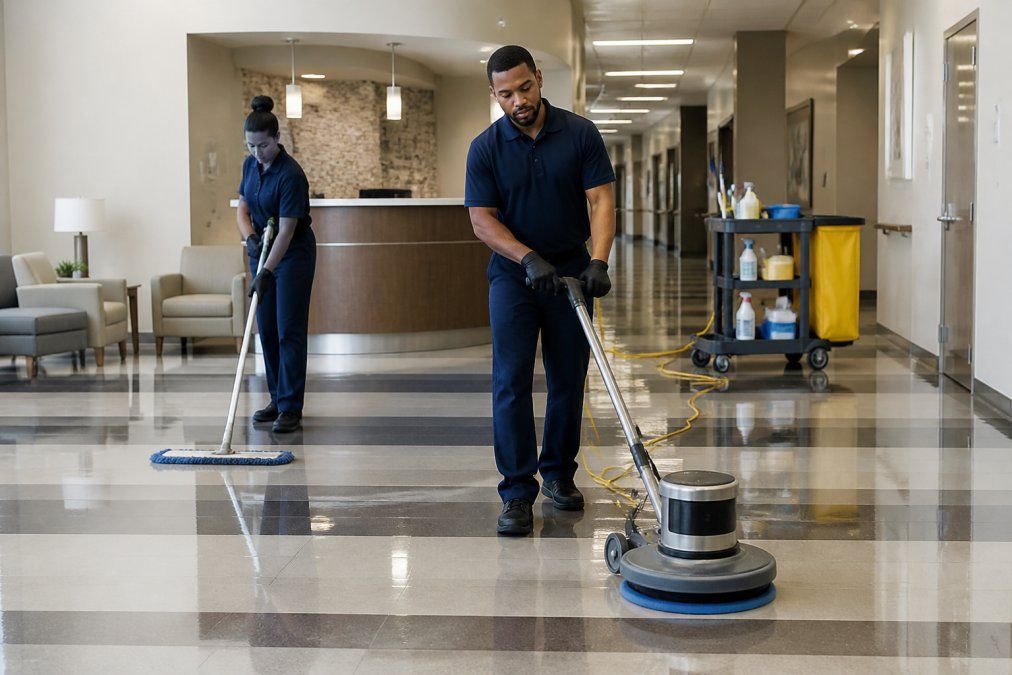
Commercial cleaning crew burnishing a medical office floor as part of facility management outsourcing services.

  • Fewer complaints from tenants, patients, and staff
  • Consistent results with a set schedule
  • One point of contact for issues
  • Documented, background-checked staff

Outsourcing vs In-House Cleaning: A Side-by-Side Look

The outsourcing vs in-house cleaning choice comes down to control, cost, and consistency. Each approach has real trade-offs. Here's how they compare.

Factor

In-House Cleaning

Outsourced Cleaning

Cost type

Fixed payroll + benefits

Predictable service fee

Coverage gaps

You fill them yourself

Provider covers them

Equipment

You buy and maintain

Provider supplies

Training

You handle it

Provider handles it

Scheduling

Limited to your staff

Flexible nightly, weekly, monthly

Manager time

High

Low

Floor care expertise

Rarely in-house

Specialized

Watch Out
The most common mistake is choosing a provider on price alone. A low bid often means thin staffing and skipped tasks. You end up paying twice: once for the service, once to fix what they missed.

VCT Floor Maintenance Best Practices That Protect Your Budget

VCT floor maintenance best practices protect the single most expensive surface in your building. Vinyl composition tile is durable, but it fails without a real program. Neglect it and you face full replacement instead of routine care.

A sound VCT program follows a cycle:

  1. Daily: Dust mop and damp mop to remove grit.
  2. Weekly: Auto-scrub to lift embedded soil.
  3. Monthly: Burnish to restore shine and extend finish life.
  4. Periodically: Scrub and recoat to rebuild the finish.
  5. As needed: Strip and wax to reset the floor.

Key Takeaway
The cheapest floor program is the one that prevents premature replacement. Routine scrub and recoat costs far less than tearing out and replacing a floor.

Hidden Costs of Outsourcing and How to Avoid Them

Outsourcing isn't automatically cheaper. The hidden costs of outsourcing are real, and they sink budgets when contracts are vague. The fix is to define scope before you sign.

Watch for these traps:

  • Vague scope: "General cleaning" means different things to different people. List every task.
  • Change-order creep: Extra charges for work you assumed was included. Get it in writing.
  • Weak service level agreements: No clear standards means no way to hold anyone accountable.
  • Slow communication: A provider who won't answer during business hours can't handle a spill.
  • Turnover: Constant staff changes hurt consistency. Ask how they retain workers.

Pro Tip
Build a simple scorecard. Rate each area monthly on a 1-5 scale. Share it with your provider. Most issues get fixed before they become complaints.

Making the Transition: Change Management and Local Partner Selection

Most articles about outsourcing stop at the benefits and never explain how to actually switch. That's the part that trips up facility and property managers, and it's where a good decision turns into a bad experience. A smooth transition depends on planning, not luck. Change management is the part most companies skip, and it's where clean switches go wrong.

A Practical Transition Timeline

A typical switch from in-house to an outsourced commercial cleaning partner follows a predictable arc. Exact timing varies by building size and scope, but the sequence holds:

  1. Weeks 1-2, Walkthrough and scope. Walk the building with your provider and note every surface, room, and problem area. This becomes your written scope. Include floor types (VCT, LVT, carpet, tile and grout), restroom counts, and any areas with special requirements.
  2. Weeks 2-3, Schedule and standards. Nightly, weekly, or monthly programs should match your building's traffic and use. Define what "clean" means for each area so there's no ambiguity later.
  3. Week 3, Communication plan. Who do you call for a spill at 2 p.m.? How fast should they respond? Name a primary contact on both sides.
  4. Week 4, First service and shadow period. Many providers run an initial deep clean or floor restoration before recurring service begins. This is the time to correct course on details.
  5. Month 2, First formal review. Review the first month closely. Early feedback prevents small problems from hardening into habits.

What to Put in Writing Before Day One

A transition goes sideways when expectations live only in conversation. Before service starts, confirm:

  • A task list by area and frequency
  • Response time for spills, complaints, and emergencies
  • Who supplies consumables like paper products and soap, and who supplies equipment
  • How callouts and holiday coverage are handled
  • The process for adding or removing tasks without a contract dispute

Communicating the Change to Tenants and Staff

If you manage a multi-tenant property or a medical office, your tenants and staff will notice the switch. A short heads-up, who the new crew is, when they'll be in the building, and how to report an issue, prevents confusion and false complaints. In medical and dental settings, coordinate access and after-hours timing so cleaning doesn't interfere with patient care.

Questions to Ask a Local Partner

When you pick a local partner, ask direct questions:

  • Can you show proof your products are OSHA-safe?
  • How do you handle callouts and turnover?
  • What's your process for floor restoration, including scrub and recoat and burnishing?
  • How quickly do you respond during business hours?
  • Do you work with offices our size?
  • Can you provide references from similar buildings?

A specialized commercial cleaning and floor-care partner will answer these without hesitation.

Measuring the Transition

You don't need a complex scorecard to know whether the switch worked. Track a few signals: complaint volume, how often you're pulled into a cleaning issue, and whether floors are holding their finish between scheduled services. If those trend the right direction in the first 60 to 90 days, the transition is doing its job. If they don't, raise it at your review, a good partner wants that feedback early.

Frequently Asked Questions

Does outsourcing really save money compared to keeping cleaning in-house?

It often does, but the savings come from several places rather than one big discount. You stop paying wages, benefits, taxes, and workers' compensation for cleaning staff, and you stop buying supplies and equipment. Those fixed costs become a predictable monthly expense you can budget for. Facility management outsourcing also removes the management time spent scheduling, training, and covering callouts. The exact difference depends on your building size, cleaning frequency, and current wage rates, which is why a walkthrough and written estimate matter more than a general rule.

How does outsourcing janitorial services reduce internal labor costs?

When cleaning is in-house, your payroll includes more than hourly wages. It includes taxes, insurance, paid time off, training hours, and the cost of covering absences. A commercial janitorial partner absorbs those costs and manages staffing, so your budget shifts from variable payroll to a set service fee. Your own staff also stop losing time to cleaning tasks and can focus on patients, tenants, or students. For medical and dental offices, that reclaimed time often matters as much as the direct labor savings.

What are the downsides of outsourcing cleaning, and how do I avoid them?

The most common downside is a vague contract. If the scope, frequency, and tasks are not written clearly, you can end up paying for work that does not match your expectations. Another risk is poor communication during the transition. Avoid both by requesting a detailed scope of work, confirming who your point of contact is, and asking how the company handles spills or emergency calls during business hours. A written service agreement with clear response expectations protects your facility and keeps the relationship predictable.

What should facility managers look for in a local commercial cleaning partner?

Look for a company that works with facilities like yours, whether that is a dental practice, school, or commercial building. Ask about background-checked staff, OSHA-safe products, and how they handle floor care such as VCT stripping and waxing, LVT maintenance, and carpet cleaning. Confirm they offer flexible nightly, weekly, or monthly schedules and that they will do a walkthrough before quoting. A partner that explains its cleaning process and puts the scope in writing is easier to hold accountable than one that only promises low prices.

By Editorial Team September 17, 2026
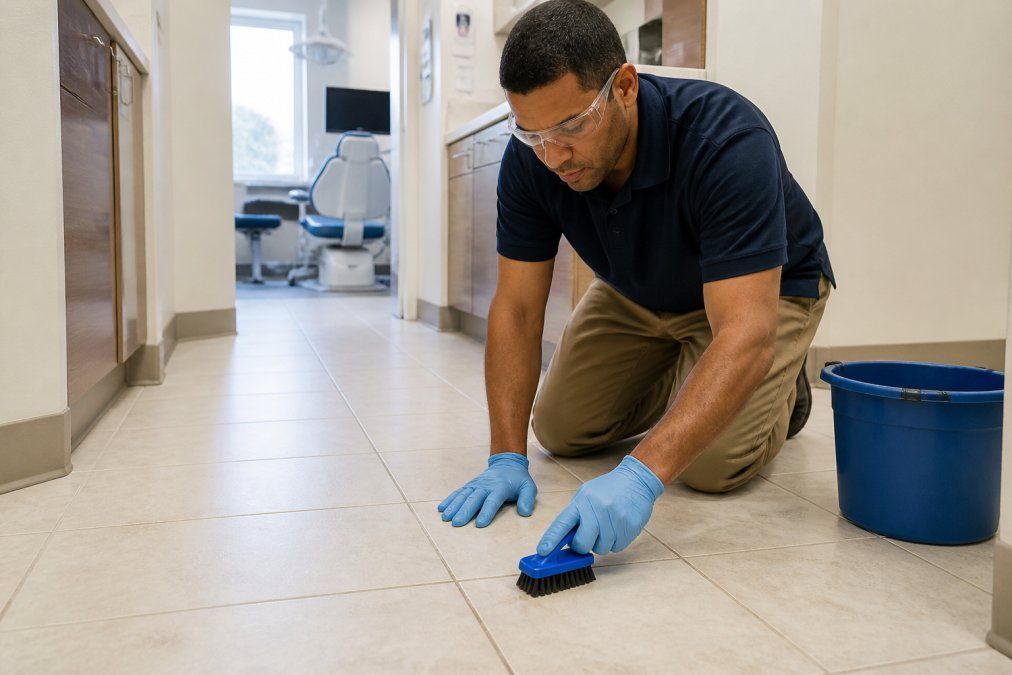
Learn how to remove stubborn stains from tile and grout safely, plus when to call commercial grout restoration services. Get a free estimate today.
By Editorial Team September 17, 2026
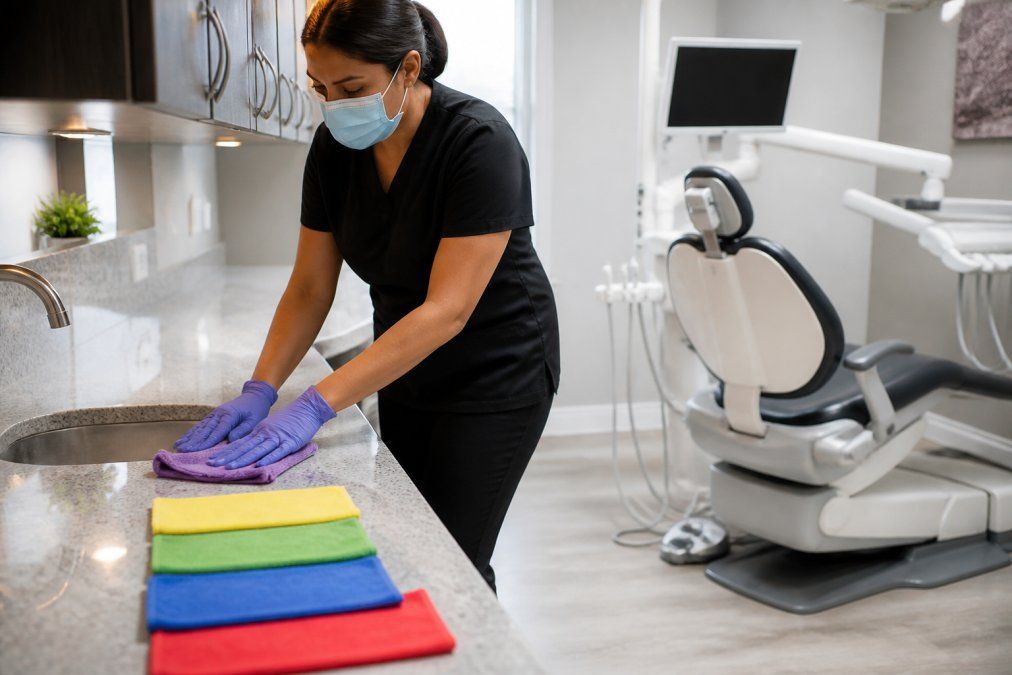
OSHA compliant cleaning for dental offices starts here. Learn the steps, standards, and staff training that protect your practice. Get a free walkthrough.
By Editorial Team September 13, 2026
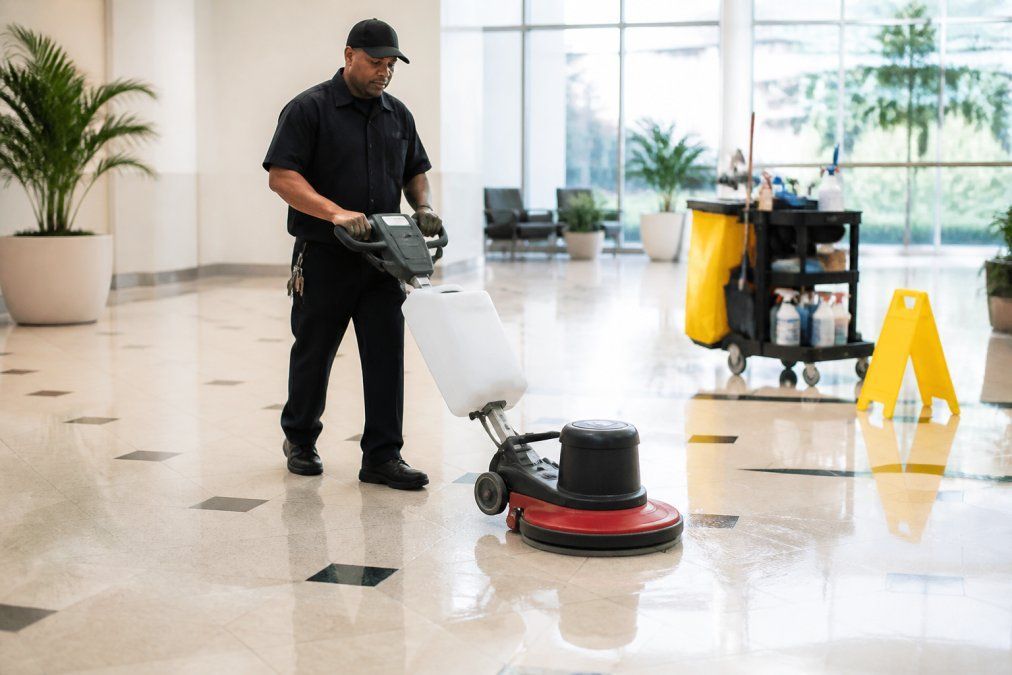
Choosing a commercial floor cleaning company? Learn costs, VCT maintenance, stripping and waxing, and schedules. Get a free floor care estimate today.
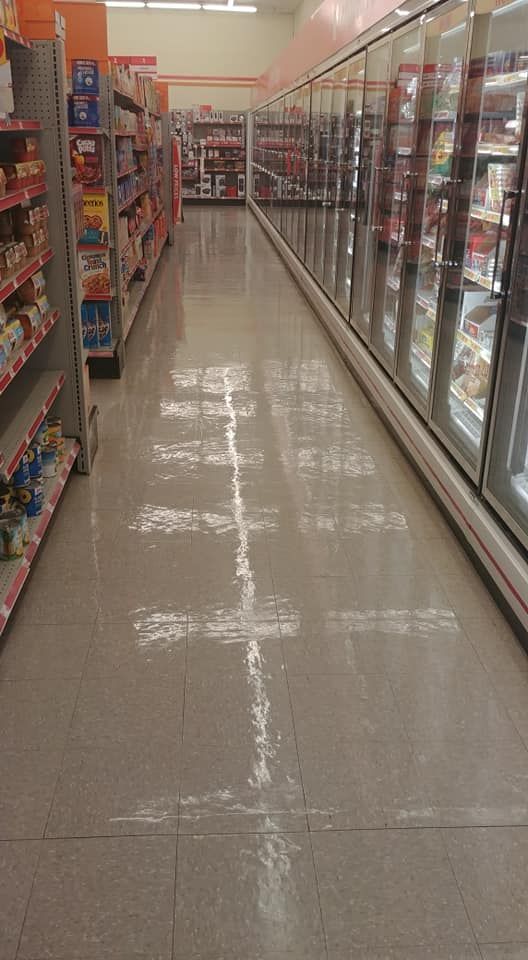
By Dawn Stewart September 9, 2026
Clean and Shiny Floors
By Dawn Stewart July 19, 2026
Dexter the Inspector Loves Shiny Floors!!!
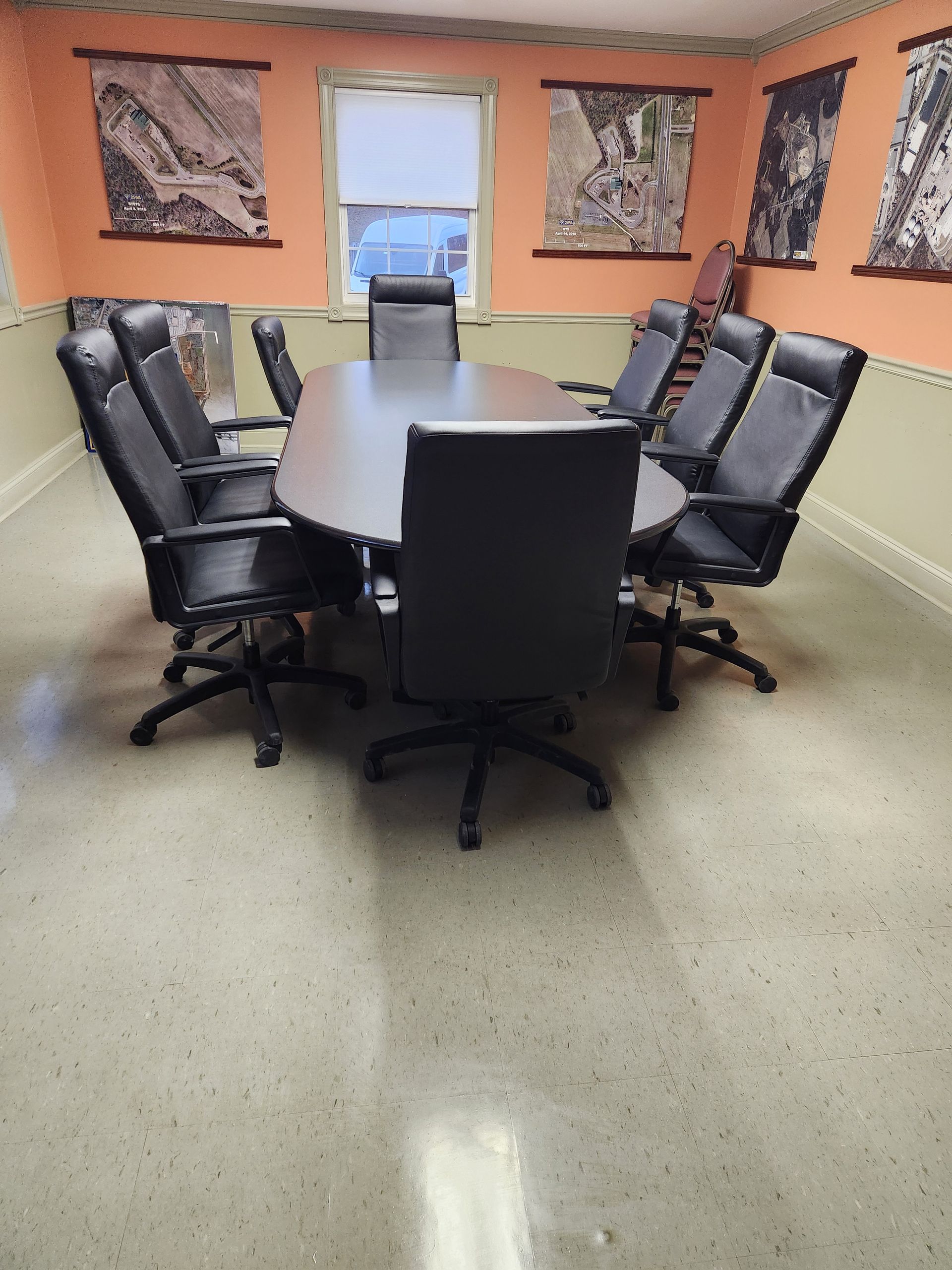
By Dawn Stewart July 8, 2026
Commercial Cleaning Sussex County DE | A Smarter Clean

By Dawn Stewart July 1, 2026
Commercial Terrazzo Floor Stripping and Waxing in Delaware
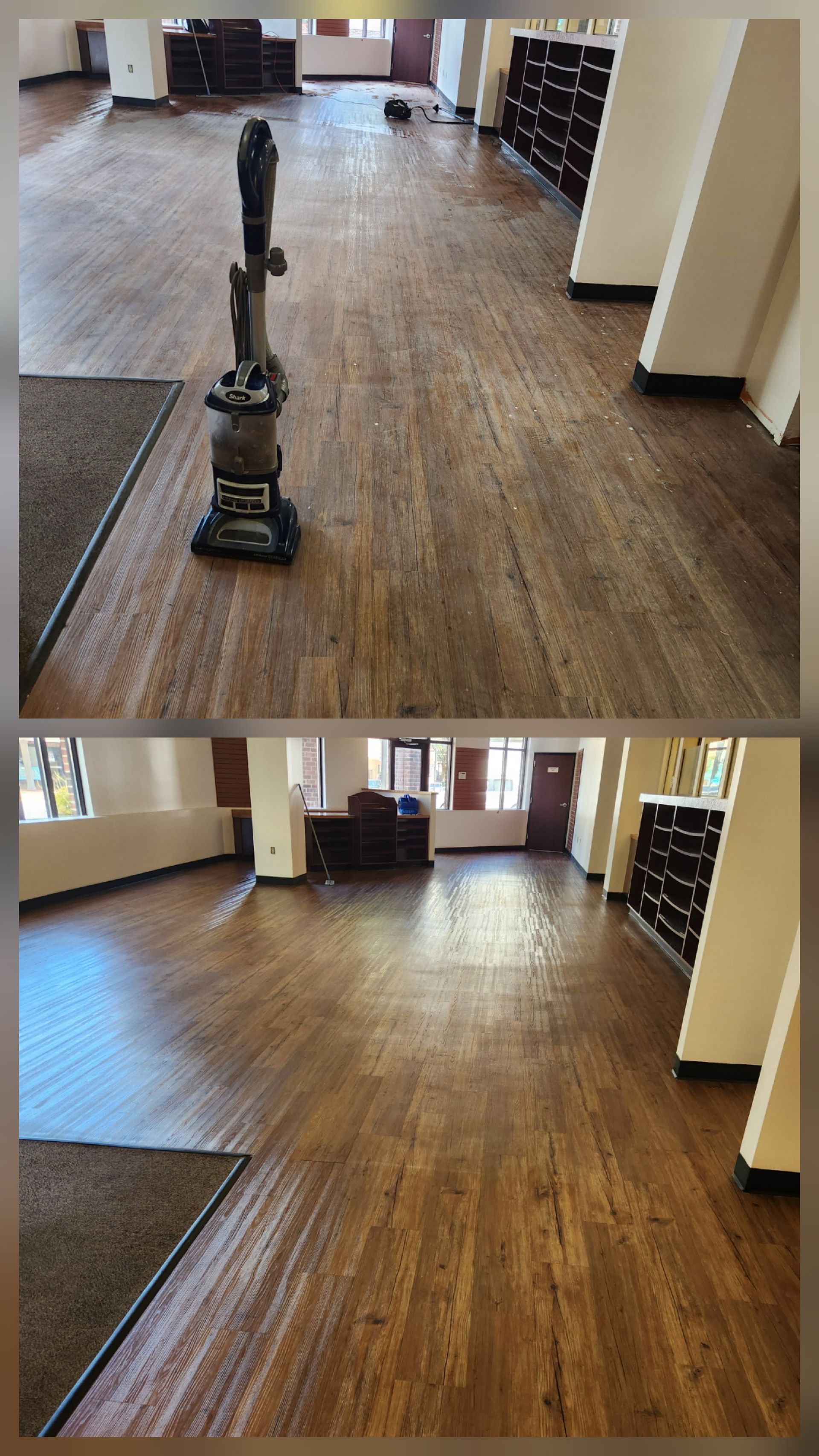
LVT floor cleaning in Dover, DE
By Dawn Stewart March 31, 2026
Find out why floors can still look dirty after cleaning and what to do about buildup, worn finish, residue, and improper maintenance methods.
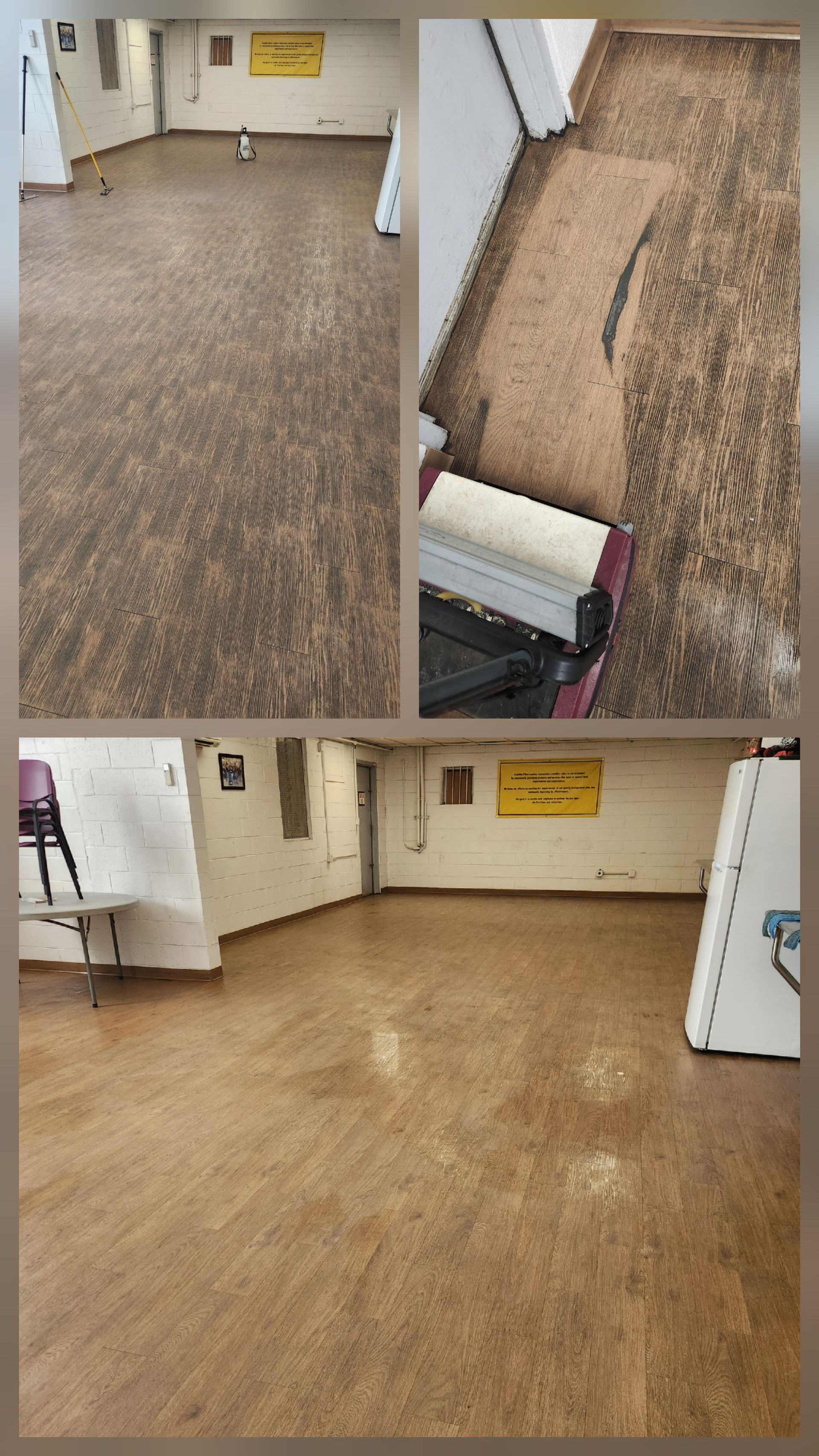
LVT floor cleaning in Wilmington, DE
By Dawn Stewart March 27, 2026
Learn how professional cleaning and maintenance help luxury vinyl tile floors stay clean, protected, and looking like new in Delaware facilities.
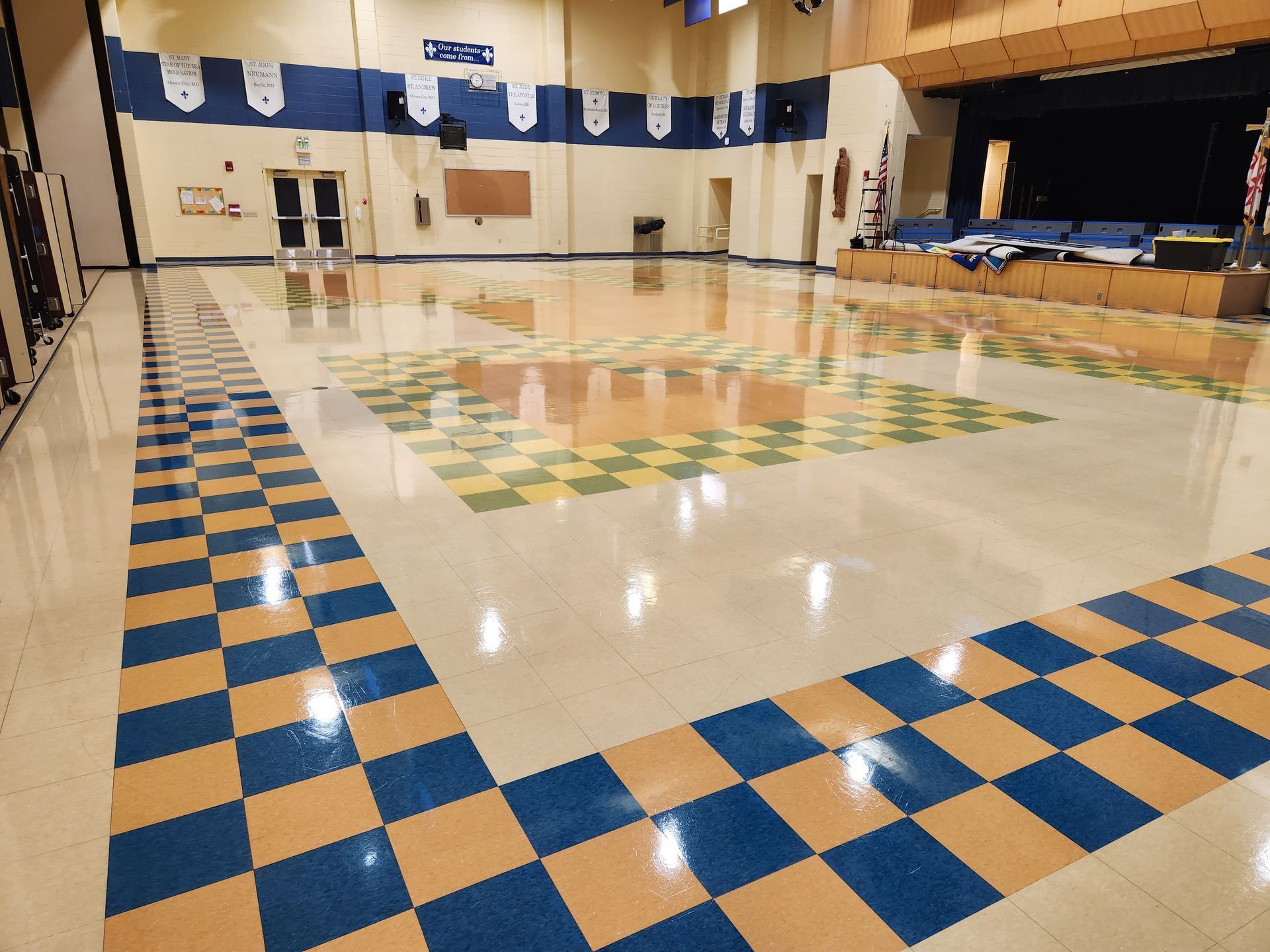
An empty gymnasium with a polished floor featuring blue and tan checkerboard borders and a central patterned square.
March 17, 2026
Learn practical VCT floor maintenance tips for facility managers, including cleaning, burnishing, recoating, and strip and wax planning.
Show More