

Commercial Cleaning for Dental Offices: OSHA & Infection-Control Considerations
Table of Contents
- What to Gather Before You Start: Prerequisites and Walkthrough Prep
- Step 1: Map Your Surfaces and Set the Cleaning Standard
- Step 2: Separate Janitorial vs Clinical Disinfection Duties
- Step 3: Verify Commercial Cleaning Bloodborne Pathogen Training
- Step 4: Build Cross-Contamination Prevention in Dental Offices Into the Schedule
- Step 5: Handle Regulated Waste, Laundry, and Floors Correctly
- Step 6: Know What to Do After an Exposure and Keep Equipment Maintained
- Common Mistakes to Avoid in OSHA Compliant Cleaning for Dental Offices
- Frequently Asked Questions
Last Updated: September 17, 2026
What to Gather Before You Start: Prerequisites and Walkthrough Prep
OSHA compliant cleaning for dental offices starts long before anyone picks up a spray bottle. It starts with documentation: your written exposure control plan, your current Safety Data Sheets binder, and a clear map of who cleans what.
- Your written exposure control plan, reviewed and dated
- A current SDS collection for every chemical used in the building
- A surface map separating clinical contact surfaces from housekeeping surfaces
- Your practice's infection-control procedures, so janitorial staff know where their work stops and clinical disinfection begins
Step 1: Map Your Surfaces and Set the Cleaning Standard
Surface mapping is the foundation of OSHA compliant cleaning for dental offices. It determines which surfaces get routine janitorial attention and which require clinical disinfection by trained dental staff.
Clinical Contact Surfaces vs. Housekeeping Surfaces
Clinical contact surfaces are surfaces touched during patient care that can be contaminated by blood or saliva. These include dental chair controls, light handles, bracket trays, drawer handles, and countertops in the operatory. These surfaces require clinical disinfection between patients, performed by dental staff, not janitorial crews.
High-Touch Points in the Waiting Room, Restrooms, and Staff Areas
Waiting room chairs, door handles, reception counters, restroom fixtures, and staff break room surfaces collect pathogens from dozens of people daily. These are housekeeping surfaces, but they need frequent attention. A common mistake is treating the waiting room like a lobby instead of a clinical environment.
Step 2: Separate Janitorial vs Clinical Disinfection Duties
The line between janitorial vs clinical disinfection is where most dental practices get into trouble. Janitorial work covers general cleaning: floors, trash, restrooms, waiting areas, and non-clinical surfaces. Clinical disinfection covers anything touched during patient care, and it belongs to trained dental staff.
OSHA Training for Dental Offices: Common Breaches
Dentlogics
Step 3: Verify Commercial Cleaning Bloodborne Pathogen Training
Commercial cleaning bloodborne pathogen training is not optional for staff who may contact blood or other potentially infectious materials. Under the OSHA Bloodborne Pathogens Standard, employers must provide training, PPE, and a written exposure control plan for at-risk workers.
The Bloodborne Pathogens Standard in Plain Terms
The OSHA Bloodborne Pathogens Standard, 29 CFR 1910.1030 requires employers to identify at-risk employees, provide hepatitis B vaccination at no cost, supply appropriate personal protective equipment, and train workers on exposure procedures. Cleaning staff who handle regulated waste or clean areas where blood may be present fall under this standard.
PPE and Safety Data Sheets for Cleaning Staff
Personal protective equipment for cleaning staff typically includes gloves, eye protection, and, where splashing is possible, gowns or aprons. Safety Data Sheets must be accessible for every chemical on site. Under the OSHA Hazard Communication Standard, employers must maintain SDS access and train workers on the hazards of the chemicals they use.
Step 4: Build Cross-Contamination Prevention in Dental Offices Into the Schedule
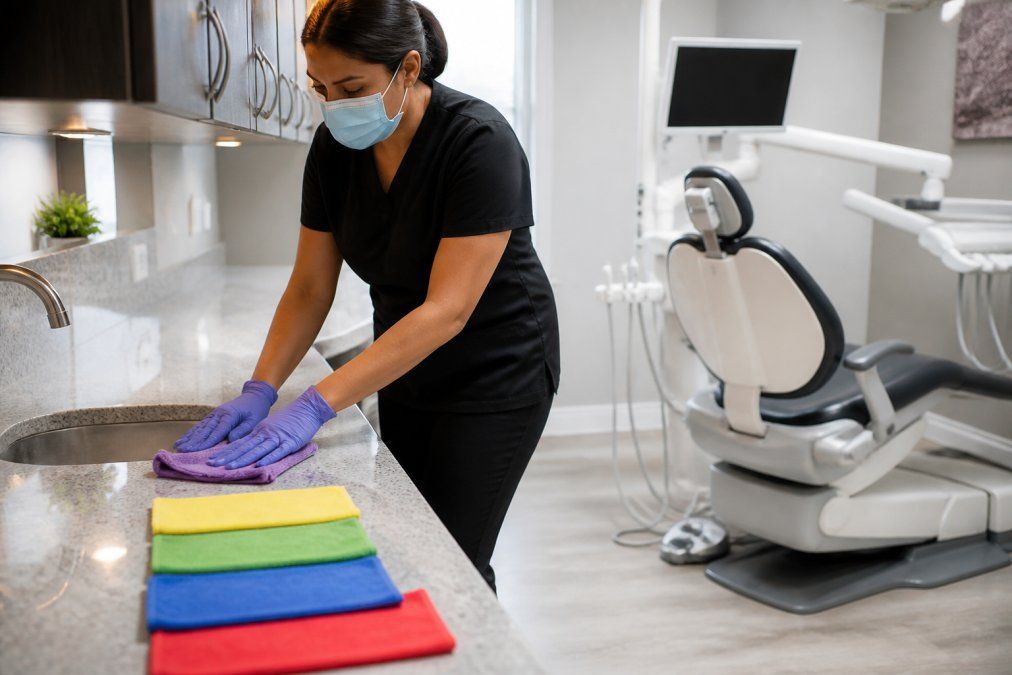
Cross-contamination prevention in dental offices comes down to sequence and tools. Clean high-touch, low-risk areas before clinical areas. Never move a cloth from a restroom to an operatory. Use color-coded microfiber so a cloth assigned to one zone never migrates to another.
| Zone |
Cleaning Frequency |
Assigned Tool |
|---|---|---|
| Waiting room and reception |
Daily, multiple touchpoints |
Color-coded microfiber, EPA-registered disinfectant |
| Restrooms |
Daily, restocked each visit |
Dedicated restroom tools, never shared |
| Operatories (housekeeping surfaces only) |
Daily after clinical disinfection |
Separate microfiber, no cross-zone use |
| Staff areas and break rooms |
Daily |
Dedicated cloths, food-safe surfaces |
Step 5: Handle Regulated Waste, Laundry, and Floors Correctly
Regulated waste, laundry, and floors each carry specific handling requirements that a general office cleaning program won't cover. The OSHA Bloodborne Pathogens Standard, 29 CFR 1910.1030, sets the framework, and your exposure control plan should spell out how each category is handled in your building.
Regulated Waste and Sharps Containers
Regulated waste includes liquid or semi-liquid blood or other potentially infectious materials (OPIM), items contaminated with blood or OPIM that would release them if compressed, contaminated sharps, and pathological or microbiological waste. In a dental office, the most common regulated waste streams are used sharps, blood-soaked gauze, and disposable items saturated with blood or saliva.
Laundry, Textiles, and Floor Care Requirements
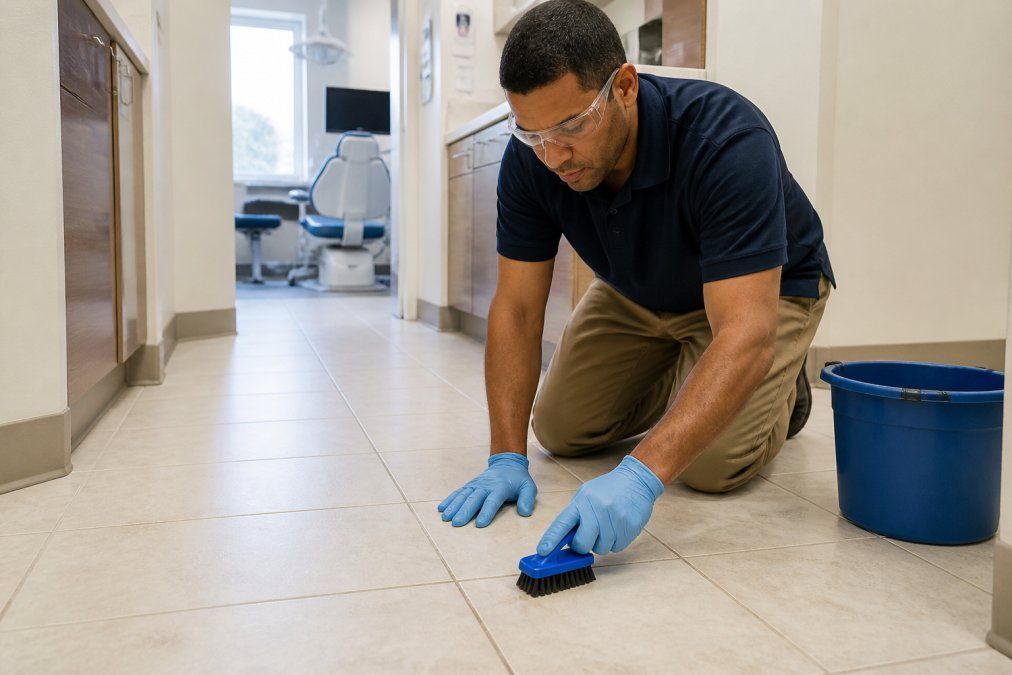
Contaminated laundry must be bagged at the point of use, handled as little as possible, and never sorted or rinsed in the cleaning area. If a practice uses reusable gowns, scrubs, or operatory linens, those items should be placed in a designated bag or container that prevents soak-through. Cleaning staff who handle contaminated laundry should wear gloves and, where splashing is possible, a gown and eye protection.
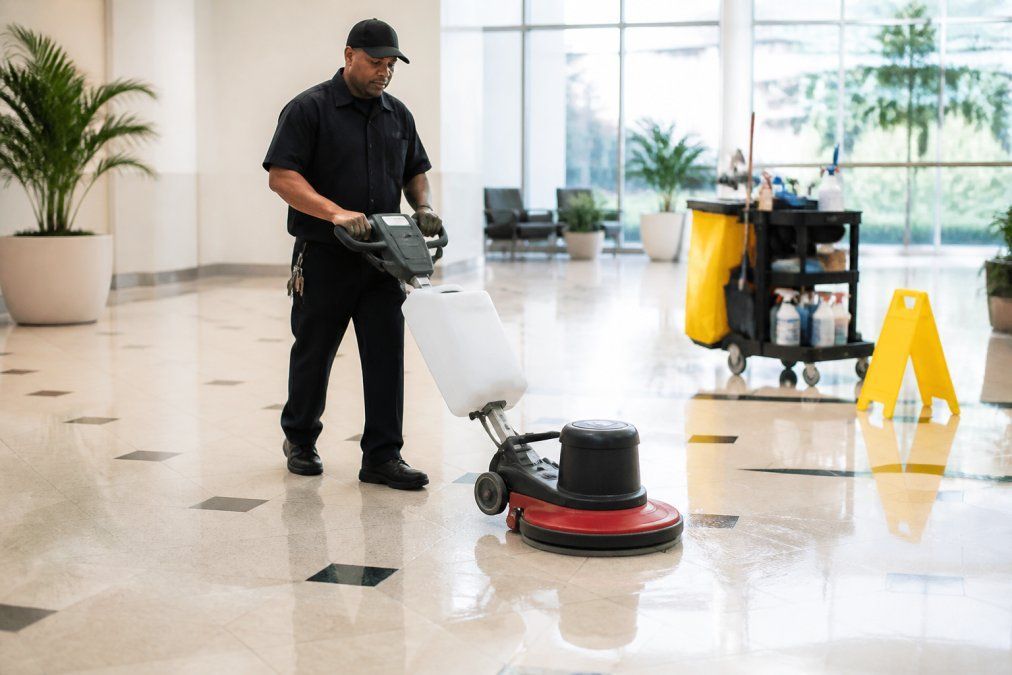
- Sweep or dust-mop hard floors in non-clinical areas first
- Clean restroom floors with dedicated tools that never leave the restroom
- Clean operatory floors last, with a separate mop head and bucket
- Allow floors to dry before patient traffic resumes
- Log mop head changes and equipment cleaning in a maintenance record
Step 6: Know What to Do After an Exposure and Keep Equipment Maintained
Post-exposure response and equipment maintenance are the two areas competitors skip, and both matter for inspection readiness. Most guides stop at "wear PPE" and never explain what happens when PPE fails or when the tools themselves become a contamination source.
Post-Exposure Incident Response for Cleaning Staff
An exposure incident is a specific event: a needlestick, a cut from a contaminated sharp, or a splash of blood or OPIM onto mucous membranes, broken skin, or non-intact skin. Under the Bloodborne Pathogens Standard, the employer must make immediate post-exposure evaluation and follow-up available at no cost to the worker, and the evaluation must be performed by a licensed healthcare professional.
- Wash immediately. For a percutaneous injury, wash the area with soap and water. For a splash to the eyes, nose, or mouth, flush with water or saline for several minutes. Do not squeeze or scrub a puncture wound.
- Report the incident. The worker notifies the practice manager or designated infection-control coordinator right away. Time matters for source-patient testing and for the worker's own medical evaluation.
- Document the exposure. The employer records the route of exposure, the circumstances, the source individual's status if known, and the worker's hepatitis B vaccination status. This record stays confidential and separate from the personnel file.
- Arrange medical evaluation. The worker is offered evaluation and follow-up, including testing and any indicated prophylaxis, at no cost. If the worker declines, the employer documents the offer and the declination.
- Review the plan. The practice reviews whether the exposure control plan needs updating, for example, if the incident revealed a gap in PPE availability or a training shortfall.
Cleaning Equipment Maintenance as a Cross-Contamination Control
Equipment maintenance is quieter but just as important. Mop heads, buckets, microfiber cloths, and vacuum filters accumulate pathogens, and a dirty tool can undo a clean room in seconds.
- Microfiber cloths: Launder after each use with detergent and dry on high heat. Color-coded cloths stay in their assigned zone. Replace when frayed or when they no longer hold a fold.
- Mop heads: Launder or replace on a documented schedule, daily for restroom and operatory mops, weekly for general-area mops. Never let a mop head dry in a bucket.
- Buckets and wringers: Empty, rinse, and dry between uses. Dedicate one bucket to restrooms and one to clinical-adjacent areas.
- Vacuums: Check and replace filters per the manufacturer's recommendation. Empty canisters outdoors or in a utility area, not in a patient-care space. HEPA filtration is preferred where fine dust or debris is a concern.
- Spray bottles and dispensers: Label every secondary container with the product name and hazard information. Never decant a disinfectant into an unlabeled bottle.
Common Mistakes to Avoid in OSHA Compliant Cleaning for Dental Offices
The same errors show up again and again in OSHA compliant cleaning for dental offices. Avoiding them is simpler than fixing them.
- Treating the waiting room like a lobby rather than a clinical environment
- Letting janitorial staff disinfect clinical contact surfaces they aren't trained for
- Skipping SDS updates when a product changes
- Using one cloth across multiple zones
- Assuming a vendor's training records exist without asking
- Leaving equipment maintenance undocumented
Frequently Asked Questions
What are the OSHA guidelines for dental office cleaning?
OSHA does not publish a single dental cleaning checklist. Instead, dental offices fall under the Bloodborne Pathogens Standard (29 CFR 1910.1030) and the Hazard Communication Standard (29 CFR 1910.1200). In practice, that means your cleaning provider should follow your written exposure control plan, use PPE, treat regulated waste correctly, and keep safety data sheets on hand for every chemical brought into the office. Clinical disinfection and sterilization stay with trained dental staff, not the janitorial crew.
How do you distinguish between janitorial cleaning and clinical disinfection?
Janitorial cleaning covers non-clinical areas: waiting rooms, restrooms, hallways, staff break rooms, and floors. It removes visible soil and surface debris. Clinical disinfection covers items that touch patients or are contaminated during care, such as handpieces, suction lines, and operatory surfaces between patients. That work belongs to dental staff following the practice's infection control procedures. A commercial cleaning provider supports the non-clinical side only and should never be asked to sterilize instruments.
What training should a commercial cleaner have for dental environments?
Look for bloodborne pathogen awareness training that covers how to handle potentially infectious material, correct PPE use, hand hygiene, and what to do after an exposure incident. Cleaners should also know how to read safety data sheets, use disinfectants at the correct contact time, and follow color-coded cloth systems to avoid moving soil from restrooms into operatories. Ask any provider for proof of training before they start.
How can a cleaning service help prevent cross-contamination in a dental office?
Cross-contamination prevention in dental offices comes down to sequence and separation. Clean high-touch, low-risk areas first, then restrooms last. Use dedicated cloths and tools for each zone, change mop water often, and never reuse a cloth from a restroom in a treatment area. A written schedule that assigns specific tools to specific rooms, plus staff who understand why the order matters, does more to reduce risk than any single product.