


Best Practices for Maintaining High-Traffic VCT and LVT Floors
Table of Contents
- Why High-Traffic Office Floors Need a Real Maintenance Plan
- Routine Cleaning Steps That Protect Commercial Flooring
- Building a Commercial Floor Maintenance Schedule
- VCT Floor Maintenance: Scrubbing, Burnishing, and Recoating
- LVT Floor Cleaning: Why It Is Not VCT
- VCT Stripping and Waxing: When Full Finish Removal Makes Sense
- Spot Cleaning Spills, Stains, and Everyday Wear
- Common Mistakes That Shorten Floor Life
- Frequently Asked Questions
Last Updated: October 13, 2026
Why High-Traffic Office Floors Need a Real Maintenance Plan
Best practices for maintaining high traffic office floors start with one uncomfortable truth: most facilities are not cleaning their floors, they are only wiping the surface.
This guide from A Smarter Clean is for facility, property, and office managers, schools, churches, medical and dental offices, banks, and other commercial facilities across Delaware and Maryland's Eastern Shore, focusing on the two flooring types we see most: VCT and LVT/LVP.
High-traffic floors do not fail from heavy use. They fail when maintenance runs on a fixed calendar instead of a schedule built around actual traffic, floor condition, and facility use.
Routine Cleaning Steps That Protect Commercial Flooring
Routine cleaning removes dirt and debris before it spreads, protecting the finish everything else depends on.
Daily Sweeping, Dust Removal, and Damp Mopping
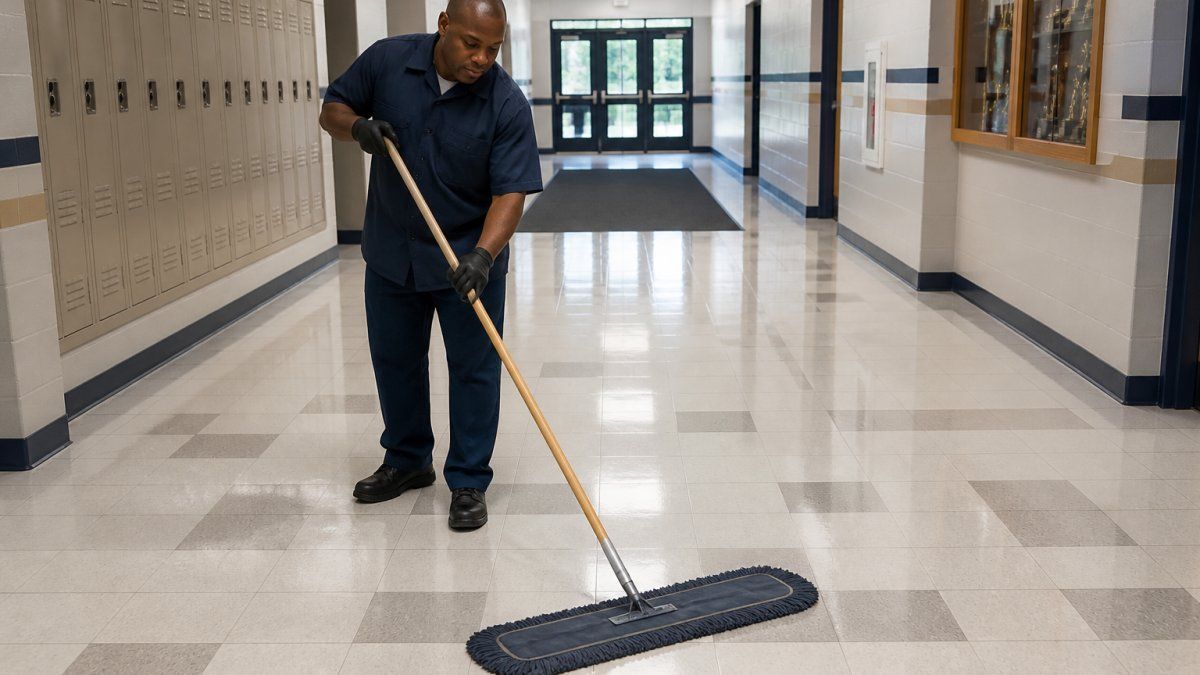
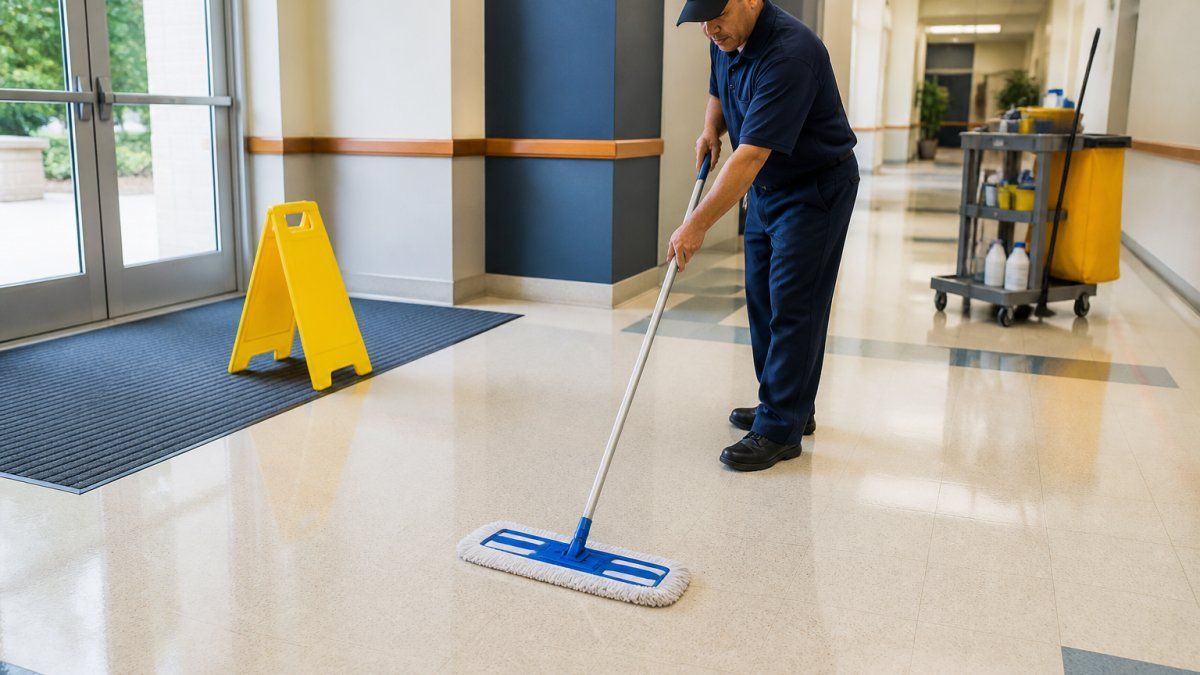
Daily sweeping or dust mopping comes first, lifting the dry soil that acts like sandpaper underfoot.
Damp mopping follows, using a neutral cleaner matched to the floor. "Damp" is the operative word: a soaking wet mop pushes water into seams, edges, and baseboards, where many hard-floor problems begin.
Skipping dust removal and going straight to a wet mop turns dry grit into a muddy film that dries into a dull haze.
Entrance Mats and Dirt-Control Systems
Entrance matting is the highest-return investment in any floor care program, because most tracked-in soil enters through the entryway.
A practical setup uses at least three zones: a scraper mat outside, an absorbent mat in the vestibule, and a secondary mat inside the door. Mats need regular vacuuming or shaking out, because a loaded mat stops capturing soil and starts releasing it.
Building a Commercial Floor Maintenance Schedule
A commercial floor maintenance schedule is a written plan that assigns each task a frequency based on traffic, facility use, and current floor condition, replacing guesswork with a repeatable routine your team or cleaning provider can follow.
Vinyl Floor Cleaning and Maintenance for Offices | Complete Commercial Floor Care Guide
Clean Group
Generic "sweep daily, mop weekly" advice is too blunt for a building with a mix of VCT and LVT/LVP, because the same task can protect one floor and damage the other.
Matching Frequency to Traffic, Facility Use, and Floor Condition
The right frequency is not the same for a bank lobby and a school hallway; traffic volume, traffic type, and finish condition all change the answer.
| Zone |
Typical Traffic |
Daily Tasks |
Periodic Tasks |
|---|---|---|---|
| Lobby and entryway |
Very high |
Dust mop, damp mop, mat care |
Machine scrub, burnish |
| Hallways and corridors |
High |
Dust mop, spot clean |
Scrub and recoat |
| Waiting areas |
Moderate to high |
Vacuum, damp mop |
Deep scrub |
| Offices and back areas |
Low |
Dust mop as needed |
Periodic scrub |
Facility use matters as much as foot count: a medical or dental office carries different soil and hygiene demands than a bank branch.
Floor condition should drive the schedule. If a floor looks dull two weeks after a recoat, the frequency is wrong.
Material-Specific Schedules: VCT vs. LVT/LVP
A single schedule for "hard floors" is the most common planning mistake. VCT and LVT/LVP need different tasks at different intervals.
VCT (vinyl composition tile with a finish layer)
- Daily: dust mop or microfiber flat mop; damp mop with a neutral cleaner; spot clean spills immediately.
- Weekly: machine scrub high-traffic lanes with a red or white pad and neutral cleaner; inspect finish for dulling.
- Monthly to quarterly: high-speed burnish where the finish responds; scrub and recoat when gloss fades between burnishes.
LVT/LVP (luxury vinyl tile or plank with a factory wear layer)
- Daily: dust mop or microfiber flat mop; damp mop with a neutral cleaner; blot spills immediately.
- Weekly: damp mop with fresh solution; inspect edges and seams for lifted material.
- Monthly: deep clean with a neutral cleaner and a soft pad; never use a stripping product unless the manufacturer or finish system specifically allows it.
A common pattern is applying a building's VCT schedule to its LVT/LVP because both look like vinyl. That is how wear layers get clouded and warranties get questioned.
Equipment and Product Compatibility
Matching the tool to the floor matters as much as matching the frequency.
- Dust mops and microfiber flat mops: safe on both VCT and LVT/LVP; microfiber traps fine grit better than a broom.
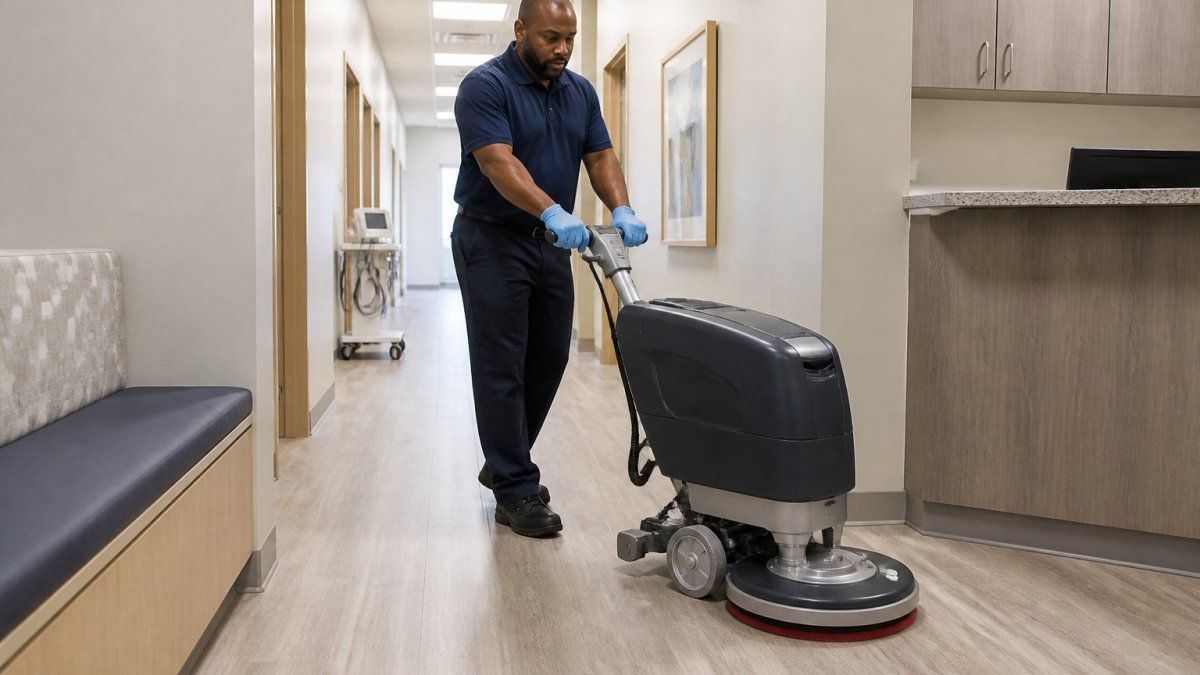
- Auto-scrubbers: appropriate for both materials with the right pad and a neutral cleaner; check that the squeegee and brush pressure are set for the finish, not for bare tile.
- High-speed burnishers: intended for VCT finish; not for LVT/LVP unless the manufacturer's finish system explicitly permits it.
When in doubt, read the floor manufacturer's maintenance guidance before changing products or pads; it is the most reliable source for what a specific wear layer or finish will tolerate.
Measuring Whether the Schedule Is Working
A schedule that is never measured drifts. Practical indicators help facility teams judge whether the plan is working:
- Cleaning frequency actually completed versus planned, by zone.
- Labor time per zone per service, tracked over a few months.
- Complaint or work-order rate tied to floor appearance, slips, or spills.
If the interval between recoats is shrinking, daily and weekly tasks are probably not keeping up; if it is stable or lengthening, the schedule is matched to the building.
Preventive Maintenance and Repair Decisions
Routine care is cheaper than restoration, and early repair is cheaper than replacement. Watch for these signals:
- VCT: patchy gloss that will not respond to burnishing, heavy yellowing, or deep scratches that reach the tile suggest the finish needs more than a recoat.
- LVT/LVP: lifted edges, gapping seams, or a wear layer that looks cloudy after cleaning may point to a product or method problem rather than a cleaning-frequency problem.
- Both: persistent dullness in a single traffic lane usually means that lane needs a targeted scrub, not a building-wide change.
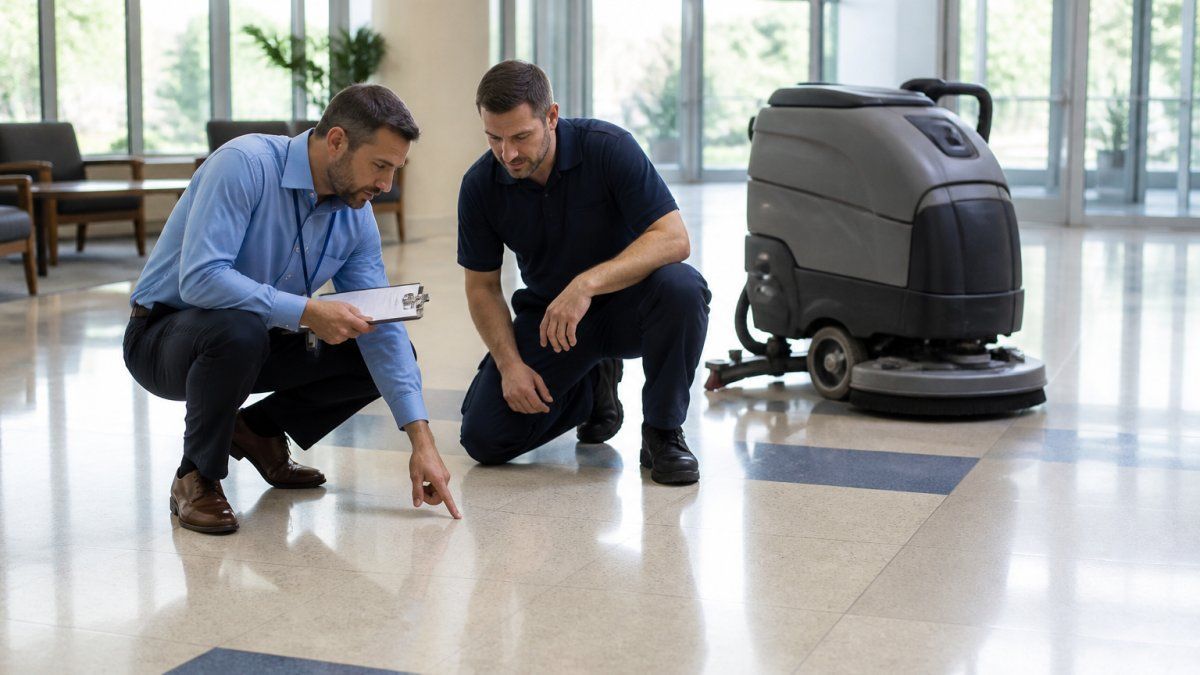
Distinguishing routine maintenance from repair is a judgment call. A professional walkthrough can confirm whether a floor needs a scrub-and-recoat, a targeted repair, or a full finish reset before a facility commits labor to the wrong task.
VCT Floor Maintenance: Scrubbing, Burnishing, and Recoating
VCT floor maintenance follows a predictable cycle: dust removal, damp mopping, periodic machine scrubbing, high-speed burnishing, scrub-and-recoat, and eventually full stripping and waxing, each step supporting the finish on top of the tile.
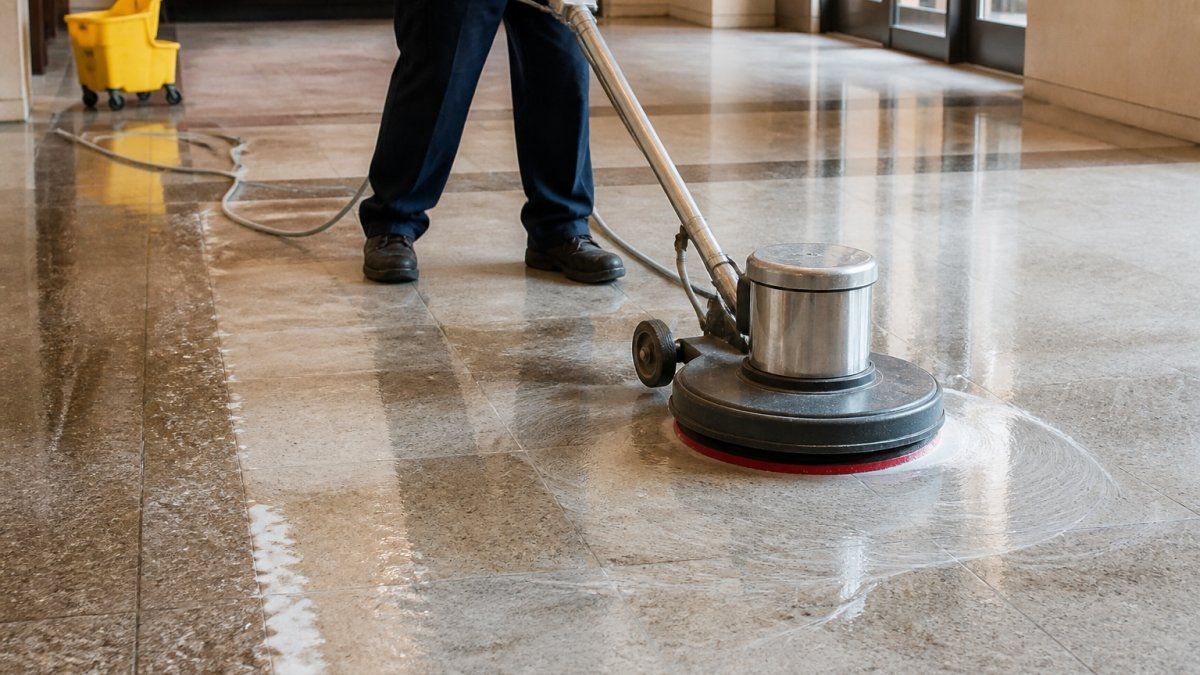
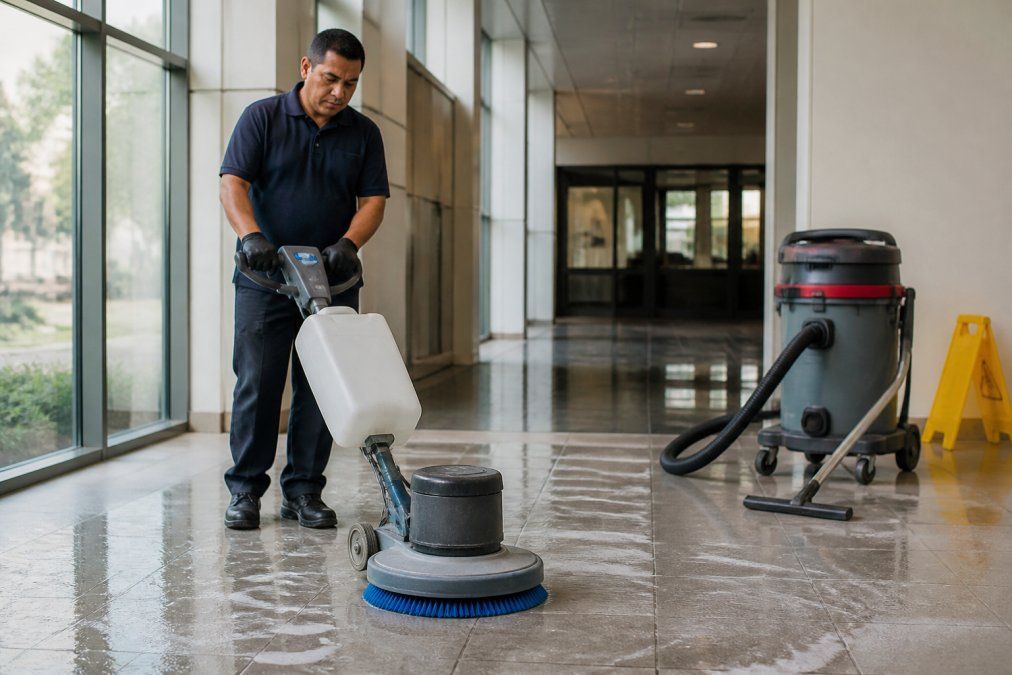
Machine scrubbing with an appropriate pad and neutral cleaner removes embedded soil daily mopping cannot reach. High-speed burnishing, where appropriate, restores gloss by heating the finish surface.
LVT Floor Cleaning: Why It Is Not VCT
LVT floor cleaning is a different discipline from VCT, and treating them the same is one of the most expensive mistakes we see.
Many LVT/LVP products should never be stripped and waxed unless the manufacturer or the finish system specifically allows it; doing so can damage the wear layer and void warranties.
When unsure, check the manufacturer's guidance before any restorative work, or call a professional floor care provider rather than experimenting.
VCT Stripping and Waxing: When Full Finish Removal Makes Sense
VCT stripping and waxing is the full reset: all old finish and built-up soil are removed, then fresh coats are applied.
Full finish removal makes sense when the finish is too worn or damaged for scrubbing and recoating to help.
Stripping is labor-intensive and disruptive, so it should be a deliberate decision, not a default.
Spot Cleaning Spills, Stains, and Everyday Wear
Spot cleaning is the fastest way to prevent a small spill from becoming a permanent stain, protecting both the finish and the flooring underneath. Office floors differ from generic commercial floors here: spills happen at desks, in break rooms, at reception, and along daily walking paths.
A Simple Spill Response Sequence
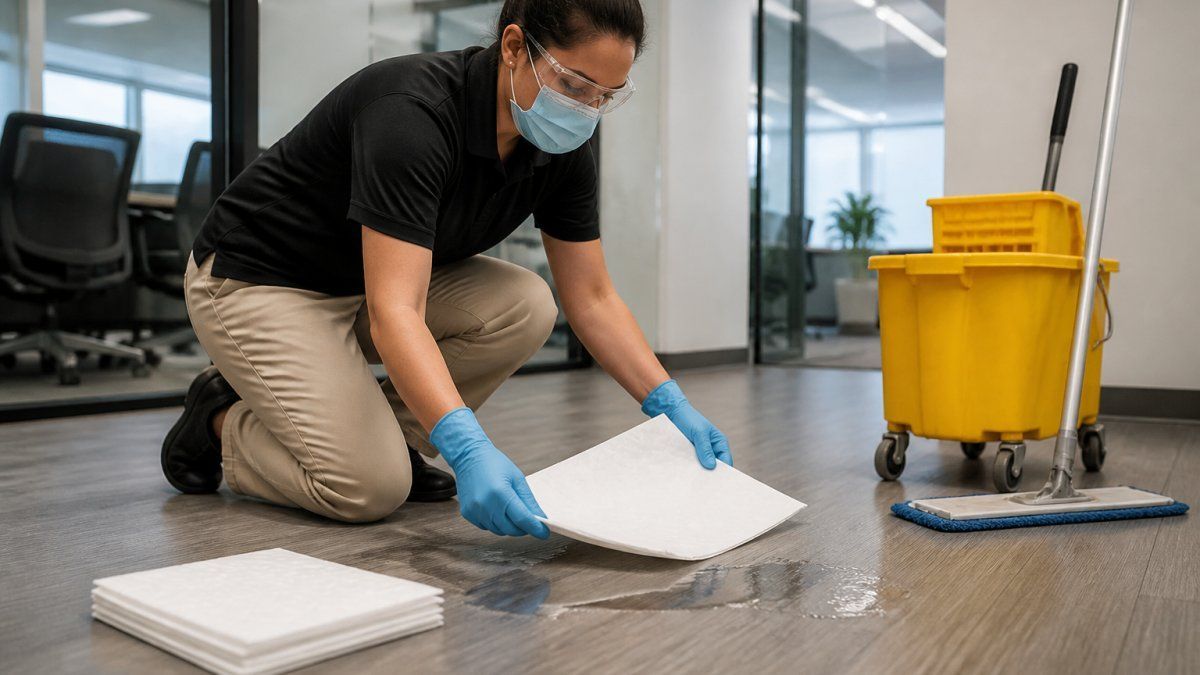
A consistent response beats improvisation. These steps work for both VCT and LVT/LVP:
- Protect the area. Place a wet-floor sign if the spill is wet, and keep foot traffic off the spot until it is dry.
- Remove solids first. Pick up or blot debris with a disposable towel before any liquid spreads.
- Blot liquids, do not wipe. Blotting lifts the spill; wiping pushes it across the finish and into seams.
- Clean with a neutral cleaner matched to the floor. Use the product as directed on its label, at the dilution the label specifies.
- Dry the area. A dry floor is a safe floor and a floor less likely to collect new soil.
- Note the spot. If the same location keeps staining, the cause is usually upstream, such as a leaking cooler or a recurring entry point.
Material-Specific Spot Care
VCT and LVT/LVP respond differently to the same spill, and the wrong method can do more damage than the spill.
- VCT: most food, beverage, and ink spots lift with a neutral cleaner and a soft pad. Scuffs usually respond to a manufacturer-approved scuff remover or a light pass with an appropriate pad, not abrasive scrubbing that dulls the finish.
- LVT/LVP: use a neutral cleaner and a soft cloth or microfiber mop. Avoid abrasive pads, aggressive scrubbing, and any product labeled as a stripper, because the factory wear layer is not designed for finish removal unless the manufacturer specifically allows it.
- Both: avoid general-purpose sprays that are not intended for the specific floor material. A product that is safe on one finish may cloud or dull another.
Office-Specific Spots to Plan For
Generic floor-care advice rarely mentions the spots that actually show up in an office. A short list helps staff respond without guessing:
- Coffee and tea at desks and in break rooms.
- Printer toner near copiers and print stations.
- Hand sanitizer and lotion at reception and shared desks.
Keeping a small spill kit at reception and in the janitorial closet, stocked with the building's neutral cleaner, microfiber cloths, and wet-floor signs, shortens response time and keeps staff from reaching for whatever is closest.
Safety Around Spills and Wet Floors
Spills create slip and trip risks beyond appearance. A few habits reduce them:
- Use wet-floor signs during cleanup and remove them only after the floor is dry.
- Dry the area with a clean microfiber mop or towel rather than letting it air-dry in a walkway.
- Keep cords, buckets, and mop handles out of walking paths while working.
When a Spot Becomes a Pattern
A single spill is a spot; the same spot returning week after week is a maintenance signal. If a hallway, break room, or entryway keeps showing the same stain or scuff pattern, the fix is usually upstream: more frequent dust removal in that lane, a longer entrance mat run, a different pad on the auto-scrubber, or a targeted scrub-and-recoat.
If your team spends more time chasing spots than preventing them, that is a good moment for a professional walkthrough. A Smarter Clean provides VCT and LVT/LVP floor-care assessments for facilities across Delaware and Maryland's Eastern Shore.
Common Mistakes That Shorten Floor Life
Most floor failures trace back to a handful of habits. Fixing them costs less than the restoration work they cause.
- Cleaning on a fixed calendar instead of matching frequency to traffic and condition
- Wet mopping with a soaking mop and pushing water into seams and edges
- Skipping dust removal and going straight to wet cleaning
A common mistake is assuming a dull floor needs stripping. Often it needs a proper scrub and recoat first.
High-traffic floors do not need heroics. They need a plan that matches real traffic, real condition, and real facility use, executed consistently.
Frequently Asked Questions
How often should high-traffic office floors be cleaned?
Most high-traffic offices need daily dust removal and spot mopping, with damp mopping of main walkways several times a week. Entrance areas and lobbies usually collect the most soil and may need attention more than once a day. Deeper tasks like machine scrubbing or burnishing typically fall on a weekly or monthly rotation, depending on traffic volume and floor finish condition.
What is the best way to clean VCT floors in a commercial building?
Start with daily dust removal using a microfiber mop, then damp mop with a neutral-pH cleaner made for vinyl composition tile. Avoid acidic or abrasive products that dull the finish. Schedule periodic machine scrubbing to lift embedded soil, and burnish with a high-speed machine when the finish needs added shine. When the finish becomes worn or uneven, a scrub-and-recoat or full strip-and-wax may be the right next step.
Can you strip and wax LVT or LVP flooring?
Many LVT and LVP products should not be stripped and waxed. The wear layer on most luxury vinyl is factory-finished, and stripping chemicals can damage it. Some products allow a manufacturer-approved finish system, but only if the warranty and installation guidelines specifically permit it. Always check the manufacturer's maintenance instructions before applying any wax or stripper to LVT or LVP.
How often should VCT floors be scrubbed and recoated?
Scrubbing and recoating frequency depends on traffic, soil load, and how the finish is holding up. In a busy office lobby, a scrub-and-recoat might be needed every few months, while a lighter-use area could go longer. Watch for dull patches, scuff buildup, and thin spots near entrances. When a routine scrub no longer restores an even appearance, it is time to recoat or consider full stripping.
When should VCT floors be stripped and waxed?
Full stripping and waxing makes sense when the finish has too many coats, looks yellowed or uneven, or has damage that scrubbing and recoating cannot fix. If soil is trapped under the finish or the floor has deep scuffs and gouges in the wax layer, stripping removes everything down to the tile so a fresh finish system can be applied. This is usually a periodic service, not a routine one.
What type of cleaner should be used on commercial vinyl floors?
Use a neutral-pH cleaner formulated for commercial vinyl. Avoid acidic cleaners, bleach-heavy products, and abrasive powders that can dull the finish or leave residue. Dilute according to the manufacturer's directions and change mop water often in high-traffic areas. For LVT and LVP, follow the flooring manufacturer's approved cleaner list to avoid voiding the warranty.
How can entrance mats help protect commercial floors?
Entrance mats catch dirt, grit, and moisture before they reach the main floor. A well-placed mat system at each entry can significantly reduce how much soil gets tracked into lobbies and hallways. Use mats sized so several steps land on them, and clean or rotate them regularly. Dirty mats stop working and can actually spread soil onto the floor.
What factors determine a commercial floor maintenance schedule?
Traffic volume, floor material, facility use, and current floor condition all shape the schedule. A medical office lobby with constant foot traffic needs more frequent attention than a back office. VCT typically needs more frequent finish maintenance than LVT. Seasonal weather, entrance layout, and whether the space serves the public also matter. A walkthrough with a floor-care provider can help set a schedule that fits the building.