

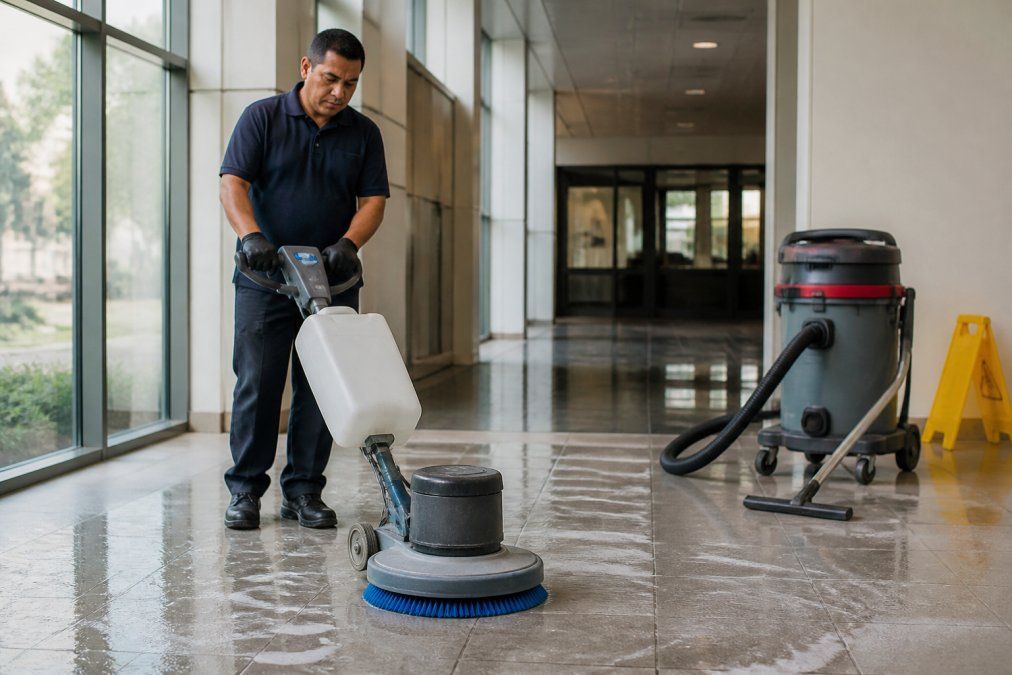

Commercial Tile and Grout Cleaning Services: 2026 Guide
Table of Contents
- What Commercial Tile and Grout Cleaning Services Actually Do
- The Benefits of Professional Tile Cleaning for High-Traffic Facilities
- How Professionals Clean Grout and Tile: Equipment and Step-by-Step Process
- Commercial Grout Sealing Services: Protecting Porous Surfaces After Cleaning
- Building a Commercial Floor Maintenance Schedule That Works
- How to Choose a Commercial Floor Cleaning Company
- Conclusion
- Frequently Asked Questions
Last Updated: September 26, 2026
What Commercial Tile and Grout Cleaning Services Actually Do
Commercial tile and grout cleaning services remove what routine mopping leaves behind: grease, embedded dirt, and discoloration trapped inside porous grout lines. At A Smarter Clean, we treat this as distinct from everyday janitorial work. Routine cleaning keeps a floor presentable; professional cleaning addresses what has built up underneath.
Routine Cleaning vs. Professional Restoration
Routine cleaning handles surface soil, dust, spills, light film, nightly or weekly, keeping a facility presentable between deeper visits.
What Results You Can and Cannot Expect
Honest providers set expectations before the first visit. Results depend on grout condition, stain type, tile age, previous coatings, and surface type. A floor with light soil and intact grout often looks dramatically better after one visit; one with decades of finish buildup, cracked grout, or deep organic staining may improve substantially without returning to its original color.
The Benefits of Professional Tile Cleaning for High-Traffic Facilities
High-traffic areas fail first. Lobbies, corridors, cafeterias, entryways, and restrooms take constant foot traffic, and grout there discolors faster than anywhere else. The benefits of professional tile cleaning show up in three places facility managers track: floor service life, compliance posture, and the operating budget.
Floor Longevity: The Asset-Lifecycle Case
A commercial tile floor is a capital asset with a replacement horizon measured in decades. Grout is the weak point: soil left in grout lines abrades underfoot the way sandpaper wears a seam, and once lines widen, crack, or crumble, tile edges lose their bedding and the floor fails from the joints inward. The floors replaced first are usually the ones cleaned least aggressively.
- Longer floor life. Soil left in grout acts like sandpaper underfoot, wearing lines wider over time.
- Safer surfaces. Grease film and soil buildup reduce slip resistance, a real concern in entries and food service areas.
- Better air quality. Deep soil holds allergens and microscopic contaminants that daily mopping does not remove.
- Protection for your investment. Cleaning and sealing cost far less than replacing a commercial flooring system, preserving the asset instead of deferring its failure.
Compliance and Health Standards
For restaurants, medical and dental offices, schools, and any facility with a commercial kitchen or public restroom, floor condition is not only cosmetic. Health inspectors look at floors, walls, and ceilings in food-prep and warewashing areas, and grout that has absorbed grease, food soil, or moisture is a documented finding. Damp, soiled restroom grout is a recurring inspection note and a common source of odor complaints.
What It Means by Facility Type
- Restaurants and commercial kitchens: Grease tracks out of the kitchen on every shift. Grout near kitchen exits and dish stations discolors fastest and needs the most frequent attention.
- Medical and dental offices: Appearance and surface cleanliness carry patient-confidence weight, and restroom and treatment-area grout is a frequent complaint source.
- Schools and churches: Large open tile areas with heavy seasonal traffic. Gymnasium entries, cafeterias, and fellowship halls are the usual problem zones.
- Banks and professional offices: Lobby and teller-line tile reads as part of the brand. Dull, darkened grout under lobby lighting is noticed by clients even when the rest of the space is spotless.
How Professionals Clean Grout and Tile: Equipment and Step-by-Step Process
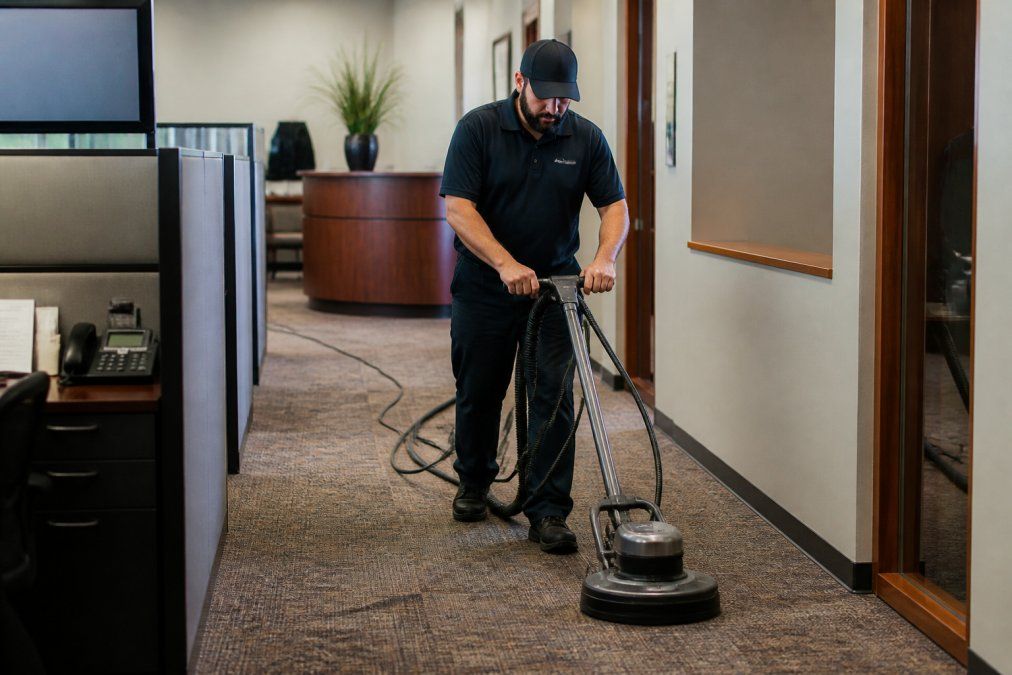
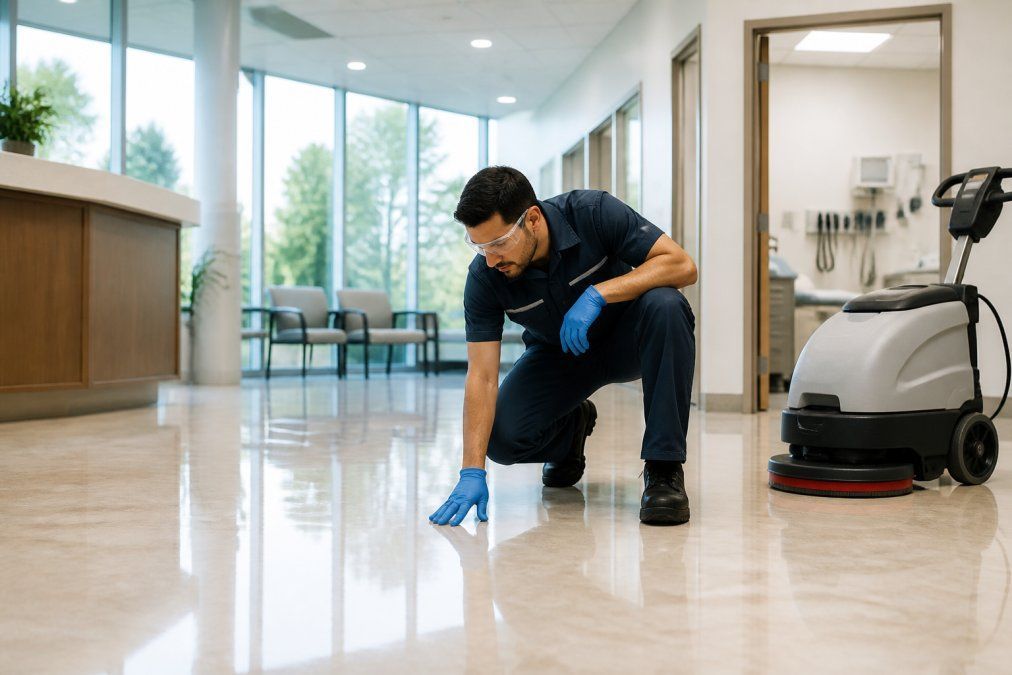
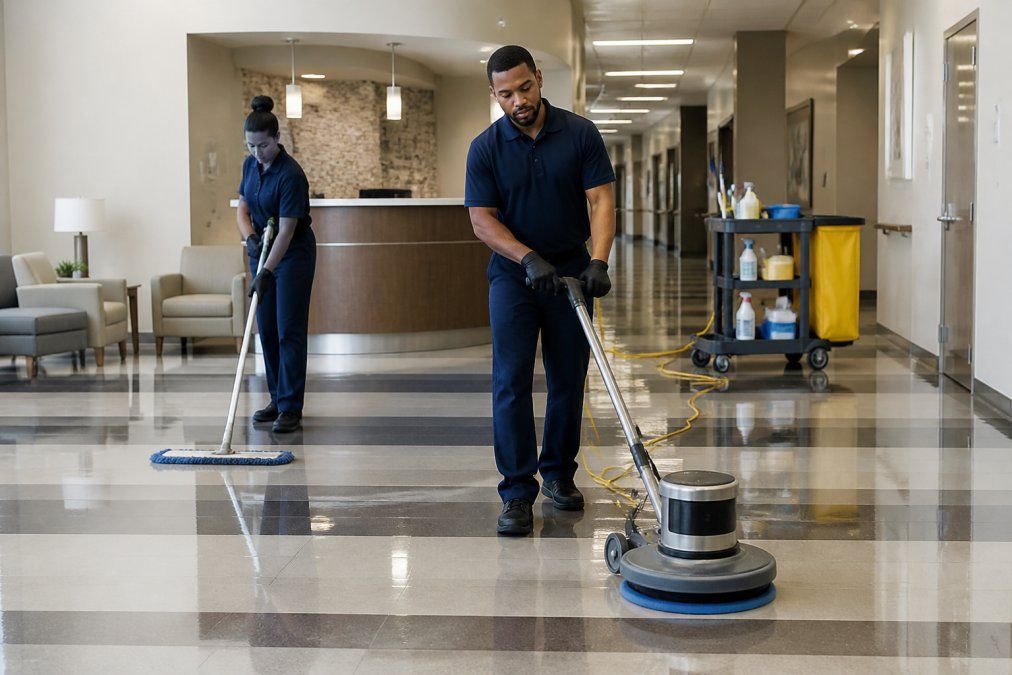
Professional cleaning pairs the right chemistry with mechanical agitation. Alkaline cleaners break down grease and oils. pH-neutral solutions handle delicate surfaces and final rinses. The machine does the rest.
Step-by-Step: What a Commercial Cleaning Visit Looks Like
- Walkthrough and surface check. Identify tile type (ceramic, porcelain, travertine, quarry) and any cracked or missing grout.
- Pre-treatment. Apply an appropriate cleaner and let it dwell so it can break the soil loose.
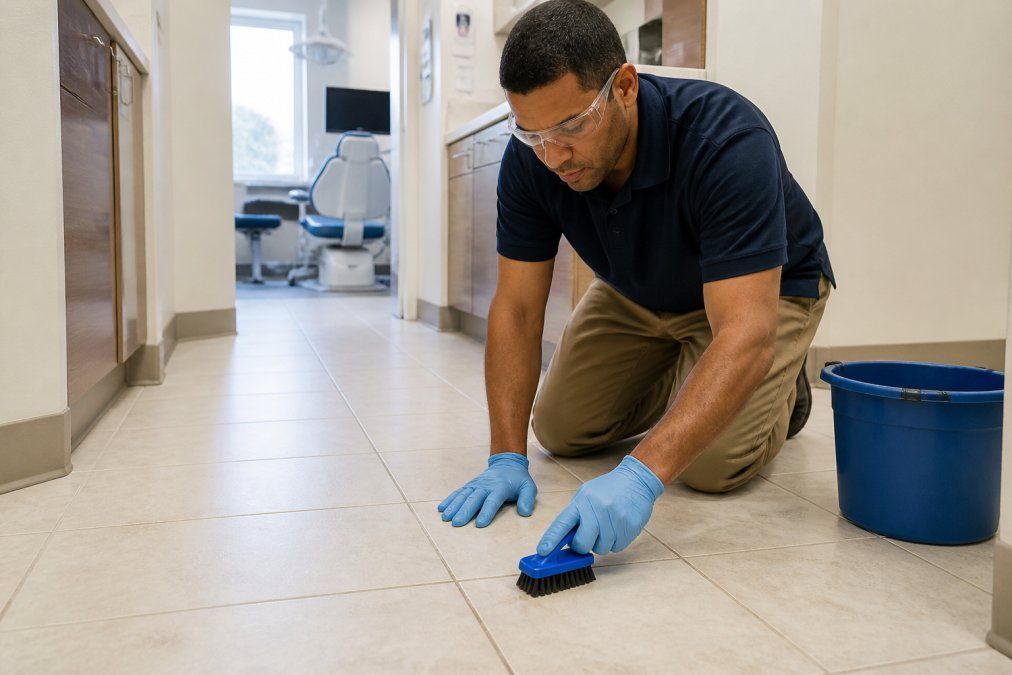
- Mechanical agitation. Work grout lines with a brush or scrubber attachment.
- Extraction. Vacuum the loosened soil and solution from the floor.
- Detail work. Hand-treat edges, corners, and problem stains.
- Rinse and inspect. Confirm no residue remains, since leftover cleaner attracts new soil.
- Optional sealing. Apply grout sealer once the floor is fully dry.
Most commercial visits run after hours to avoid disrupting operations. A single room or corridor can often be completed in one evening, while a full building may need several.
Commercial Grout Sealing Services: Protecting Porous Surfaces After Cleaning
Sealing is what makes a cleaning last. Grout sealer penetrates porous surfaces and slows absorption of spills, mop water, and grease. It does not make grout waterproof or replace cleaning, but it buys time between deep services.
SUPER DIRTY TILE AND GROUT CLEANING TRANSFORMATION! SATISFYING!
Steam Boss inc
Building a Commercial Floor Maintenance Schedule That Works
A commercial floor maintenance schedule is a written plan assigning each floor care task a frequency based on traffic, surface type, and soil load. Without one, floors get cleaned reactively, which costs more because soil reaches the base of the grout line before anyone addresses it.
A workable schedule separates tasks into tiers:
| Task |
Frequency |
Who Handles It |
|---|---|---|
| Dust mopping and spot cleaning |
Daily |
In-house or nightly crew |
| Damp mopping, entryway focus |
Daily to weekly |
Nightly crew |
| Machine scrub of high-traffic zones |
Monthly to quarterly |
Professional provider |
| Deep grout cleaning and extraction |
6 to 12 months |
Professional provider |
| Sealer inspection and reapplication |
12 to 24 months |
Professional provider |
| Grout repair or regrouting |
As needed |
Professional provider |
Why the Intervals Look the Way They Do
The daily tier exists because surface soil left overnight bonds to grout and takes more chemistry and agitation later. The monthly-to-quarterly machine scrub exists because mops cannot reach the bottom of a grout line; only mechanical agitation can. The 6-to-12-month deep cleaning interval reflects how long soil typically takes to accumulate past what routine work can address in a high-traffic zone, and the 12-to-24-month sealer interval reflects normal wear in entryways and food service areas, where sealer breaks down fastest.
Documentation and Compliance
A schedule is only as useful as its records. Keep a dated log of each deep cleaning, sealer application, and grout repair. That log supports health inspection findings in food service and restroom areas, supports internal safety reviews of walking surfaces, and gives the next facility manager or vendor a real history instead of a guess.
Matching the Schedule to the Facility
- Restaurants and commercial kitchens: Deep cleaning on the shorter end of the range, with extra attention near kitchen exits and dish stations. Sealer reapplication on the shorter end as well.
- Medical and dental offices: Focus on restrooms, treatment areas, and public corridors. Appearance and surface condition carry patient-confidence weight.
- Schools and churches: Schedule deep cleaning around breaks and major events. Large open tile areas accumulate soil unevenly, and entryways and cafeterias need the most attention.
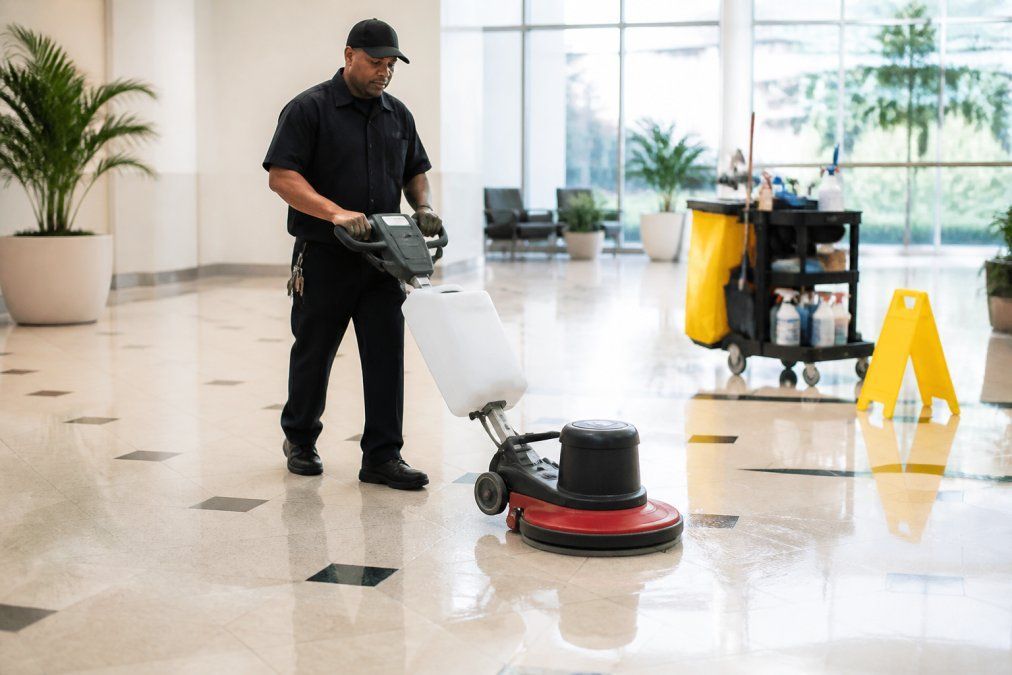
- Banks and professional offices: Lobby and teller-line tile is the priority zone. Deep cleaning on the longer end of the range is often sufficient, with sealer inspection on the standard cycle.
Preventative maintenance beats emergency work every time and makes budgeting predictable instead of reactive. A written schedule with dated records is also the most useful document a facility manager can hand to ownership when the question is whether the floor program is working.
How to Choose a Commercial Floor Cleaning Company
A commercial floor cleaning company should be evaluated on process, staffing, and communication, not the lowest bid. Every provider promises a clean floor; these questions separate the ones who can deliver from the ones who cannot.
Ask directly:
- What methods do you use on grout, and why? A vague answer signals a one-size-fits-all approach.
- How do you screen and retain staff? Turnover is the root cause of most missed-visit complaints. Ask about background checks and scheduling consistency.
- What are your products, and are they compliant? Request safety data sheets. Facilities with OSHA obligations need documentation, not assurances.
- What is your response time for spills or emergencies during business hours? Get a specific answer.
- Will you walk the facility before quoting? A provider who quotes a commercial floor without seeing it is guessing.
- What can you not fix? Providers who name their limits are usually the ones who know their work.
Troubleshooting Common Commercial Stains and Problem Areas
Not all stains respond the same way, and knowing the difference helps you set realistic expectations.
- Grease and food oil (restaurants, break rooms): Responds well to alkaline cleaners and agitation. Needs repeat treatment if buildup is old.
- Coffee, tea, and cola (lobbies, offices): Organic staining often lifts with targeted treatment, but long-set stains may leave a faint shadow.
- Rust and mineral deposits (entries, older buildings): Requires specialty products and careful surface testing. Aggressive acids can etch certain tiles.
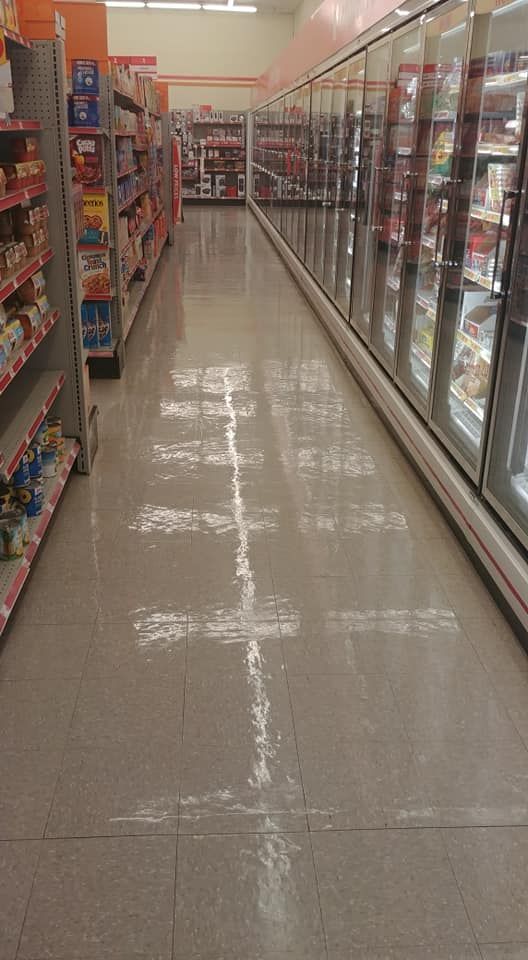
- Floor finish buildup (corridors, classrooms): Finish can seep into grout lines over years. Removal takes multiple passes and is not always complete.
- Mold and mildew (restrooms, wet areas): Needs cleaning plus correction of the underlying moisture source, or it returns.
Conclusion
Every commercial floor reaches a point where routine mopping stops being enough, and the grout tells you before the tile does. The facilities that stay ahead of it have a written schedule, a provider who documents conditions, and realistic expectations about what cleaning can and cannot restore.
Frequently Asked Questions
How much does it cost to have tile and grout professionally cleaned?
Pricing depends on square footage, grout condition, soil level, surface type, and whether sealing is included. Facilities with heavy grease or years of embedded dirt take longer to clean than lightly soiled floors. Most providers quote after a walkthrough so they can assess the actual scope. Request a walkthrough and estimate from a commercial tile and grout cleaning services provider to get accurate numbers for your facility.
Is professional grout cleaning worth it compared to routine mopping?
Routine mopping removes surface soil but leaves embedded dirt, grease, and discoloration in porous grout lines. Professional cleaning uses machine agitation and extraction to pull that material out, which improves appearance and supports floor longevity. For high-traffic areas in medical offices, schools, restaurants, and retail spaces, scheduled professional cleaning typically costs less over time than replacing tile that has degraded from neglect.
How often should high-traffic commercial floors be professionally cleaned?
Frequency depends on traffic volume, surface type, and soil sources. Entrances, lobbies, cafeterias, and restrooms in busy facilities often need professional attention quarterly, while lighter-use areas may do well twice a year. A commercial floor maintenance schedule should separate daily routine care from periodic deep cleaning and sealing. Your provider can recommend intervals after assessing your building's traffic patterns and floor condition.
Does professional cleaning remove all stains from old grout?
No. Results depend on grout condition, staining type, age, previous coatings, and surface type. Some stains, especially from dyes, rust, or years of grease absorption, may lighten significantly but not disappear completely. Very old or damaged grout may need repair or color sealing rather than cleaning alone. A professional assessment before work begins will tell you what is realistic for your floors.