

How Professional Carpet Cleaning Helps Restore High-Traffic Areas
Last Updated: October 28, 2026
Quick Summary
Remove heavy traffic carpet stains by treating them as embedded soil and oil rather than surface dirt: vacuum daily, blot spills promptly, and use low-moisture encapsulation cleaning on traffic lanes. Traffic carpet stains return when soil is pushed around instead of fully removed, so pair entrance matting with scheduled professional cleaning.
- Grit acts like sandpaper and oils bind soil to the fiber, so lanes read as a dark stripe.
- Solution-dyed carpet tolerates more agitation and moisture without bleeding or fading than piece-dyed carpet.
- Blot from the outside of the spot inward and never scrub, which spreads soil deeper.
- A spot larger than a handprint is faster and safer to treat as a lane-cleaning job.
- Vacuum main entrances and hallways daily and deep clean traffic lanes quarterly.
Table of Contents
- Why Heavy Foot Traffic Carpet Stains Keep Coming Back
- Know Your Carpet Fiber and Dye Before Any Treatment
- Commercial Carpet Spot Treatment: Why Prompt Action Matters
- Entrance Matting for Commercial Buildings: Stop Soil at the Door
- Low-Moisture Encapsulation Carpet Cleaning for Traffic Lanes
- Commercial Carpet Cleaning Frequency: Building a Maintenance Plan
- Request a Walkthrough and Carpet-Cleaning Estimate
- Frequently Asked Questions
Why Heavy Foot Traffic Carpet Stains Keep Coming Back
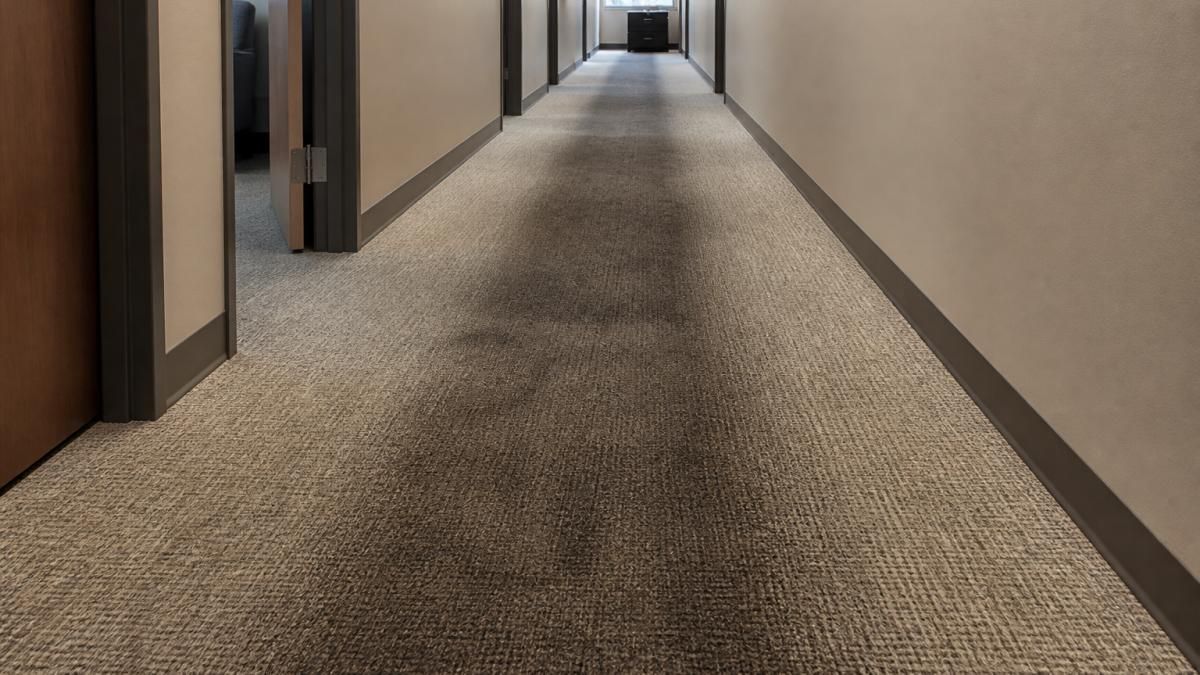
Heavy foot traffic carpet stains return because the soil was never fully removed, only pushed around.
Tracked-In Soil, Oils, and Matting
Every pair of shoes carries grit, road oil, and fine dust that works down into the pile with each step. Grit acts like sandpaper, cutting fibers from the inside, while oils bind soil to the fiber. Over time the pile mats down and the lane reads as a dark stripe.
Three forces drive the decline:
- Abrasion from grit grinding into fibers
- Oil bonding that traps soil at the base of the pile
- Matting that flattens the pile and hides soil deeper
Embedded Soil Versus a True Stain
Embedded soil is dirt packed into the pile; a true stain has changed the color of the fiber itself. Embedded soil responds to agitation, while a true stain may need targeted spot treatment, and some stains never lift completely.
Know Your Carpet Fiber and Dye Before Any Treatment
Carpet fiber and dye decide which cleaning method is safe. Two carpets that look identical can respond very differently to the same cleaner depending on the fiber and how the color was applied, and getting this wrong is one of the most common reasons a traffic lane comes out duller, blotchy, or lighter than it went in.
The Three Fibers You Will Meet in Commercial Carpet
- Nylon is the most common commercial face fiber. It is resilient and accepts dye well, but oils bond tightly to it, so nylon traffic lanes look dark and greasy before they look worn.
- Olefin (polypropylene) is common in entry areas and break rooms because it resists moisture and many stains. Its weakness is oil, which bonds tightly and is hard to lift with vacuuming alone. It also has lower resilience, so it mats down faster and can look permanently crushed.
- Polyester is soft and takes color deeply, popular in appearance-focused spaces. It is less resilient than nylon, so heavy traffic compresses the pile and the lane reads as a dark stripe even when the surface is clean. It is also sensitive to heat and some solvents.
Solution-Dyed Versus Piece-Dyed: Why It Changes the Plan
- Solution-dyed carpet has color built into the fiber before it is formed, so it tolerates more cleaning, agitation, and moisture without bleeding or fading. Most high-traffic commercial carpet is solution-dyed for exactly this reason.
- Piece-dyed (also called yarn-dyed or stock-dyed) carpet has color applied after the fiber is made. The color sits closer to the surface, so it is more vulnerable to bleeding, crocking, and color loss when the wrong cleaner or too much agitation is used. Light-colored piece-dyed carpet is the least forgiving combination in a commercial setting.
The Hidden-Area Colorfastness Test
- Identify a hidden area of the same carpet, ideally from the same dye lot.
- Apply a small amount of the intended cleaning solution to a white cloth, not directly to the carpet.
- Blot the cloth onto the hidden area and wait the full dwell time the product calls for.
- Press a clean white cloth over the spot and check for color transfer.
- Let the area dry completely and compare it to the surrounding carpet for fading, darkening, or ring marks.
What a Professional Records Before Cleaning
Some discoloration, wear, fiber damage, or permanent staining may remain no matter which method is used, and documenting it up front is how a facility manager avoids surprises later.
Commercial Carpet Spot Treatment: Why Prompt Action Matters
Commercial carpet spot treatment works best in the first hours. Fresh spills sit on the surface; left overnight, they wick into the backing and bond with the fiber. The longer a spot sits, the lower the chance of full removal and the more likely the mark becomes permanent discoloration rather than removable soil.
How to Remove High Traffic Stains From Carpet
The Stain Guide
Why Delay Turns a Spot Into a Shadow
Prompt action interrupts that sequence. Delay lets it finish.
A Repeatable Spot Response Sequence for Facility Teams
The goal of an in-house spot response is not to deep-clean the lane but to stabilize the spot, remove what can be safely removed, and flag anything needing professional attention. A sequence that works across fiber types:
- Remove solids first. Pick up or vacuum loose material before any liquid touches the spot; adding liquid to dry soil turns a small spot into a larger one.
- Identify the substance if possible. Food, beverage, ink, grease, and body oils each behave differently, which tells the responder whether a general carpet-safe product is appropriate or the spot should be flagged immediately.
- Test in a hidden area. Confirm colorfastness before the product touches a visible spot, especially on light or piece-dyed carpet.
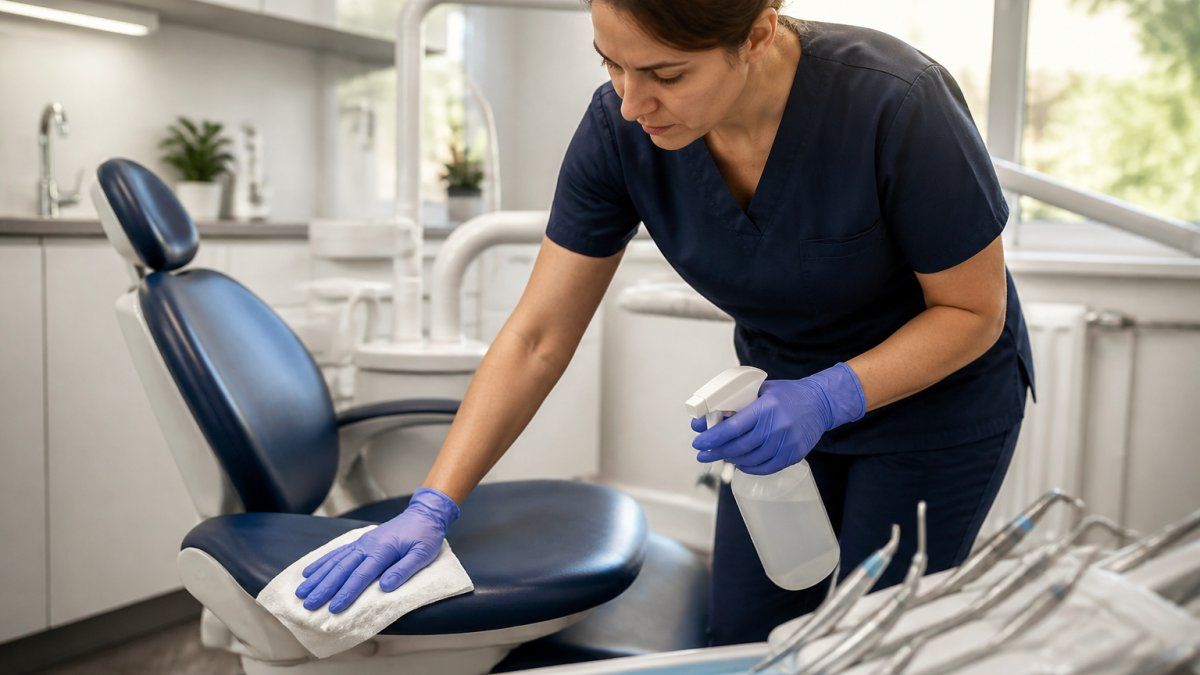
- Apply to a cloth, not the carpet. Put the carpet-safe product on a white cloth and blot from the outside of the spot inward to keep it from spreading.
- Blot, never scrub. Blotting lifts material; rubbing spreads it, frays the pile, and drives soil deeper into the backing.
- Rinse the residue. Blot with a clean, damp white cloth to lift leftover product, since residue attracts new soil and causes faster re-soiling.
- Dry completely and check for wicking. Place a clean white cloth over the spot, weight it, and let it dry. If a ring appears, the substance reached the backing and needs professional treatment.
- Log the spot. Record what it was, what product was used, and whether it wicked, turning spot treatment into a maintenance record instead of a series of one-off reactions.
Residue, Wicking, and Re-Soiling: The Three Failure Modes
- Residue happens when too much product is used or the rinse step is skipped. Sticky residue acts like a magnet for soil, so the spot turns dark again within days. The fix is less product and a thorough rinse, not more cleaner.
- Wicking happens when the substance reached the backing and was never fully removed. Moisture pulls it back up through the pile as the carpet dries, leaving a ring. The fix is professional treatment that reaches the backing, not repeated surface blotting.
- Re-soiling happens when a spot is cleaned but the surrounding lane is not. The cleaned spot stands out as lighter, and the lane around it looks darker by contrast. The fix is lane-level cleaning, not spot-level cleaning.
When In-House Spot Treatment Is Not Enough
Not every spot should be treated in-house. Four factors help facility teams know when to escalate:
- Age. A spot treated within hours is usually manageable in-house. A spot that has sat for days or has already wicked is a professional job.
- Area size. A spot larger than a handprint, or a cluster of spots in one lane, is faster and safer to treat as a lane-cleaning job than as a series of individual spots.
- Carpet type. Light-colored, piece-dyed, or polyester carpet carries more risk. When the fiber and dye method are uncertain, escalate rather than experiment.
- Prior attempts. A spot already treated two or three times without success usually means the substance reached the backing or residue is now the problem. More in-house attempts tend to make it worse.
A practical spot response plan for facility teams:
- Keep a spill kit stocked with a carpet-safe cleaner and white cloths
- Blot, never scrub, from the outside of the spot inward
- Rinse residue with a clean, damp cloth
- Dry completely and check for wicking
- Log every spill, the product used, and the outcome
- Flag set-in, wicked, or repeatedly treated spots for professional treatment
Some spots will not lift completely no matter how quickly they are treated. Dyes, inks, and substances bonded to the fiber can leave permanent discoloration, and some carpet damage is not reversible. A spot response plan removes what can be removed, prevents spreading, and gets the rest to a professional before it becomes a permanent shadow in the lane.
Entrance Matting for Commercial Buildings: Stop Soil at the Door
Entrance matting for commercial buildings can help control soil. Matting can catch tracked-in soil before it reaches the carpet.
- Scraper mat outside to knock off grit
- Absorbent mat inside to pull moisture and fine dust
- Extended walk-off length so shoes shed soil before the carpet
Mats need vacuuming and cleaning on a set schedule. A saturated mat stops absorbing and starts releasing soil back onto the floor. The Carpet and Rug Institute's guidance on heavy traffic areas notes that prompt spot removal and certified cleaning solutions protect carpet life, and matting supports that effort.
Low-Moisture Encapsulation Carpet Cleaning for Traffic Lanes
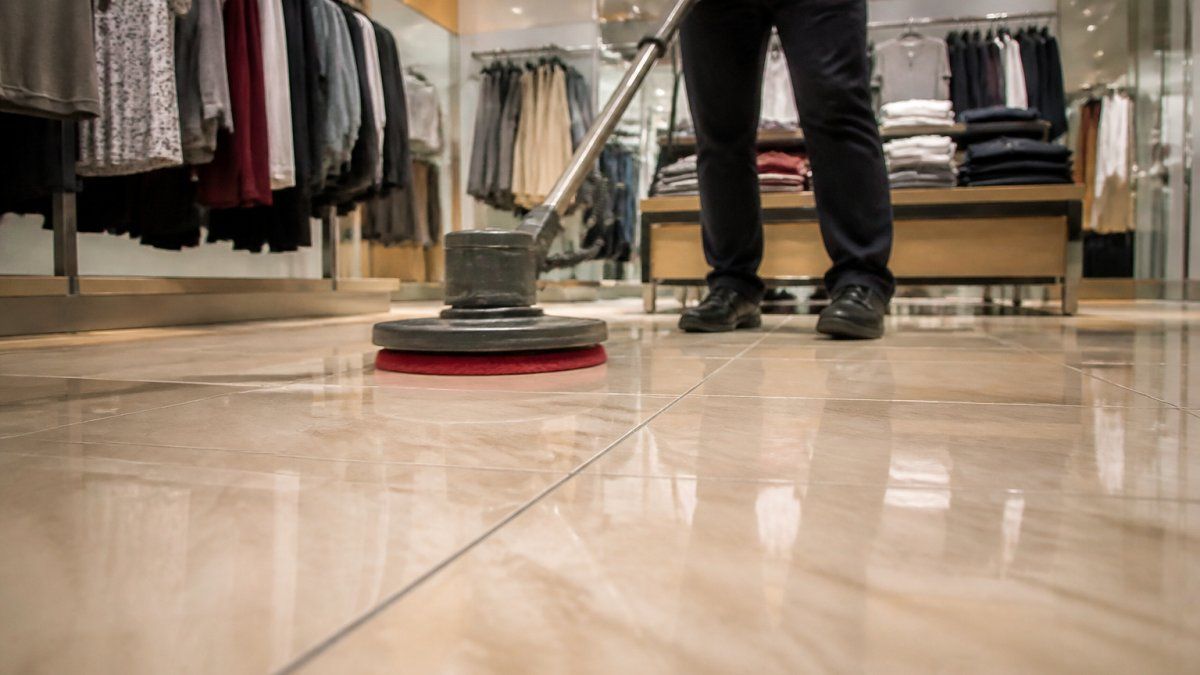
Low-moisture encapsulation carpet cleaning is one of the low-moisture cleaning processes used for commercial carpet care.
- Short dry times keep hallways open
- Less moisture means less risk of wicking and mildew
- Encapsulation targets the oils and soil that bind into traffic lanes
Commercial Carpet Cleaning Frequency: Building a Maintenance Plan
Commercial carpet cleaning frequency depends on traffic, soil load, and matting. A busy medical office lobby needs more attention than a low-traffic records room. Most facilities do well with a layered plan: daily vacuuming, scheduled spot treatment, and periodic professional low-moisture carpet cleaning of traffic lanes. For practical commercial carpet maintenance tips for facility managers, see our guide.
A simple frequency guide:
| Area |
Vacuuming |
Spot Treatment |
Deep Cleaning |
|---|---|---|---|
| Main entrance and lobby |
Daily |
As spills happen |
Quarterly |
| Hallways and traffic lanes |
Daily |
As spills happen |
Quarterly |
| Offices and low-traffic rooms |
Weekly |
As spills happen |
Twice yearly |
| Break rooms and food areas |
Daily |
Same day |
Quarterly |
Request a Walkthrough and Carpet-Cleaning Estimate
Every traffic lane is different, so the right plan starts with a walkthrough.
We cannot promise that every mark will disappear. Some discoloration, wear, fiber damage, or permanent staining may remain after cleaning. To request a walkthrough or carpet-cleaning estimate, contact our cleaning company.
Frequently Asked Questions
Why does carpet get dark in high-traffic areas?
Traffic lanes collect tracked-in soil, grit, and oils from shoes, carts, and equipment. Repeated foot traffic grinds that soil into the carpet pile, and the fibers mat down so light reflects less. Regular vacuuming removes some of it, but soil can build up and the lane can look dark even after spot treatment.
How often should commercial carpet be professionally cleaned?
Commercial carpet cleaning frequency depends on traffic volume. Lobbies, hallways, and entrances usually need attention more often than private offices. A facility manager should set a schedule based on foot traffic, entrance matting coverage, and how quickly lanes darken. A walkthrough can help set an interval that matches your building.
What is low-moisture encapsulation carpet cleaning?
Low-moisture encapsulation carpet cleaning is a low-moisture process for commercial carpet care.
Can worn or permanently discolored carpet be restored?
Not always. Some fiber damage, wear patterns, and set-in discoloration may remain.
Heavy traffic lanes will keep darkening without a plan built for your building. A Smarter Clean brings low-moisture carpet systems, OSHA-safe products, background-checked staff, and flexible nightly, weekly, or monthly schedules to facilities across the region. Get started with A Smarter Clean and request a walkthrough and carpet-cleaning estimate for your facility.