

Commercial Carpet Cleaning for Allergy-Sensitive Facilities
Table of Contents
- Why Carpet Cleaning Matters in Allergy-Sensitive Facilities
- Commercial Carpet Vacuuming: Frequency, Technique, and Filtration
- Carpet Spot Treatment: Fast Action That Limits Soil Spread
- Low-Moisture Carpet Cleaning for Faster Drying and Less Disruption
- Choosing Cleaning Products for Allergy-Sensitive Buildings
- Building a Commercial Carpet Maintenance Schedule
- Entrance Matting and Everyday Habits That Reduce Tracked-In Soil
- Conclusion
- Frequently Asked Questions
Last Updated: October 21, 2026
Why Carpet Cleaning Matters in Allergy-Sensitive Facilities
Carpet cleaning matters in allergy-sensitive facilities because carpet fibers trap dust, soil, pollen, and other particles that get stirred into the air when people walk across them. At A Smarter Clean, we focus on reliable service and professional results.
How Carpets Collect Dust, Soil, and Other Particles
Carpet acts like a filter. Fibers capture tracked-in soil, dust, pet dander, pollen, and mold spores until agitation or airflow lifts them back out. In a medical office or school, that reservoir builds fast because traffic is constant and doors open all day.
What Cleaning Can and Cannot Do for Occupant Comfort
Cleaning can reduce accumulated dust and soil in the carpet. It cannot prevent, treat, or cure allergies or asthma, and no honest provider should promise an allergen-free building. A disciplined program delivers a measurably cleaner surface and less material available to become airborne.
Commercial Carpet Vacuuming: Frequency, Technique, and Filtration
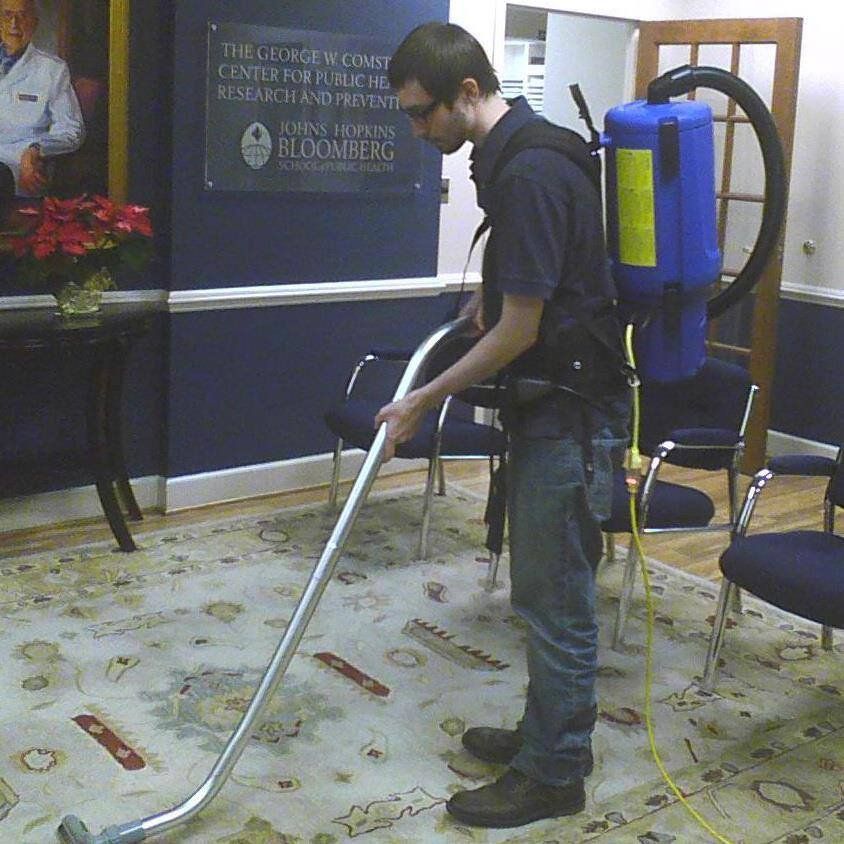
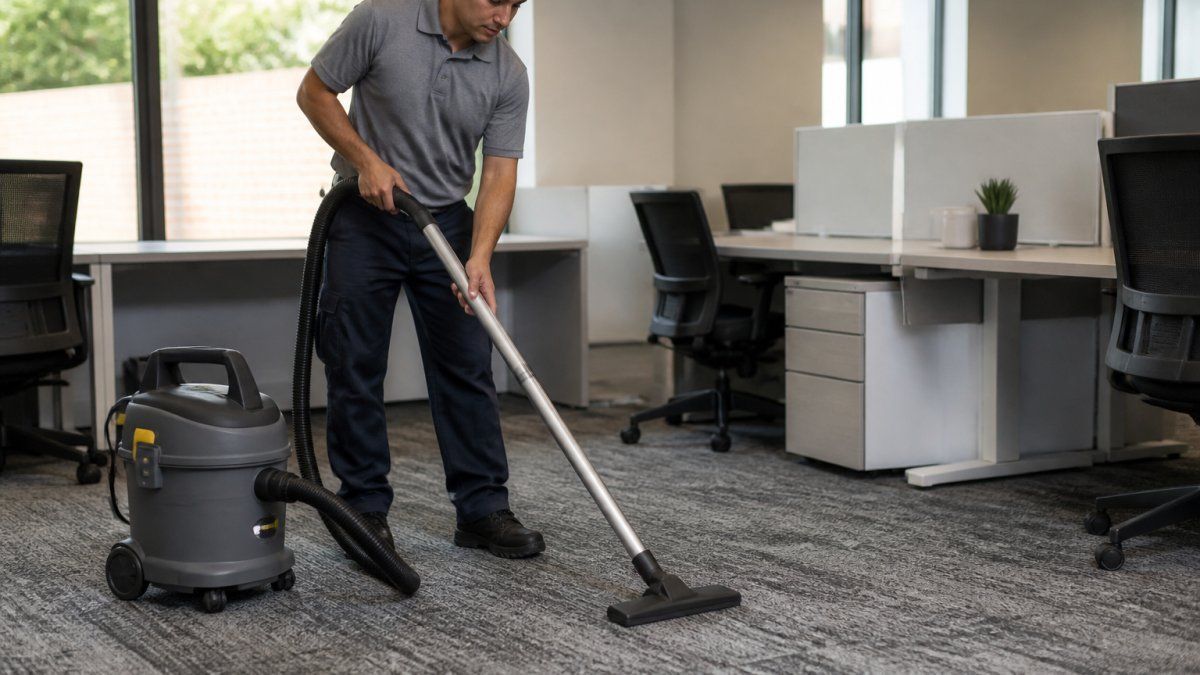
Commercial carpet vacuuming is the highest-frequency task in any carpet maintenance program and removes the most soil per dollar spent.
Technique matters as much as frequency. Slow, overlapping passes in two directions lift more soil than fast single passes, and edges, corners, and under-desk zones need deliberate attention.
Carpet Spot Treatment: Fast Action That Limits Soil Spread
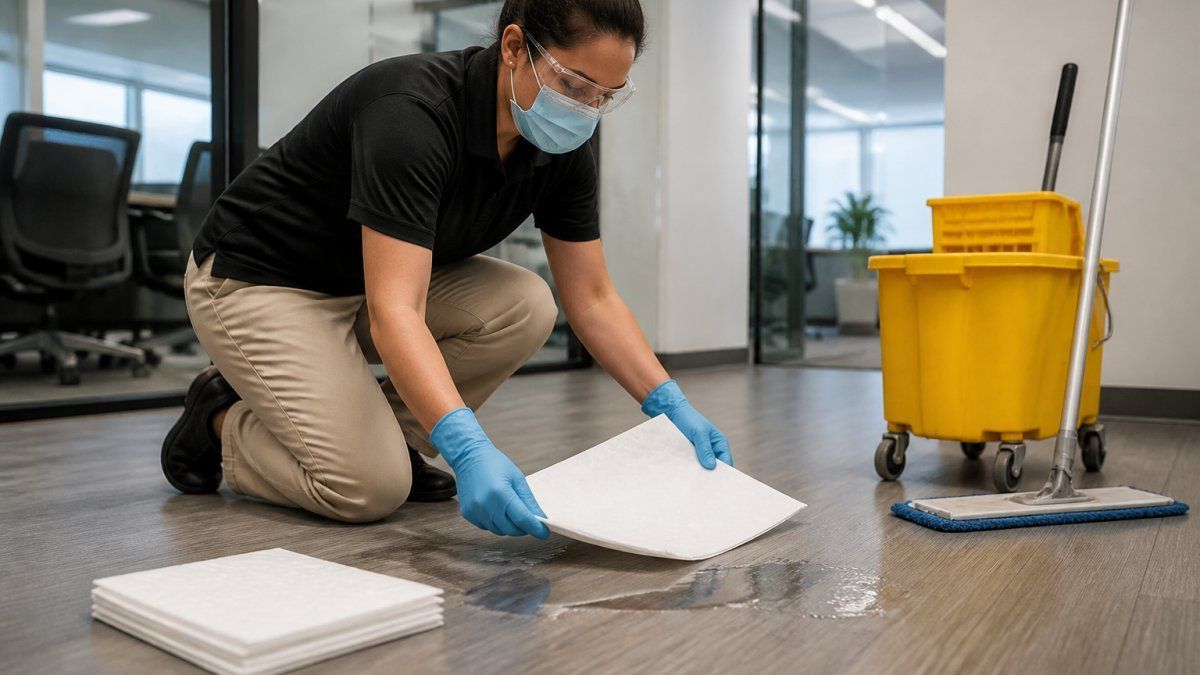
Carpet spot treatment should begin within minutes of a spill, not at the end of the shift. Fresh spills wick outward through the pile and into the backing; the longer they sit, the larger the treated area and the more likely a stain sets permanently.
Blot, don't scrub. Press a clean white cloth into the spill from the outside in, lift, and repeat with a mild detergent solution approved for the fiber. Scrubbing abrades the pile and drives soil deeper.
Low-Moisture Carpet Cleaning for Faster Drying and Less Disruption
Low-moisture carpet cleaning uses encapsulation chemistry and mechanical agitation to lift soil with a fraction of the water used in wet methods. Carpets are typically walkable within about an hour, which matters in clinics, banks, and schools that cannot close a corridor for a day.
Drying Time, Residue, and Moisture Control
Drying time decides whether a cleaning method is safe for an occupied building. Trapped moisture creates conditions where mold can grow, so verifying dryness with air movers and moisture readings before reopening an area is important. Residue is the second concern: over-applied detergent leaves a sticky film that attracts new soil within weeks, which is why dilution ratios and rinse steps are non-negotiable.
| Task |
Frequency |
Method |
Why It Matters |
|---|---|---|---|
| Vacuuming (high traffic) |
Daily |
HEPA-filtered, two-direction passes |
Removes soil before it settles deep |
| Vacuuming (low traffic) |
2x weekly |
HEPA-filtered |
Maintains baseline soil control |
| Spot treatment |
Within minutes |
Blot with neutral detergent |
Prevents setting and spread |
| Low-moisture cleaning |
Quarterly to semi-annually |
Encapsulation with agitation |
Resets the carpet, fast dry time |
| Moisture verification |
Every cleaning |
Air movers and readings |
Prevents mold conditions |
Choosing Cleaning Products for Allergy-Sensitive Buildings
Choosing cleaning products for allergy-sensitive buildings starts with the label, not the marketing. Two products can both say "green" and "natural" while one contains a fragrance blend that irritates occupants. The practical goal is not a perfect product, it is a product whose residue, odor, and chemistry you can defend to the people who use the space.
What the Label Actually Tells You
Read four things on every product before it enters the building:
- Fragrance disclosure. "Fragrance" or "parfum" can stand for dozens of undeclared compounds, and fragrance is one of the most common triggers reported by chemically sensitive occupants. Fragrance-free is a stronger signal than "unscented," which sometimes means a masking fragrance was added.
- Dilution ratio. Concentrates are only as safe as the person mixing them. A neutral pH detergent diluted per the label behaves very differently from the same product at triple strength, which leaves a sticky film that attracts soil and can off-gas.
- Rinse requirement. Some encapsulants are designed to crystallize and vacuum away; others need a rinse step. Skipping the rinse leaves residue that re-soils the carpet within weeks.
Third-Party Signals Worth Trusting
The most useful label signal is independent verification, not a self-applied badge. The EPA Safer Choice product search lists products that meet the program's ingredient safety criteria, and the OSHA Hazard Communication Standard guidance explains what a compliant SDS must contain. A product carrying a verified mark plus a clear SDS is a far better starting point than one carrying a leaf logo and no documentation.
Residue, Odor, and the Trade-Offs Nobody Advertises
Every product choice involves a trade-off:
- Stronger chemistry cleans faster but leaves more residue. Aggressive surfactants lift soil quickly, but unrinsed film attracts new soil and can hold odor.
- Enzymatic spot treatments work well on organic spills but need dwell time, and some occupants notice the residual scent even when the product is fragrance-free.
- Solvent-based removers handle adhesives and ink but carry stronger odor and ventilation requirements, schedule them for unoccupied hours.
DIY Mixing: Where Facilities Get Into Trouble
Staff sometimes improvise spot treatments from whatever is under the sink. Two rules prevent most incidents: never mix cleaning chemicals together (combining bleach with an acid or ammonia product can release hazardous gas), and never substitute a general-purpose cleaner for a carpet-specific product without checking the manufacturer's cleaning code. A neutral pH carpet detergent, a clean white cloth, and the care label solve most spots; anything beyond that should go to the professional provider.
A spill kit stocked with a neutral pH detergent, white cloths, and the carpet manufacturer's cleaning code prevents more damage than any improvised recipe. Keep one on each floor and train staff to use it within the first two minutes.
Building a Commercial Carpet Maintenance Schedule
A commercial carpet maintenance schedule is a written plan that assigns each task a frequency, an owner, and a verification step. Build it around traffic zones rather than floor plans, review it quarterly against actual conditions, and tailor the cycle to the sensitivities of the people in the building.
Step 1: Map Traffic Zones, Not Floor Plans
Walk the building and mark three zones on a floor plan:
- Zone 1, entry and transition. Vestibules, main corridors, elevator lobbies, and the first ten to fifteen feet inside each entrance. Highest soil load, highest cleaning frequency.
- Zone 2, active occupied space. Waiting rooms, open offices, classrooms, pews, teller lines. Moderate load, driven by occupant density and hours of use.
- Zone 3, low-traffic and closed rooms. Private offices, storage, conference rooms used occasionally. Lowest load, longest interval between deep cleans.
Zone boundaries shift with building use. A conference room that hosts daily meetings belongs in Zone 2, not Zone 3, regardless of its square footage.
Step 2: Set Frequencies by Zone
| Task |
Zone 1 |
Zone 2 |
Zone 3 |
|---|---|---|---|
| Vacuuming |
Daily, HEPA-filtered, two-direction passes |
Daily to three times weekly |
Twice weekly |
| Spot treatment |
Same day, within minutes of the spill |
Same day |
Same day |
| Low-moisture encapsulation cleaning |
Monthly to quarterly |
Quarterly to semi-annually |
Semi-annually to annually |
| Moisture verification |
Every cleaning |
Every cleaning |
Every cleaning |
| Mat inspection and cleaning |
Weekly |
, |
, |
These intervals are starting points, not fixed law. A school with a rainy-season entrance or a clinic with a snowy vestibule may need Zone 1 cleaning more often.
Step 3: Assign Owners and Verification Steps
A schedule without an owner is a wish. Each task needs a named role responsible for it and a simple verification record:
- Vacuuming: initialed daily log by zone, with a weekly spot-check by the facility manager.
- Spot treatment: spill log noting time, location, product used, and outcome.
- Encapsulation cleaning: moisture readings before reopening, recorded by the provider.
Step 4: Tailor the Plan to Occupant Sensitivities
Different sensitivities call for different emphasis; a facility serving several populations should plan for the strictest one:
- Dust-mite sensitivity. Prioritize frequent HEPA vacuuming and moisture control. Mites thrive in damp conditions, so verified drying after any cleaning matters as much as the cleaning itself ( Biological Pollutants' Impact on Indoor Air Quality | Indoor Air Quality (IAQ)).
- Pet-dander sensitivity. Dander travels on clothing and shoes, so entry matting and frequent Zone 1 vacuuming do more than deep cleaning alone. Upholstered seating in waiting areas deserves the same attention as carpet.
- Pollen sensitivity. Seasonal peaks (spring and fall in this region) justify temporary increases in entry-zone vacuuming and mat cleaning.
Step 5: Know When Maintenance Is No Longer Enough
Cleaning reduces accumulated dust and soil, but it cannot restore a carpet that has been saturated, delaminated, or worn through the pile. Signs that replacement deserves consideration include persistent odor after cleaning, visible backing separation, matted traffic lanes that no longer respond to encapsulation, and any area with a documented moisture history. A walkthrough can distinguish a carpet that needs a different cleaning cycle from one at the end of its service life.
Step 6: Review Quarterly
Review the schedule quarterly against actual conditions: soil load at entrances, complaint patterns, seasonal weather, and changes in building use. Adjust frequencies up or down rather than adding ad hoc cleanings, so the plan stays predictable for budgeting and staffing.
Facilities with limited budget and heavy foot traffic: invest in matting and daily Zone 1 vacuuming first, then add periodic encapsulation cleaning as budget allows. A disciplined low-cost routine outperforms an occasional deep clean with no maintenance in between.
A Smarter Clean focuses on educating clients on safer, cost-effective cleaning processes. Request a walkthrough and carpet-cleaning estimate to map your zones and set a maintenance plan that fits your building.
Entrance Matting and Everyday Habits That Reduce Tracked-In Soil
Entrance matting is the cheapest soil-control tool a facility owns. A properly sized mat system, roughly ten to fifteen feet of walk-off surface at each entrance, removes a large share of tracked-in soil before it reaches carpet. Small habits compound: sealing loading doors, wiping spills at the source, and keeping food and drink out of carpeted areas all reduce the load your cleaning program has to handle.
Facilities with limited budget and heavy foot traffic: invest in matting and daily vacuuming first, then add periodic deep cleaning as budget allows.
Conclusion
Every allergy-sensitive facility faces the same tension: carpet improves acoustics and comfort but holds soil that has to be managed deliberately. A Smarter Clean builds programs around HEPA vacuuming, prompt spot treatment, low-moisture cleaning, and verified drying, backed by OSHA-safe products and flexible nightly, weekly, or monthly schedules. Request a walkthrough and carpet-cleaning estimate, and we will map your traffic zones and recommend a maintenance schedule that fits your building.
Frequently Asked Questions
What carpet-cleaning practices are suitable for facilities with allergy-sensitive occupants?
Focus on regular commercial carpet vacuuming with appropriate filtration, prompt carpet spot treatment, and low-moisture carpet cleaning methods that dry quickly. Use cleaning products with clear labels and avoid heavy fragrances. Schedule work during low-occupancy hours and allow adequate drying time before staff and visitors return. These practices can reduce accumulated dust and soil in the carpet, which supports a cleaner indoor environment, though cleaning alone does not prevent, treat, or cure allergies or asthma.
How often should commercial carpets be vacuumed?
High-traffic areas such as main entrances and hallways typically need daily or near-daily vacuuming, while lower-traffic offices may need it two to three times per week. Medical and dental offices often benefit from daily attention in patient areas. Your commercial carpet maintenance schedule should account for foot traffic, weather, and whether occupants are allergy-sensitive. Adjust frequency seasonally if soil loads increase.
What filtration should a commercial vacuum use?
Look for vacuums with HEPA filtration or high-efficiency filtration systems that capture fine particles rather than redistributing them into the air. Sealed systems and well-maintained filters matter as much as the filter rating. Check that bags or canisters are emptied and filters changed on a set schedule, because a clogged filter reduces suction and capture efficiency. Ask your cleaning provider what filtration their equipment uses.
How does low-moisture carpet cleaning work?
Low-moisture carpet cleaning applies a small amount of cleaning solution and agitates it into the carpet fibers, then extracts the soil and solution with minimal water. Encapsulation-based methods leave a crystalline residue that is removed during vacuuming once dry. Because less water is used, carpets typically dry faster, which reduces disruption to facility operations and limits the window for moisture-related issues. Drying time varies with humidity, airflow, and carpet type.
How long should commercial carpet take to dry after cleaning?
Low-moisture methods often dry within a few hours, while methods using more water can take longer depending on humidity, airflow, and carpet construction. Increase ventilation and use air movers to speed drying. Avoid walking on damp carpet where possible, and confirm with your cleaning provider before reopening an area. Faster drying helps you return spaces to normal use and reduces the chance of lingering moisture problems.
How can entrance mats help reduce soil tracked onto commercial carpets?
Entrance matting captures soil, moisture, and debris before it reaches carpeted areas. Use matting that covers several steps of walking distance at main entrances, and clean or vacuum mats regularly so they do not become a soil source themselves. Rotate and replace worn mats. Combined with frequent commercial carpet vacuuming, good matting reduces the soil load that settles into carpet fibers and supports a cleaner indoor environment.