

7 Ways Better Cleaning and Floor Care Can Improve Facility Efficiency
Table of Contents
- Why Facility Operations Efficiency Starts With Cleaning and Floor Care
- 1. Build a Commercial Cleaning Schedule That Matches Traffic Patterns
- 2. Use a Facility Maintenance Checklist to Catch Small Issues Early
- 3. Invest in Preventative Commercial Floor Maintenance Programs
- 6. Improve Communication and Quality Control With Your Cleaning Partner
- 7. Address Maintenance Issues Before They Escalate Into Larger Problems
- Frequently Asked Questions
Last Updated: October 16, 2026
Why Facility Operations Efficiency Starts With Cleaning and Floor Care
Efficiency in facility operations rarely collapses from one big failure. This guide from A Smarter Clean covers seven practical ways to tighten up facility operations through commercial cleaning and floor care planning.
Cleaning and floor care sit at the center of how a building runs day to day, touching every tenant, patient, student, and visitor who walks through the door.
Below are seven changes you can make this quarter, each grounded in how commercial buildings actually operate, and each actionable without a major capital project.
1. Build a Commercial Cleaning Schedule That Matches Traffic Patterns
A commercial cleaning schedule works best when it follows how a building is actually used, not a flat calendar. A lobby that sees hundreds of people a day needs different attention than a storage room opened twice a week. Walk your building at different hours, note where traffic peaks, which entrances get the most use, and which restrooms run out of supplies first, then build the schedule around those patterns.
How to Map Traffic Levels to Service Frequency
Many facility teams group spaces into three tiers:
- High traffic : Lobbies, main entrances, restrooms, cafeterias. These often need daily or twice-daily attention.
- Medium traffic: Hallways, shared offices, break rooms. These usually need daily service with periodic deep cleaning.
- Low traffic: Storage rooms, utility areas, executive offices. These can often run on a weekly or as-needed basis.
Treating every space the same wastes labor on rooms nobody uses and shortchanges the rooms everyone uses. Matching frequency to traffic is one of the simplest ways to improve facility operations without adding headcount.
2. Use a Facility Maintenance Checklist to Catch Small Issues Early
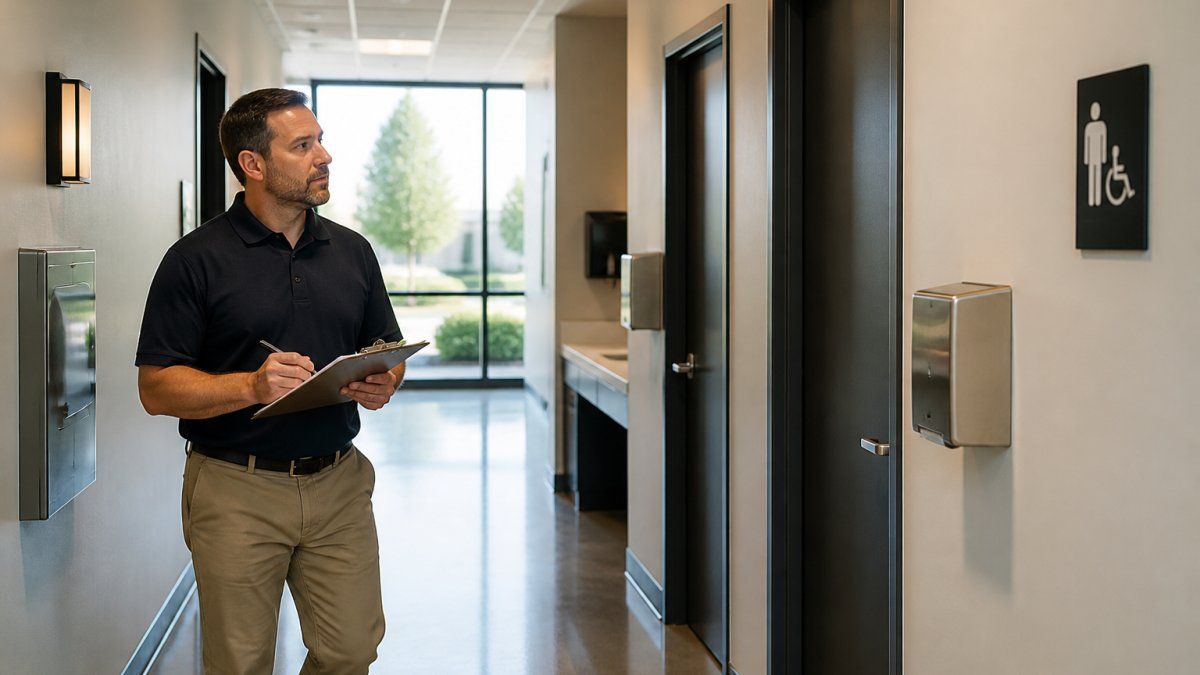
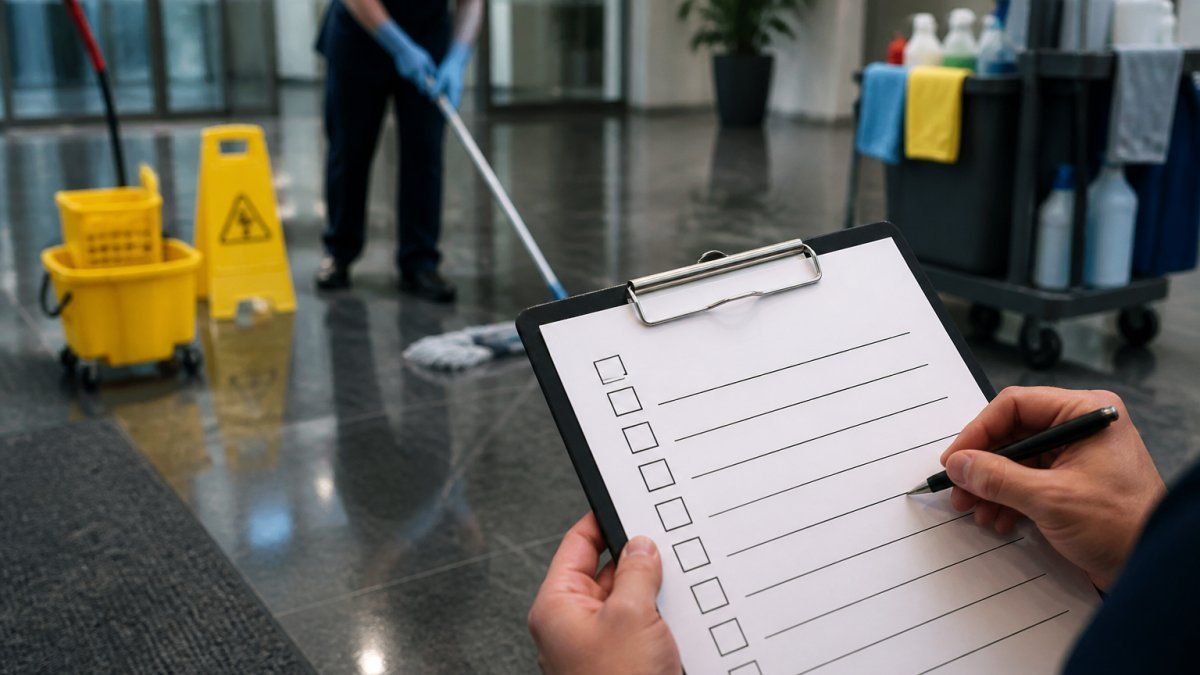
A facility maintenance checklist turns vague expectations into a repeatable routine, giving your cleaning partner a clear standard and giving you a way to verify the work. It does not need to be long, just specific: "clean restrooms" means nothing, while "wipe sinks, restock paper products, check for leaks under each sink" gives someone a real task and gives you something to inspect against.
What Belongs on a Cleaning and Floor-Care Checklist
- Restrooms: sinks, mirrors, dispensers, floors, trash
- Entrances: glass, mats, door handles, floor edges
- Floors: visible soil, scuff marks, dull patches, spills
3. Invest in Preventative Commercial Floor Maintenance Programs
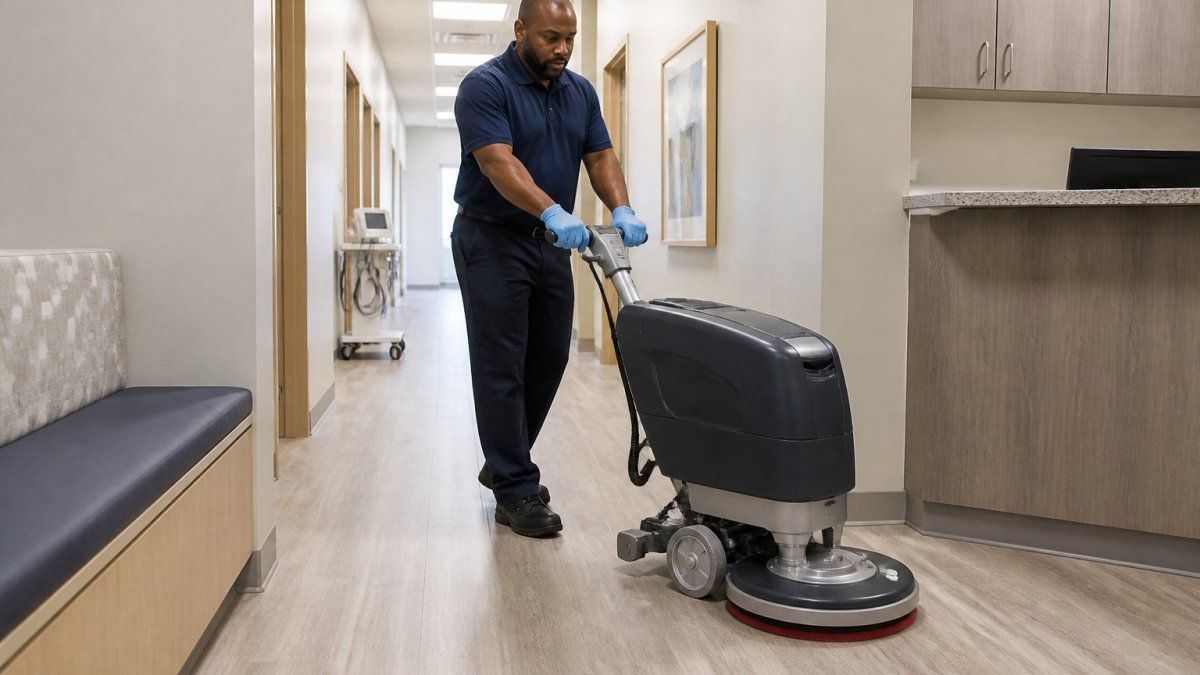
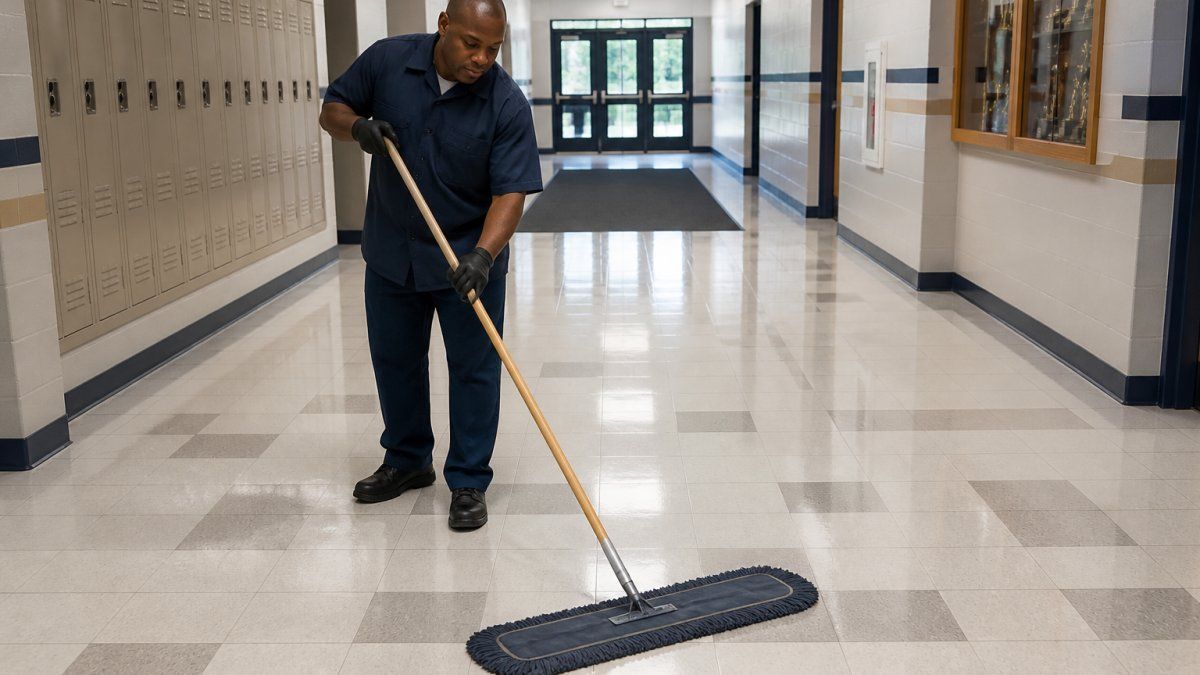
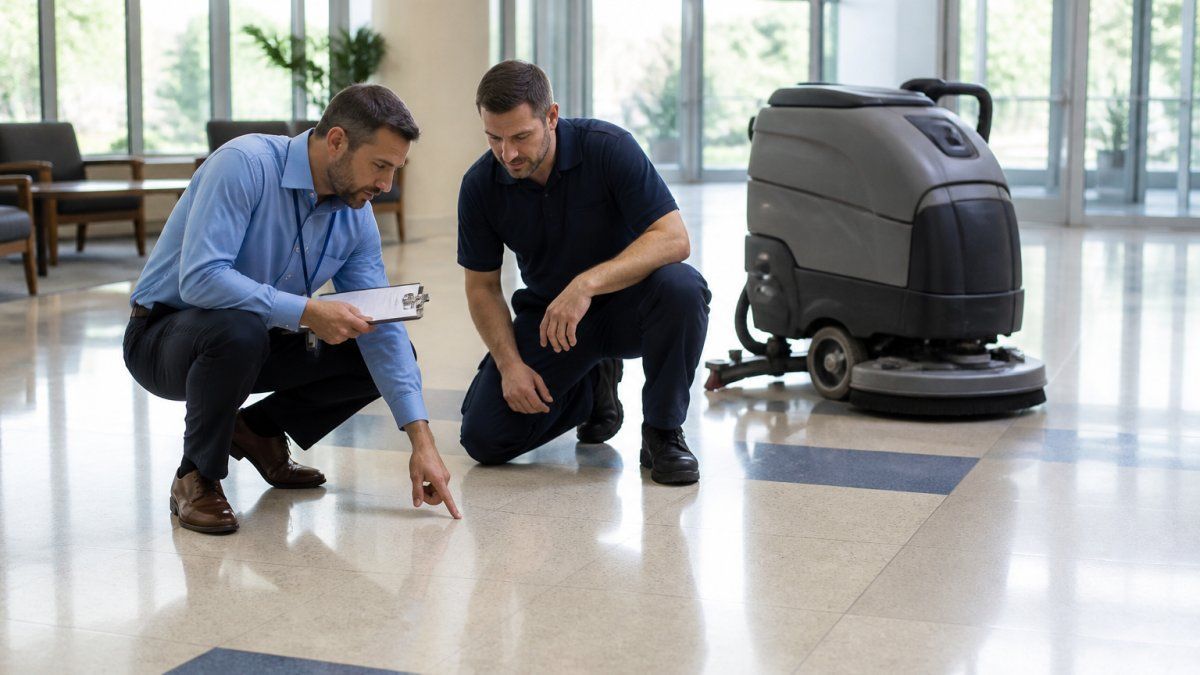
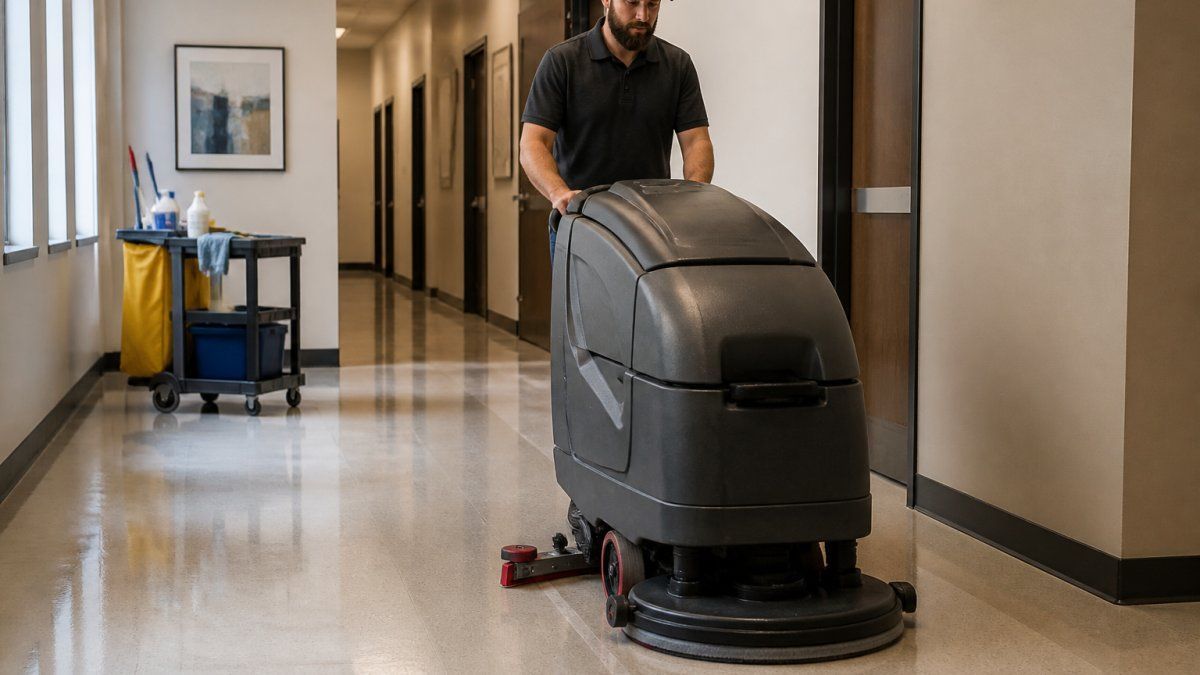
Preventative commercial floor maintenance means caring for floors on a set cycle before damage becomes visible.
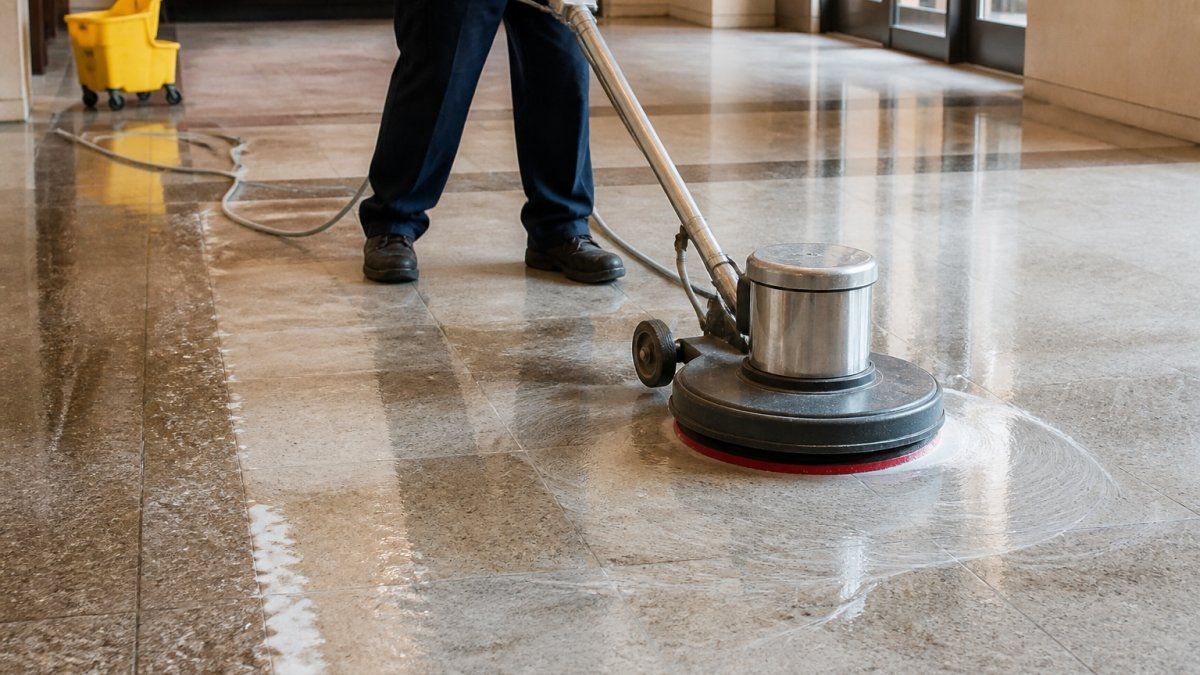
Different floors need different care. Carpet needs regular vacuuming plus periodic deep cleaning. Tile and grout need cleaning that lifts soil out of the grout lines without damaging the surface.
(/professional-building-cleaning) and floor care between two vendors creates gaps. One team blames the other when a floor looks dull, and nobody owns the transition between routine cleaning and periodic restoration.
It also simplifies your side of the work:
- One point of contact for scheduling and questions
- One scope of work covering daily and periodic tasks
- One standard for quality across the whole building
Consolidation is not right for every facility. Large campuses with specialized needs may still split certain services. But for most commercial buildings, one reliable partner beats three disconnected ones.
6. Improve Communication and Quality Control With Your Cleaning Partner
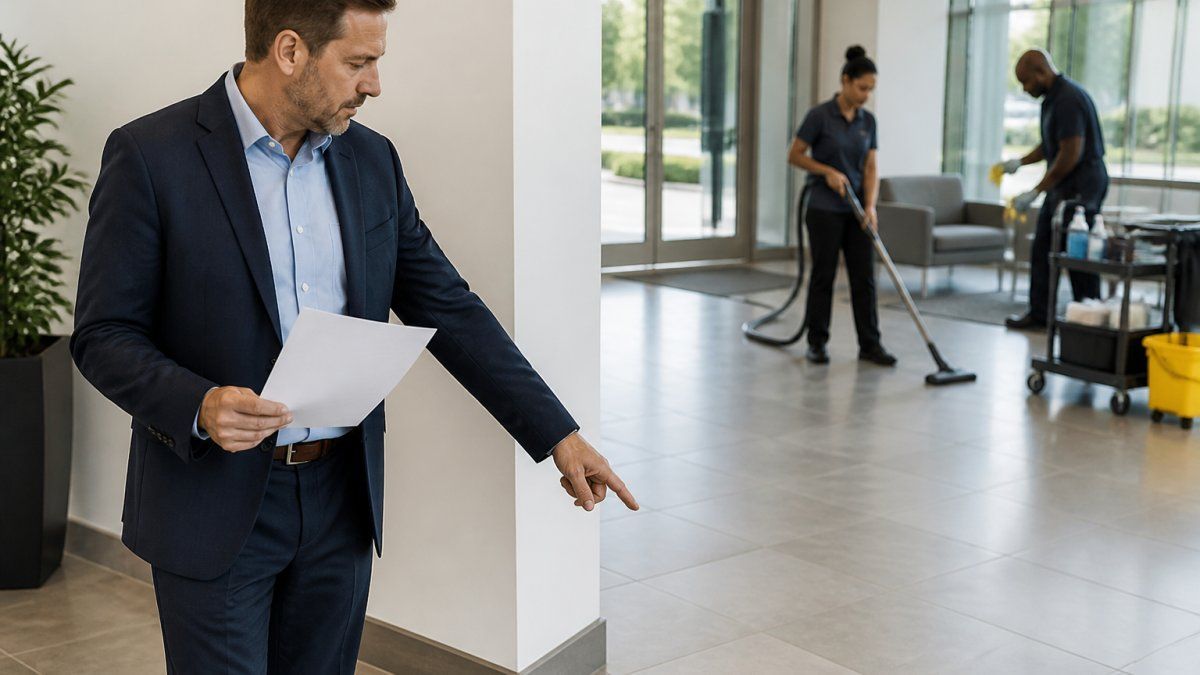
Communication is where most cleaning relationships quietly fail. A facility manager notices a problem, mentions it once, and never hears back. Three weeks later the same issue is still there.
Fix that with a simple routine:
- A named contact on both sides
- A short weekly or monthly check-in
- A shared log for issues and resolutions
Quality control works the same way. Inspect against the checklist, not against memory. Note what passed, what failed, and what changed. Over a few months, that log becomes the most useful document you have for managing the contract.
7. Address Maintenance Issues Before They Escalate Into Larger Problems
Small issues get expensive when they wait. A slow leak under a sink can rot a cabinet; a scuffed VCT floor left alone eventually needs full stripping instead of a spot recoat; a stained carpet square can spread into a full replacement. Treat every small issue as a scheduling item, not a someday item: when your cleaning team flags something, log it and assign a date, and when your own staff notices something, pass it along the same day.
Run Issues Through a Simple Triage
Not every issue deserves the same response time. A short triage keeps the log from becoming a backlog nobody reads:
- Same-day: Anything that affects safety, water intrusion, or the appearance of a main entrance. A wet floor sign that never comes down, a leaking dispenser, a broken door closer.
- This week: Cosmetic damage that will worsen with traffic. Scuffed VCT in a lobby, a curling carpet edge, a cracked tile in a restroom.
- This month: Items that are stable but will eventually need attention. Faded finish in a low-traffic corridor, a slow-draining sink, worn baseboards.
The triage is the point. It forces a decision on every item instead of letting small things sit in a queue.
Measure How Fast Issues Close
A log is only useful if you can see whether it is working. Two simple measures tell you most of what you need:
- Time to close: The number of days between when an issue is logged and when it is resolved. Track it by triage tier so a same-day item is not averaged against a next-budget-cycle item.
- Repeat rate: The share of issues that come back within a set window, such as 30 or 60 days. A high repeat rate usually points to a root cause that was never fixed, not to a new problem.
You do not need software to track these. A shared spreadsheet with a date opened, a date closed, and a short description is enough for most commercial buildings. The value is in reviewing it on a set schedule, not in the tool itself.
Close the Loop With Your Cleaning Partner
This is where a good cleaning partner earns their keep. A reliable team notices the small stuff during routine work, the loose handrail, the cracked tile, the fading floor finish, giving you time to plan the repair instead of reacting to it.
The loop only works if the report goes somewhere. Agree on how issues get reported, a shared log, a weekly email, a note in the check-in, and who owns the follow-up.
If you are rethinking your cleaning and floor care program, the place to start is a walkthrough. A Smarter Clean provides commercial janitorial and floor care services for businesses, medical and dental offices, schools, churches, banks, and other commercial facilities in Sussex and Kent Counties in Delaware and Maryland's Eastern Shore. We offer flexible nightly, weekly, and monthly programs, low-moisture carpet cleaning, VCT stripping and waxing, LVT and LVP maintenance, and tile and grout cleaning. Our team uses OSHA-safe products and background-checked staff, and we focus on educating clients on safer, cost-effective cleaning processes.
Frequently Asked Questions
How often should a commercial facility be cleaned?
The right frequency depends on your traffic levels and facility type. A medical or dental office with high daily foot traffic typically needs nightly janitorial service, while a small office with light use may only need service two to three times per week. Schools, churches, and banks fall somewhere in between. The key is matching your commercial cleaning schedule to actual use patterns rather than sticking to a fixed routine that may over-serve quiet areas and under-serve busy ones.
What is a preventative floor maintenance program?
A preventative commercial floor maintenance program is a planned schedule of care that keeps floors in good condition instead of waiting for them to deteriorate. For VCT, this means regular scrub-and-recoat and periodic stripping and waxing. For LVT/LVP, it means routine cleaning and occasional deeper restorative work. For carpet, it includes scheduled encapsulation or hot-water extraction. These programs reduce the need for costly restoration and keep floors looking professional year-round.
How can cleaning services reduce disruption during business hours?
Most disruption is avoided by scheduling work outside operating hours. Nightly janitorial service handles routine cleaning after staff leave. For floor care projects like stripping and waxing or carpet cleaning, weekend or evening windows work best. If daytime work is unavoidable, providers can section off areas and use low-moisture methods that dry quickly. Clear communication about timing and scope helps facility managers plan around any necessary daytime activity.
What should a facility maintenance checklist include for cleaning and floor care?
A practical facility maintenance checklist should cover daily janitorial tasks like trash removal, restroom cleaning, and spot mopping, plus weekly and monthly items such as floor burnishing, carpet spot treatment, and tile and grout inspection. Include seasonal tasks like stripping and waxing VCT or deep carpet extraction. The checklist should also note who is responsible, when the task was completed, and any issues observed so nothing falls through the cracks between service visits.