


A red metal shed with a white door and window, set against a backdrop of green pine trees and a clear blue sky.

Customizable Cleaning Schedules for Trained Staff

Editorial Team • October 8, 2026

Table of Contents

Last Updated: October 8, 2026

Why Customizable Cleaning Schedules Beat One-Size-Fits-All Plans

Customizable cleaning schedules are written plans that match cleaning tasks to a specific building's size, hours, traffic, and surfaces instead of applying one fixed routine to every facility. For most facilities, that difference decides whether a space actually stays clean or just looks that way on inspection day.

At A Smarter Clean, we build these schedules with clients across Sussex and Kent Counties in Delaware and Maryland's Eastern Shore, and the pattern holds: facilities that define their own scope get more consistent results. The ISSA cleaning industry standards treat cleaning as a process with defined outcomes, not a checklist copied from another building.

Below, we'll show you exactly how to assess your facility, build a schedule your staff will follow, and adjust it as your needs change.

What to Assess Before Building Your Schedule

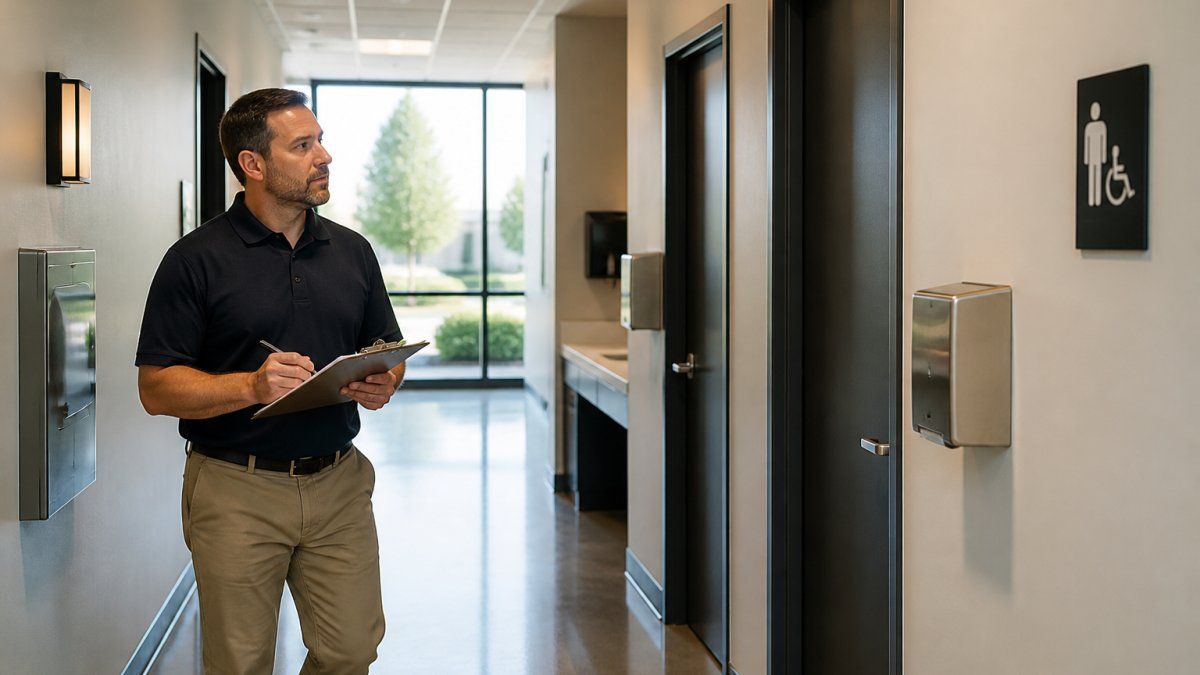
Start with a walkthrough. Walk the building during operating hours, not after close, so you see how people actually use each space. Bring a clipboard and note four things: square footage, peak hours, high-touch surfaces, and floor types.

A facility manager walking through a commercial office hallway with a clipboard, inspecting restroom doors and high-touch surfaces during a daytime walkthrough, natural window light

Facility Size, Operating Hours, and Traffic Patterns

A 2,000-square-foot dental office and a 40,000-square-foot school need different plans, even if both want daily service. Note when the building is busiest. A bank lobby peaks at midday. A school peaks between class changes.

Traffic level sets your frequency. Heavy traffic areas need daily attention. Low-traffic storage rooms may only need weekly service.

High-Touch Areas and Restroom Demands

Restrooms drive most complaints. Count the fixtures, note the traffic, and set a service frequency for each restroom separately. A single-occupancy restroom in a small office is not the same job as a multi-stall restroom in a medical building.

High-touch surfaces include:

  • Door handles and push plates
  • Light switches and elevator buttons
  • Shared keyboards and phones
  • Water fountains and break room counters
  • Handrails and shared seating

How to Use a Commercial Cleaning Schedule Template

A commercial cleaning schedule template is a fill-in document that lists each area, the tasks assigned to it, and how often each task happens. The template matters less than the fields you fill in.

Every schedule should capture:

  • Area or room name
  • Task description
  • Frequency (daily, weekly, monthly, quarterly)
  • Who is responsible
  • Supplies or equipment needed

Pro Tip
Build your template around zones, not rooms. Grouping a hallway, its restrooms, and its entry doors into one zone lets one staff member own a complete route instead of bouncing between floors.

Building a Janitorial Cleaning Checklist Your Staff Will Follow

A janitorial cleaning checklist works when it is specific, short, and tied to a location. "Clean restroom" fails. "Wipe sinks, restock paper, mop floor" works.

Write each task as a verb plus an object. Then group tasks by area so staff can move through a space once and finish it.

Keep daily checklists to one page per zone. Longer lists get skimmed, not followed. Reserve detailed task lists for periodic work like floor care.

Commercial Cleaning Frequency Guide: Matching Tasks to Intervals

A commercial cleaning frequency guide maps each task to a realistic interval. Set intervals by how fast a surface gets dirty, not by habit.

Task Frequency Why
Restroom cleaning and restocking Daily Highest complaint source
Trash removal Daily Odor and pest control
Vacuuming high-traffic carpet Daily to weekly Depends on foot traffic
Dusting open surfaces Weekly Slow buildup
Deep carpet cleaning Quarterly to yearly Soil reaches the base
VCT stripping and waxing Every 6 to 12 months Finish wears with traffic
Tile and grout cleaning As needed Grout holds soil

The CDC guidance on cleaning and disinfecting supports matching cleaning frequency to how often a surface is touched, which is exactly what this table does.

Commercial Floor Care Schedule: Recurring vs. Periodic Tasks

A commercial floor care schedule separates routine work from restoration work. Routine tasks keep floors presentable. Periodic tasks bring them back.

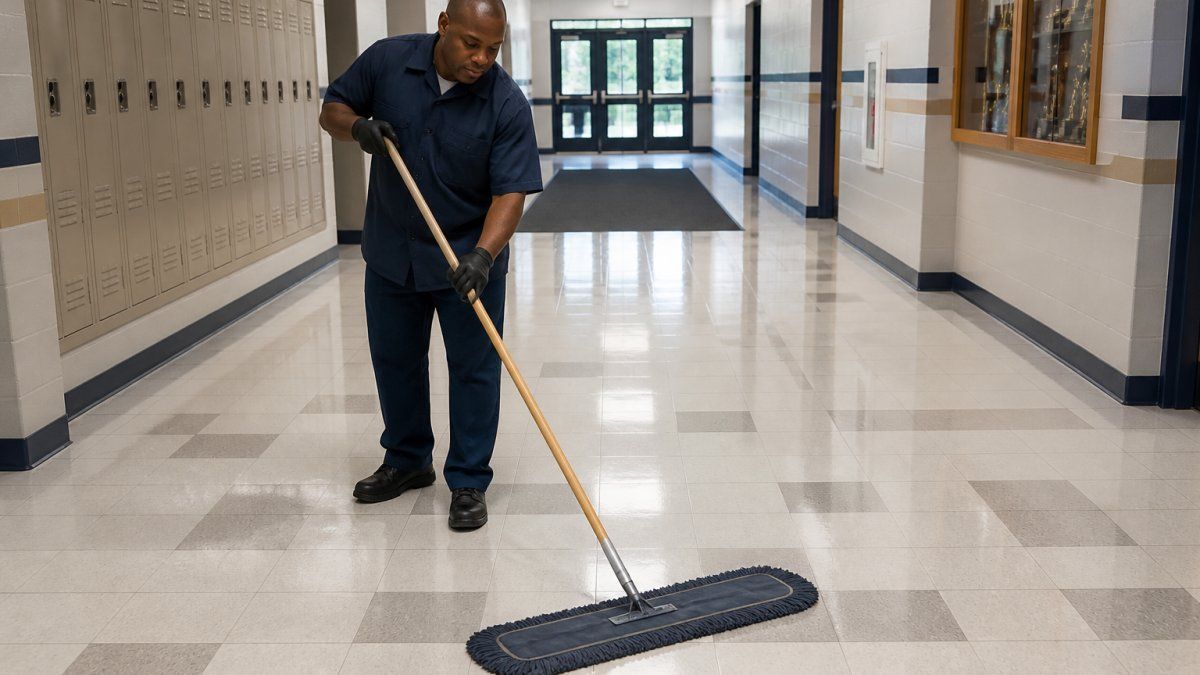
Recurring floor care includes dust mopping, damp mopping, and auto-scrubbing on a set cycle. Periodic floor care includes stripping and waxing VCT, scrub-and-recoat, burnishing, LVT/LVP maintenance, commercial low-moisture carpet cleaning, and tile and grout cleaning.

Watch Out
Skipping periodic floor care to save short-term effort usually backfires. Finish wears through, soil bonds to the floor, and a scrub-and-recoat turns into a full strip and wax.

Build both into the same schedule. Recurring janitorial service keeps the building clean day to day. Periodic floor care keeps the floors from aging faster than they should.

Quality Control, Communication, and Adjusting Schedules Over Time

Quality control is a scheduled inspection, not a reaction to a complaint. Set a weekly walkthrough with your provider and score each zone against the checklist.

Communication keeps the schedule honest. Report issues the same day, in writing, with a photo when possible. A provider that responds fast fixes small problems before they grow.

Adjust schedules when something changes:

  • New tenants or staff
  • Seasonal traffic shifts
  • Renovations or new flooring
  • Changes in operating hours

Key Takeaway
A cleaning schedule is a living document. Review it quarterly and update it when the building changes, not when a problem forces the issue.

Conclusion: Building a Schedule That Works for Your Facility

No two buildings clean the same way, and a schedule that ignores your size, hours, and floor types will always fall short. A Smarter Clean works with facility managers, property managers, schools, churches, medical and dental offices, and banks to build practical schedules around how each building is actually used. Our flexible nightly, weekly, and monthly programs, commercial low-moisture carpet cleaning, and specialized floor care cover both recurring janitorial work and periodic restoration. Request a walkthrough and a customized cleaning proposal, and we'll build a schedule that fits your facility.

Frequently Asked Questions

How do you create a cleaning schedule for a commercial facility?

Start by walking the facility to document square footage, operating hours, traffic levels, high-touch areas, restroom counts, and flooring types. Then assign tasks to daily, weekly, monthly, or quarterly intervals using a commercial cleaning frequency guide. Build a janitorial cleaning checklist for each zone, and set a commercial floor care schedule for periodic tasks like stripping, waxing, and carpet cleaning. Review the plan monthly and adjust as facility needs change.

What should a commercial cleaning checklist include?

A janitorial cleaning checklist should list every task by area: restrooms, breakrooms, lobbies, offices, and floors. Include specific actions like disinfecting high-touch surfaces, restocking supplies, emptying waste, and spot-cleaning floors. Note the frequency for each task and who is responsible. Checklists work best when tasks are concrete and verifiable, so staff and managers can confirm completion during quality inspections rather than relying on general impressions.

How often should a commercial facility be cleaned?

Frequency depends on traffic and use. Medical and dental offices typically need daily attention to restrooms and high-touch surfaces. Schools and banks may need nightly service during the week. Lower-traffic offices can often run on a two or three day per week schedule. Periodic floor care, such as VCT stripping and waxing or carpet cleaning, usually runs monthly to annually depending on wear. A commercial cleaning frequency guide helps map each task to the right interval.

When should a commercial cleaning schedule be adjusted?

Review your schedule whenever operations change: new hours, added staff, seasonal traffic shifts, or updated flooring. Also adjust after quality inspections reveal missed tasks or recurring complaints. Building a customizable cleaning schedule means treating it as a living document. Schedule a formal review quarterly, and update checklists, frequencies, and floor care intervals so the plan keeps matching how your facility is actually used.


A schedule only works if the team behind it shows up and follows it. A Smarter Clean builds customizable cleaning schedules around your building, then backs them with flexible nightly, weekly, or monthly programs and specialized floor care like VCT stripping and waxing, LVT/LVP maintenance, and tile and grout cleaning. Get started with A Smarter Clean and request a walkthrough for a cleaning plan built for your facility.

By Editorial Team • October 6, 2026
Keep commercial VCT flooring clean and safe with 7 practical maintenance methods, from daily dust mopping to stripping and waxing. Request a quote today.
By Editorial Team • October 4, 2026
Learn how to vet commercial cleaners in Maryland with a step-by-step checklist covering scope of work, reviews, insurance, and floor care.
By Editorial Team • October 2, 2026
Commercial flooring maintenance explained for facility managers: VCT, LVT, tile, and carpet care, plus schedules that protect your floors.
By Editorial Team • October 1, 2026
Discover why professional janitorial staff matters for consistency, safety, and asset protection in your commercial facility. Learn how to get reliable.
By Editorial Team • September 26, 2026
Commercial tile and grout cleaning services restore floors in high-traffic facilities. Learn methods, schedules, sealing, and how to choose a provider.
By Editorial Team • September 25, 2026
Discover 5 floor care tips for medical offices, from maintenance schedules to LVT best practices. Keep your facility safe and professional. Get a quote.
By Editorial Team • September 24, 2026
Discover the benefits of low moisture carpet cleaning for commercial facilities: faster dry times, less disruption, and better appearance. Get a quote.
By Editorial Team • September 23, 2026
Find reliable commercial janitorial services in Sussex County. Learn what to expect, how to choose, and why professional cleaning matters.
By Editorial Team • September 21, 2026
Professional commercial floor care services for businesses, medical offices, and schools. Learn about floor stripping, waxing, maintenance.
By Editorial Team • September 21, 2026
Practical carpet maintenance tips for facility managers: schedules, stain removal, preventative programs. Discover how to extend carpet life and cut costs.
Show More