

How to Extend the Life of Commercial Tile and Grout
Last Updated: November 21, 2026
Quick Summary
Extending the lifespan of commercial tile and grout comes down to daily habits: entrance matting, prompt spill cleanup, pH-neutral cleaning, and keeping excess water off the floor. Pair these with traffic-matched machine scrubbing, deep grout cleaning, and condition-based resealing to slow wear and delay costly replacement.
- Sweep or dust-mop high-traffic areas daily and use a pH-neutral cleaner for routine mopping.
- Over-wet mopping can push dirty water into grout lines instead of removing soil.
- Match maintenance frequencies to traffic level, and give every task an owner and a log entry.
- Sealing slows soil and moisture absorption but does not make grout stain-proof or maintenance-free.
- Inspect grout in entries, service counters, and kitchen lines first, since sealer wears fastest there.
Table of Contents
- Why Commercial Tile and Grout Age Faster Than You Expect
- How to Maintain Commercial Tile Floors Day to Day
- Building a Commercial Floor Maintenance Schedule by Traffic Level
- Commercial Tile Floor Cleaning Equipment and Products That Protect Grout
- Grout Sealing for Commercial Floors: When It Helps and When It Doesn't
- Repair or Replace? Reading Grout Condition and Lifecycle Cost
- Request a Tile and Grout Walkthrough for Your Facility
- Frequently Asked Questions
Why Commercial Tile and Grout Age Faster Than You Expect
Extending the lifespan of commercial tile and grout starts with one uncomfortable truth: most floors do not wear out from traffic alone. They wear out because the wrong cleaning method, excess water, or a missing entrance mat does the damage first.
Grout is the weak point. It is porous, and once soil works into those pores, no mop lifts it back out. The tile itself can last decades. The grout between it often gives out far sooner.
Traffic, Moisture, and Cleaning Methods That Wear Grout Down
Three forces do most of the damage.
- Foot traffic grinds grit into grout lines, slowly widening and staining them.
- Moisture seeps into unsealed grout and weakens the bond to the tile.
- Harsh cleaning strips sealers and etches the surface.
The Tile Council of North America's installation guidance notes that grout performance depends heavily on proper installation and ongoing care. Poor installation quality or a weak substrate speeds up cracking and deterioration.
Watch out: over-wet mopping is a common mistake. It can push dirty water into grout lines instead of removing soil.
How to Maintain Commercial Tile Floors Day to Day
Daily habits protect grout more than any single deep clean. Routine soil removal keeps grit off the surface before it grinds into the pores.
Entrance Matting, Spill Response, and Daily Soil Removal
Start at the door. Entrance matting catches dirt before it reaches the tile. Skipping mats at secondary entrances is a common mistake, since tracked-in soil often enters through them.
Then build these into every shift:
- Sweep or dust-mop high-traffic areas daily
- Use a pH-neutral cleaner for routine mopping
- Blot spills promptly instead of spreading them
- Keep excess water off the floor and let tile dry fully
For facilities with porous tile, our guide on how to care for porous commercial tile and grout covers the daily routine in more detail. When spills set in, see how to remove stubborn stains from tile and grout.
Building a Commercial Floor Maintenance Schedule by Traffic Level
A commercial floor maintenance schedule should match the floor's actual traffic, not a one-size template. A common error is treating a busy cafeteria the same as a quiet office suite. The fix is to write frequencies down as procedures with owners and sign-offs, so the schedule survives staff turnover and vendor changes.
Start by classifying each tiled area by traffic level, then assign measurable frequencies. The framework below is a starting point, not a fixed rule, adjust it after the first inspection cycle.
| Traffic Level |
Example Facility |
Daily |
Weekly |
Monthly |
Annual / Periodic |
|---|---|---|---|---|---|
| Low |
Private offices, banks |
Dust mop or sweep; spot mop spills |
Damp mop with pH-neutral cleaner; mat check |
Grout-line inspection; sealer condition check |
Deep grout cleaning and resealing assessment based on condition |
| Medium |
Medical and dental offices, churches |
Dust mop; damp mop high-soil zones; spill response |
Damp mop full floor; entrance mat rotation |
Machine scrub of grout lines; inspection log entry |
Deep grout cleaning; resealing assessment |
| High |
Schools, restaurants, lobbies, cafeterias |
Multiple dust-mop passes; damp mop during and after peak hours; mat checks each shift |
Machine scrub of high-traffic zones; mat deep-clean |
Deep grout cleaning of kitchen, entry, and service areas; inspection log entry |
Full deep grout cleaning; resealing assessment; substrate and moisture check |
Two things make this table work in practice. First, every frequency needs an owner and a log entry, a schedule nobody signs off on quietly disappears. Second, the inspection drives the deep work, not the calendar alone.
Facility-specific adjustments matter more than most guides admit:
- Restaurants and cafeterias face grease and food soil that pH-neutral routine cleaners handle slowly. Build in more frequent machine scrubbing and inspect grout near cooking and dish areas first.
- Medical and dental offices often use disinfectants that can leave residue or stress sealers over time. Checking sealer condition regularly is a sound practice.
- Schools and churches see bursty traffic, assemblies, services, events, that concentrates soil in entries and aisles. Mat checks and post-event passes protect grout more than a heavier weekly mop.
- Banks and office suites with low traffic still fail at entries and elevator lobbies, where tracked-in grit concentrates. Secondary entrances deserve the same matting as the main door.
Watch out: a schedule copied from another facility without adjusting for soil type, cleaning chemistry, and mat coverage will either over-clean some areas or under-clean the ones that actually fail first.
For a fuller look at what professional care involves, see our commercial tile and grout cleaning services guide.
Commercial Tile Floor Cleaning Equipment and Products That Protect Grout
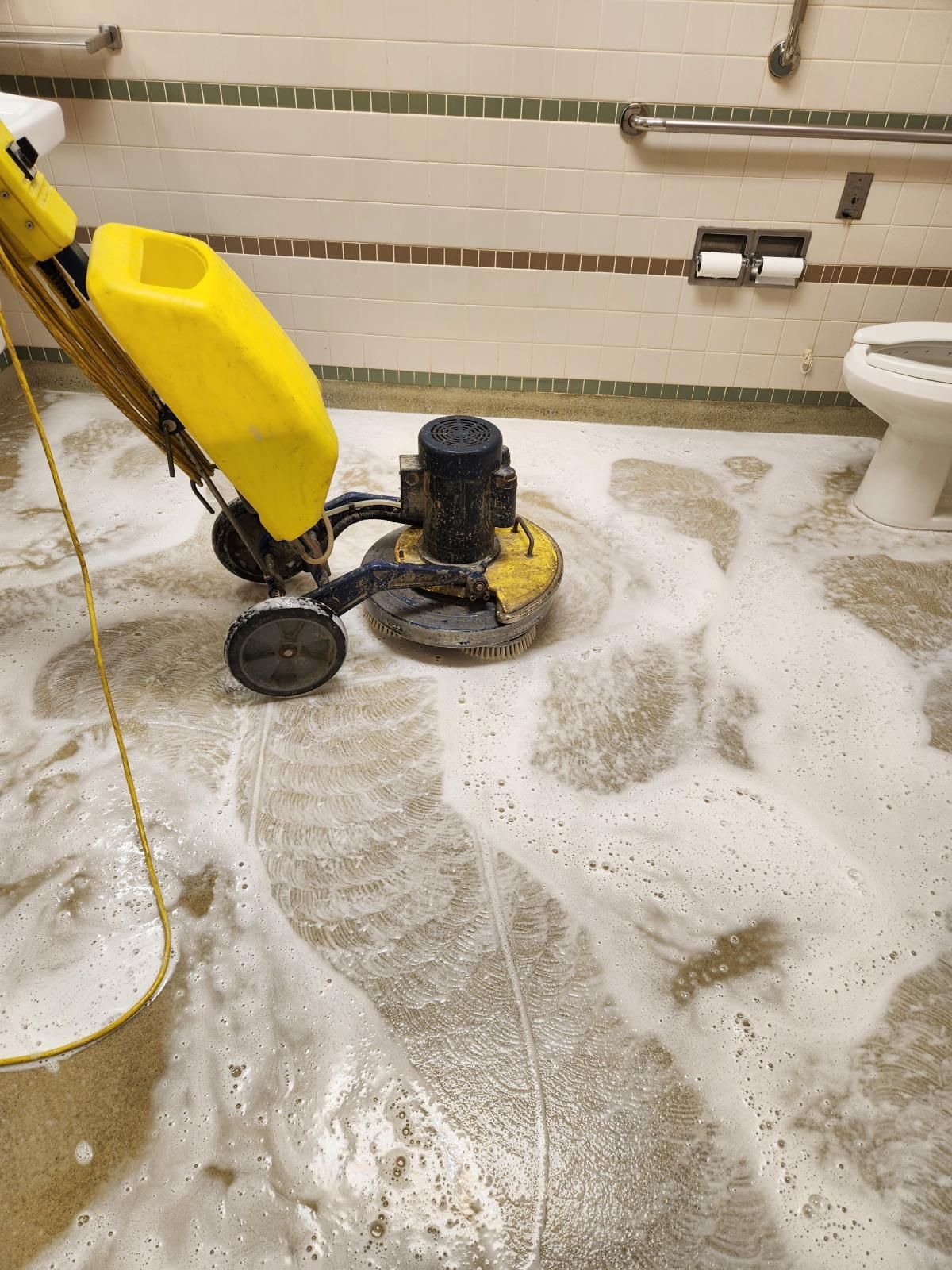
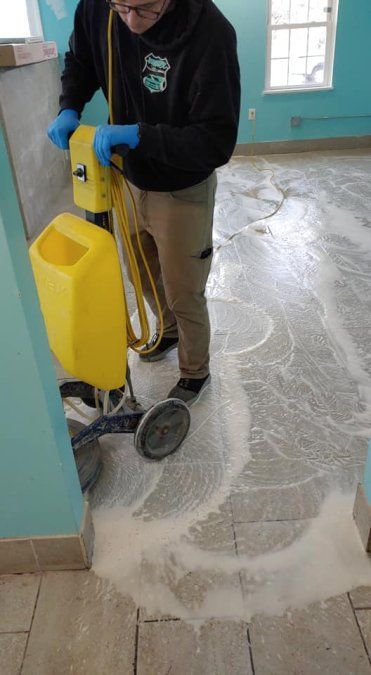
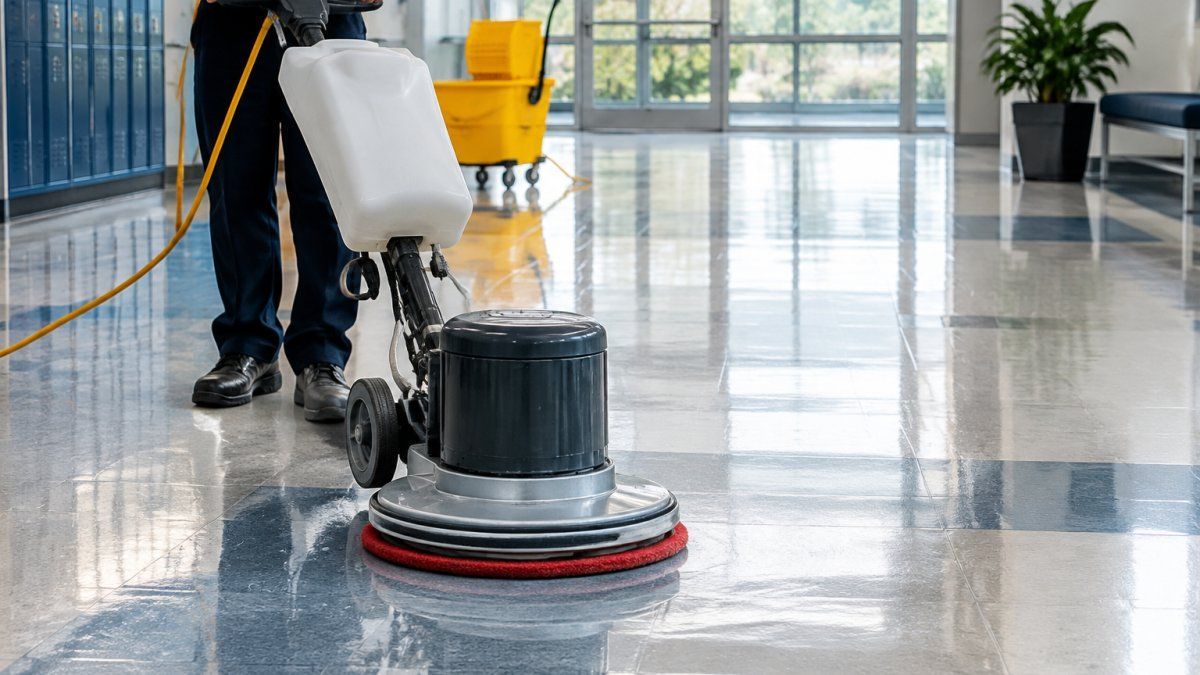
The right commercial tile floor cleaning equipment removes soil without driving it deeper. That usually means microfiber, controlled moisture, and pH-neutral products.
Abrasive cleaners and harsh acids can scratch tile, strip sealers, and leave grout more vulnerable, so pH-neutral routine cleaners are generally preferred.
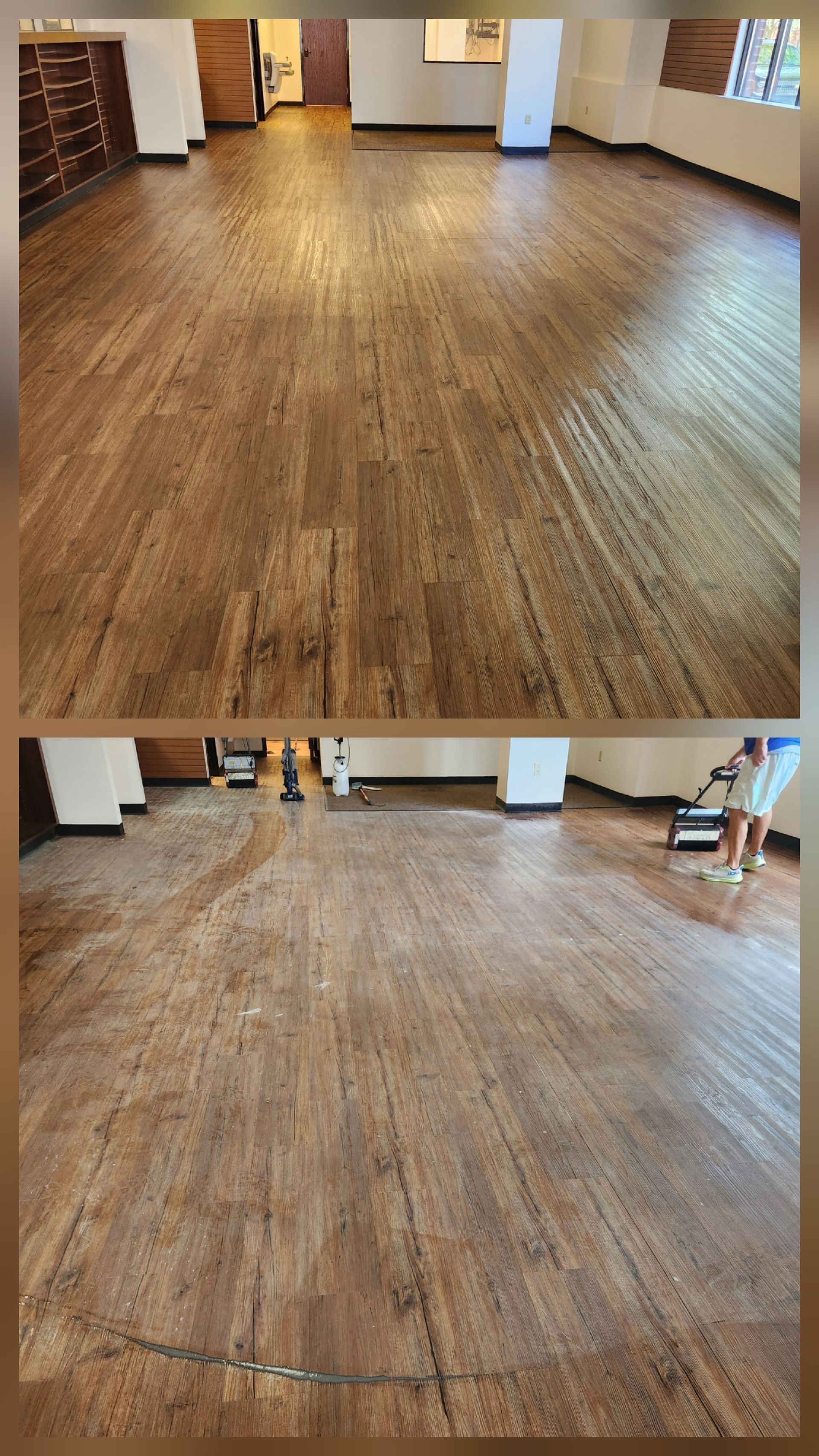
Match the product to the material. VCT, LVT/LVP, tile and grout, concrete, and wood each need different care. Treating them the same is a common mistake.
When routine cleaning stops keeping up, it may be time for deeper work. Our article on when routine cleaning isn't enough explains the signs.
Grout Sealing for Commercial Floors: When It Helps and When It Doesn't
Grout sealing for commercial floors helps slow soil and moisture absorption, but it is not a cure-all. Sealing does not make grout stain-proof, waterproof, or maintenance-free. It buys time and makes routine cleaning easier, nothing more.
Sealing helps most when grout is clean, sound, and unsealed. It helps less when grout is cracked, already saturated, or coated with a failing previous sealer. Resealing on a schedule, based on condition, keeps protection working. Because sealing cannot compensate for embedded soil or failing grout, Americanprocarpetcleaningandrestoration can help connect routine maintenance with the deeper cleaning that prepares tile and grout for protection.
Matching Sealer, Grout, and Tile
Most guides skip the compatibility question, and it is where sealing goes wrong. Three variables interact:
- Grout type. Cementitious grout is porous and responds to penetrating sealers ( Cleaning Grout). Epoxy grout is far less absorbent and usually needs little or no sealing, applying a sealer to it can leave a film that attracts soil.
- Tile type. Glazed porcelain and ceramic resist sealer penetration, so sealer belongs on the grout lines, not the tile face. Natural stone, quarry tile, and some unglazed surfaces are more absorbent and may need a different product and application approach than cementitious grout alone.
- Sealer type. Penetrating sealers soak into the grout and leave the surface looking natural; they are the usual choice for commercial floors because they do not change appearance or create a film that wears unevenly. Topical coatings sit on the surface and can scuff, peel, or yellow under heavy traffic, and they complicate future cleaning because stripping becomes part of the cycle.
Previous Sealers and Resealing Decisions
Previous sealers change the plan. A penetrating sealer that has worn thin can often be refreshed after cleaning. A topical coating that is peeling or patchy usually needs to be removed before any new product goes down, or the new layer fails with the old one. Ask what was applied before, and when, a maintenance log is worth more here than any product label.
Resealing frequency should follow condition, not a fixed calendar. Check grout in high-traffic zones, entries, service counters, kitchen lines, elevator lobbies, first, since those areas wear sealer fastest. A common pattern is to inspect quarterly in high-traffic facilities and reseal only the zones that have lost protection, rather than sealing the whole floor on a schedule it does not need.
Watch out: sealing over dirty or damp grout traps problems in. Clean and dry first, always, and confirm the grout is sound before sealing, because sealer over cracked grout hides the crack without fixing it.
Repair or Replace? Reading Grout Condition and Lifecycle Cost
Not every worn floor needs replacement. Reading grout condition first saves money. Minor cracked grout can often be repaired or regrouted. Widespread failure, loose tile, or a failing substrate points toward bigger work.
Weigh lifecycle cost, not just the repair bill. Preventive maintenance extends service life and delays costly replacement. A floor restoration plan, matched to the surface, usually costs less over time than repeated emergency fixes.
Request a Tile and Grout Walkthrough for Your Facility
Every floor is different, so the right plan starts with a walkthrough. At A Smarter Clean, we evaluate your flooring type and condition before recommending a service, and recommend a suitable service. Our team is background-checked and the company is insured.
We serve commercial facilities across Delaware and Maryland's Eastern Shore with flexible nightly, weekly, or monthly janitorial programs. Request a professional building cleaning walkthrough and get a plan built around your floors.
Your floors are aging every day, and the wrong routine speeds that up. A Smarter Clean combines recurring janitorial service with specialized floor care in one vendor, so your tile and grout get consistent, material-appropriate attention. With background-checked staff, OSHA-safe products, and low-moisture methods, we help you protect your investment and avoid unnecessary replacement. Get started with A Smarter Clean and request a tile and grout walkthrough for your facility.
Frequently Asked Questions
What is the typical lifespan of tile grout in a commercial facility?
Grout life varies widely with traffic, cleaning habits, moisture exposure, and installation quality, so no single number fits every building. Many commercial floors see grout that holds up for years when soil is removed routinely and spills are handled quickly, while neglected grout in high-traffic areas can show discoloration, cracking, and deterioration much sooner. Rather than chasing a fixed figure, have your grout inspected periodically and let its actual condition, not a calendar, decide when deep cleaning, regrouting, or sealing is worth the investment.
How often should commercial tile and grout be professionally cleaned?
Frequency depends on foot traffic and the type of facility. A low-traffic office may only need periodic machine cleaning and deep grout work every so often, while restaurants, schools, and medical offices with heavy daily traffic usually benefit from a more regular commercial floor maintenance schedule. Between professional visits, routine cleaning, entrance matting, and prompt spill cleanup do most of the protective work. A walkthrough lets a provider set a realistic interval based on your flooring, traffic patterns, and current grout condition instead of a one-size-fits-all plan.
Does grout sealing for commercial floors make grout stain-proof or waterproof?
No. Grout sealing for commercial floors slows how quickly soil and moisture work into the grout, which can make routine cleaning easier and help grout hold its appearance longer, but it does not make grout stain-proof, waterproof, or maintenance-free. Sealer wears with traffic and cleaning, so it needs periodic inspection and resealing when appropriate. Sealing also is not always the right first step; if grout is heavily soiled or damaged, deep cleaning or repair should come first so the sealer goes onto sound, clean grout.
How do traffic levels affect commercial tile and grout maintenance needs?
Higher foot traffic grinds grit into grout lines, drives soil deeper, and wears sealer faster, so busy entrances, corridors, and dining areas usually need more frequent attention than back offices. Facilities with carts, deliveries, or food service add spills and moisture on top of that. Matching your commercial floor maintenance schedule to actual traffic, rather than treating every square foot the same, keeps high-traffic zones protected without overspending on low-traffic areas, and it helps you spot cracked grout or worn finish before it turns into a bigger repair.