

Commercial Tile and Grout Cleaning: When Routine Cleaning Isn’t Enough
Last Updated: October 23, 2026
Quick Summary
Safely removing deep stains from unglazed tile starts with identifying the stain source, because grease, rust, pigment, and mineral marks each need a different approach. Unglazed tile is porous, so routine mopping cannot pull absorbed soil back out; professional machine agitation and extraction are usually required. Results depend on tile type, grout condition, stain source, floor age, and previous sealers.
- Glazed ceramic tile has a glass-like finish that seals the surface, while unglazed ceramic and porcelain tile have no such barrier.
- A grease stain on commercial tile usually means buildup has been collecting for a while and calls for professional tile and grout cleaning.
- Dark grout lines that stay dark after normal cleaning mean soil is embedded rather than on the surface.
- Professional tile and grout cleaning includes a site walkthrough, a patch test, machine agitation, extraction, and controlled drying.
- Restoration may be appropriate when grout has eroded, a previous sealer has worn away unevenly, or cleaning leaves the floor dull.
Table of Contents
- Why Unglazed Tile Holds Deep Stains
- Identify the Stain Source Before You Touch It
- When Darkened Grout Lines Signal Embedded Soil
- Grease Buildup on Commercial Tile in Kitchens and Entryways
- What Professional Tile and Grout Cleaning Actually Involves
- Tile and Grout Restoration: When Cleaning Is Not Enough
- When a Stain Is Permanent or the Tile Is Damaged
- Frequently Asked Questions
Why Unglazed Tile Holds Deep Stains
Unglazed tile is a porous surface, and that porosity is exactly why deep stains take hold. A floor that looks dull and marked no matter how often it gets mopped is a common sight in commercial facilities across the region. The stain isn't sitting on top. It has soaked in.
That's the core difference between a surface mark and a deep stain. Routine cleaning lifts soil from the top of a surface. It cannot pull pigment or oil back out of a material that has already absorbed it.
How Absorptive Tile Differs From Glazed Ceramic
Glazed ceramic tile carries a glass-like finish that seals the surface. Spills stay on top, and a mop usually wins. Unglazed ceramic tile and unglazed porcelain tile have no such barrier. Their open surface welcomes liquid in.
This is why advice written for glazed tile often fails on absorptive tile. A cleaner that works fine on a sealed surface can drive a stain deeper into an open one.
Identify the Stain Source Before You Touch It
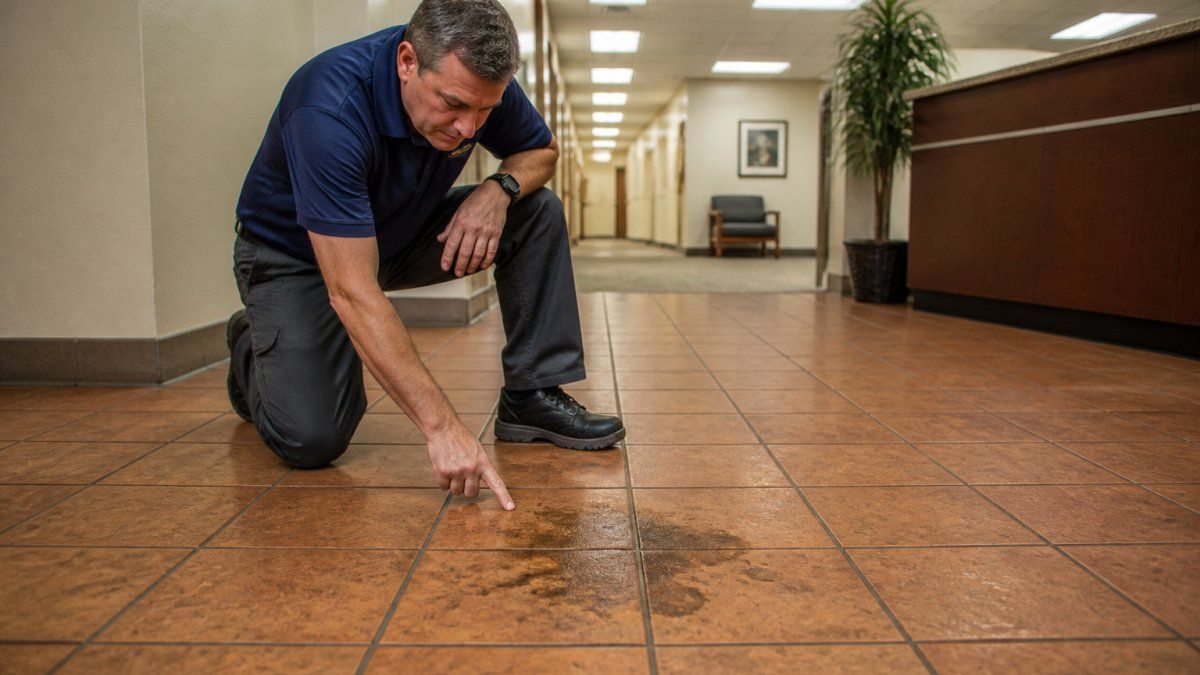
The stain source decides everything that follows. A rust mark, a grease patch, and a coffee spill are three different problems, and they do not respond to the same approach. This is the step most cleaning routines skip, and it is the step that most often determines whether a floor is a cleaning job or something else entirely.
For facility managers, a stain log helps. Note where the mark appeared, when it showed up, and what happens nearby. That record tells a professional cleaner more than any single photo. A pattern of marks near a kitchen pass-through, a loading door, or a drinking fountain usually points to a source faster than the mark itself does.
Stain Types by Source and What They Mean
| Stain Source |
Typical Location |
What It Suggests |
|---|---|---|
| Grease and cooking oil |
Kitchen floors, entryways |
Embedded buildup below the surface |
| Coffee, tea, food dye |
Breakrooms, dining areas |
Absorbed pigment in porous tile |
| Rust and metal marks |
Doorways, equipment zones |
Mineral transfer or surface reaction |
| Mineral deposits and hard-water film |
Restrooms, exterior entries |
Dissolved minerals left behind as water evaporates |
| Soap and detergent residue |
Janitor closets, mop paths |
Film that traps soil and dulls the surface |
| Organic staining (plant, food, mildew) |
Entrances, food-service areas |
Material that has soaked into open pores |
| Darkened grout lines |
High-traffic corridors |
Soil trapped in grout, not just tile |
| General discoloration |
Lobbies, hallways |
Wear, age, or a failing sealer |
A grease stain on commercial tile usually means buildup has been collecting for a while. That's a job for professional tile and grout cleaning, not a stronger mop. A rust or mineral mark tells a different story: it often points to a water source, a metal fixture, or a reaction at the surface rather than to foot traffic. Soap residue is the quiet one, it looks like ordinary dullness, but it is a film that keeps grabbing new soil, which is why some floors never seem to come clean no matter how often they are mopped.
Why the Source Changes the Recommendation
The source matters because it tells a professional what kind of treatment is even worth attempting. Pigment-based stains behave differently from oily ones, and mineral or rust marks can be a sign of surface reaction rather than simple soiling. Two floors that look equally dark can need completely different approaches, and one of them may not be a cleaning problem at all.
This is also where a walkthrough earns its keep. A trained eye can usually separate a stain that has soaked in from one that has etched or discolored the surface, and that distinction decides whether cleaning, restoration, or replacement is the honest recommendation. If your facility has marks that routine janitorial work no longer touches, request a walkthrough and let the assessment start with the source, not the scrub brush.
When Darkened Grout Lines Signal Embedded Soil
Dark grout lines are the clearest early warning sign. Grout is even more porous than unglazed tile, so it grabs soil and holds it. When lines that were once light turn gray or black, routine mopping has stopped keeping up.
Cleaning Tile : Cleaning Unglazed Ceramic Floor Tile
homesteady
This matters because grout soil spreads. Trapped dirt wicks into the surrounding tile edges over time. Left alone, darkened grout lines become a permanent look rather than a temporary one.
Grease Buildup on Commercial Tile in Kitchens and Entryways
Grease buildup on commercial tile is a different animal from everyday dirt. It's sticky, it traps other soil, and it builds in layers. Kitchen floors and entryways collect it fastest.
Standard mopping can smear grease across a floor without removing it. Over months, that film hardens into a dark, tacky layer that no routine pass will lift. Professional agitation and extraction are usually what's needed to break it down.
What Professional Tile and Grout Cleaning Actually Involves
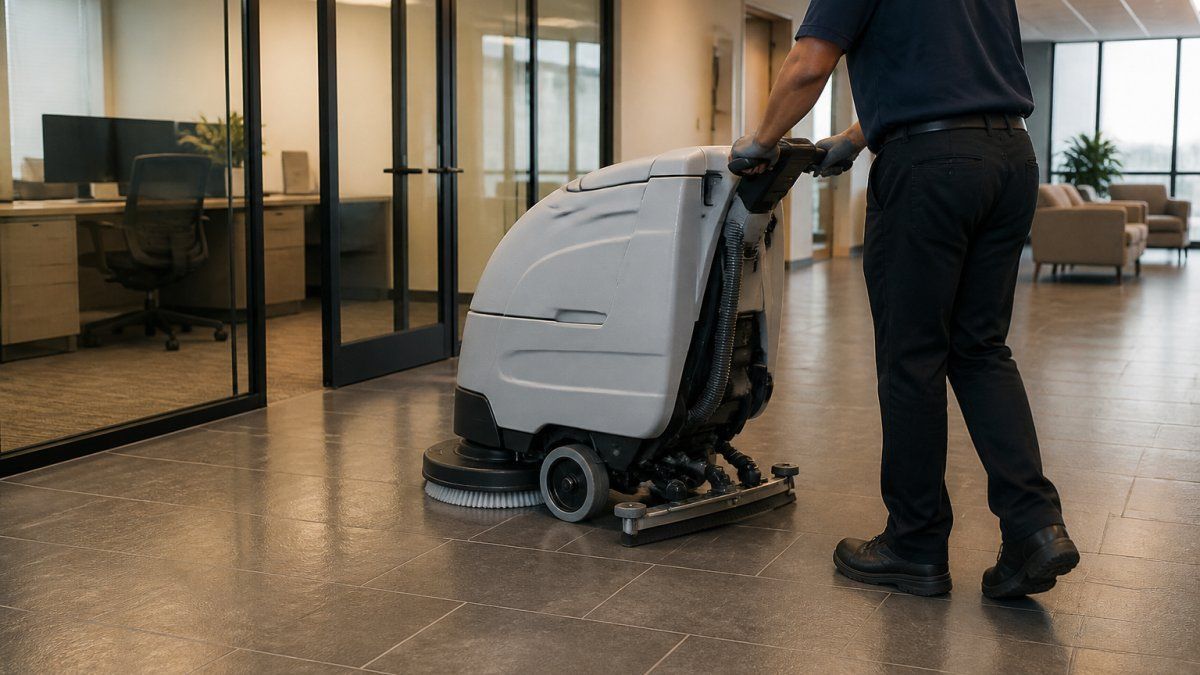
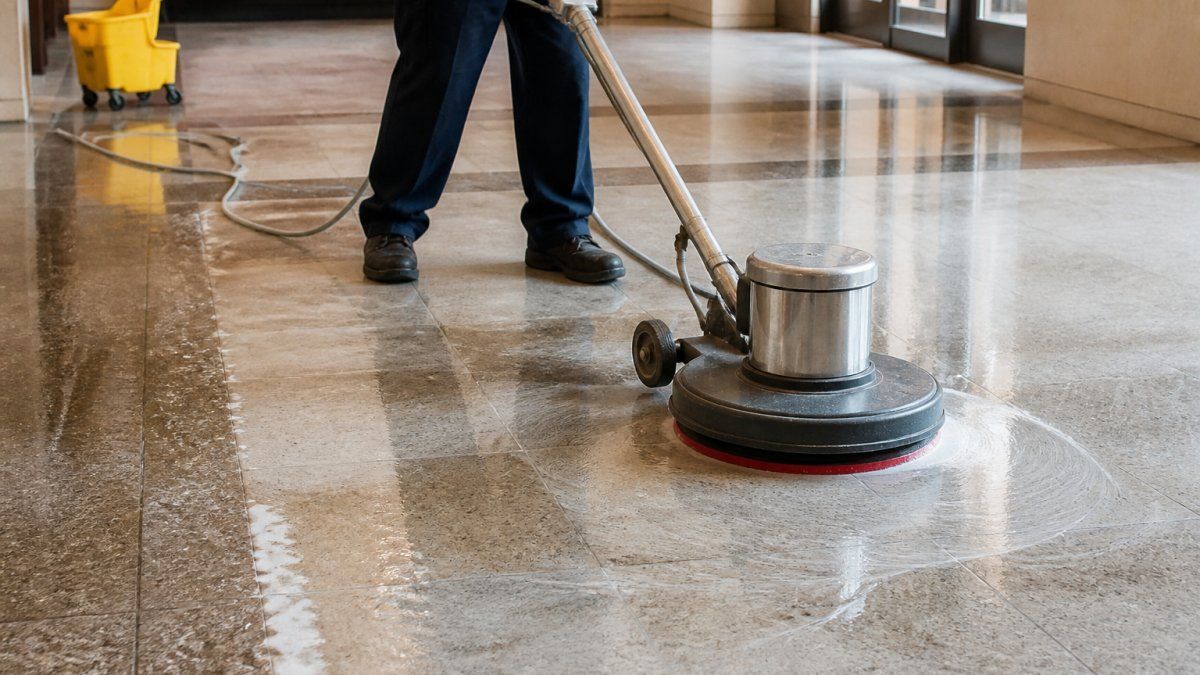
Professional tile and grout cleaning is a machine-based process that agitates the surface, lifts embedded soil, and extracts the dirty water in one pass. It is not a stronger version of mopping. It is a different method built for porous surfaces.
The process generally follows a staged approach:
- A site walkthrough to identify tile type, grout condition, and stain sources
- A patch test on a small area to confirm the method suits the tile
- Machine agitation to loosen embedded soil from tile and grout
- Extraction to pull suspended soil and water out of the surface
- Controlled drying before the area returns to service
- A review of whether a sealer makes sense going forward
Results depend on several factors: the type of tile, grout condition, the staining source, the age of the floor, any previous sealers or coatings, and whether the discoloration is permanent. We never promise a full reset. We promise an honest assessment first.
Tile and Grout Restoration: When Cleaning Is Not Enough
Sometimes cleaning isn't the answer, and restoration is. Tile and grout restoration goes beyond soil removal. It addresses worn grout, surface damage, and the loss of a protective sealer that has let staining take hold in the first place.
Restoration may be appropriate when:
- Grout has eroded or crumbled in high-traffic zones
- A previous sealer has worn away unevenly
- The tile surface shows wear that traps soil
- Cleaning has been repeated and the floor still looks dull
For property managers weighing options, a walkthrough is the fastest way to know which path fits. A Smarter Clean provides tile and grout cleaning and floor care for commercial facilities.
When a Stain Is Permanent or the Tile Is Damaged
Not every stain comes out, and honest providers say so. Some discoloration is permanent. Pigment that has fully bonded with a porous tile, or tile that has been etched or worn, may never return to its original look. The useful question is not "can this be cleaned" but "what kind of problem is this", because absorbed staining, surface etching, and plain wear each point to a different answer.
Telling Absorbed Staining From Etching and Wear
Absorbed staining sits inside the pores. The color is in the body of the tile, the surface still feels like the rest of the floor, and the mark tends to have a soft edge where the liquid spread. Etching is different: the surface itself has been attacked, so it often feels rougher, chalky, or slightly pitted in that spot, and the change may look more like a dull patch than a colored one. Wear is broader, a traffic lane that has lost its texture and gone smooth and gray, rather than a single defined mark.
The distinction matters because cleaning can sometimes lift absorbed soil, while etching and wear are surface conditions that cleaning will not reverse. A professional assessment is the reliable way to tell them apart; guessing from a photo usually leads to the wrong recommendation.
Signs a Stain May Be Permanent or the Tile Is Damaged
- The mark has been there for years and never shifted
- The surface feels rough, pitted, or worn in that spot
- Color changes remain after professional cleaning
- The tile itself is chipped or cracked
- The mark has a hard, defined edge that suggests a surface reaction rather than a spill
- A traffic lane is uniformly dull and smooth rather than stained in one place
When Cleaning Should Stop
There is a point where more cleaning stops helping and starts costing. If a floor has been treated professionally and the mark is unchanged, repeating the same process is unlikely to produce a different result. If the surface is visibly worn or etched, additional agitation can make the condition worse rather than better.
In these cases, restoration or replacement is the realistic path. A professional assessment tells you which. That honesty is worth more than a promise no one can keep, and it is the difference between spending on a treatment that works and repeating one that cannot. If you are unsure which category your floor falls into, request a tile-and-grout walkthrough and get a straight answer before any work begins.
Frequently Asked Questions
Is unglazed porcelain tile hard to clean?
Unglazed porcelain tile is more absorptive than glazed tile, so liquids and soil can settle into the surface and become harder to lift with routine mopping. Light surface soil usually responds to routine care, but deep or set-in stains often need professional attention. Results depend on the tile's porosity, the staining source, the tile's age, and any previous sealers or coatings. A professional assessment can tell you whether the discoloration is cleanable or permanent.
Why do dark stains remain in tile grout after routine cleaning?
Darkened grout lines usually mean soil has worked below the surface, where a mop and neutral cleaner cannot reach. Grout is porous, and in commercial settings foot traffic, spills, and cleaning residue all contribute. Routine janitorial work keeps the surface presentable but does not extract embedded soil. Professional tile and grout cleaning uses machine agitation and extraction to lift what routine cleaning leaves behind, though results vary with grout condition and age.
Can professional cleaning restore discolored tile or grout?
Professional cleaning can improve many discolored tile and grout surfaces, but no provider can guarantee complete restoration. Outcomes depend on the type of tile, the staining source, how long the stain has been set, and whether previous sealers or coatings have trapped soil. Some discoloration is permanent, and some tile is physically damaged. A walkthrough lets a provider assess the floor and tell you what is realistic before any work begins.
When should commercial tile and grout be professionally deep cleaned?
Consider professional deep cleaning when floors no longer respond to routine janitorial work, grout lines stay dark after mopping, grease buildup appears in kitchens or entryways, or high-traffic areas show discoloration that keeps returning. Facilities with heavy foot traffic, food service, or medical use often benefit from a scheduled deep-clean cycle. A walkthrough and tile-and-grout estimate will show whether professional machine cleaning is appropriate for your floor.