Is Winter Salt Ruining Your Commercial Floors?
How to Protect VCT, LVT, and Concrete Before the
First Frost
Winter weather brings more than wet shoes into your business. Rock salt, ice melt, and gritty debris
can travel through entrances and wear down floor finishes, leave stubborn residue, and create extra
cleaning work. On concrete exposed to repeated wetting and freezing, salt-laden water can also contribute
to surface deterioration.
A fall checkup and a practical winter cleaning routine can help reduce this damage. For property
managers, facility managers, and business owners in Sussex County, commercial flooring maintenance
before the first frost is a useful way to prepare floors and simplify care throughout the season.
How Winter Salt Affects Commercial Floors
Salt crystals and grit can be tracked in on footwear, carts, and equipment. When meltwater dissolves
the crystals, it leaves a residue that can dull floors and spread beyond the entryway. Grit can also
scratch or abrade a surface under foot traffic.
The effect depends on the floor type, finish, exposure, and cleaning routine. The goal is not to apply
the same treatment everywhere, but to use compatible cleaning methods and remove salt promptly.
VCT: Protect the Floor Finish
Vinyl composition tile (VCT) relies on a maintained finish to protect its surface. Salt residue and gritty
soil can wear down that finish, particularly in busy entrance lanes. Signs may include white or cloudy
residue, scuffing, dull traffic paths, and a floor that looks dirty soon after cleaning.
Regular dust removal and appropriate cleaning help limit buildup. If the protective finish is worn, a
professional scrub and recoat may refresh it. More extensive finish damage or buildup may call for
commercial floor stripping and waxing.
LVT: Clean Gently and Follow Product Guidance
Luxury vinyl tile (LVT) often has a factory-applied wear layer and may not need wax or polish. That
does not make it immune to winter soil. Salt residue can leave a haze, while grit can scratch the surface.
Meltwater left near seams, transitions, or edges may also create avoidable problems.
Use the flooring manufacturer’s maintenance instructions. For example, Shaw’s commercial resilient
maintenance guidance advises using suitable cleaning methods and products for its flooring. Avoid
assuming that LVT should receive the same finish treatment as VCT.
Concrete: Reduce Water and Salt Exposure
Concrete can absorb water and salt solutions through its surface, joints, and cracks. Repeated wetting
and freezing can increase the risk of scaling and other deterioration, especially where water collects
or drainage is poor. The Federal Highway Administration’s technical brief on chemical deicers and
concrete pavement discusses how deicers can contribute to concrete distress and why limiting saltsolution
entry and helping water drain are important.
For commercial walkways, entry pads, and other concrete surfaces, inspect drainage, joints, and visible
cracks before cold weather. Professional concrete cleaning and sealing can help protect suitable
surfaces, but the right product and preparation depend on the concrete’s condition and intended use.
A Before-the-First-Frost Floor Protection Checklist
A few preparations can help keep salt outside and make winter cleaning more manageable:
• Check entrance mats. Use exterior scraper mats and interior absorbent mats where space allows.
Keep them flat, clean, and in the natural walking path.
• Set a mat-cleaning schedule. Shake out, vacuum, or launder mats as appropriate. A saturated or
dirty mat can spread moisture and grit instead of trapping them.
• Review exterior ice-melt practices. Follow product directions and avoid unnecessary over-application.
Coordinate with your snow-removal team so excess material is not carried through the
doorway.
• Inspect floors and entry transitions. Look for worn VCT finish, residue, open seams, damaged
edges, and concrete areas where water pools.
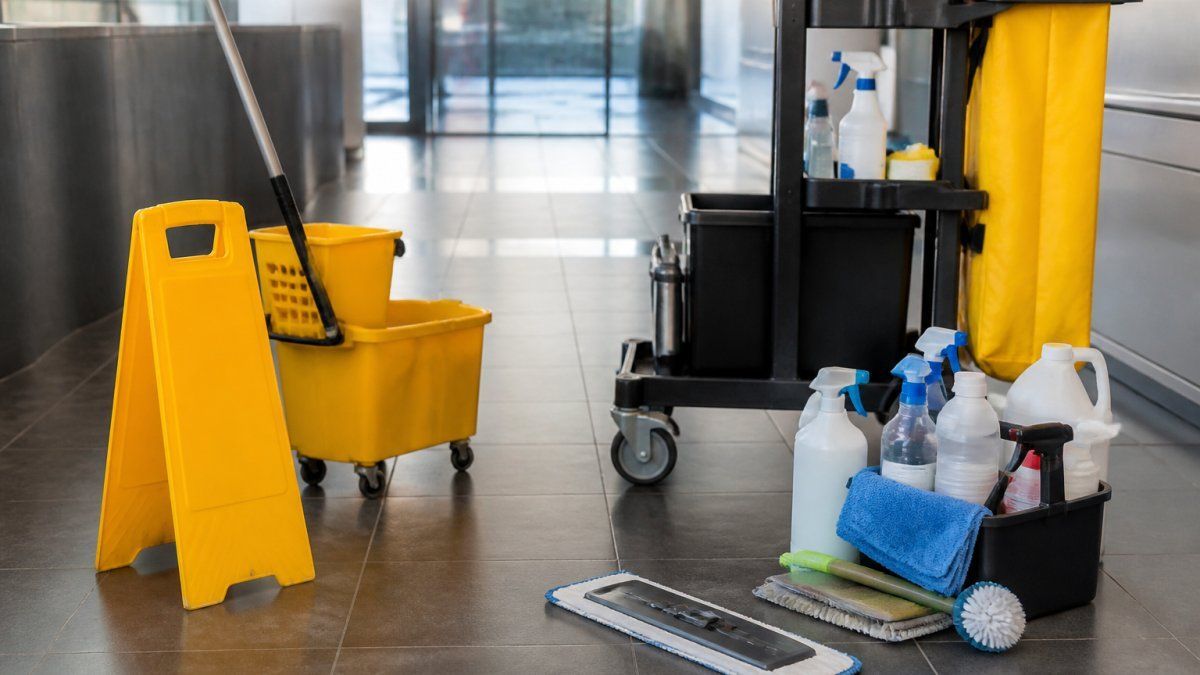
• Stock the right cleaning supplies. Confirm that cleaners, pads, and equipment are suitable for
your specific flooring.
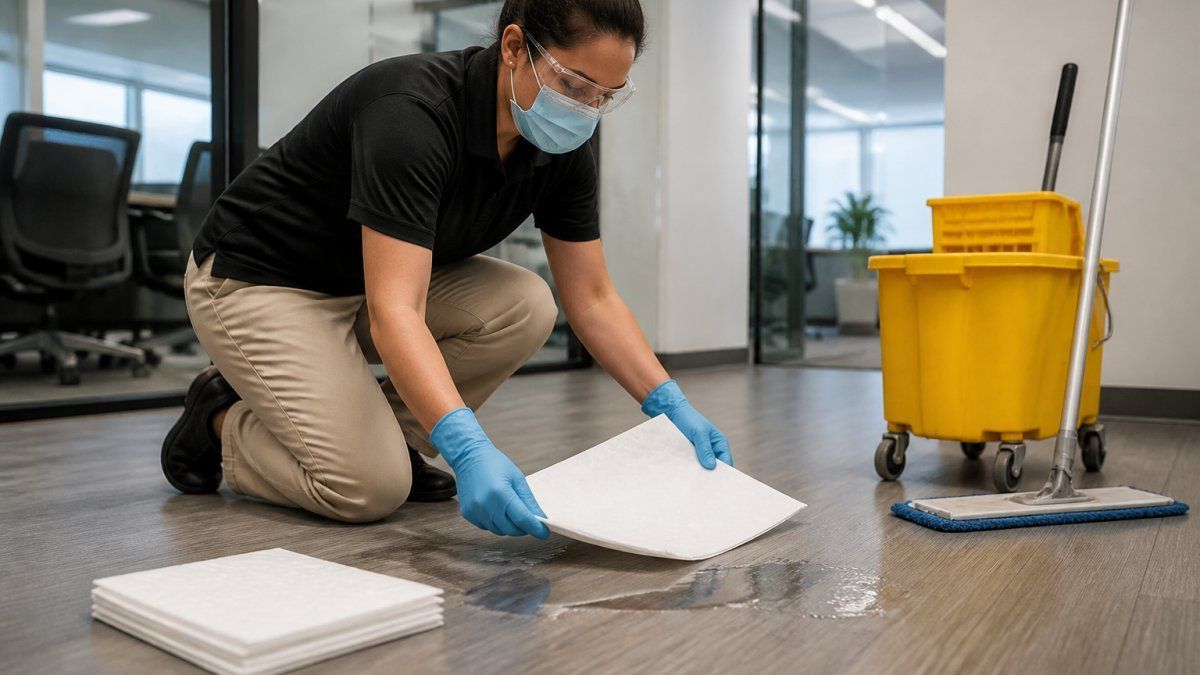
• Plan for faster response during storms. Increase entrance checks and remove slush before it
dries or is tracked farther into the building.
A Winter Cleaning Routine That Helps Limit Salt Buildup
A dependable routine focuses first on removing loose soil and moisture, then cleaning the floor with
an appropriate method.
1. Inspect entrances and mats. Check high-traffic doors regularly, especially during and after winter
weather.
2. Remove dry grit first. Vacuum or dust mop loose crystals and debris so they are not dragged
across the floor during wet cleaning.
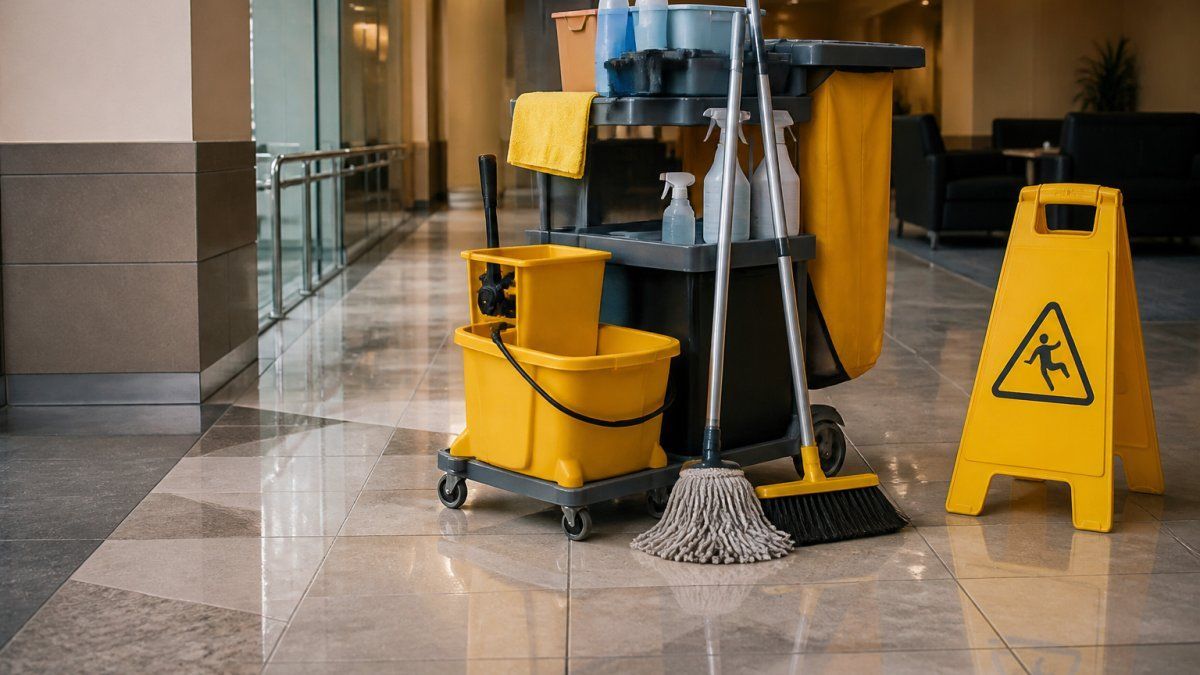
3. Pick up slush promptly. Use the approved method for your floor and place caution signs while
the surface is wet.
4. Clean with compatible products. Follow the floor manufacturer’s guidance for cleaner, equipment,
and pad or brush selection.
5. Check the results. Look for lingering haze or residue and adjust the cleaning schedule if buildup
returns quickly.
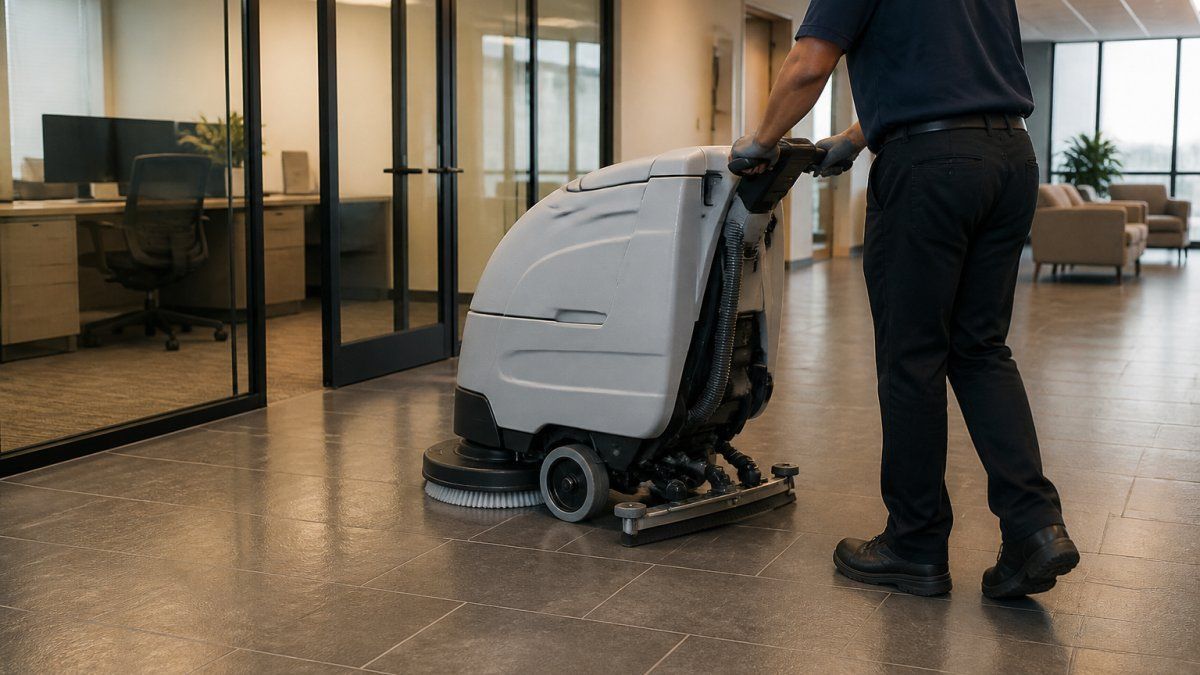
For larger hard-floor areas, professional auto-scrubbing can help remove tracked-in soil efficiently
when the machine, solution, and settings are appropriate for the surface. A regular janitorial program
can also include entrance inspections, routine floor cleaning, and added attention during winter conditions.
Choosing the Right Commercial Flooring Maintenance Service
Winter preparation does not automatically mean every floor needs a full restoration. The right service
depends on the condition of the floor, its material, traffic, and existing maintenance history.
• Scrub and recoat: A maintenance option for compatible finished floors when the existing finish
can be prepared and renewed.
• Floor stripping and waxing: A more extensive VCT service when old finish or buildup needs to be
removed before applying new finish.
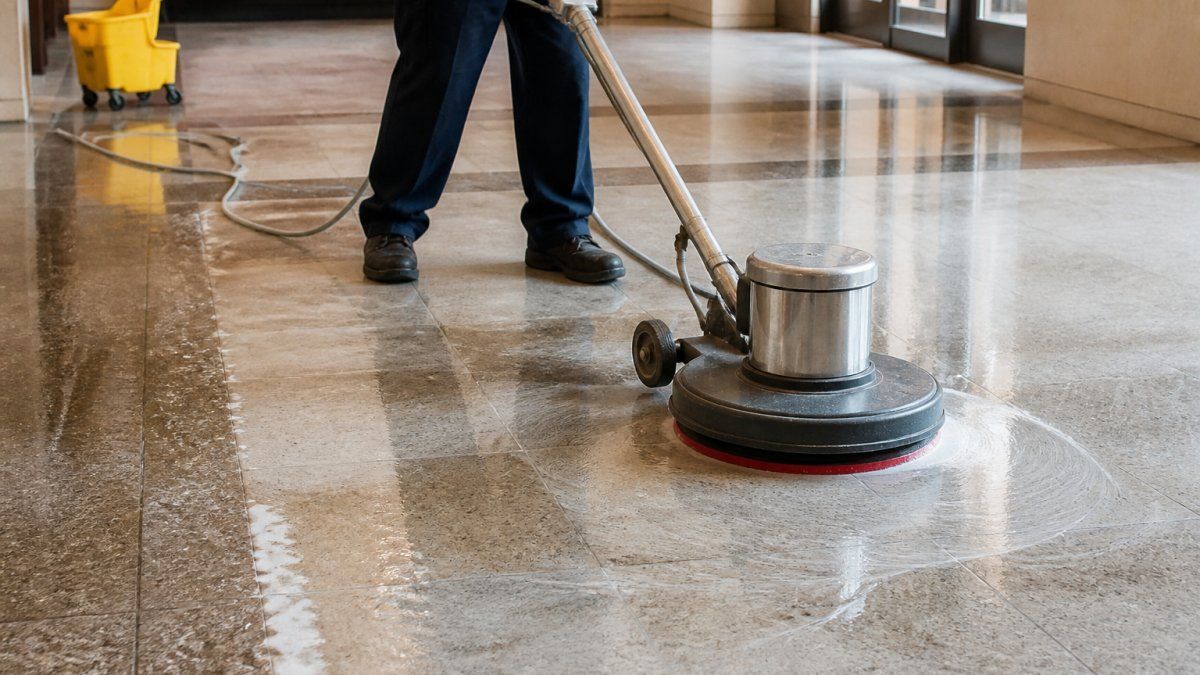
• Auto-scrubbing: Routine or periodic mechanical cleaning for suitable hard surfaces and larger areas.
• Concrete cleaning and sealing: A way to clean and help protect appropriate concrete surfaces after
evaluating their condition.
• Janitorial services: Ongoing cleaning with schedule adjustments for busy entrances and winter
weather.
At A Smarter Clean LLC, we tailor commercial flooring maintenance to your floor type, traffic, facility
schedule, and service needs. We provide flexible evening and weekend scheduling, commercial-grade
equipment, and customized maintenance plans for businesses throughout Sussex County.
Frequently Asked Questions
When should I prepare commercial floors for winter?
Start before the first frost, while there is time to inspect floors, service worn finishes, and organize entrance
cleaning. You can then adjust cleaning frequency when winter weather begins.
Does every VCT floor need stripping and waxing before winter?
No. If the finish is in good condition, routine cleaning or a scrub and recoat may be more appropriate.
A floor assessment can help determine whether a full strip-and-wax service is needed.
Can ice melt damage LVT?
Salt residue and grit can dull or scratch LVT, and standing moisture around seams or edges should be
cleaned up promptly. Follow the specific flooring manufacturer’s care instructions.
Can concrete sealing prevent all winter damage?
No sealer can guarantee that concrete will avoid damage. Cleaning, drainage, surface condition,
product compatibility, and exposure all matter. Sealing may help reduce water and salt solution absorption
on suitable concrete.
Commercial Flooring Maintenance in Sussex County, Delaware
A Smarter Clean provides commercial flooring maintenance and janitorial services in Harbeson,
Georgetown, Lewes, Rehoboth Beach, Dewey Beach, Milton, Millsboro, Seaford, Laurel, Bridgeville,
Bethany Beach, Ocean View, Dagsboro, Selbyville, Fenwick Island, Delmar, and nearby communities.
We help property managers, facility teams, and business owners prepare VCT, LVT, and concrete
floors for winter with practical, customized service plans.
Request a free estimate to discuss your floors, entrances, and winter cleaning schedule. Contact A
Smarter Clean or call 302-841-1063.