

Top 10 Commercial Cleaning and Floor Care Outsourcing Trends for 2026
Table of Contents
- 1. Bundled Janitorial and Floor Care Contracts
- 2. Customized Commercial Cleaning Schedules Replace One-Size-Fits-All Plans
- 3. Preventative Floor Maintenance Programs Protect Asset Life
- 5. Commercial Cleaning Quality Control Moves to Documented Inspections
- 6. Data-Driven Service Planning and After-Hours Scheduling
- 7. The Janitorial Service Proposal Becomes a Performance Contract
- Conclusion
- Frequently Asked Questions
Last Updated: October 19, 2026
1. Bundled Janitorial and Floor Care Contracts
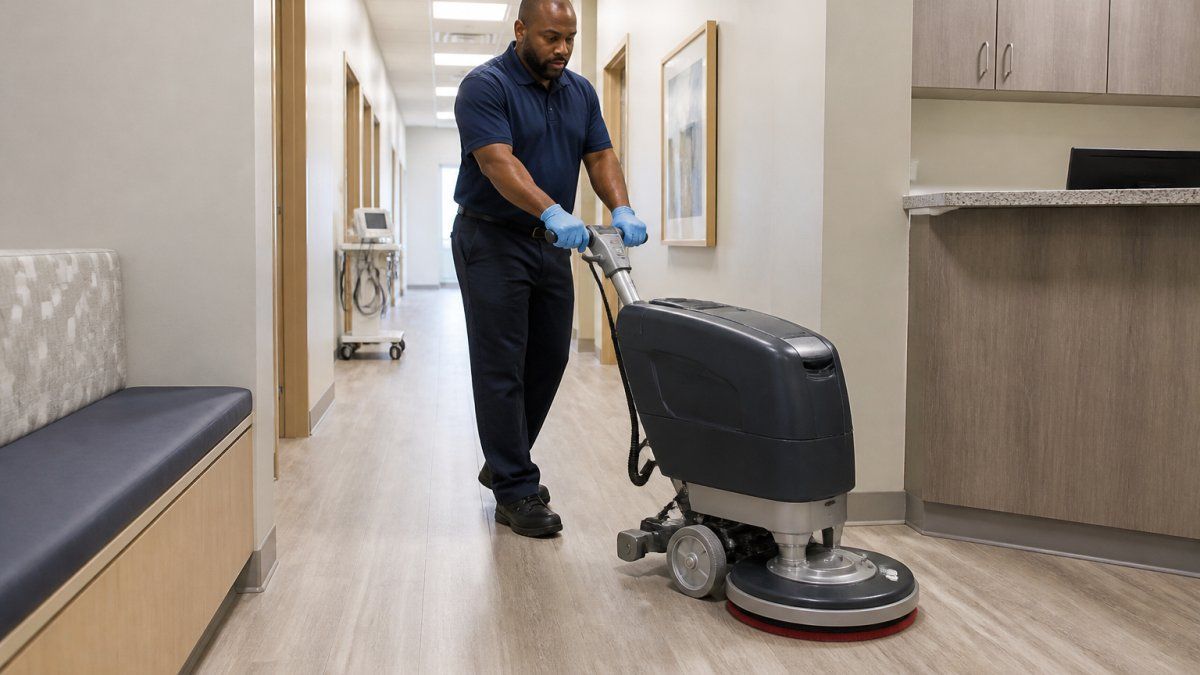
The biggest shift in facility management outsourcing for 2026 is consolidation: bundled contracts pairing recurring janitorial work with scheduled floor care are replacing the split-vendor model, and facility management outsourcing now favors fewer, broader contracts.
Split contracts create gaps. The janitorial crew mops, but nobody owns the finish. The floor vendor strips and waxes, but nobody maintains between visits. When something looks dull, both vendors point at each other.
A bundled approach closes that gap. One provider handles nightly cleaning and the floor maintenance calendar together. That means:
- One point of contact for every service issue
- Floor care scheduled around your cleaning program, not against it
- Consistent products and methods across both services
At A Smarter Clean, we structure bundled programs this way for commercial facilities across Sussex and Kent Counties and Maryland's Eastern Shore, with recurring janitorial service and scheduled floor care on one calendar you can plan around.
2. Customized Commercial Cleaning Schedules Replace One-Size-Fits-All Plans
A customized commercial cleaning schedule is a written plan matching tasks, frequency, and timing to how a building is actually used, replacing the generic "five nights a week, same checklist" proposal most providers still hand out.
The difference matters most in mixed-use buildings. A medical office has different traffic patterns than a bank branch, and a school gym needs different attention than a church fellowship hall.
What a customized schedule should define:
- Which areas get nightly attention and which get weekly
- Restroom frequency based on actual daily traffic
- High-touch surface lists specific to your building
The old model sold hours. The 2026 model sells outcomes tied to how your facility runs. That shift is why more facility managers now ask for a walkthrough before signing anything.
3. Preventative Floor Maintenance Programs Protect Asset Life
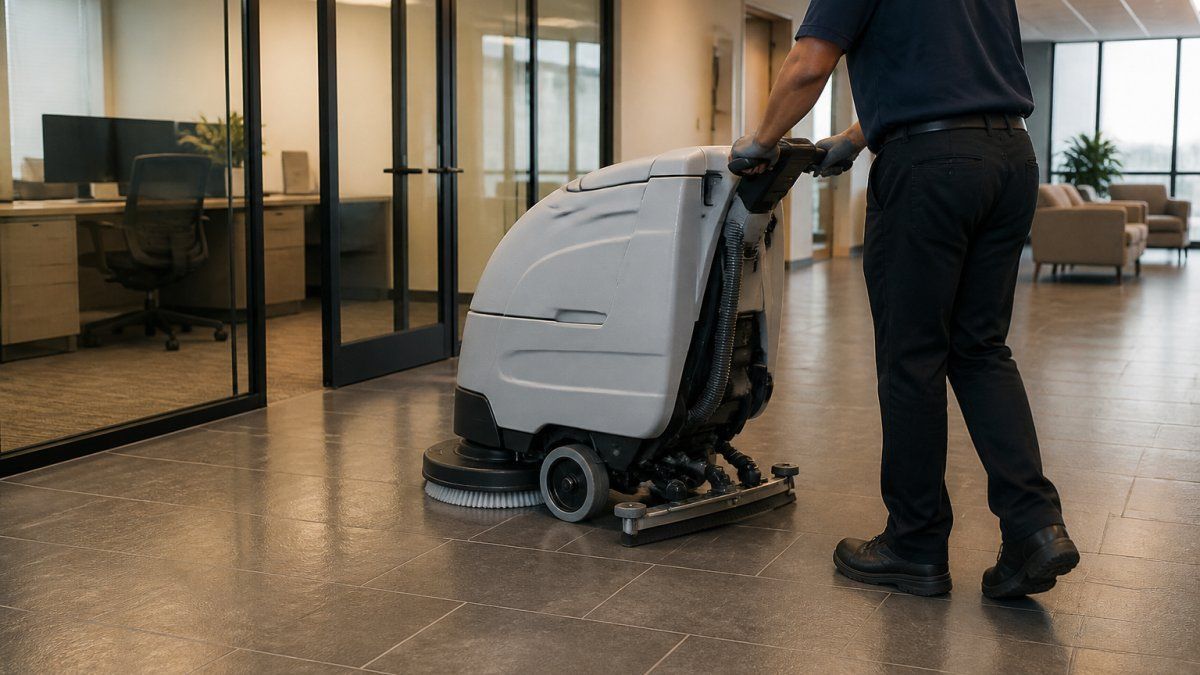
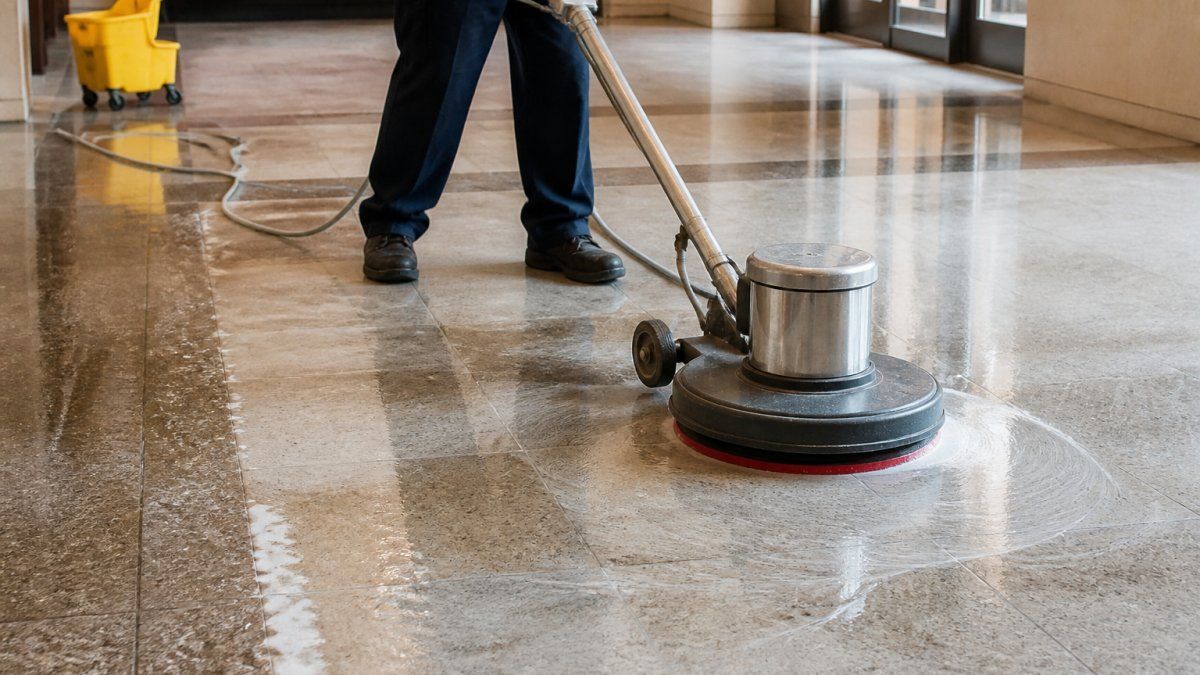
A preventative floor maintenance program is a scheduled plan of cleaning, burnishing, and refinishing tasks designed to extend flooring life instead of waiting for it to fail, costing less than restoration and far less than replacement.
(/commercial-cleaning-blog/commercial-floor-cleaning-company-2026-buyers-guide)."
The two surfaces need different treatment.
What this means for your contract:
| Floor Type |
Core Maintenance |
Watch Out For |
|---|---|---|
| VCT |
Strip, seal, wax on a set cycle; burnish between |
Finish buildup and yellowing from over-application |
| LVT/LVP |
pH-neutral cleaning, low-moisture methods, no harsh stripping |
Abrasive pads and strong strippers dulling the wear layer |
| Carpet |
Commercial low moisture carpet cleaning |
Over-wetting, which drives dry times and odor |
Ask any provider to state, in writing, which method they use on each floor type in your building. A provider who answers "we treat all vinyl the same" has just told you something useful.
5. Commercial Cleaning Quality Control Moves to Documented Inspections
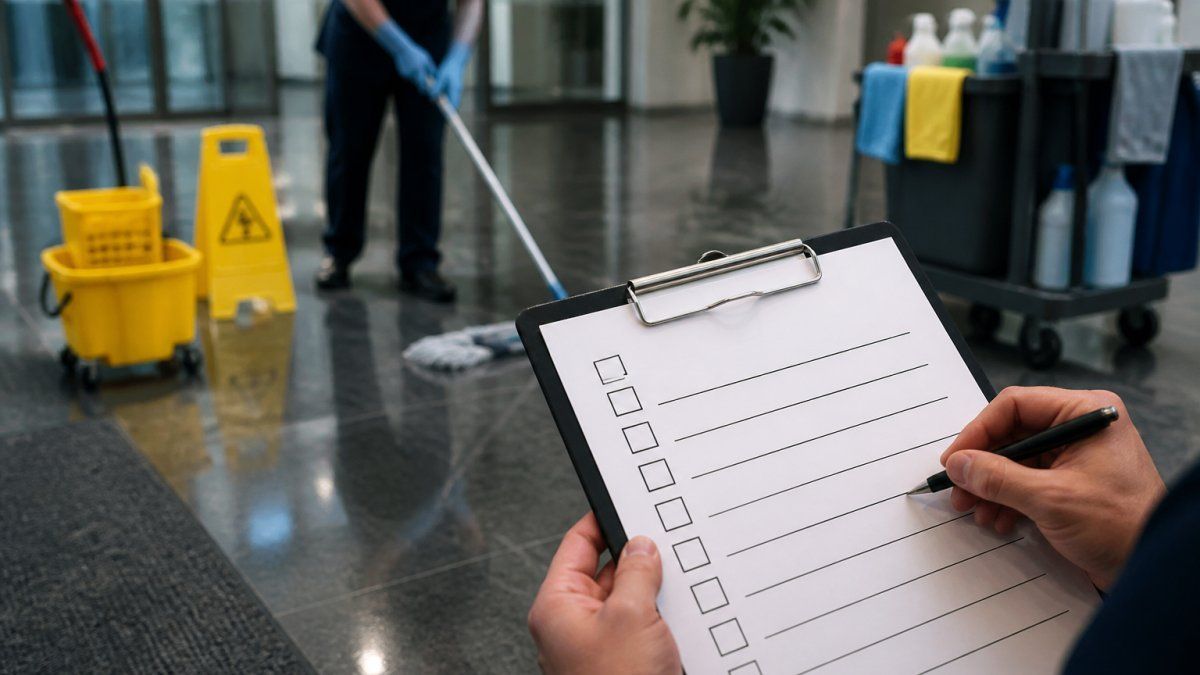
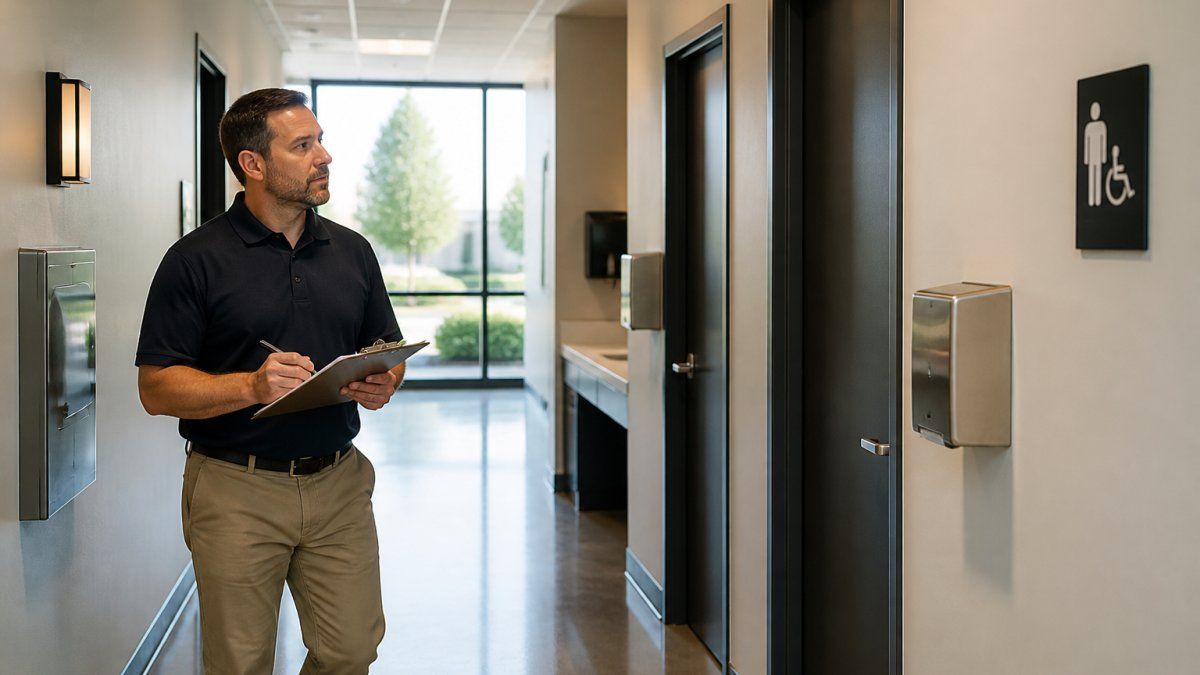
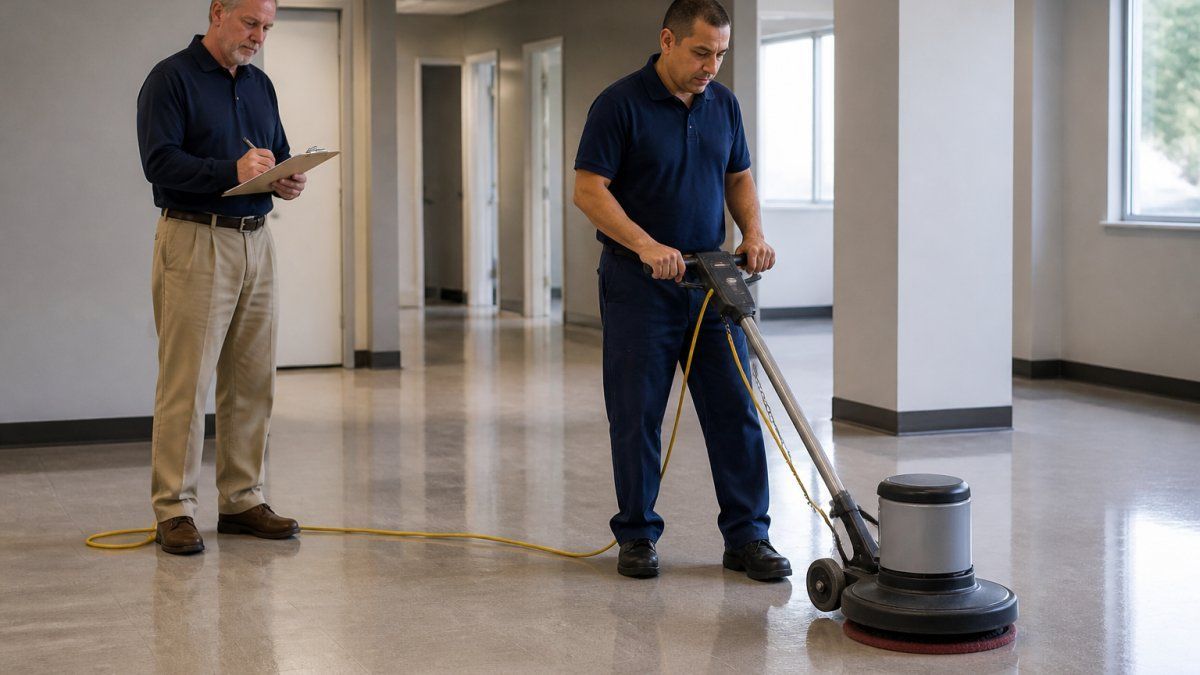
Commercial cleaning quality control is the inspection system that verifies work was done to a defined standard, and in 2026 it is moving from verbal assurances to written records. Facility managers want proof, not promises.
Facilities Management Trends for 2026
Totalmobile
The old model: you notice a problem, you call, someone apologizes, the problem gets fixed, and the cycle repeats. Nothing is tracked, so nothing improves.
Documented inspection changes the loop:
- Inspections run on a set schedule, not only after complaints
- Results are scored against a written standard
- Findings and corrections are logged
This matters most in medical and dental offices, where cleanliness is not cosmetic. When a surveyor or inspector asks how you verify cleaning standards, a documented inspection log answers the question.
6. Data-Driven Service Planning and After-Hours Scheduling
Data-driven service planning means using your building's own patterns, traffic, complaints, and inspection results, to decide where cleaning hours go. It is less about software and more about tying decisions to measurable outcomes, so planning becomes a conversation about results rather than a debate about hours.
Four inputs drive most of the value:
- Traffic patterns. Which entrances, restrooms, and corridors take the most daily wear
- Inspection trends. Which areas repeatedly fall short and why
- Incident logs. Spills, weather events, and seasonal spikes
- Occupant feedback. Complaints and compliments, logged and reviewed rather than handled one call at a time
Connecting planning to measurable outcomes
A data-driven program should produce numbers you can track quarter over quarter. The measures that matter most to facility managers tend to be practical ones:
- Cost per square foot , tracked by area so you can see whether a high-traffic zone is consuming a disproportionate share of the budget
- Inspection scores by area , so improvement or decline shows up as a trend rather than a surprise
- Work-order or request response , measured from the time a request is logged to the time it is closed
None of these require a software platform: a shared log and a monthly review will do, as long as findings move hours between areas.
After-hours scheduling as a planning decision
After-hours scheduling fits the same conversation. Nightly programs keep disruption out of business hours for medical offices, banks, and schools, while day porters cover restrooms and entryways during operating hours. The right mix depends on your building, not a template.
A useful way to frame the decision is by occupancy pattern:
- Single-shift offices and banks often suit a nightly program with a light daytime presence for restrooms and entryways.
- Medical and dental offices usually need restroom and high-touch attention during operating hours, with deeper work scheduled after close.
- Schools and churches tend to cluster around event calendars, so the schedule should flex with the calendar rather than run flat year-round.
Our scheduling options run nightly, weekly, or monthly, built around when your facility is occupied. A dental office and a warehouse do not need the same calendar.
Sustainability considerations in the plan
Sustainability belongs in the same planning conversation, not a separate brochure. Practical choices, matching product dilution to the task, using low-moisture methods where they fit the floor type, and avoiding unnecessary repeat visits, reduce waste and keep the program efficient. These are general industry directions, not guarantees.
That review cadence is where the plan earns its keep: reviewing inspection trends, cost per square foot, and floor condition notes together lets you move hours toward the areas that need them and show leadership why the program is structured as it is.
7. The Janitorial Service Proposal Becomes a Performance Contract
The janitorial service proposal is changing shape. It used to be a price sheet with a task list; in 2026 it reads more like a performance contract, with defined standards, inspection methods, and communication terms built in. You are no longer buying hours but a documented level of service you can hold a provider to.
What a stronger proposal includes:
- A scope written by area, not by vague category
- Frequency stated per task, not bundled into "general cleaning"
- The inspection method and reporting cadence
Service-level agreements and key performance indicators
The mechanism behind a performance contract is the service-level agreement (SLA), which states, per area and per task, what "done" looks like and how it will be verified. A useful SLA pairs each standard with a key performance indicator (KPI) measurable on a walkthrough, for example, restroom restocking verified on a set inspection cadence, or entryway appearance scored against a written photo standard.
Facility managers who get good results keep the KPI list short: five to eight measures that reflect how the building is actually used beat a forty-line checklist nobody reviews.
Benchmarking and remedies
A performance contract should also say what happens when a KPI is missed. That is the remedy clause, and it is where many proposals stay vague. Ask, in writing:
- How many consecutive missed inspections trigger a corrective action plan?
- Who reviews the trend, and on what cadence?
- What is the process for escalating a recurring issue?
Benchmarking fits here too. Rather than promising savings, a credible provider will show you how performance will be tracked against the baseline set at the walkthrough, so you can see whether the program is holding its standard over time.
Transition and knowledge transfer
When services move to an external provider, the first ninety days decide whether the contract works.
Knowledge transfer matters most in buildings with quirks, a bank branch with a vault area, a church with a fellowship hall on a separate schedule, a dental office with equipment-adjacent surfaces. If the transition plan misses those details, the new crew learns by trial and error, and you absorb the cost.
Long-term vendor relationships
Long-term vendor relationships grow out of this structure. When performance is documented and reviewed regularly, renewals stop being a leap of faith, and facility managers increasingly favor providers they can hold to a standard over those who simply quote the lowest number.
This is where the proposal becomes a working document rather than a filing-cabinet artifact. A quarterly review of inspection trends, missed KPIs, and upcoming floor care turns the contract into a management tool, the difference between a provider you can plan around and one you only think about when something goes wrong.
Conclusion
The throughline across these trends is accountability. Bundled contracts, customized schedules, documented inspections, and performance-based proposals all point the same direction: facility managers want proof that the work matches the promise.
A Smarter Clean builds janitorial and floor care programs that way for commercial facilities across Sussex and Kent Counties and Maryland's Eastern Shore.
Request a commercial cleaning quote and walkthrough from A Smarter Clean, and get a customized plan you can measure against.
Frequently Asked Questions
What are the key facility management outsourcing trends for 2026?
The trends shaping facility management outsourcing in 2026 center on bundling janitorial and floor care into one contract, customized commercial cleaning schedules, preventative floor maintenance programs, documented quality control inspections, and data-driven service planning. Facility managers are also asking for after-hours scheduling, sustainability considerations, and long-term vendor relationships instead of year-to-year renewals. The shift is toward measurable performance and service continuity rather than the lowest bid.
What should commercial facilities look for in a janitorial service provider?
Look for a provider that offers a customized commercial cleaning schedule, a written preventative floor maintenance program, and a clear commercial cleaning quality control process with scheduled inspections. Ask for background-checked staff, OSHA-safe products, and a janitorial service proposal that lists tasks, frequencies, and reporting. Confirm the provider serves your building type, whether that is a medical office, school, bank, or church, and that they can handle both recurring janitorial work and specialized floor care.
How often should commercial floors be maintained?
Frequency depends on floor type and foot traffic. High-traffic VCT usually needs stripping and waxing on a scheduled cycle, with burnishing in between, while LVT/LVP benefits from regular deep cleaning and protective treatment. A preventative floor maintenance program sets intervals by square footage, traffic patterns, and floor condition rather than a fixed calendar. A walkthrough is the best way to set an accurate schedule for your facility.
What should be included in a commercial cleaning proposal?
A strong janitorial service proposal should list every task and its frequency, name the products used, describe the quality control inspection process, and state response and communication expectations. It should also separate recurring janitorial work from floor care projects and note scheduling, including after-hours options. Ask for a walkthrough before signing so the proposal reflects your actual square footage, floor types, and building use.