


A red metal shed with a white door and window, set against a backdrop of green pine trees and a clear blue sky.

Benefits of a Professional Commercial Floor Maintenance Program

Editorial Team • November 23, 2026

Last Updated: November 23, 2026

Quick Summary

Professional floor maintenance programs keep each floor in good condition between services by matching cleaning, burnishing, scrubbing, recoating, and periodic restoration to the specific flooring type and its condition. This planned approach avoids unnecessary restoration work and the higher labor and disruption that come from waiting until floors look worn out.

  • A commercial floor care schedule should match the floor, not the calendar, based on material, traffic, facility use, condition, and manufacturer guidance.
  • VCT floors often respond to auto-scrubbing, burnishing, or scrub-and-recoat before a full strip and wax is needed.
  • Many LVT and LVP products should not automatically be stripped and waxed the way VCT is.
  • Low-moisture encapsulation carpet cleaning can help occupied commercial spaces return to use sooner.
  • Track floor condition ratings, incident rates, complaints, maintenance spend, and time to replacement to measure program performance.

Are your commercial floors overdue for care? A Smarter Clean builds customized floor maintenance plans for commercial facilities in Delaware and Maryland's Eastern Shore.
Request a Floor Care Walkthrough

Table of Contents

What are the benefits of professional floor maintenance programs?

A professional floor maintenance program is a scheduled, floor-specific plan of cleaning, burnishing, scrubbing, recoating, and periodic restoration that keeps each surface in good condition instead of reacting only when a floor looks worn out.

Here is the part most facility managers get wrong. A dull floor is not automatically a dirty floor. It may have worn finish, finish buildup, embedded soil, or traffic wear, and each of those needs a different response. Choosing the least intensive service that actually fixes the condition is the whole point of a program.

Below, we break down how a commercial floor care schedule works by floor type, plus what to check before you sign with any provider.

Building a commercial floor care schedule around traffic and use

A commercial floor care schedule should match the floor, not the calendar. A hospital corridor, a church fellowship hall, and a bank lobby can all have hard floors and still need very different service intervals. Frequency depends on flooring material, foot traffic volume, facility use, current floor condition, and manufacturer recommendations for that specific product.

Entrances take the worst of it. Soil tracks in at the door and grinds into the finish within the first few feet, so lobby and entrance zones usually need attention before the rest of the building. High-traffic areas benefit from routine auto-scrubbing and spot attention, while back offices and storage rooms may only need periodic maintenance.

What changes maintenance frequency

Several factors move the schedule up or down:

  • Flooring type: VCT, LVT/LVP, tile and grout, carpet, concrete, and wood each carry different care requirements
  • Traffic volume: A school gym and a small dental office are not the same problem
  • Facility use: Food service, medical, and retail spaces generate different soil loads
  • Floor condition: Worn finish or damaged areas may need restoration before routine service resumes
  • Manufacturer guidance: Some LVT/LVP products should not automatically be treated like VCT

That last point matters more than most guides admit. Treating every hard floor as if it were VCT is one of the most common and expensive mistakes we see.

Several factors move a floor care schedule up or down, and each one should be weighed before intervals are set.

Factor

What it covers

Flooring type

VCT, LVT/LVP, tile and grout, carpet, concrete, wood

Traffic volume

A school gym versus a small dental office

Facility use

Food service, medical, and retail generate different soil loads

Floor condition

Worn finish or damage may need restoration first

Manufacturer guidance

Some LVT/LVP should not be treated like VCT

VCT floor maintenance: scrub-and-recoat before strip and wax

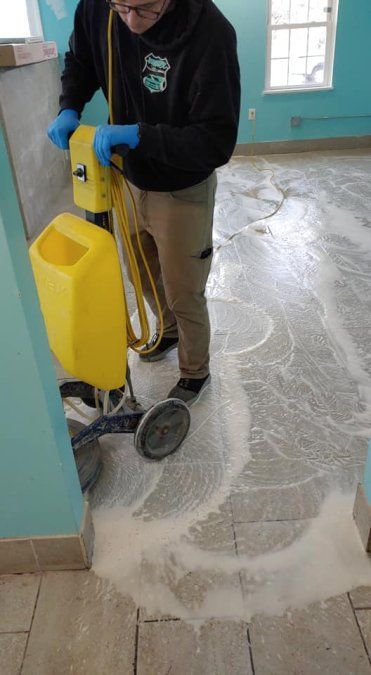
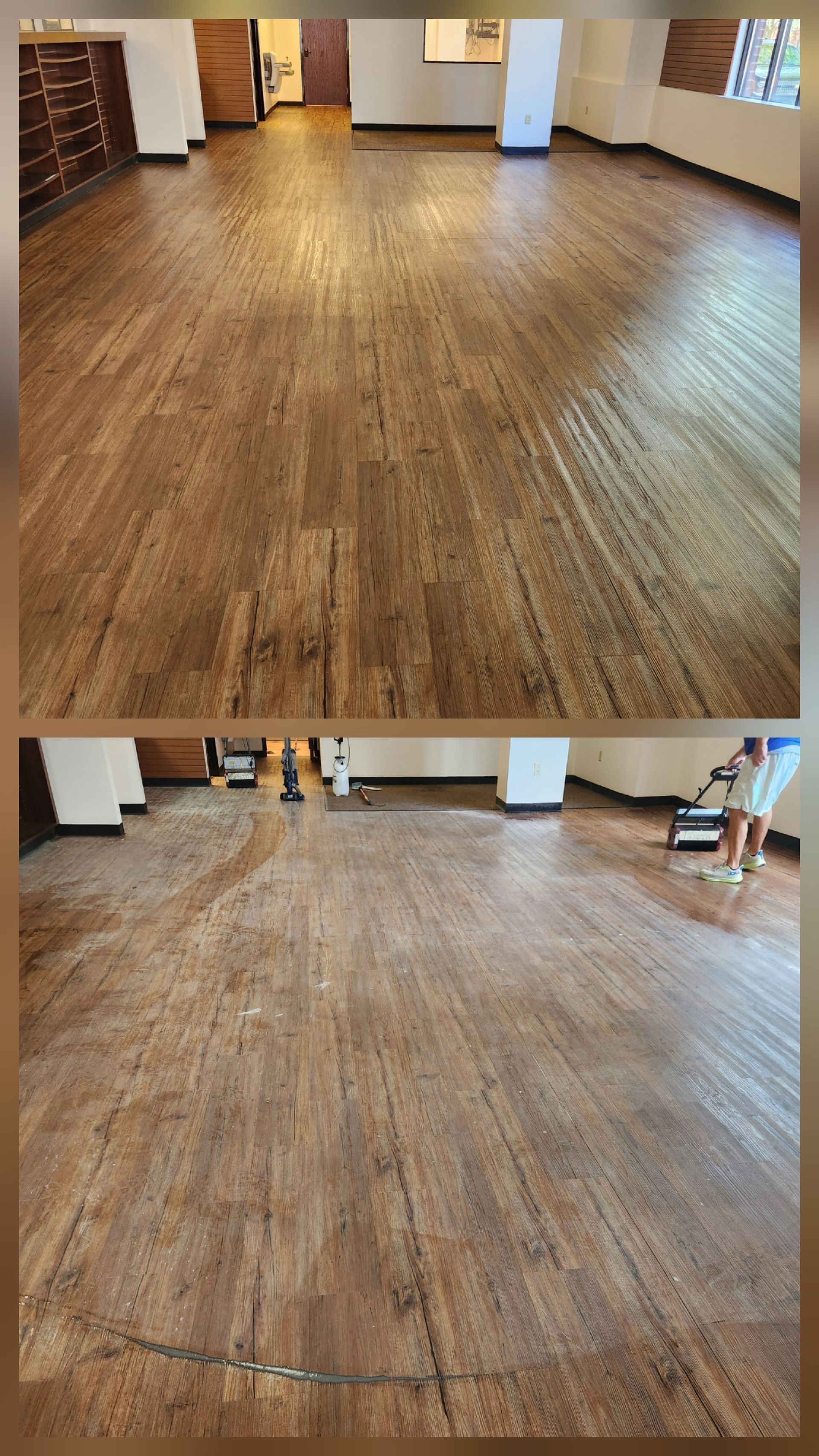
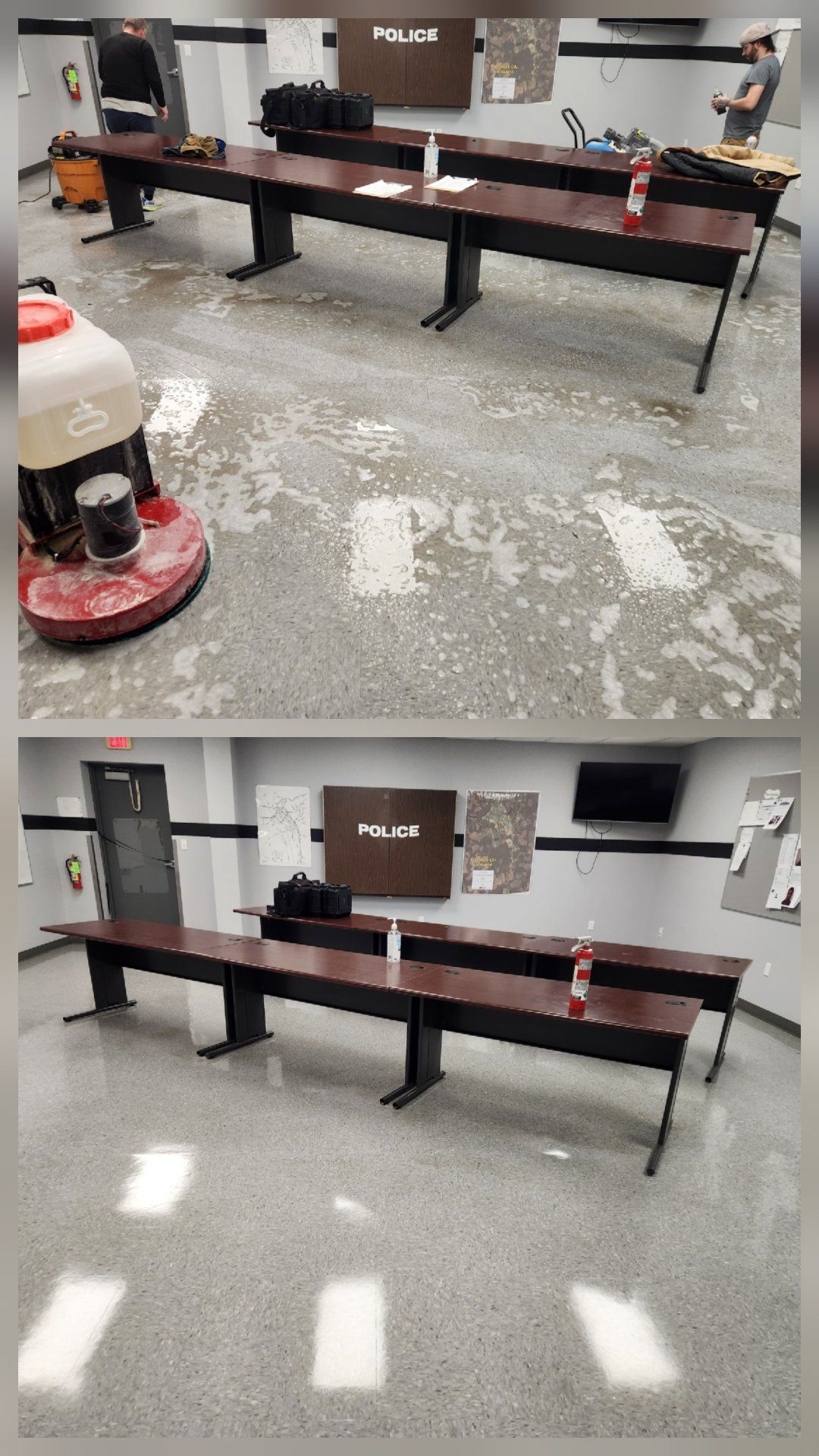
VCT floor maintenance should not jump straight to stripping and waxing every time the shine fades. In many cases, auto-scrubbing, burnishing, or a scrub-and-recoat restores appearance without the disruption and cost of a full strip.

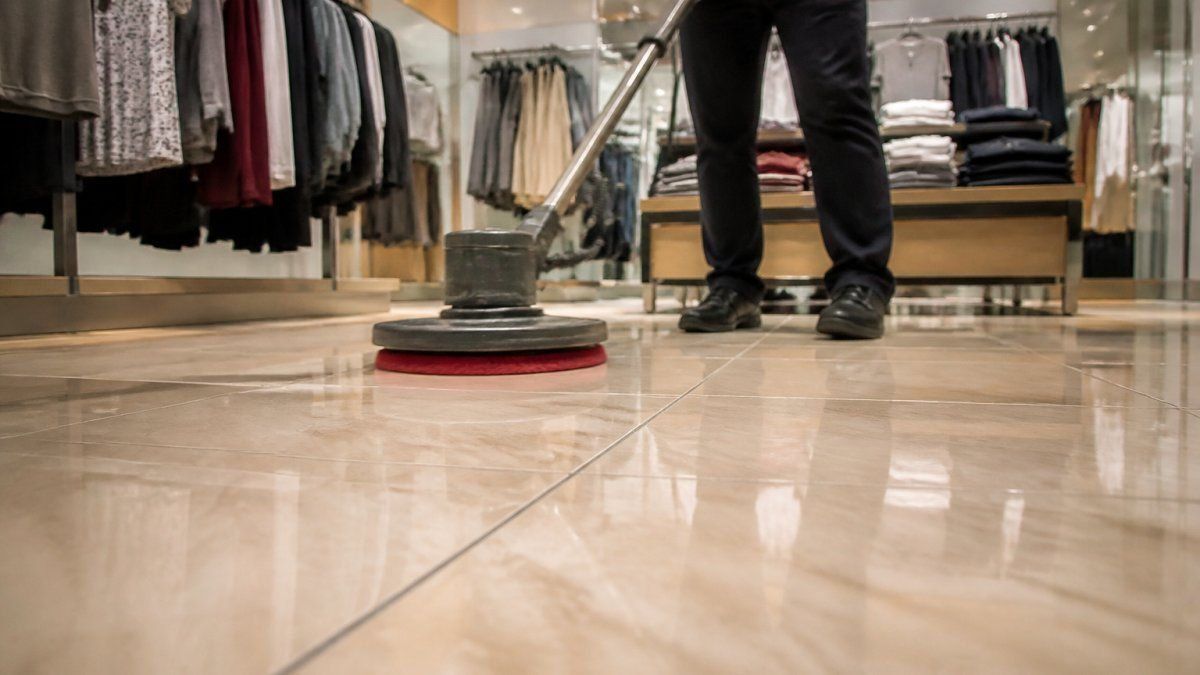
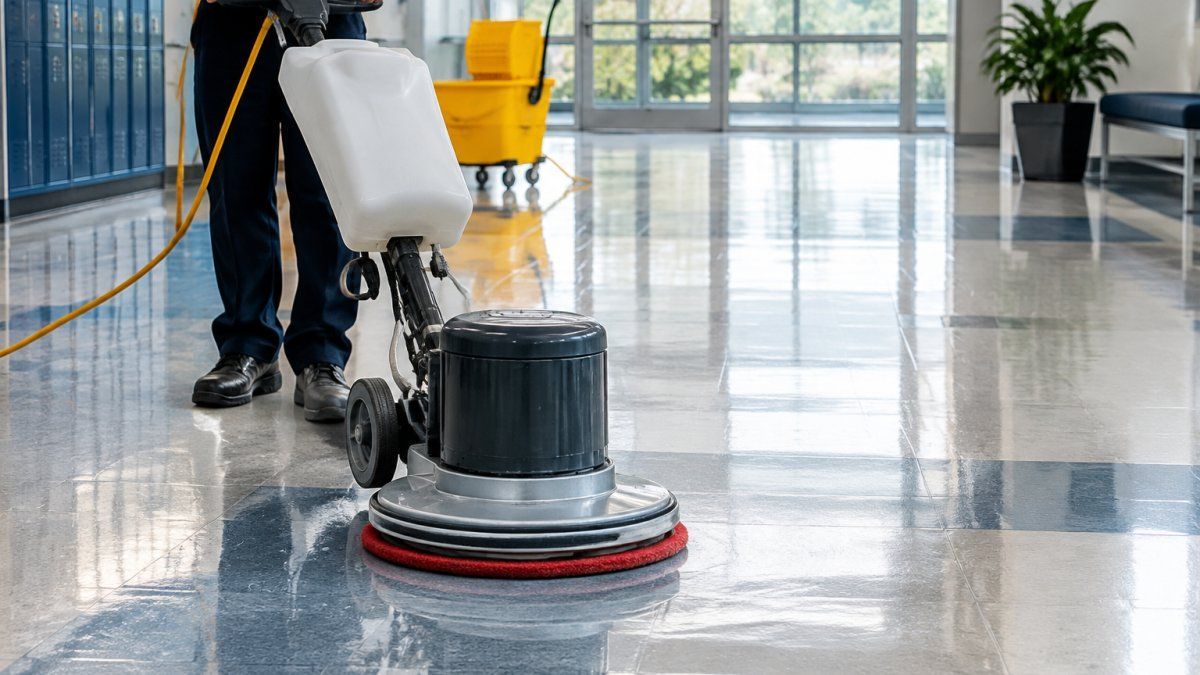
A person uses a floor polishing machine on a glossy tiled floor in a clothing store with folded apparel displayed in the background.

Scrub-and-recoat is one option for restoring the appearance of a worn finish without a full strip, and burnishing and auto-scrubbing can address routine soil between deeper services.

Watch out: stripping a floor that only needed a scrub-and-recoat wastes labor and closes off areas you did not need to close. If you want guidance on timing, our article on how often commercial VCT floors should be scrubbed and recoated walks through the decision.

Commercial LVT and LVP maintenance without the wrong treatment

Commercial LVT and LVP maintenance is where generic floor care breaks down. The same care in choosing products and following surface-specific recommendations matters in slip-resistant floor maintenance, where preserving traction is as important as keeping the floor clean.

The Principles of Floor Care | Clean Care

AMRE Supply

The practical rule: identify the flooring first, then evaluate its condition, then choose the service. A worn-looking LVT floor may simply need a proper clean and the right pad, not a restoration process borrowed from a different material.

Manufacturer care guidance for the specific LVT or LVP product matters more than a generic hard-floor routine, since wear layers and recommended cleaning methods vary.

How care differs across the other floor types

A program that treats every hard surface identically is not a program, it is a guess. Each material carries its own logic:

  • Tile and grout: Grout holds soil in its pores, so it needs focused cleaning with appropriate agitation rather than a pass with a mop. Sealing grout lines, where the product allows, can make routine cleaning more effective between deeper visits.
  • Concrete: Concrete benefits from cleaning and sealing to protect the surface from soil, moisture, and staining. Unsealed concrete in a shop or warehouse may need a different schedule than a sealed and polished floor in a showroom.
  • Wood: Wood needs moisture control and appropriate products. Excess moisture can damage wood floors, so damp cleaning and prompt spill response are important.
  • Carpet: Carpet care is covered separately below, but the same principle applies: match the method to the material and its condition.

Building a floor-type-specific plan

A floor-type-specific plan starts with an inventory. Walk the building and list every distinct flooring material, then note its location, traffic level, and current condition. From there, assign each area a routine service, a periodic service, and a restoration trigger. A bank lobby with LVT, a school corridor with VCT, a church fellowship hall with tile and grout, and a warehouse with sealed concrete should not share a single schedule.

Watch out: applying a VCT strip-and-wax routine to LVT, or a wet mop to wood, can cause surface damage that costs more to correct than the routine service would have cost to begin with. When in doubt, confirm the material and the manufacturer's guidance before any restorative work begins.

Low-moisture encapsulation carpet cleaning in occupied buildings

Low-moisture encapsulation carpet cleaning uses a cleaning process that uses less water than traditional methods, which can help occupied commercial spaces return to use sooner.

For medical offices, schools, and offices that cannot shut down for a day, that difference can matter. Low-moisture agitation and steam systems can clean high-traffic carpet with less disruption. Routine vacuuming, prompt spill cleanup, and entrance matting protect the carpet between professional visits.

If you want the full picture on how this works in occupied facilities, read our breakdown of the benefits of low moisture carpet cleaning for facilities.

Inspections, provider selection, and measuring program performance

An inspection-first approach is what separates a real floor care program from a mop-and-go contract. Before recommending any service, a provider should identify your flooring, evaluate its actual condition, and explain the proposed scope of work, the equipment and products used, and the schedule. Ask whether insurance, references, or reviews are available, and what results are realistically expected.

What a provider evaluation should cover

A vendor checklist keeps the comparison honest. Confirm each of the following before signing:

  • Training and staffing: Are technicians trained on the specific flooring in your building, and are staff background-checked?
  • Insurance and references: Is the company insured, and can it provide references from facilities with similar flooring and traffic?
  • Equipment and products: What equipment and products are used, and are they appropriate for each material? Are product safety data sheets available?
  • Service-level expectations: What is the scope of work, how is scheduling and access handled, and how are callbacks or missed visits addressed?
  • Condition-based recommendations: Does the provider recommend the least intensive service that addresses the condition, or does it default to a standard package?

A few questions worth asking any provider:

  • Do you understand this specific flooring, and is the recommendation based on condition rather than a standard package?
  • Is a full strip and wax truly necessary, or would auto-scrubbing, burnishing, or scrub-and-recoat address the problem?
  • What is the scope of work, and how is scheduling and access handled?
  • Are staff background-checked and is the company insured?

Measuring program performance

Measuring performance is simpler than it sounds, but it needs defined metrics rather than a general impression. A practical set of program indicators includes:

  • Floor condition: A simple condition rating for each floor type at each inspection, tracked over time.
  • Incident rates: Slip, trip, and fall reports in areas with hard flooring, reviewed alongside entrance matting and spill response.
  • Complaint volume: Appearance complaints from staff, tenants, or visitors, grouped by area.
  • Maintenance spend: Routine and periodic service costs tracked against restoration and replacement work.
  • Time to replacement: How long each floor type lasts before replacement is required, compared with the manufacturer's expected service life.

Consistency is an important measure of a program. A consistent schedule is easier to budget and plan around. Review the indicators on a regular cadence, adjust frequency where traffic or condition has changed, and keep the inspection record with the schedule so decisions are based on evidence rather than memory. For a deeper checklist, see our guide on how to choose a local commercial floor care company.

Request a floor care walkthrough and customized maintenance plan

A walkthrough helps turn guesswork into a plan. During a walkthrough, floor types, condition, and traffic patterns can be reviewed, and the least intensive service that addresses the condition can be recommended.

A Smarter Clean combines recurring commercial janitorial service with specialized floor care, with flexible nightly, weekly, or monthly scheduling. The company uses OSHA-safe cleaning products and low-moisture processes.

If your floors are dull, worn, or simply overdue for attention, request a walkthrough and a customized floor-maintenance plan. You can review the full scope of our professional floor care services and our business cleaning programs before we sit down.


Dull floors rarely fix themselves, and waiting usually means more intensive work later. Get started with A Smarter Clean and get a floor care plan built around your actual flooring, traffic, and schedule.

Frequently Asked Questions

What does a commercial floor-maintenance program include?

A planned program combines routine cleaning with periodic services chosen for each surface, which may include floor-type-specific care for hard floors, carpet, tile and grout, concrete, and wood. It also includes scheduled inspections, written scope, and a calendar that ties frequency to traffic, facility use, floor condition, and manufacturer recommendations. The goal is the least intensive service that properly addresses the floor's current condition.

How often should commercial floors be professionally maintained?

There is no single interval. A hospital corridor, a school cafeteria, and a bank lobby each wear differently, and VCT, LVT/LVP, carpet, tile, concrete, and wood respond to different service cycles. Frequency should follow flooring type, foot traffic, facility use, current condition, and manufacturer guidance. Entrances and other high-traffic areas usually need attention sooner than back offices. A commercial floor care schedule built after a walkthrough, then adjusted as conditions change, keeps the program accurate instead of guessing by calendar alone.

Is low-moisture encapsulation carpet cleaning enough for a busy office?

For many commercial carpets, low-moisture encapsulation cleaning may suit routine soil, and it can help areas return to service sooner in medical offices, schools, and lobbies that cannot shut down for long. Heavily soiled or neglected carpet may need a different approach after inspection. Ask the provider to assess traffic patterns, spot history, and carpet condition before committing to a frequency, and confirm what results are realistic for the carpet you have.

How do I choose a floor care provider and measure the results?

Ask about experience with your specific flooring, the proposed scope of work, equipment and products used, insurance, references, and how scheduling and access are handled. For restoration, ask whether a full strip and wax is truly necessary or whether auto-scrubbing, burnishing, or scrub-and-recoat would address the condition. To measure performance, track appearance between visits, inspection findings, spill and spot response, and whether the agreed schedule is actually met. Clear communication before the job starts keeps scope and expectations aligned.

By Editorial Team • November 21, 2026
Learn how to extend the lifespan of commercial tile and grout with 7 practical habits, from matting to sealing. Request a walkthrough from A Smarter Clean.
By Dawn Stewart • November 20, 2026
Flake and Solid-Color Epoxy: Different Surfaces - Similar Care
By Editorial Team • November 20, 2026
Commercial floor care keeps high-traffic facilities looking consistent. Learn material-specific cleaning steps, schedules, and when to call a professional.
By Editorial Team • November 19, 2026
Choosing cleaning solutions for porous commercial tile starts with knowing the surface. Learn how pH, dwell time and rinsing protect grout and tile.
By Editorial Team • November 18, 2026
LVT floor care product compatibility decides how your commercial floors look and last. Learn which cleaners, pads, and coatings are safe for LVT.
By Editorial Team • November 17, 2026
Learn how often to scrub VCT floors and spot the signs your commercial floors need attention. Get a practical maintenance schedule for your facility.
By Editorial Team • November 15, 2026
Learn when a VCT scrub and recoat beats a full strip and wax, and how traffic, wear, and burnishing set your schedule. Request a floor-care walkthrough.
By Editorial Team • November 13, 2026
Build a carpet maintenance schedule by traffic level with this 7-step plan. Learn vacuuming frequency, matting, spot response, and interim cleaning timing.
By Editorial Team • November 12, 2026
Choosing a commercial cleaning partner means checking floor-care depth, insurance, and references. Get a floor-care checklist and request a walkthrough.
By Editorial Team • November 11, 2026
VCT stripping brings worn tile back to a clean, uniform finish. Compare scrub-and-recoat and burnishing, then request a floor-care walkthrough.
Show More