


How to Choose a Local Commercial Floor Care Company
Last Updated: November 12, 2026
Quick Summary
Choosing a local commercial cleaning partner starts with floor care, not square footage or a low bid. Build a written floor-care checklist, verify insurance and background checks, and require a walkthrough before any quote. The right commercial cleaning partner maps each floor type to a service and frequency.
- Commercial work makes up 89.29% of the $112.4 billion U.S. janitorial services market.
- A provider who quotes your building without walking it is guessing.
- Ask how a provider decides between a full strip and a scrub and recoat.
- A provider quoting one frequency for the whole building has not mapped it.
- Confirm contract term, renewal, notice period, and mid-cycle handoff terms in writing.
Table of Contents
- Start With Floor Care, Not Square Footage
- Use a Commercial Floor-Care Checklist Before You Interview Anyone
- Ask About VCT Stripping and Waxing Experience
- Scrub and Recoat Commercial Floors: The Maintenance Question Most Buyers Skip
- Build a Commercial Floor Maintenance Program Around Your Building
- Map Every Floor Type Before You Set a Frequency
- Set Frequencies From Traffic and Condition, Not From a Menu
- Build In Burnishing and Scrub-and-Recoat as Separate Line Items
- Plan the Calendar Around Your Building's Operating Rhythm
- Staffing Consistency: The Variable That Decides Whether the Program Works
- Review and Adjust on a Set Cadence
- Vet Insurance, Background Checks, and Communication Standards
- Insurance: Read the Certificate, Not the Logo
- Background Checks: Ask What the Check Actually Covers
- Communication: Test It Before You Sign
- Quality Control: Who Checks the Work, and How Often
- Contract Terms and Exit Strategy: The Question Almost Nobody Asks
- References: Ask the Right Building, Not the Right Logo
- Request a Walkthrough and Floor-Care Estimate
- Frequently Asked Questions
Start With Floor Care, Not Square Footage
Choosing a local commercial cleaning partner starts with the floor, and the right commercial cleaning partner proves it there. According to Enrich Labs' 2026 cleaning industry analysis, commercial work makes up 89.29% of the $112.4 billion U.S. janitorial services market, yet most buyers still pick a provider on square footage and a low bid.
Floors take the most abuse of anything in a building. They also show a crew's real habits faster than any lobby ever will.
Why Floor Condition Reveals a Provider's Real Capability
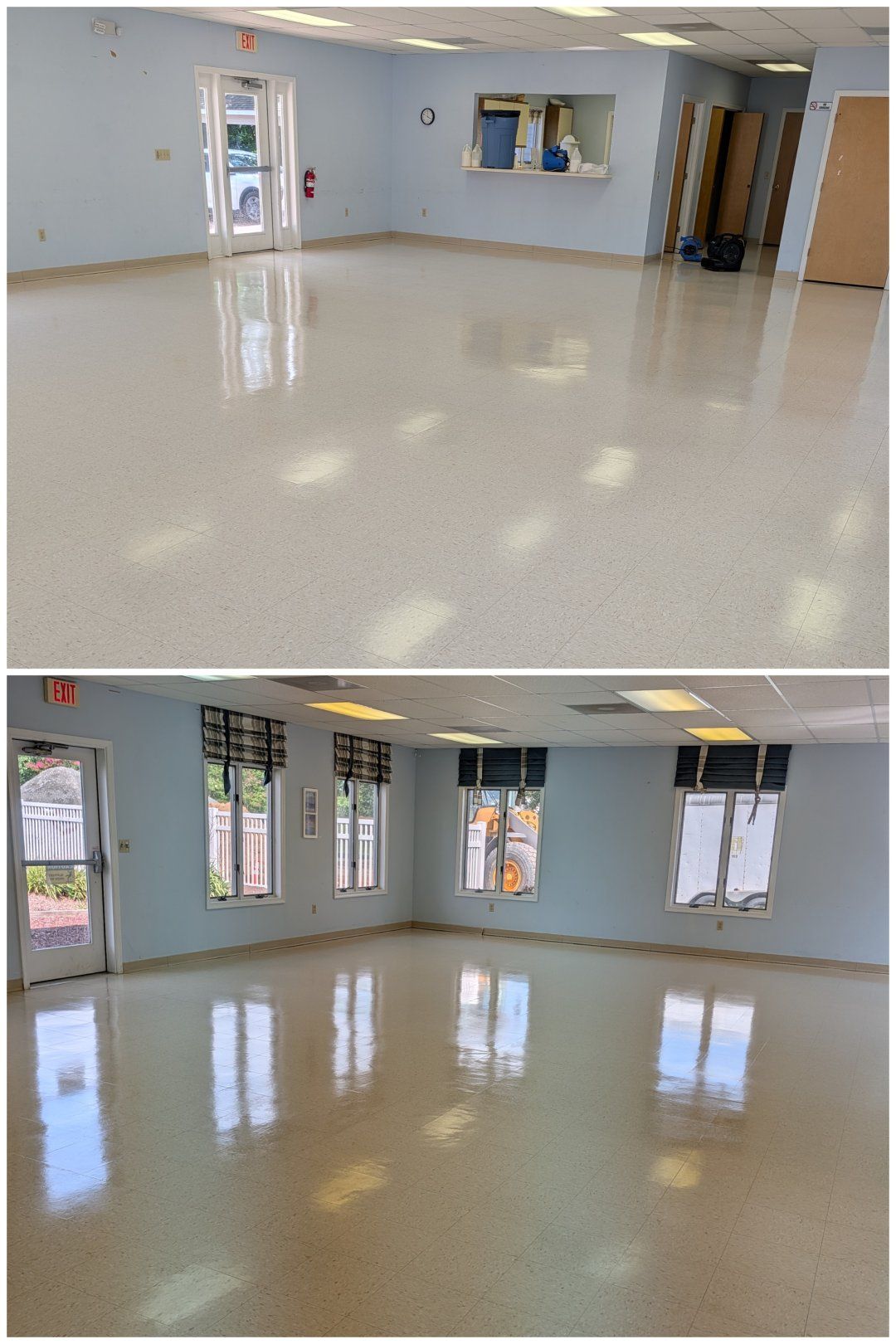
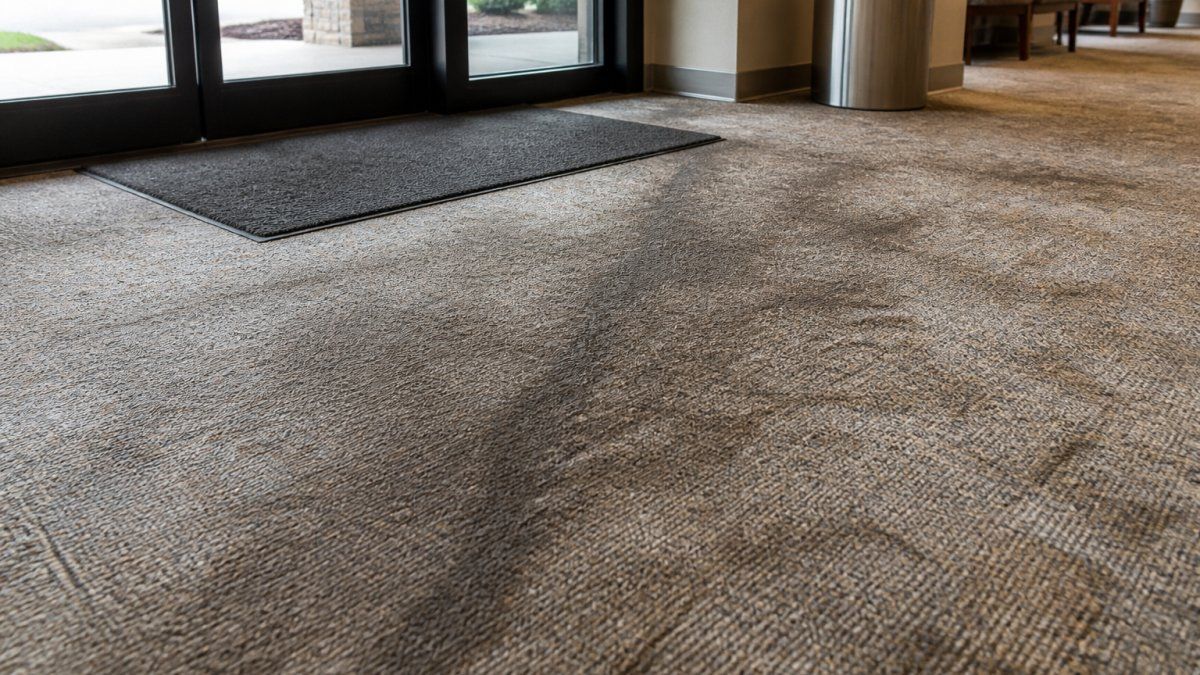
A dull, scuffed VCT floor shows whether a provider understands finish buildup, burnishing schedules, and when a floor needs a strip instead of another coat of wax. A stained carpet near an entry tells you whether anyone thought about soil tracking. Walk a building's floors before you sign anything.
Use a Commercial Floor-Care Checklist Before You Interview Anyone
A commercial floor-care checklist turns a vague conversation into a scored comparison. Build it before you call anyone, and score every provider on the same criteria.
- Written scope naming each floor type and the service for it
- Proof of liability insurance and bonding
- Background-check process for assigned staff
That last item matters most. A provider who quotes your building without walking it is guessing. Our team put together 10 questions to ask before hiring a commercial floor cleaning company as a free checklist.
What to Verify in Writing
Get the scope, schedule, and insurance certificates in writing before work starts. Verbal promises about "deep cleaning" mean nothing when a crew shows up with a mop and a vacuum.
Score every provider on the same written criteria before you interview anyone.
| Checklist item |
What it proves |
|---|---|
| Written scope naming each floor type and service |
Provider has mapped your building |
| Proof of liability insurance and bonding |
Coverage is current and applies |
| Background-check process for assigned staff |
Screening standard is defined |
| References from buildings with similar flooring |
Relevant, comparable experience |
| Sample schedule for stripping, recoating, carpet care |
Program, not a package |
| Named contact and stated response window |
Communication is accountable |
| Walkthrough before any quote is given |
Quote is based on your floors |
Ask About VCT Stripping and Waxing Experience
VCT stripping and waxing is the clearest test of a floor-care provider's skill. Vinyl composition tile needs a full strip when old finish layers build up, trap dirt, and turn yellow.
Ask three questions:
- How do you decide when a floor needs a full strip versus a scrub and recoat?
- What finish and stripper do you use, and how do they meet OSHA requirements?
- Can you show us a building where you maintain VCT on a recurring schedule?
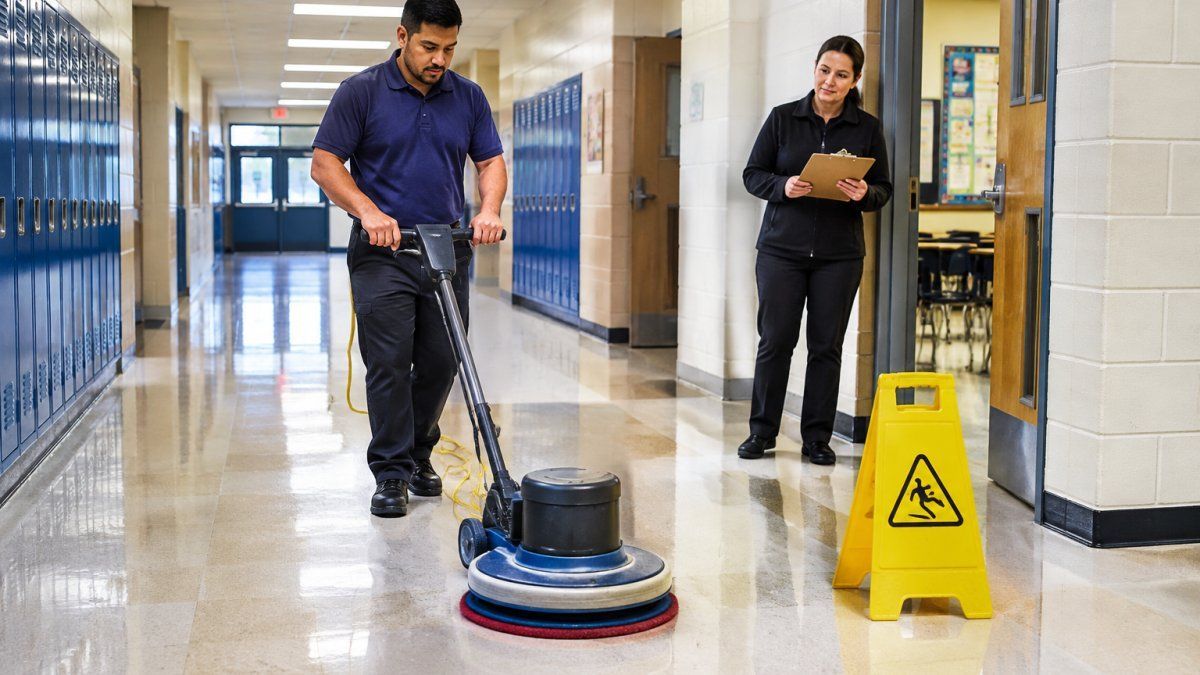
If you want to understand when a full strip is actually needed, read our breakdown of VCT stripping and waxing.
Scrub and Recoat Commercial Floors: The Maintenance Question Most Buyers Skip
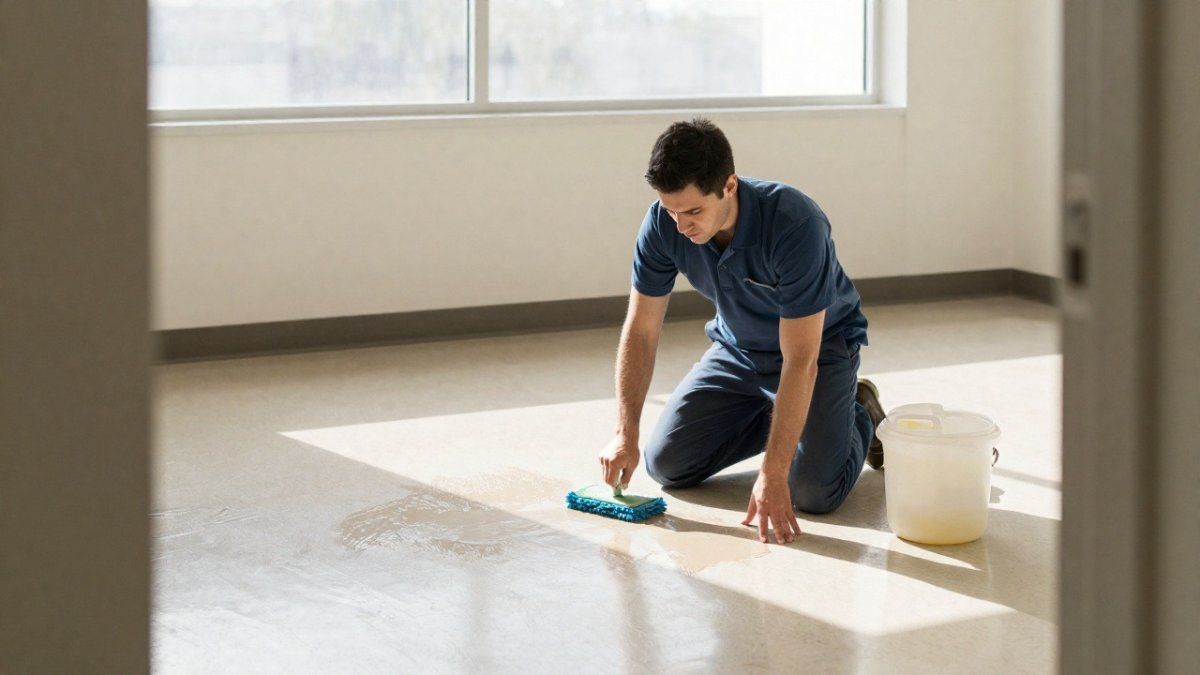
Scrub and recoat commercial floors sits between routine cleaning and a full strip, and most buyers never ask about it.
Done at the wrong time, it hides a problem. If the finish is already failing, another coat traps dirt and makes the eventual strip harder. Our guide to the 5 signs your commercial floors need stripping and waxing walks through the difference.
Build a Commercial Floor Maintenance Program Around Your Building
A commercial floor maintenance program should fit your building's traffic, not a generic template. A medical office with tile and grout in treatment rooms has different needs than a school gym or a bank lobby with LVT. A serious provider maps each floor type to a service and a frequency, then adjusts as conditions change.
Map Every Floor Type Before You Set a Frequency
Walk the building with the provider and list each distinct floor surface separately. A single building commonly holds four or five:
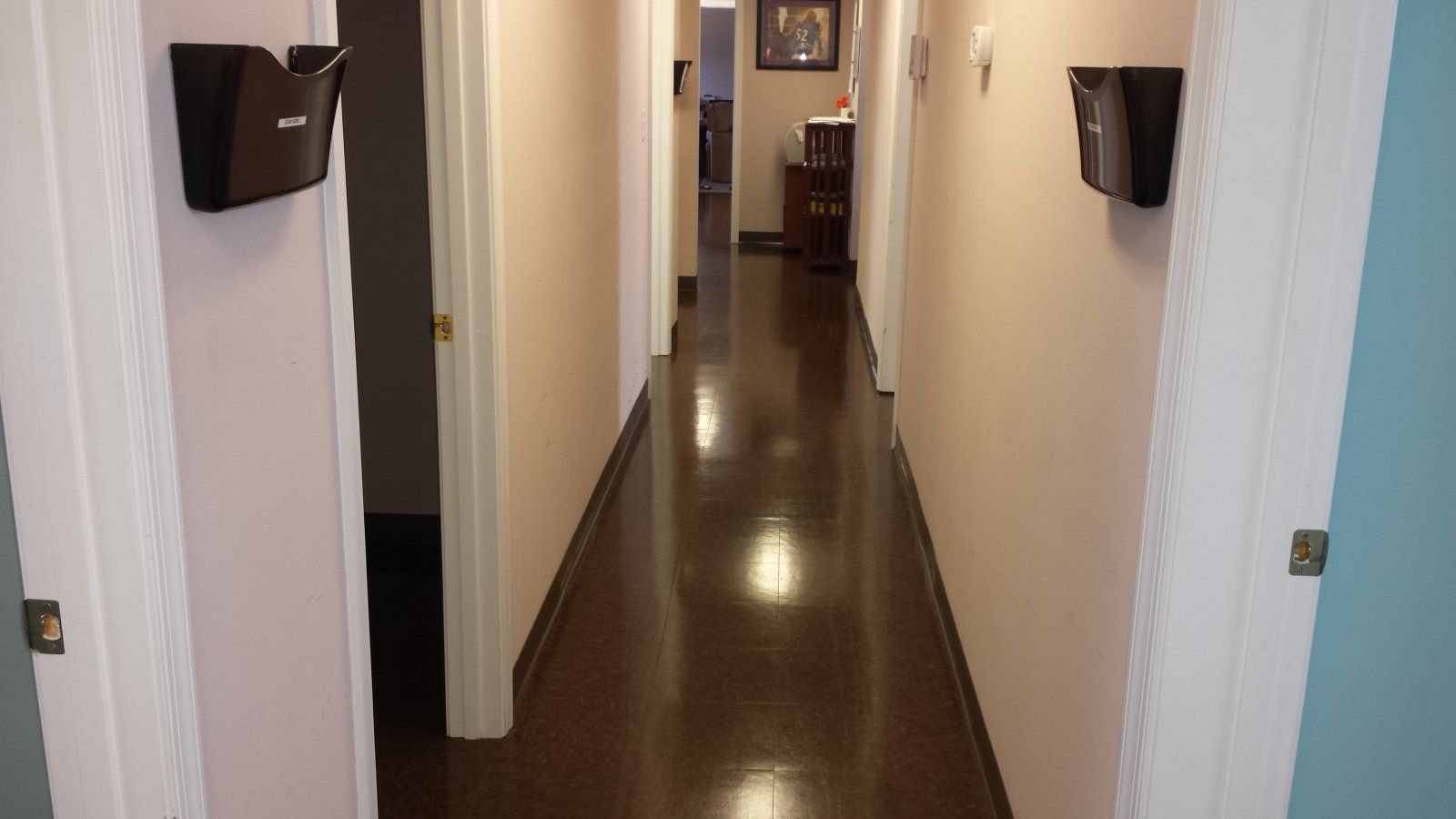
- VCT in hallways, break rooms, and back-of-house corridors
- LVT or LVP in lobbies, reception areas, and tenant entries
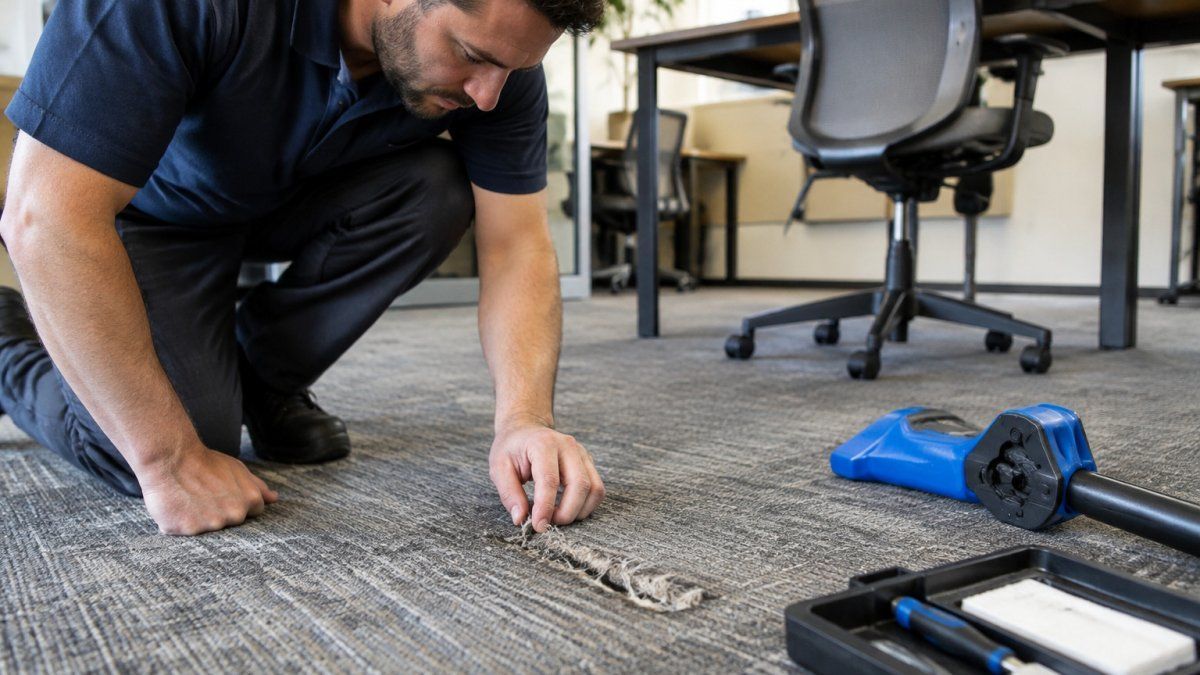
- Carpet in offices and conference rooms, maintained with low-moisture encapsulation cleaning
Each surface gets its own service and interval. VCT needs burnishing between scrub-and-recoats and a full strip when finish buildup stops responding to more coats. LVT needs a routine matched to its wear layer, not a strip-and-wax cycle built for vinyl composition tile.
A provider who quotes one frequency for the whole building has not mapped it. They have priced it.
Set Frequencies From Traffic and Condition, Not From a Menu
Frequency should follow two inputs: how much traffic a surface takes and its current condition. A bank lobby entry takes more soil than a back office corridor. A school hallway during the year runs harder than in summer.
Ask the provider to show the reasoning, not just the schedule. A written program should state, for each floor type, the service, the interval, and the condition trigger that changes the interval.
Watch out: a program that schedules a full strip on a fixed annual date regardless of condition will either strip a floor that did not need it or skip one that did.
Build In Burnishing and Scrub-and-Recoat as Separate Line Items
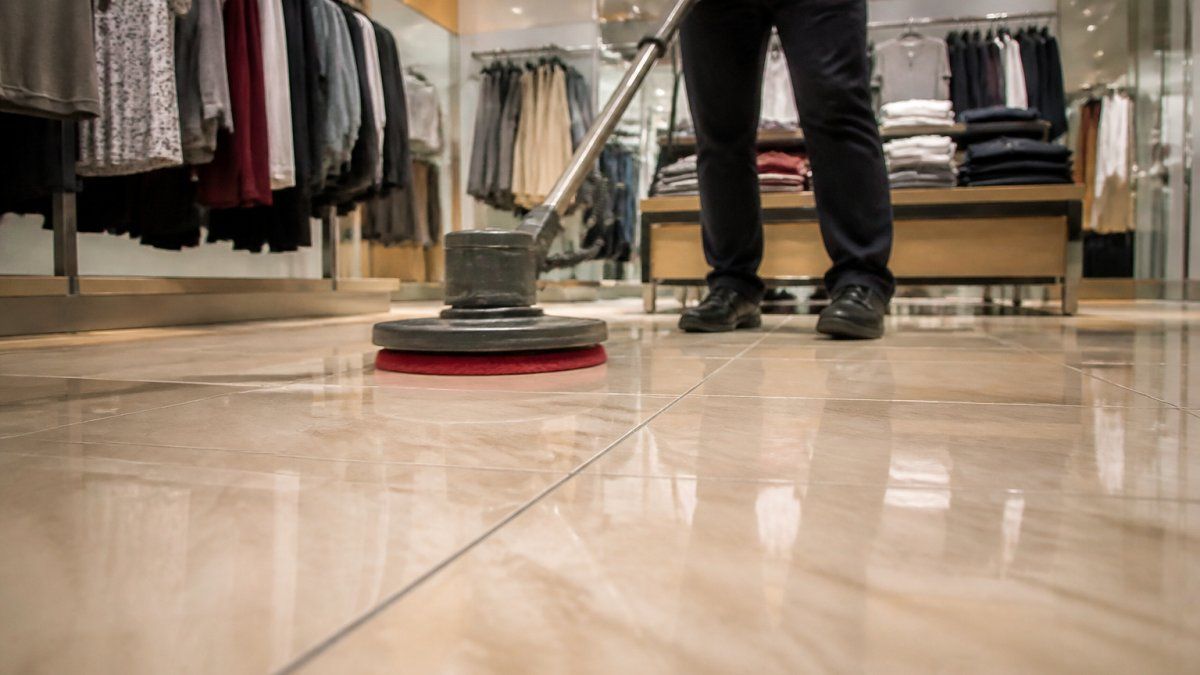
Burnishing and scrub-and-recoat keep a floor between strips, and they are the two services most often folded into a vague "floor care" line. Ask for them as separate items with their own frequencies. Burnishing restores sheen and removes light scuffing; scrub-and-recoat cleans the top layer of finish and adds a fresh coat.
A provider who cannot explain when each applies to your specific floors is selling a package, not a program.
Plan the Calendar Around Your Building's Operating Rhythm
Floor care is disruptive by nature, equipment noise, chemical odor, blocked corridors, wet floors. A program should be built around when your building can absorb that disruption.
Ask how the provider handles staging, and what happens when your schedule changes, a late event, an unplanned closure, a tenant move. Scheduling flexibility should be described in the contract, not promised on a sales call.
Staffing Consistency: The Variable That Decides Whether the Program Works
Ask how the provider handles staff turnover and absences. A crew that changes every month never learns your building, which edges scuff first, which entry tracks in the most soil. That familiarity also helps staff spot when terrazzo needs a different approach, so consistent attention to Tampa Terrazzo can keep floor care aligned with the demands of your building.
Review and Adjust on a Set Cadence
A program should be reviewed, not just renewed. Ask for a standing monthly or quarterly review where the provider walks the floors with you, notes condition changes, and adjusts frequencies. This is where you catch a program drifting: a floor that needed a recoat two months ago, a grout line gone dark, a carpeted office that has stopped responding to encapsulation cleaning.
You can see how customizable cleaning schedules for trained staff work in practice.
Vet Insurance, Background Checks, and Communication Standards
Insurance, background checks, and communication standards separate a professional floor-care operation from an informal one. Most buyers ask whether a provider is insured and stop there. The better question is what kind of coverage, at what limit, and whether it actually applies to the work being done on your floors.
Insurance: Read the Certificate, Not the Logo
Ask for a certificate of insurance and confirm four things on it:
- General liability coverage that names your property type and is current, not expired
- Workers' compensation coverage, so an injury on your floor does not become your liability
- Auto coverage if the crew drives equipment to your site
Floor care adds a wrinkle that general janitorial does not. Stripping and refinishing involve chemicals, water, and heavy equipment near walls, casework, and fixtures. Ask whether the policy covers chemical damage and water intrusion, not just slips and falls.
Background Checks: Ask What the Check Actually Covers
"We background-check our staff" can mean a name-only database search or a full criminal history, employment verification, and drug screen. Ask which. For medical offices, dental practices, schools, and churches, the screening standard should be stated in writing and matched to your own facility's requirements. Ask three follow-ups:
- Are checks run before a worker's first shift at your building, or after hire?
- Are temporary or fill-in workers screened to the same standard as the regular crew?
- Will you provide the names of assigned staff so we can cross-check against our sign-in log?
That last point matters for floor care specifically. Stripping and recoating often happens after hours, when your staff has gone home and the building is empty. Consistent, named, screened technicians assigned to your site are a security control, not just a service preference.
Communication: Test It Before You Sign
Send an email with a specific question, how the provider would handle a scuffed LVT entry during a busy week, for example, and time the reply. A provider who takes three days to answer a sales question will take longer once you are a customer. Ask what records you will receive after each service: a service report, before-and-after photos, a floor-condition note, or nothing.
Quality Control: Who Checks the Work, and How Often
Ask who inspects completed work, on what schedule, and against what standard. A provider with a real quality-control process can describe it concretely: a supervisor walkthrough after each strip and recoat, a monthly floor-condition review with the facility manager, a written punch list for missed areas.
Ask for the inspection checklist itself. If the provider cannot produce one, the inspection is a phone call, and a phone call does not catch a missed edge along a wall or a dull patch near an entry.
Contract Terms and Exit Strategy: The Question Almost Nobody Asks
Most guides tell you to read the contract. Few tell you what to look for. Before signing, confirm:
- The contract term and renewal terms, including whether it auto-renews
- The notice period required to cancel, and whether it differs for cause versus convenience
- What happens to unfinished work, a strip scheduled but not completed, if the contract ends mid-cycle
A floor-care program runs on a schedule, so a mid-cycle exit can leave a floor half-stripped or a recoat skipped. Get the handoff terms in writing at signing.
References: Ask the Right Building, Not the Right Logo
A reference from a building with different flooring tells you little. Ask for two references with flooring like yours, a school with VCT in hallways, a bank lobby with LVT, a medical office with tile and grout in treatment rooms, and ask each how often the provider rescheduled, how quickly problems were fixed, and whether the same crew showed up month to month.
Request a Walkthrough and Floor-Care Estimate
A walkthrough and floor-care estimate should come before any contract, not after. The provider walks your building, identifies each floor type, notes current condition, and recommends services based on what the floors actually need.
A Smarter Clean LLC provides commercial floor care across Delaware and Maryland's Eastern Shore, including VCT stripping and waxing, LVT/LVP maintenance, low-moisture carpet cleaning, and tile and grout work. Review our commercial cleaning project gallery to see recent work before you book.
Most facility managers inherit a cleaning contract and never test it until something goes wrong. Flip that order.
Frequently Asked Questions
What should I look for in a commercial floor-care provider?
Look for specific floor-type experience: VCT stripping and waxing, scrub and recoat, burnishing, LVT/LVP maintenance, low-moisture encapsulation carpet cleaning, and tile and grout work. Ask for references from buildings with your flooring mix, proof of liability insurance, and confirmation that background-checked staff are assigned to your site. A provider should also give realistic recommendations based on your floor's actual condition rather than promising a fixed result.
What is the difference between a scrub-and-recoat and stripping and waxing?
A scrub-and-recoat cleans the surface and applies a fresh layer of finish over existing coats, which is faster and suits floors that are dull but intact. Stripping and waxing removes all old finish down to the tile before applying new coats, which is the right call when finish is yellowed, worn through, or has too many layers. Ask a provider to assess your floor and explain which method fits its condition before you commit.
How can I verify a commercial cleaning partner's references and insurance?
Request a certificate of insurance showing general liability coverage and confirm it is current. Ask for two or three references from facilities similar to yours, ideally including one with comparable flooring, and call them about reliability, communication, and how the provider handled problems. Also ask whether the same background-checked team members are assigned to your building, since consistent staffing affects quality.
How often should commercial floors be maintained?
Frequency depends on flooring type and foot traffic, not a single rule. High-traffic VCT may need burnishing regularly and scrub-and-recoat on a set cycle, while LVT/LVP and carpet need different care. A commercial floor maintenance program should be built from a walkthrough of your building, with the schedule written into the service agreement so both sides know what happens and when.