

How to Spot and Repair Common Commercial Carpet Damage
Last Updated: November 5, 2026
Quick Summary
Common commercial carpet damage includes wear in traffic lanes, seam separation, buckling, stains and tears. Most issues can be fixed by re-taping seams, patching with matched material, re-stretching buckled areas or replacing carpet tiles, while early inspection keeps small problems from growing.
- Inspect entrances, corridors and seams every few months to catch damage early.
- Re-tape and seal lifting seams so the separation does not spread.
- Re-stretch buckled or rippled carpet quickly, since it is a safety issue.
- Replace single damaged carpet tiles instead of an entire room, keeping spare tiles from the original lot.
- Place walk-off mats at entrances and vacuum high-traffic lanes several times a week.
Table of Contents
- Why Commercial Carpet Damage Adds Up Faster Than You Think
- The Most Common Types of Commercial Carpet Damage
- Commercial Carpet Repair Methods That Work
- Carpet Tile Replacement: When Single Squares Are the Right Fix
- Commercial Carpet Repair vs Replacement: How to Decide
- Commercial Carpet Damage Prevention Steps for High-Traffic Floors
- Scheduling a Carpet Inspection for Your Facility
- Frequently Asked Questions
Why Commercial Carpet Damage Adds Up Faster Than You Think
Carpet damage is one of the first problems facility managers raise in commercial buildings, from medical offices to schools. Small problems rarely stay small. A loose seam becomes a trip hazard, and a stain left alone sets deeper with every cleaning.
Carpet is one of the largest flooring investments in a commercial building, and replacing it is disruptive. Catching damage early is often the more economical path.
- Small tears and loose seams spread under foot traffic
- Stains that sit too long become harder to lift
- Worn traffic lanes signal that maintenance is overdue
- Damage that looks minor can hide a bigger problem underneath
The Most Common Types of Commercial Carpet Damage
Most commercial carpet problems fall into a few familiar groups. Knowing what each one looks like makes them easier to spot during routine walkthroughs.
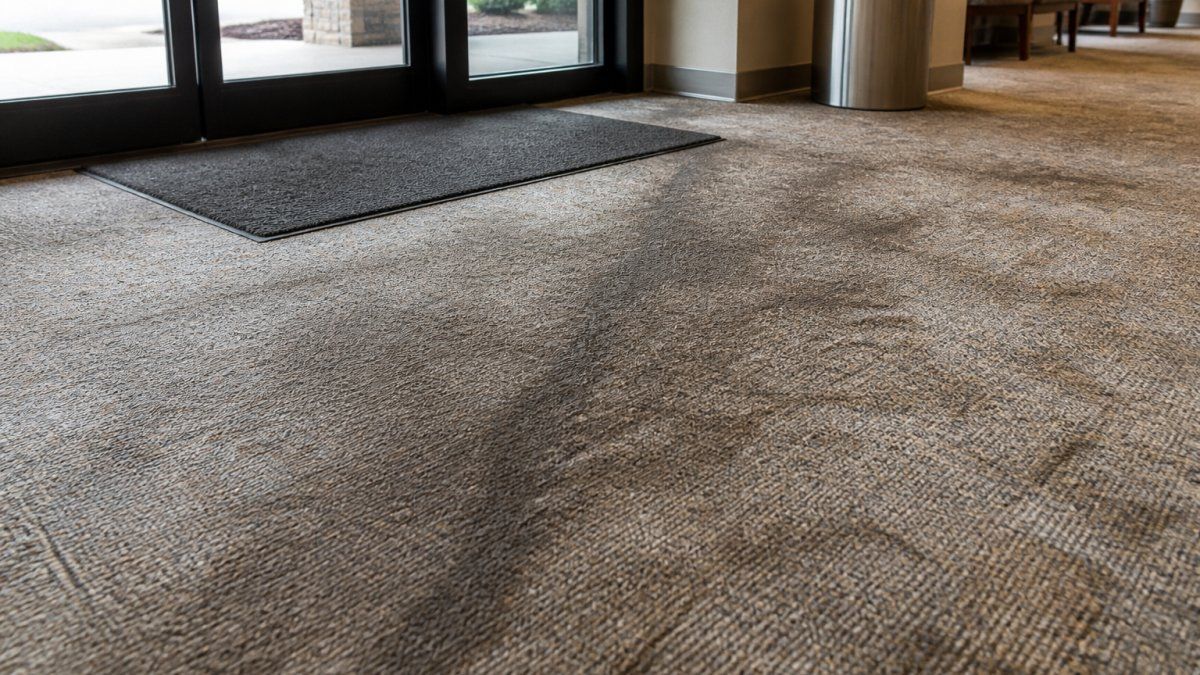
Wear and traffic lanes. Carpet in corridors and near entrances often shows dull, flattened paths. The fibers lose their bounce and the color looks faded.
Seam separation. Where two carpet pieces meet, the seam can lift or open. This is a common issue in high-traffic areas and near doorways.
Buckling and rippling. Carpet that is no longer tight to the floor can wave or bunch up. This often happens after moisture or when the stretch fades over time.
Stains and soiling. Spills that go unnoticed bond with the fibers. Ground-in dirt in entry zones is a frequent problem for medical and dental offices.
Tears and burns. Furniture drags, rolling carts and cigarette or heat damage can leave clear marks that need a targeted fix.
Commercial Carpet Repair Methods That Work
Not every damaged area needs the same fix. The right repair depends on the type of damage, the location and how much traffic the area sees.
Patching and Re-Taping Seams
Lifting seams are often re-taped and sealed to keep the problem from spreading. Small tears or worn spots can sometimes be patched with material cut from a hidden area, such as under furniture or inside a closet, provided the pattern and fiber match closely.
Re-Stretching Buckled or Rippled Areas
Buckled carpet is a safety issue, so it should be addressed quickly. Re-stretching tightens carpet back to the floor edge, though if the carpet has lost too much stretch or backing strength, replacement may need to be considered.
The table below summarises the main damage types and the repair approach each one usually calls for.
| Damage type |
Typical repair |
Key note |
|---|---|---|
| Seam separation |
Re-tape and seal |
Keeps the problem from spreading |
| Small tears or worn spots |
Patch with matched material |
Use hidden-area material for a close match |
| Buckling or rippling |
Re-stretch to floor edge |
Address quickly; it is a safety issue |
| Severe stretch loss |
Consider replacement |
Applies if backing strength is lost |
Carpet Tile Replacement: When Single Squares Are the Right Fix
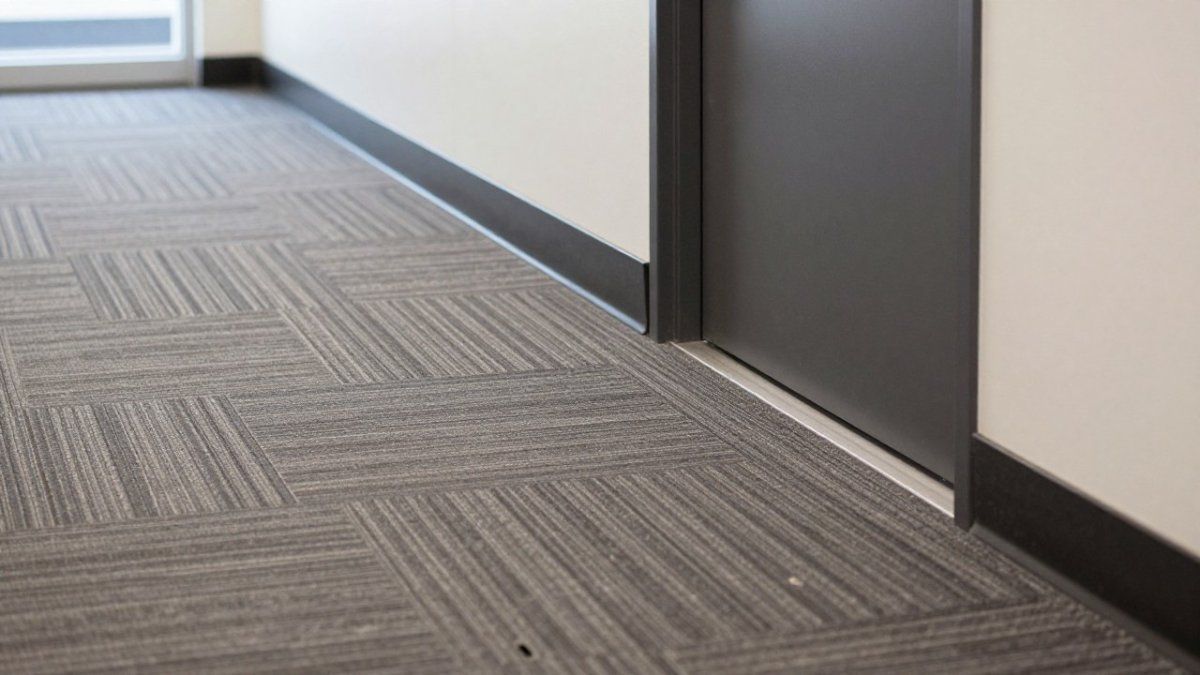
Carpet tile is generally simpler to repair than broadloom carpet. When one square is stained, torn or burned, it can often be pulled and replaced without touching the rest of the room.
Tile is a good fit for offices, classrooms and clinics where a single damaged area would otherwise mean replacing a whole section. Keeping spare tiles from the original lot helps the color and dye match stay consistent.
Commercial Carpet Repair vs Replacement: How to Decide
Repair is usually the right choice when damage is limited to a small area and the backing is still sound. Replacement makes more sense when wear covers most of the room, when odors or stains will not lift, or when the carpet is near the end of its service life. When damage is confined to a few loose loops, repair pulled carpet loops before the snags spread and turn a small repair into a larger replacement decision.
A simple test helps: if repairs would cost more than half of a new installation over the next few years, replacement is usually the better investment. Some facilities also consider refinishing hard-surface floors, such as terrazzo, as an alternative. Our terrazzo stripping and waxing project shows what that work involves.
Commercial Carpet Damage Prevention Steps for High-Traffic Floors
Prevention costs far less than repair. A few habits help keep high-traffic carpet in good shape longer.
- Place walk-off mats at every entrance to trap dirt and moisture
- Vacuum high-traffic lanes several times a week
- Clean spills right away with the right product for the stain type
- Rotate furniture and move heavy items with floor protectors
- Schedule professional low-moisture cleaning on a regular cycle
Watch out: using harsh solutions or too much water can damage carpet backing. Manufacturer maintenance guidelines commonly advise testing any product in a hidden spot first.
For more ongoing routines, our commercial carpet maintenance tips for facility managers cover schedules you can adapt to your building. If your floors show signs they need professional attention, see the warning signs that stripping and waxing is due.
Scheduling a Carpet Inspection for Your Facility
A walkthrough every few months is the simplest way to catch damage early. Look at entrances, corridors and seams, and note any stains, lifting edges or thin traffic lanes. Keeping a simple log helps you track changes over time and plan repairs before they become emergencies.
If you are unsure whether an in-house team or an outside provider makes more sense for your building, compare commercial floor waxing services with in-house maintenance. A Smarter Clean is happy to walk your facility, review its carpet and floors, and recommend a repair or maintenance plan that fits your budget and schedule. Request a commercial cleaning quote to get started.
Frequently Asked Questions
Can damaged commercial carpet be repaired instead of replaced?
In many cases, yes. Localized damage such as a small tear, a lifted seam, a burn or a stretched edge can often be repaired without replacing the whole installation. Repair is usually the better choice when damage is confined to a small area and the carpet is otherwise in good condition. Replacement becomes more sensible when wear is widespread, the backing has deteriorated, or repeated repairs are no longer holding. A flooring professional can inspect the carpet and recommend the least disruptive fix for your facility.
How do you repair a tear in commercial carpet?
Small tears are typically repaired by cutting a clean patch from a hidden area, such as a closet or under furniture, matching the pile and color, and bonding it into place with seam adhesive. Edges should be trimmed so the patch sits flush. Tears along seams or in high-traffic areas may require professional re-seaming. Because results depend on fiber type and pattern match, a trained installer is recommended for visible areas in medical offices, schools and other commercial spaces.
Can a damaged carpet tile be replaced individually?
Yes. Carpet tile is designed so that individual squares can be lifted and replaced, which is one of its main advantages over broadloom carpet. Replacement works best when the tile is from the same dye lot or product line. Because dye lots and fiber styles can change over time, keeping a few spare tiles from the original installation makes future replacements much easier to match.
How can businesses prevent commercial carpet damage?
Prevention focuses on reducing wear and catching problems early. Place walk-off mats at every entrance, schedule regular low-moisture cleaning and vacuuming, and address spills promptly. Inspect seams and edges periodically so small separations are caught before they spread. Rotating high-traffic areas where possible and following the carpet manufacturer's maintenance guidelines also extend service life. Ask your cleaning provider to flag early signs of damage during routine visits.