

VCT Stripping and Waxing: When Your Floor Needs a Full Strip
Last Updated: November 11, 2026
Quick Summary
VCT stripping removes every layer of old floor finish down to the bare tile, then rebuilds a fresh protective coating in thin, even coats. A full strip is due when the finish has failed, showing yellowing, powdering, flaking, or wax ridges along traffic lanes, not when a schedule date arrives.
- Most commercial floors land in a six-to-twelve-month window for VCT stripping and waxing frequency.
- Interim scrub-and-recoat maintenance can push the gap between full strips out to 18 months.
- Facilities that skip burnishing tend to need a full strip and refinish every six to nine months.
- Professional stripping and waxing runs $0.30 to $0.80 per square foot, with full jobs typically $1,500 to $4,000.
- Finish applied over cracked or loose VCT will fail at the same seam within weeks.
Table of Contents
- What VCT Stripping and Waxing Actually Involves
- Signs VCT Needs Stripping: Reading the Finish, Not the Calendar
- VCT Scrub and Recoat: The Middle Path Between Full Strips
- VCT Floor Burnishing: Protecting the Finish Between Services
- VCT Stripping and Waxing Frequency: What Traffic and History Dictate
- Planning the Work: Downtime, Access, and Cost Expectations
- Request a VCT Floor-Care Walkthrough
- Frequently Asked Questions
What VCT Stripping and Waxing Actually Involves
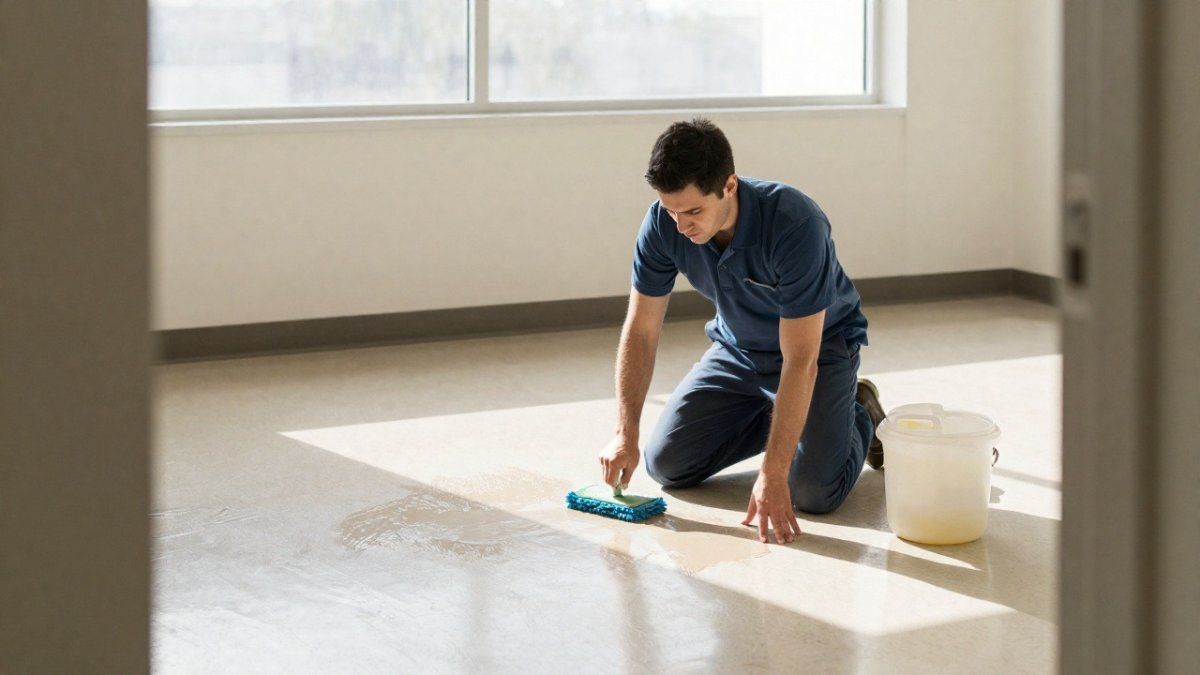
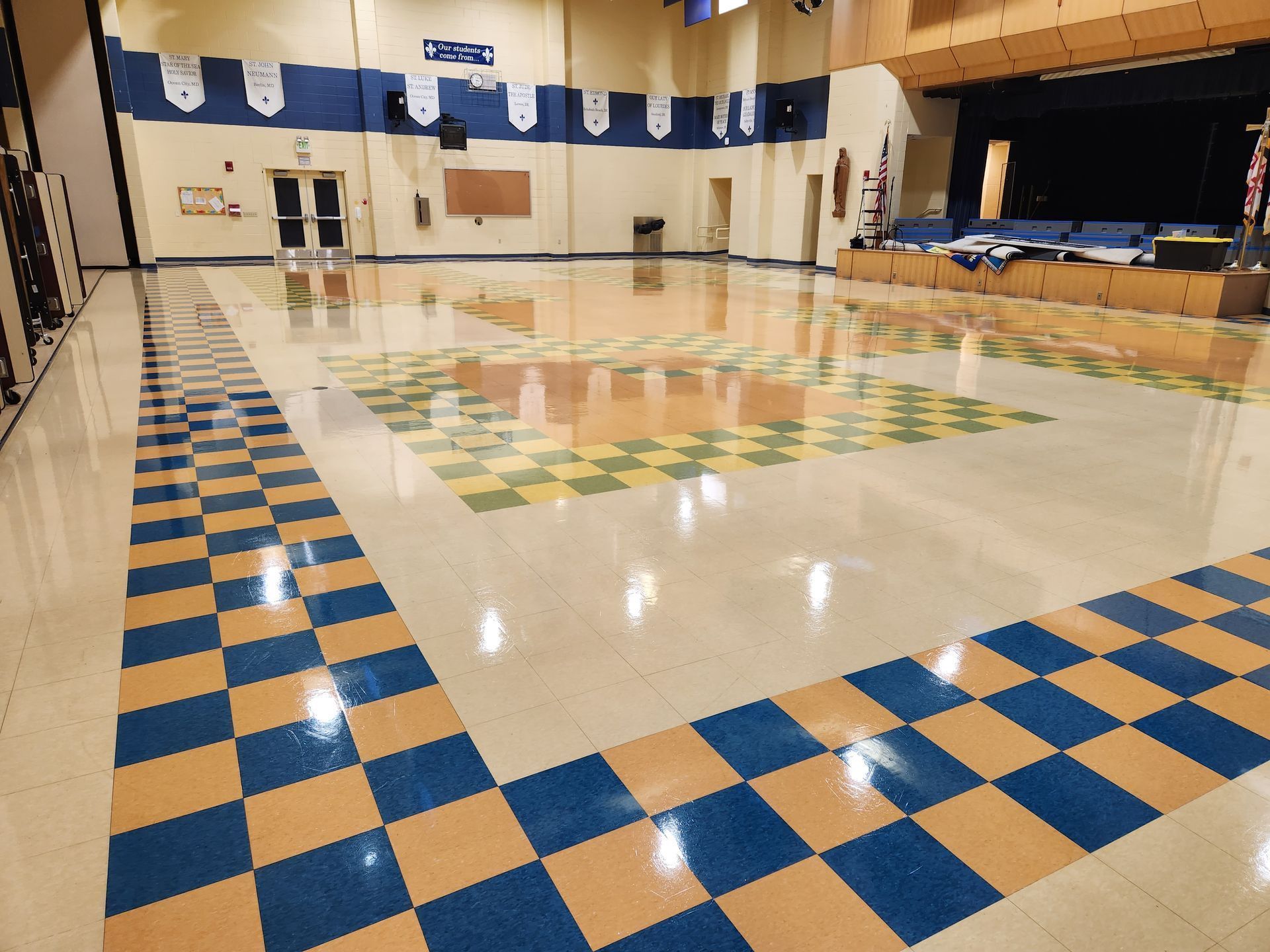
VCT stripping and waxing is the process of removing every layer of old floor finish down to the bare tile, then rebuilding a fresh protective coating in thin, even coats. Vinyl composition tile is a forgiving surface, but it only looks good when the finish above it is intact. At A Smarter Clean, we treat VCT stripping as a restoration step, not a routine mop job.
The work follows a clear sequence:
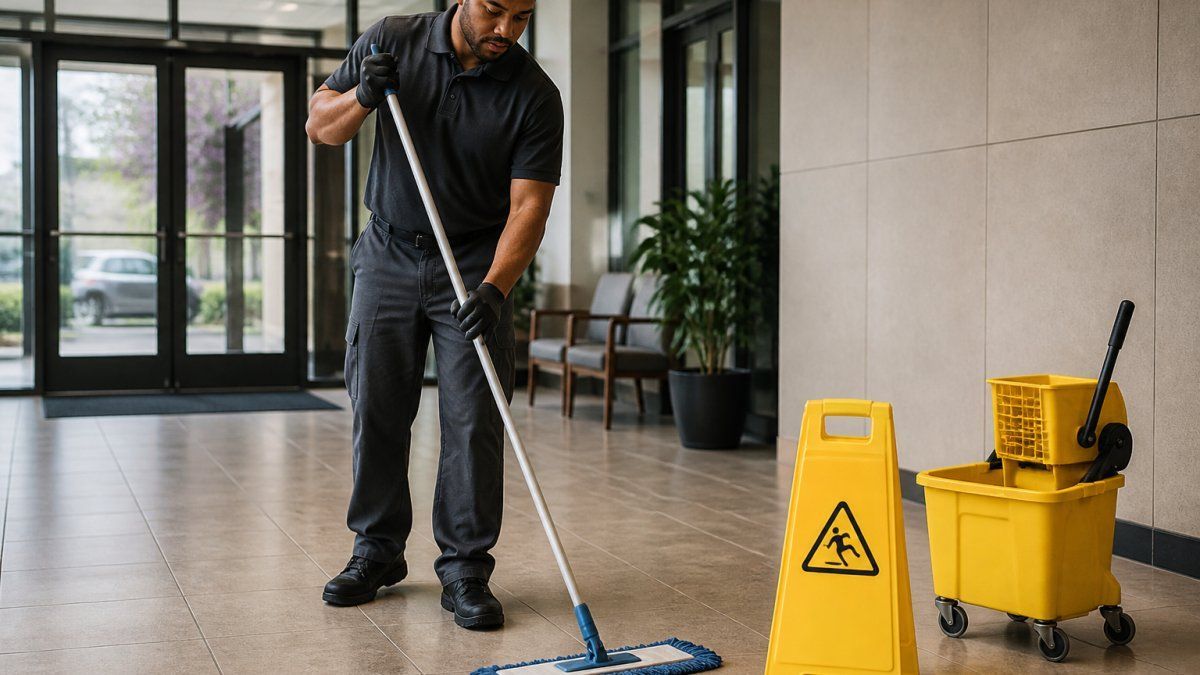
- Clear the area and post wet floor signs. Furniture, mats, and fixtures come out first so the crew is not working around obstacles and so no one walks through stripper or wet finish.
- Sweep and clean loose soil from the tile. Stripper works on finish, not on grit. Soil left on the floor dilutes the stripper and gets pushed around by the machine.
- Apply floor stripper and let it dwell. Dwell time is what softens the finish, and the product label sets the window.
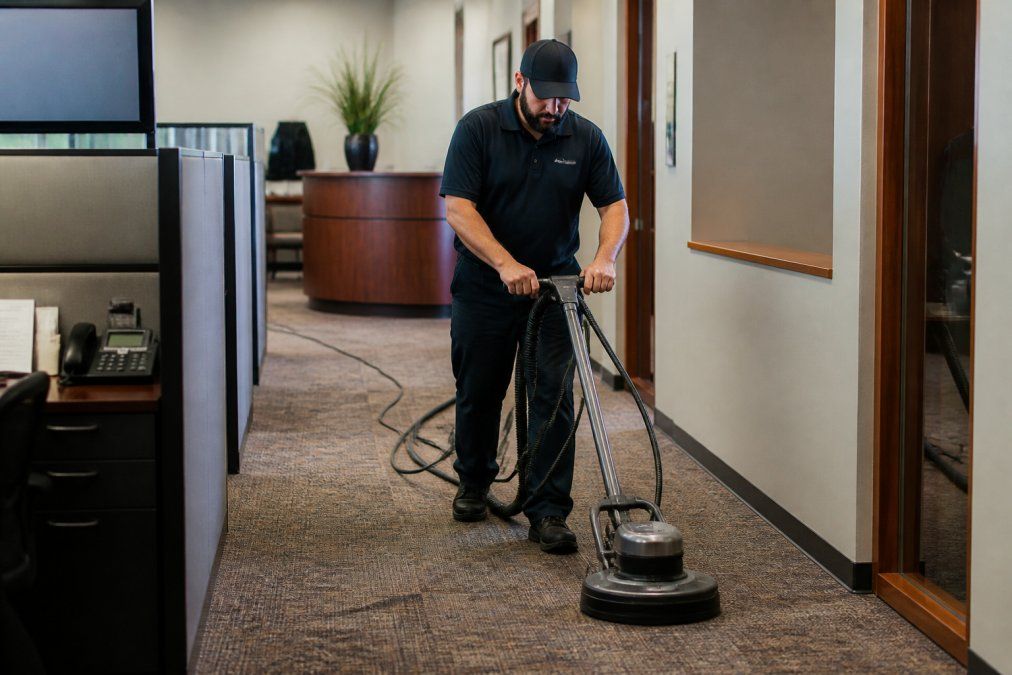
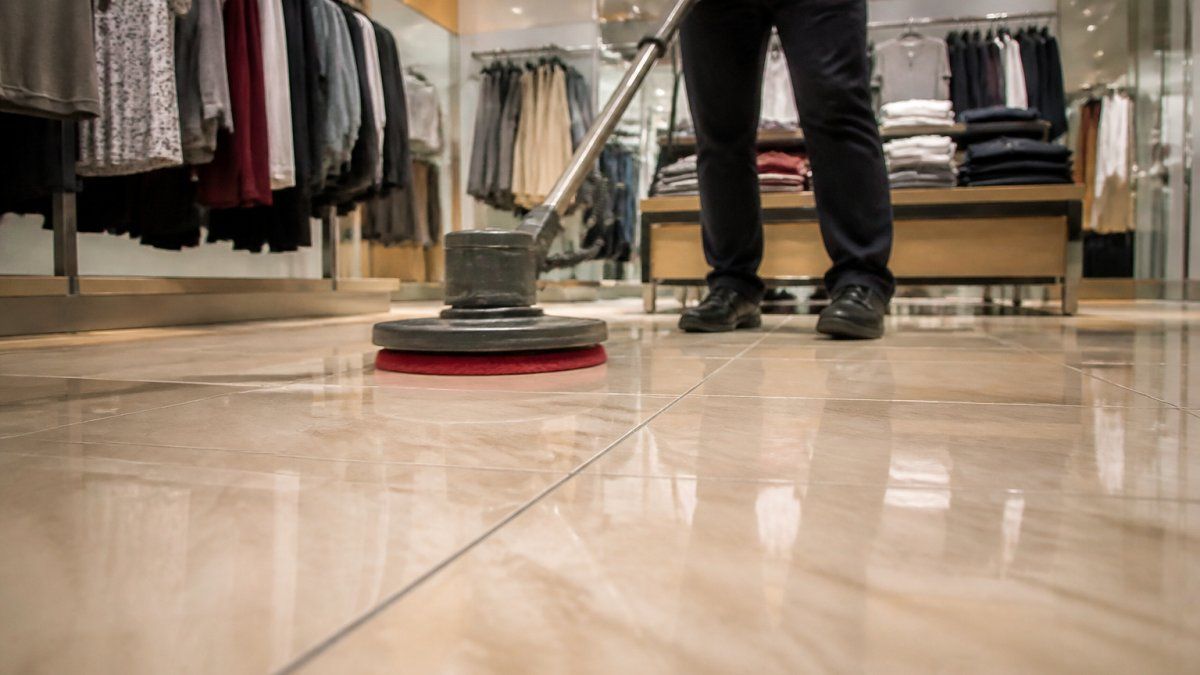
- Agitate the softened finish with a floor machine and stripping pad. The machine lifts the softened coating; it does not replace the dwell. Working in manageable sections keeps the slurry from drying back onto the tile.
- Work edges and corners by hand. The machine cannot reach under toe kicks, around door frames, or into corners, so those areas are done with a hand pad and detail brush.
- Wet vacuum the slurry. The dissolved finish and stripper have to leave the floor, not just move around on it.
- Rinse with clean water until residue is gone. Residual stripper interferes with adhesion of the new finish, so rinsing continues until the water runs clear.
- Let the floor dry completely. Finish applied over damp tile traps moisture and clouds.
- Apply thin coats of finish, usually four to five. Thin coats level and bond better than thick ones, and the number of coats is set by traffic, not by habit.
Finish choice matters as much as technique. How to choose the right floor finish for commercial VCT and LVT walks through the options before a single coat goes down.
Signs VCT Needs Stripping: Reading the Finish, Not the Calendar
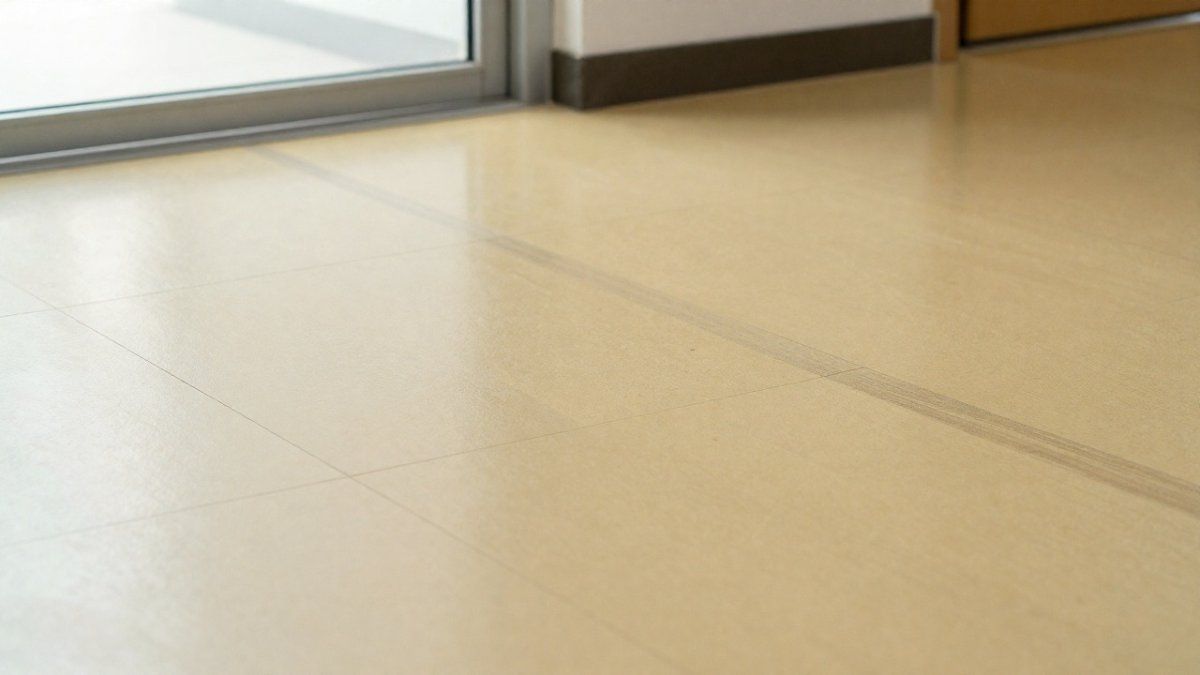
A full strip is due when the finish has failed, not when a date on a schedule arrives. According to Pro-San's 2026 VCT maintenance guide, the visual signals are yellowing, powdering, flaking, and wax ridges building up along traffic lanes.
Walk your building and look for these signs VCT needs stripping:
- A yellow or gray cast that mopping will not lift
- Finish flaking or peeling at edges and seams
- Dark, raised ridges where coats have stacked up
- Scuffs and stains trapped under the finish, not on it
- Dull patches that no amount of buffing brings back
A floor can look worn and still only need a recoat. That distinction decides your budget. Five signs your commercial floors need stripping and waxing gives you a checklist to compare against what you see.
VCT Scrub and Recoat: The Middle Path Between Full Strips
Scrub and recoat cleans the top of the finish and adds a fresh coat without removing everything underneath. It is the right call when the finish is dirty and dull but still bonded to the tile.
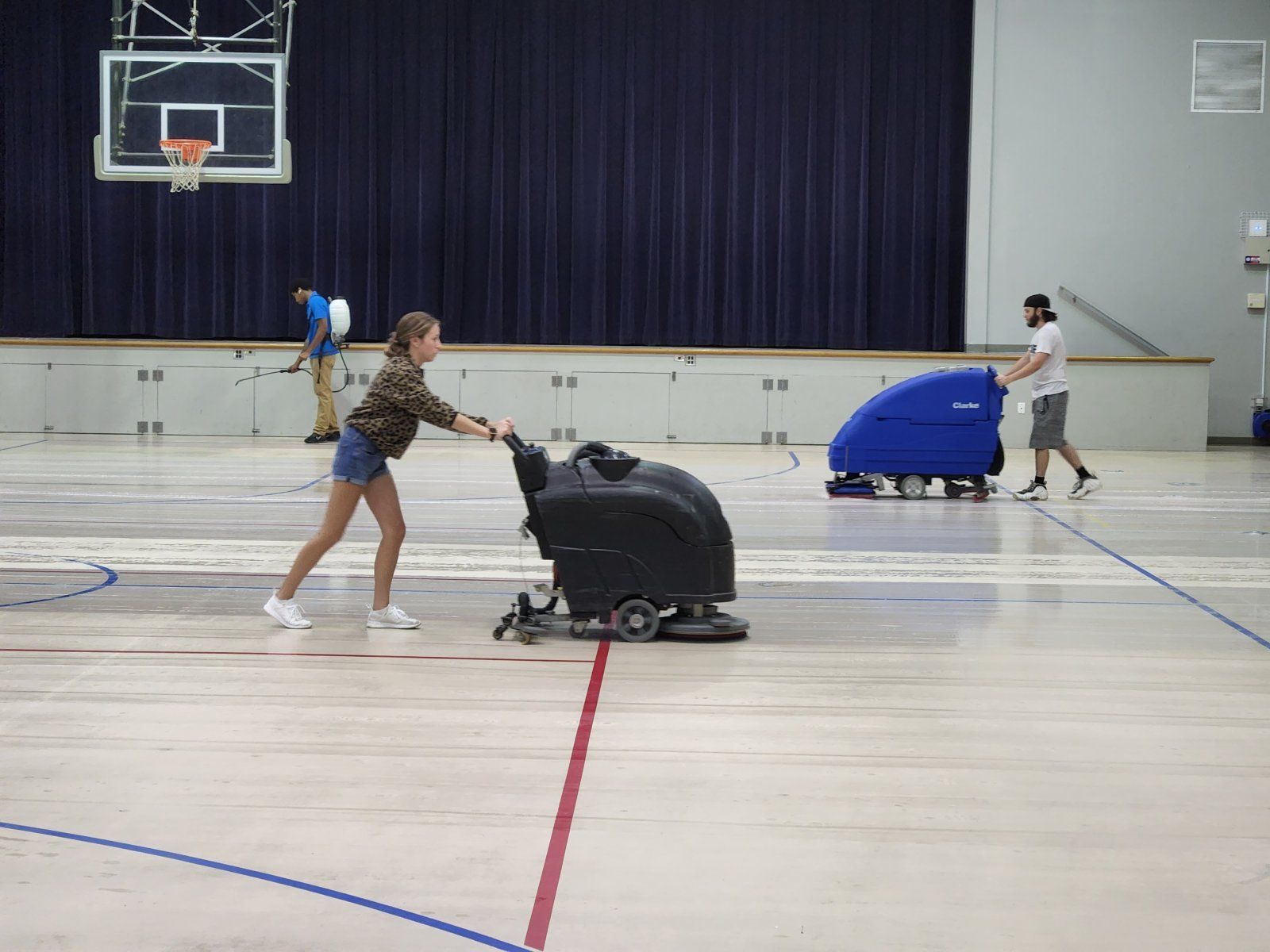
The method is simple. A floor machine with a scrubbing pad lifts embedded soil, a wet vacuum pulls the dirty solution away, and one or two new coats restore the shine. The finish stays intact, so the floor is back in service faster.
This is where a lot of facilities save money. Janitech Corp's 2026 floor care guidance notes that interim scrub-and-recoat maintenance can push the gap between full strips out to 18 months. That is a real difference for a busy clinic or school hallway.
Best for: floors with dull but intact finish and moderate soil. Skip if: the finish is flaking, yellowed through, or ridged.
VCT Floor Burnishing: Protecting the Finish Between Services
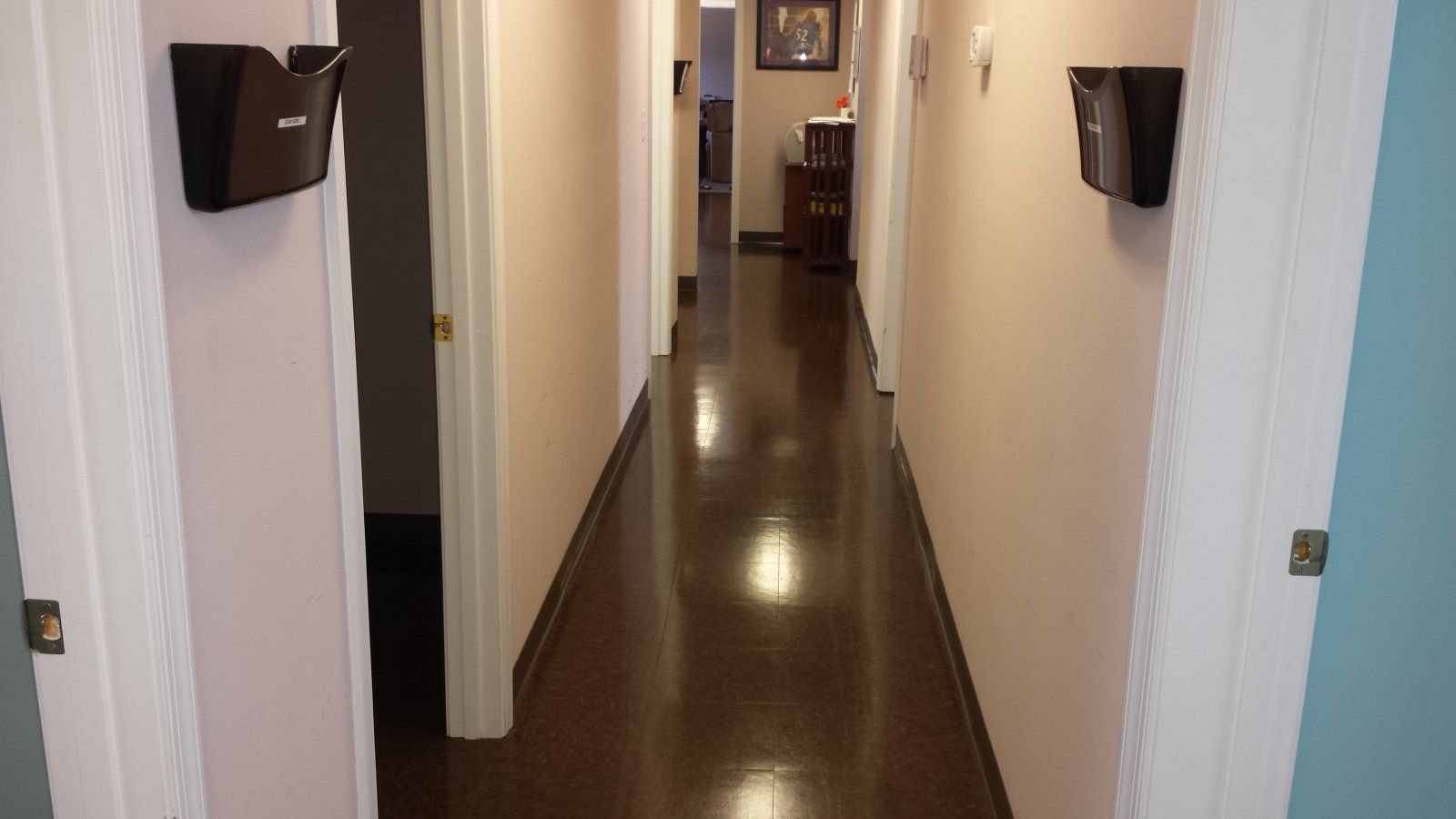
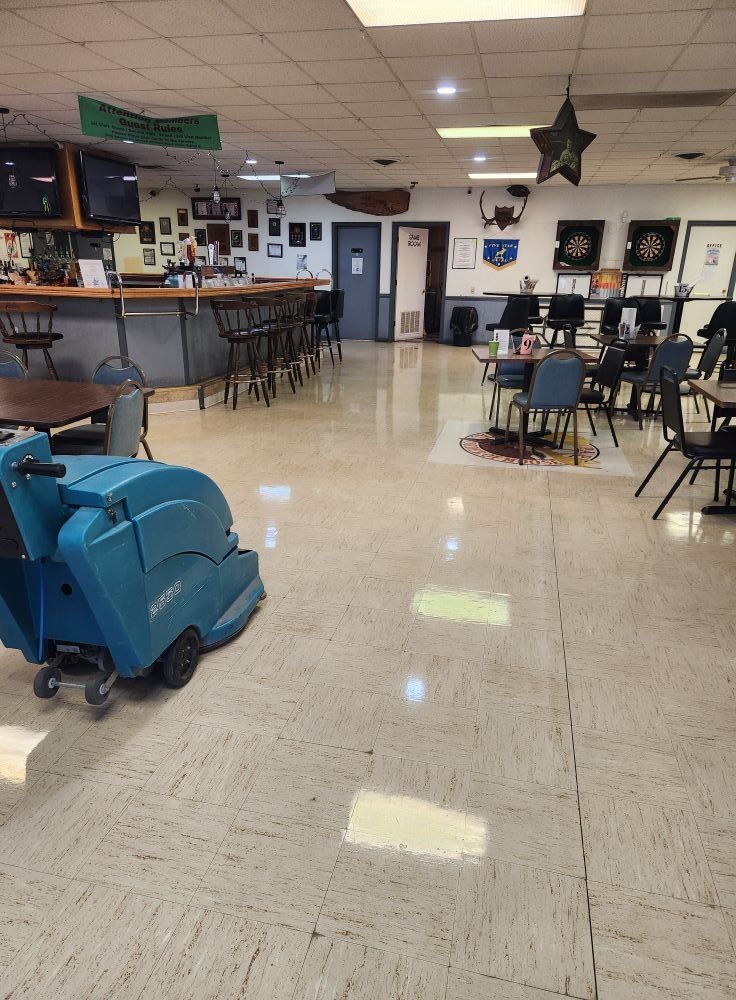
Burnishing is high-speed buffing that heats the finish and brings back gloss. It does not clean deep and it does not add coating. It maintains what is already there.
Facilities that skip burnishing tend to need a full strip and refinish every six to nine months, per Imperial Brady's maintenance intervals. Regular burnishing and interim recoats stretch that cycle considerably.
A practical routine looks like this:
- Burnish high-traffic lanes weekly or biweekly
- Damp mop with a neutral cleaner daily
- Recoat worn spots before they spread
- Schedule scrub and recoat when gloss drops
For a fuller routine, seven ways to maintain commercial VCT flooring covers the day-to-day habits that protect a finish.
VCT Stripping and Waxing Frequency: What Traffic and History Dictate
Most commercial floors land in a six-to-twelve-month window for VCT stripping and waxing frequency. Okum Supply's 2026 maintenance guidance ties that interval to foot traffic and how well the finish has been kept up. The window is a starting point, not a rule, and the buildings that get the most out of their floor-care budget are the ones that read their own floor instead of following a calendar.
Three factors move the number:
- Traffic volume. A hospital corridor and a storage room age at different speeds. Entrances, elevator lobbies, and main aisles take the most abuse and are usually the first places finish fails.
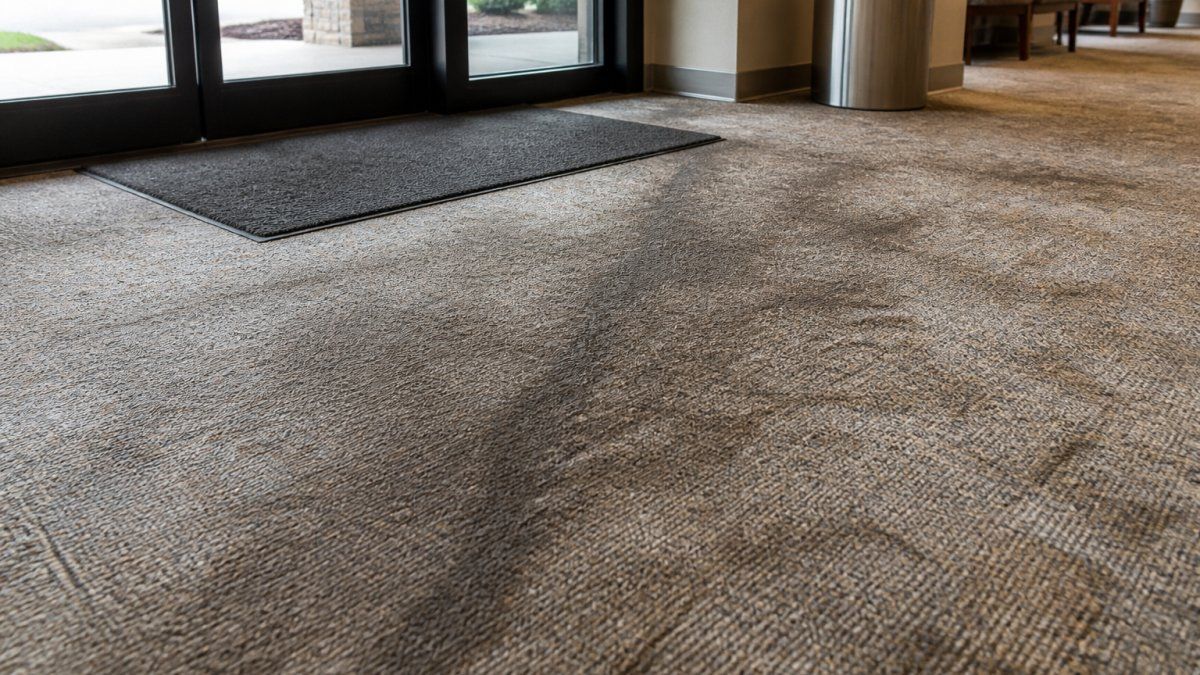
- Entry points. Salt, grit, and moisture destroy finish fast near doors. A building with a long, unprotected entrance run will need attention sooner than one with a deep matting system.
- Maintenance history. A floor that gets burnished and recoated lasts longer between strips. A floor that only gets damp-mopped accumulates soil under the finish and reaches the strip point faster.
Before you schedule anything, separate three conditions that look similar from across the room:
- Worn finish. Dull, scuffed, or lightly yellowed, but still bonded and intact. This is a scrub-and-recoat candidate, not a strip.
- Failed finish. Flaking, peeling, ridged, or yellowed through the coating. This is a strip-and-refinish candidate.
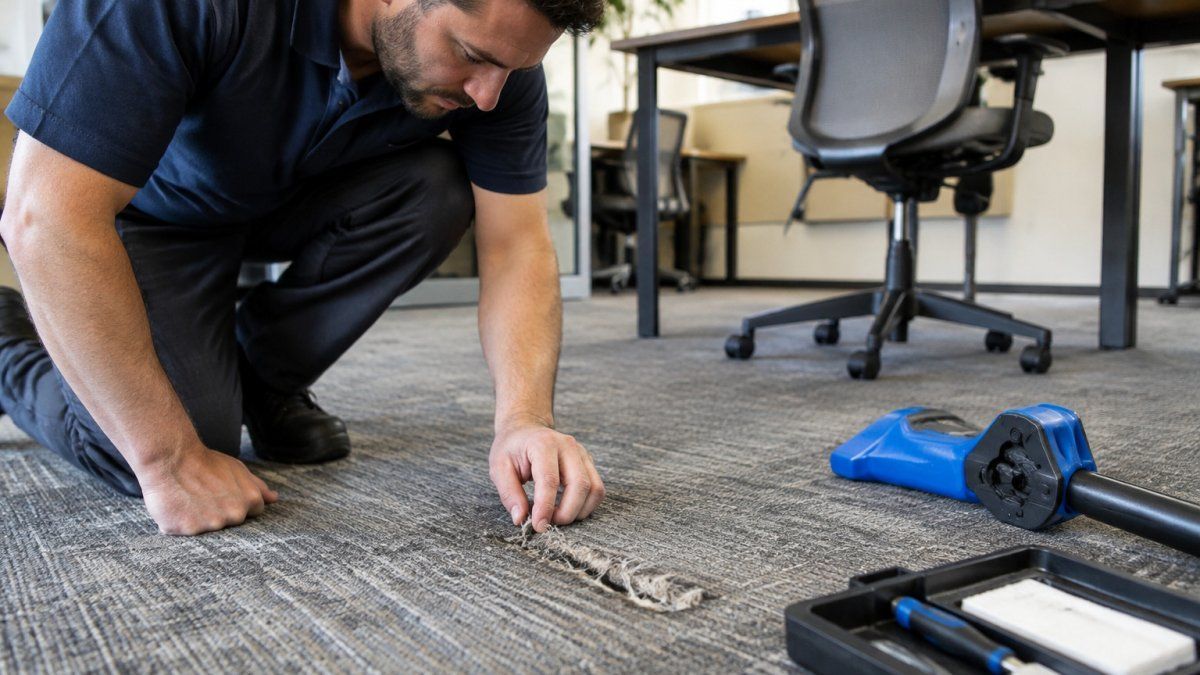
- Damaged tile. Cracks, loose tiles, missing tiles, or tile that has lost its surface. No amount of finish fixes this; the tile needs repair before any coating goes down.
That third condition is the one most often missed. Finish applied over cracked or loose VCT will fail at the same seam within weeks, and the money spent on the strip is wasted. A walkthrough that includes a tile condition check saves that cost.
If you are weighing outside service against in-house work, commercial floor waxing services vs in-house maintenance lays out the trade-offs.
The point is to catch the finish before it fails so the next service is a recoat rather than a strip.
Planning the Work: Downtime, Access, and Cost Expectations
Budget the project around square footage and access, not guesswork. Excellence Janitorial Services' 2026 pricing data puts professional floor stripping and waxing at $0.30 to $0.80 per square foot, with full jobs typically running $1,500 to $4,000.
Plan for these realities:
- Downtime. Finish needs time to cure before foot traffic returns.
- Access. Furniture, fixtures, and locked areas slow the crew down.
- Scheduling. Overnight and weekend windows keep a clinic or bank open.
- Ventilation. Stripper fumes need airflow and empty rooms.
Our team schedules around your operating hours so patients and staff are not walking on wet finish. For a line-by-line budget view, the floor stripping and waxing cost guide breaks down what drives the number.
Here are the planning facts to budget around before the crew arrives.
| Item |
Value |
Note |
|---|---|---|
| Professional stripping and waxing cost |
$0.30 to $0.80 per square foot |
Per 2026 pricing data cited in the article |
| Typical full job cost |
$1,500 to $4,000 |
Full jobs typically run in this range |
| Downtime |
Finish needs time to cure |
Before foot traffic returns |
| Access |
Furniture, fixtures, locked areas |
Slow the crew down |
| Scheduling |
Overnight and weekend windows |
Keep a clinic or bank open |
| Ventilation |
Stripper fumes need airflow |
And empty rooms |
Request a VCT Floor-Care Walkthrough
Judging whether your floor needs a full strip or just a recoat can be difficult.
A Smarter Clean provides professional commercial floor care for facilities across Delaware and Maryland's Eastern Shore. Our crews handle VCT stripping and waxing, scrub and recoat, and burnishing on flexible nightly, weekly, or monthly schedules. We use OSHA-safe products and background-checked staff.
Get started with A Smarter Clean and put your floor on a maintenance plan that fits how your building actually gets used.
Frequently Asked Questions
How often should VCT be stripped and waxed?
The interval for full VCT stripping and waxing depends on foot traffic and how well the finish has been maintained. The finish itself is the better trigger than the calendar: yellowing, powdering, flaking, or wax ridges mean the coating has failed and a full strip is due.
What is the difference between full stripping and waxing, scrub-and-recoat, and burnishing?
Full VCT stripping and waxing removes all old finish down to the tile, then applies fresh coats of floor finish. Scrub-and-recoat cleans and lightly abrades the existing finish, then adds new coats on top, which is faster and extends the time between full strips. VCT floor burnishing uses a high-speed machine to polish the finish and restore gloss without adding product. Burnishing and scrub-and-recoat are maintenance steps; stripping is the reset that happens when the finish has failed.
What signs indicate that a VCT floor needs a full strip?
Look for a finish that has yellowed, powders or flakes underfoot, or has built up ridges and uneven layers where coats were added over dirt. Dark traffic lanes that no longer respond to cleaning, dull patches that burnishing will not lift, and finish peeling at edges and corners all point to a failed coating. When those signs appear, stripping and refinishing the VCT is the fix. A walkthrough can confirm whether a full strip is needed or whether scrub-and-recoat will do.
How long does professional VCT stripping and waxing take?
Timing depends on square footage, how many layers of old finish have built up, and how much furniture and equipment must be moved. Work is typically done in sections so part of the floor can dry while another is stripped, and fresh finish needs time to cure before traffic returns. Facilities should plan for the area to be out of service for a stretch rather than a quick pass.