


A red metal shed with a white door and window, set against a backdrop of green pine trees and a clear blue sky.

Floor Stripping and Waxing Cost: 2026 Guide

Editorial Team • September 30, 2026

Table of Contents

Last Updated: September 30, 2026

What Drives Professional Floor Stripping and Waxing Cost in 2026

Professional floor stripping and waxing cost is not a single number pulled from a price list. It is the sum of measurable inputs: square footage, how many finish coats have built up over the years, how much furniture has to move, how many coats go back down, and how tight the after-hours window is. This guide from A Smarter Clean breaks down each variable so facility managers, property managers, and school administrators can budget with real numbers instead of guesses.

Square Footage and Floor Condition

Square footage sets the baseline, but condition sets the multiplier. A floor with intact finish and light soil strips quickly; a floor with heavy wax buildup, embedded black marks, or adhesive residue takes longer chemical dwell time, more agitation, and sometimes a second pass with a floor stripping machine.

Finish Coats, Buildup, and Labor Time

Every additional coat of floor finish adds removal time. Finish solids content matters too: high-solids products leave more film to break down. Labor, not chemicals, drives most of the invoice, which is why coat count and buildup history belong in every quote conversation.

Scrub and Recoat vs Strip and Wax: Choosing the Right Service

Scrub and recoat is the lighter, cheaper option and the right call more often than people think. It cleans the top layer of soil, removes scuffs, and applies one or two fresh coats of finish without removing the existing film. Full strip and wax removes everything down to the floor substrate and rebuilds from sealer up. The gap between them is not just chemical strength, it is labor hours, downtime, and how much finish film the floor can safely give up before the substrate is exposed.

Service What It Does When It Fits Relative Cost
Burnishing High-speed burnishing restores gloss, no chemical removal Floors in good shape between recoats Lowest
Scrub and recoat Cleans and adds 1-2 finish coats Light soil, intact finish, no yellowing Low to moderate
Full strip and wax Removes all finish, reseals, applies 3-5 coats Heavy buildup, discoloration, patchy wear Highest

How Floor Type Changes Which Service You Need

Not every hard floor behaves the same way under finish, and that changes both the service recommendation and the labor curve.

  • VCT (vinyl composition tile): The classic strip-and-wax floor. Porous, takes sealer and multiple finish coats well, and responds predictably to stripping. Most facilities recoat quarterly to semi-annually and strip every one to three years depending on traffic.
  • LVT/LVP (luxury vinyl tile/plank): Usually manufactured with a wear layer and often a factory finish. Many LVT/LVP products should not be stripped with aggressive alkaline strippers at all, the manufacturer's maintenance instructions typically call for pH-neutral cleaners and occasional scrub-and-recoat with a compatible finish. Stripping the wrong LVT can dull or cloud the wear layer permanently.
  • Terrazzo: A stone-aggregate floor that is typically polished or honed rather than waxed. Some facilities do apply a sacrificial finish coat for protection, which can be scrubbed and recoated, but true stripping on terrazzo requires care because acidic or highly alkaline chemistry can etch the matrix.
  • Concrete (sealed or polished): Sealed concrete may take a finish coat in some facilities, but polished concrete is maintained by burnishing and densifier reapplication, not by wax. Stripping a polished concrete floor is usually the wrong service.
  • Linoleum and sheet vinyl: Similar logic to LVT, check the manufacturer's guidance before assuming a full strip is appropriate.

The Labor Math Behind Each Service

Labor, not chemical, is the largest line item in nearly every commercial floor-care invoice. A rough way to think about the difference:

  • Burnishing is a pass with a high-speed machine and no chemical dwell time. It is the fastest service per square foot.
  • Scrub and recoat adds a scrub pass, a rinse or pick-up pass, and one or two finish applications. It is typically a fraction of a full strip in labor hours.
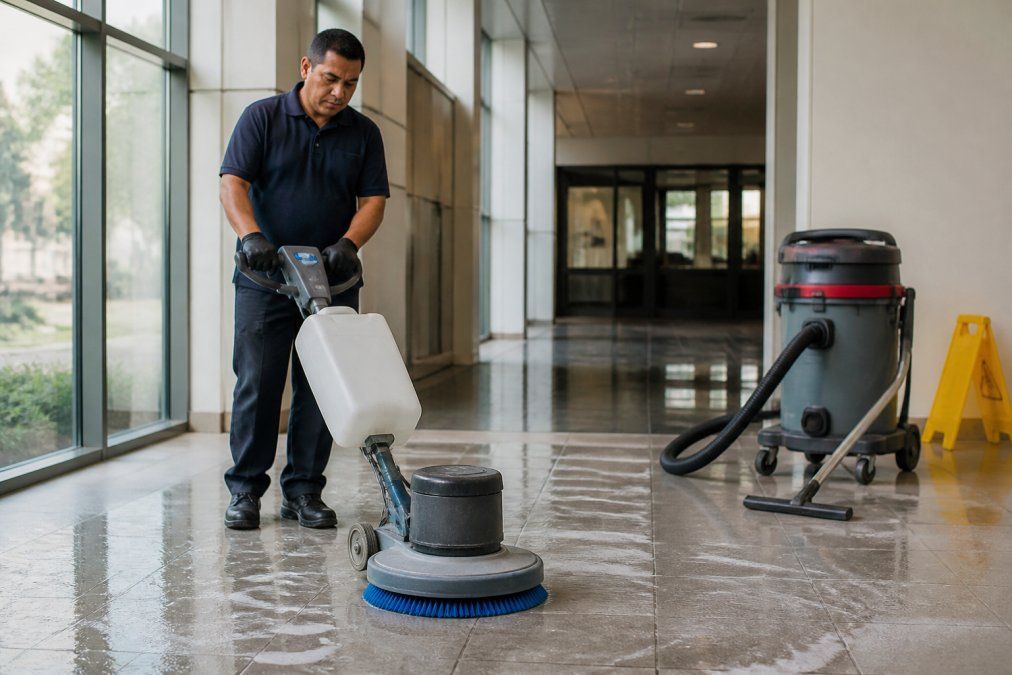
  • Full strip and wax adds chemical dwell time, agitation, wet vacuuming of slurry, a neutral rinse, sealer application, and three to five finish coats with dry time between each. It is the most labor-intensive service by a wide margin, and it is the one most sensitive to buildup depth and furniture density.

When Burnishing and Routine Maintenance Are Enough

Burnishing and routine maintenance are enough when the finish is intact and the floor only looks dull. If a neutral cleaner, auto-scrubber, and high-speed burnishing bring the gloss level back, you do not need to strip. Stripping too often wears the floor and shortens its service life.

Pro Tip
Test a small area before committing to a full strip. If a diluted neutral cleaner and a red pad restore the sheen, you have saved the entire strip cost and a day of downtime.
Key Takeaway
Match the service to the floor type first, then to the condition. Recommending a full strip on LVT/LVP or polished concrete is a red flag that the provider has not read the manufacturer's maintenance guidance.

A Commercial Floor Care Site Walkthrough Checklist

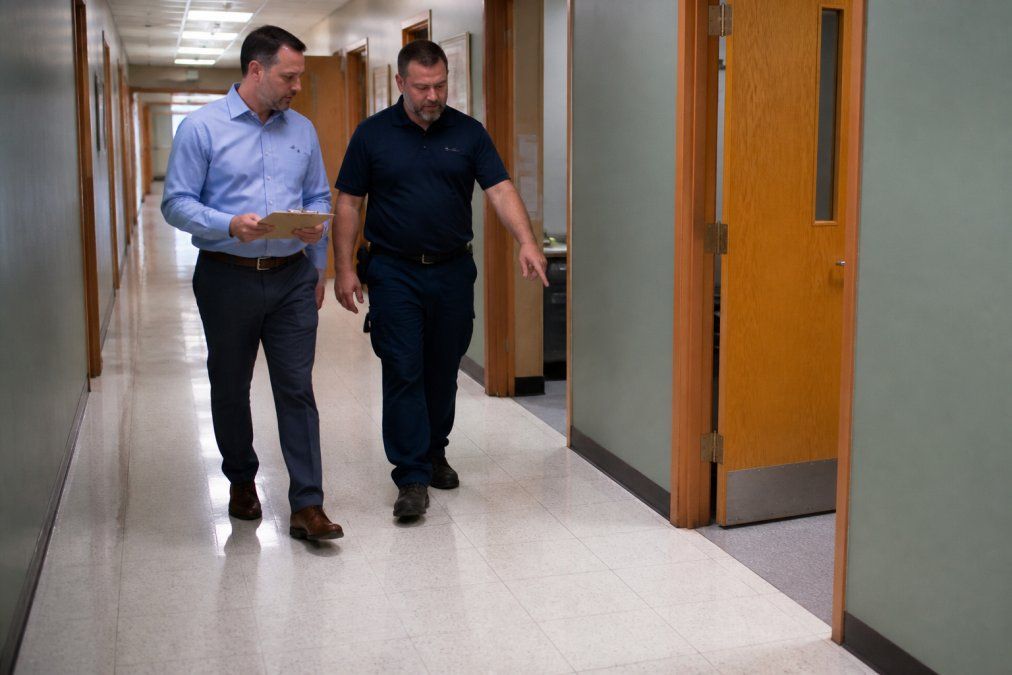
A site walkthrough is what turns a rough estimate into an accurate quote. Most commercial floor-care providers, including A Smarter Clean, price from site details rather than a phone call because access, furniture density, and floor condition change the labor hours dramatically.

Facility manager and technician inspecting a VCT floor to determine stripping and waxing cost

Use this checklist during your next walkthrough:

  • Measure total square footage by room, not just the building footprint
  • Note floor type: VCT, LVT/LVP, concrete, tile, or mixed
  • Count existing finish coats and check for yellowing or wax buildup
  • Identify furniture, shelving, and equipment that must move
  • Check access: door widths, elevator availability, staging space
  • Confirm after-hours window and any noise or odor restrictions
  • Photograph problem areas: black marks, gouges, adhesive residue
  • List any floor that needs repair before finish work begins

Watch Out
Skipping the walkthrough and quoting from square footage alone is the fastest way to a mid-job change order. Undisclosed furniture moves or heavy buildup turn a one-night job into three.

Building a Commercial VCT Floor Maintenance Schedule

A commercial VCT floor maintenance schedule should be built around traffic, not the calendar. High-traffic entries and corridors need more frequent attention than back offices and storage rooms.

A practical starting framework many facilities use:

  • Daily: Dust mop or auto-scrub with neutral cleaner
  • Weekly: Burnish high-traffic zones to maintain gloss
  • Quarterly to semi-annually: Scrub and recoat
  • As needed: Full strip and wax when buildup or discoloration appears

Cost Factors Unique to Medical Offices, Schools, and Other Facilities

Two buildings of identical square footage can land on very different invoices because of how the work has to be staged. Medical offices, dental practices, schools, churches, banks, and municipal buildings each carry constraints that a generic quote will miss.

What Actually Changes the Labor Hours

  • Staging around occupied hours. A dental office may need floor work sequenced around patient chairs, sterilizers, and equipment that cannot be unplugged or moved. That means smaller work zones, more setup and breakdown time, and sometimes multiple nights instead of one.
  • Fixed furniture and casework. A church sanctuary with fixed pews, a bank lobby with bolted teller counters, or a school library with anchored shelving cannot be cleared. Crews work around them, which slows the machine pass and adds hand-work at edges.
  • Narrow service windows. A school gym or cafeteria has enormous square footage but a narrow window between terms or between the last lunch period and the first morning bell. Compressing the same work into fewer hours means more crew members on site, which raises labor cost even though the square footage has not changed.
  • Moisture and slip-risk controls. Medical and dental offices often require extra caution around wet floors near patient areas, which can slow the strip-and-rinse sequence.
  • Odor and ventilation limits. Occupied buildings with sensitive occupants may require low-odor chemistry or additional ventilation time, which can extend the dwell-and-dry schedule.
  • Security and access. Banks and municipal buildings may require background-checked crews, escorted access, or after-hours badge entry, all of which add coordination time.

How the Invoice Usually Breaks Down

Labor and material cost breakdown usually splits into three buckets:

  1. Labor hours for stripping, rinsing, sealing, and coating, typically the largest share in nearly every commercial facility.
  2. Chemical and finish material , stripper, neutralizer, sealer, and finish, scaled to square footage and coat count.
  3. Equipment, disposal, and consumables , floor machines, wet vacuums, pads, and proper disposal of stripping slurry.

Why Regional Averages Mislead

Regional price variations exist, but they matter less than access and scheduling constraints. A national average square-foot rate assumes a clear floor, a wide window, and easy load-in. A facility with fixed pews, a two-hour window, and a freight elevator shared with other tenants is not that facility. This is why a local walkthrough beats a national average every time, the walkthrough is what surfaces the constraints that actually drive the number.

Key Takeaway
When comparing estimates, ask each provider to list the assumptions behind the number, work window, furniture handling, coat count, and floor type. Two quotes that look different on price often differ more on assumptions than on rate.

DIY vs Professional Floor Stripping: What the Comparison Actually Shows

DIY looks cheaper on paper and rarely is. A floor stripping machine, wet vacuuming equipment, stripping chemicals, sealer, finish, applicators, and pads add up fast, and the learning curve on chemical dwell time and floor pad abrasiveness is unforgiving. Apply stripper too weak and the finish will not release; leave it too long and you risk the floor substrate.

Eco-Friendly Stripping Chemicals and Safer Floor Care Options

Eco-friendly stripping chemicals have improved enough that "green" no longer means "weak." Low-odor, low-VOC strippers and pH-neutral neutral cleaners reduce indoor air complaints, which matters in occupied buildings like medical offices and schools. The trade-off is that some eco-friendly formulas need longer dwell time, so labor hours may rise slightly even as chemical risk falls.


Frequently Asked Questions

What is the going rate for stripping and waxing floors?

There is no single going rate, because stripping and waxing cost depends on square footage, floor condition, buildup, the number of finish coats, furniture moving, and access. Industry pricing is often discussed as a square footage rate, but that rate shifts with every one of those factors. The only reliable number comes from a site walkthrough, where a provider measures the space and inspects the floor. A Smarter Clean provides estimates after reviewing the actual facility rather than quoting a flat figure.

What is the difference between stripping and waxing versus scrub and recoat?

Stripping removes all old finish and wax buildup down to the bare floor substrate, then applies new sealer and finish coats. Scrub and recoat cleans the top layer of soil and scuffs, then adds one or two fresh finish coats without removing everything underneath. Scrub and recoat costs less and takes less time, so it works well between full strip-and-wax cycles. Full stripping is needed when floor wax buildup, discoloration, or uneven gloss level can no longer be corrected by recoating alone.

How often should commercial VCT floors be stripped and waxed?

Frequency depends on traffic, cleaning routine, and the floor maintenance schedule already in place. High-traffic entries and hallways usually need attention sooner than back offices. Most facilities rotate between routine cleaning, buffing or high-speed burnishing, scrub and recoat, and full strip-and-wax over a multi-year cycle. A commercial VCT floor maintenance schedule built around your actual traffic patterns keeps the finish serviceable longer and helps you plan floor care spending instead of reacting to a floor that has gone dull.

Why is a site walkthrough necessary for an accurate floor care estimate?

A walkthrough confirms square footage, floor substrate, existing finish and buildup, furniture and equipment that must move, doorway and elevator access, and the hours your facility can be closed or worked around. Two rooms of the same size can need very different labor if one is empty and the other is packed with exam tables or shelving. Scheduling also matters, since night and weekend work changes crew logistics. That is why commercial floor-care pricing usually requires site details before a provider can quote responsibly.

How does floor condition impact the cost of professional floor maintenance?

Heavy floor wax buildup, deep scuffs, adhesive residue, or years of skipped maintenance add chemical dwell time and labor hours, which raises the total. A floor that has been on a consistent preventative maintenance program is faster to strip and recoat. Surface preparation, including moving furniture and protecting adjacent areas, also adds time. Facilities that stay on a regular schedule generally avoid the worst-case pricing that comes with full floor restoration after long neglect.

By Editorial Team • September 26, 2026
Commercial tile and grout cleaning services restore floors in high-traffic facilities. Learn methods, schedules, sealing, and how to choose a provider.
By Editorial Team • September 25, 2026
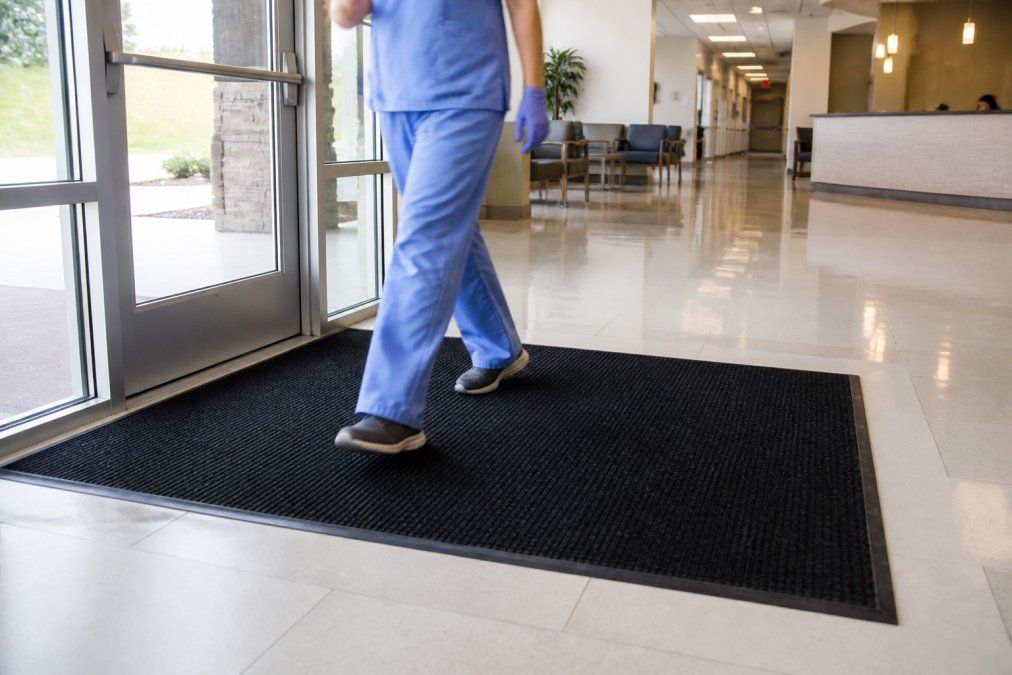
Discover 5 floor care tips for medical offices, from maintenance schedules to LVT best practices. Keep your facility safe and professional. Get a quote.
By Editorial Team • September 24, 2026
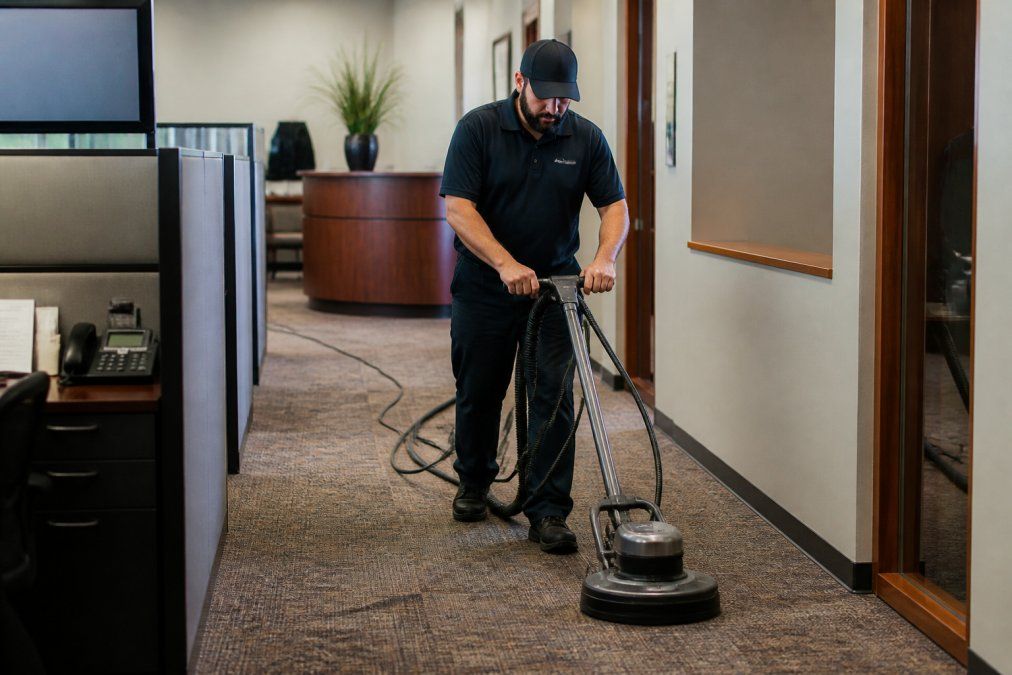
Discover the benefits of low moisture carpet cleaning for commercial facilities: faster dry times, less disruption, and better appearance. Get a quote.
By Editorial Team • September 23, 2026
Find reliable commercial janitorial services in Sussex County. Learn what to expect, how to choose, and why professional cleaning matters.
By Editorial Team • September 21, 2026
Professional commercial floor care services for businesses, medical offices, and schools. Learn about floor stripping, waxing, maintenance.
By Editorial Team • September 21, 2026
Practical carpet maintenance tips for facility managers: schedules, stain removal, preventative programs. Discover how to extend carpet life and cut costs.
By Editorial Team • September 19, 2026
Discover why facility management outsourcing saves money through lower labor costs, predictable budgets, and consistent results. Learn how to start.
By Editorial Team • September 17, 2026
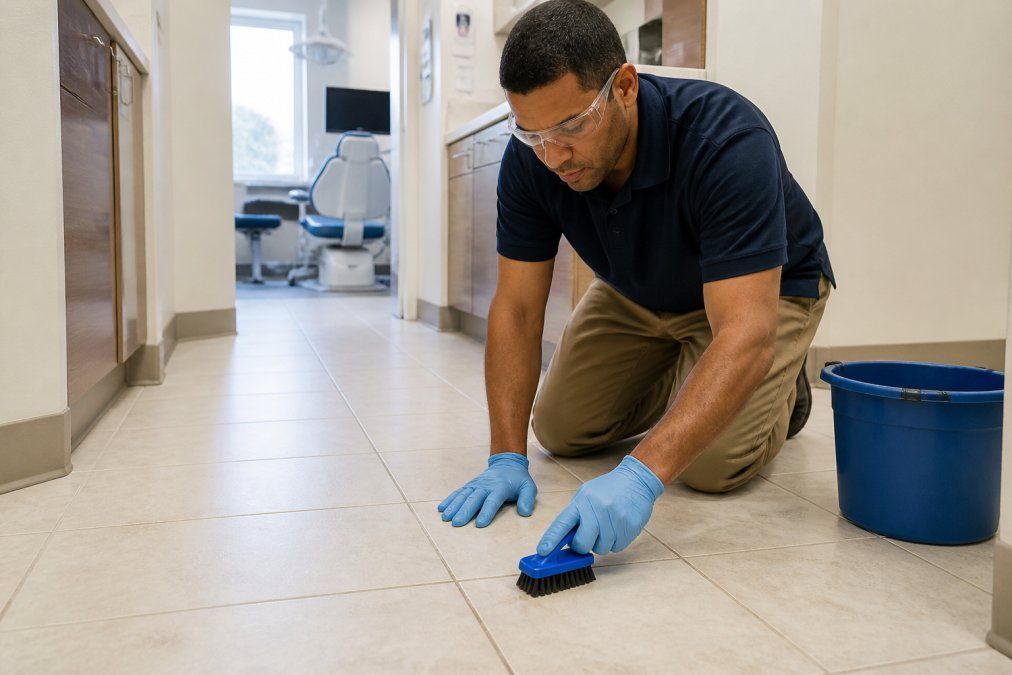
Learn how to remove stubborn stains from tile and grout safely, plus when to call commercial grout restoration services. Get a free estimate today.
By Editorial Team • September 17, 2026
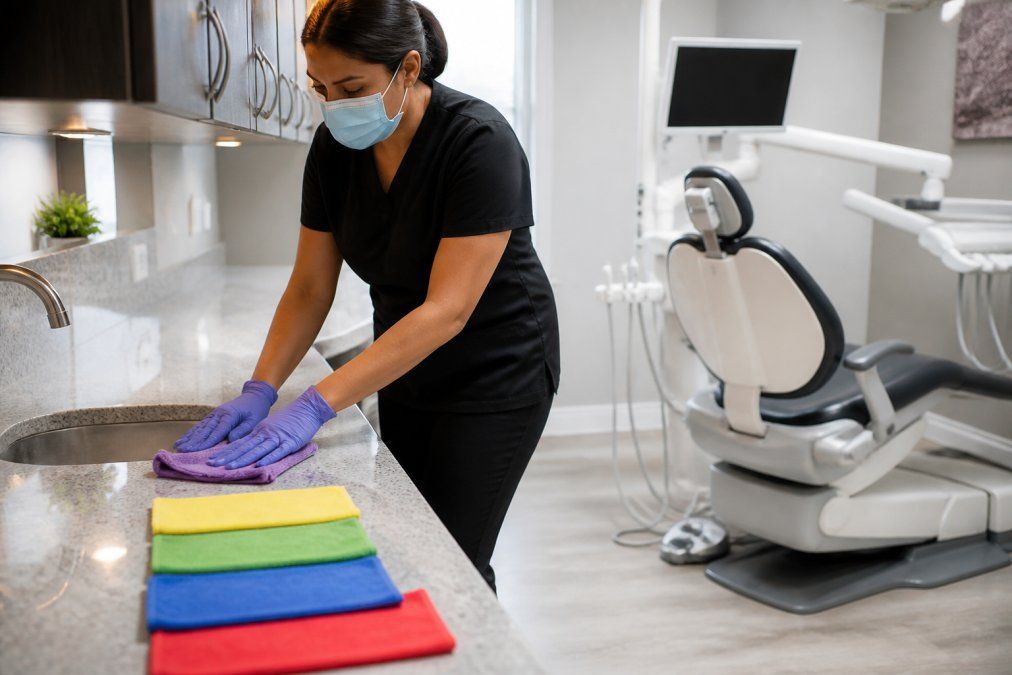
OSHA compliant cleaning for dental offices starts here. Learn the steps, standards, and staff training that protect your practice. Get a free walkthrough.
By Editorial Team • September 13, 2026
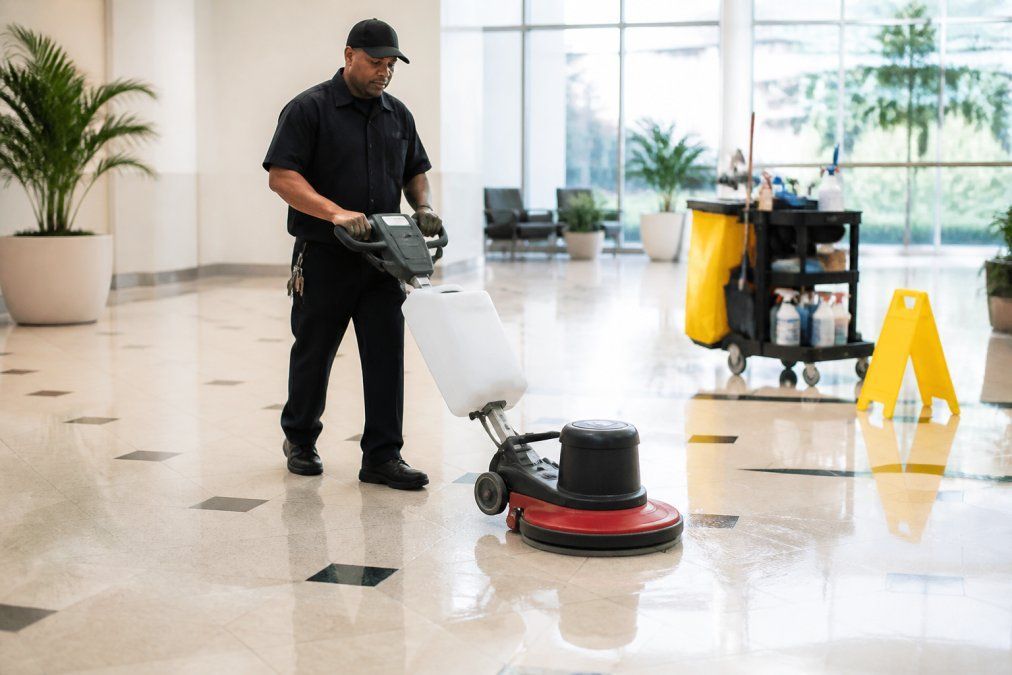
Choosing a commercial floor cleaning company? Learn costs, VCT maintenance, stripping and waxing, and schedules. Get a free floor care estimate today.
Show More