
Commercial Janitorial Services in Sussex County
Table of Contents
- What Commercial Janitorial Services Include
- Commercial Cleaning Frequency Guide for Your Business
- Commercial Floor Care Services and Restoration
- Why Professional Janitorial Services Matter for Medical Offices and Schools
- Janitorial Service Contract Checklist: What to Look For
- Reliability and Staff Vetting: How Professional Providers Ensure Consistency
- Choosing the Right Commercial Janitorial Services Provider
- Frequently Asked Questions
Last Updated: September 23, 2026
What Commercial Janitorial Services Include
Commercial janitorial services are professional cleaning and facility maintenance programs that encompass recurring cleaning schedules, specialized floor care, sanitization protocols, and preventative maintenance tailored to your facility's specific needs.
Professional commercial janitorial services are customized to match your industry, facility size, and operational demands, a medical office requires different protocols than a school or warehouse.
Core offerings typically include:
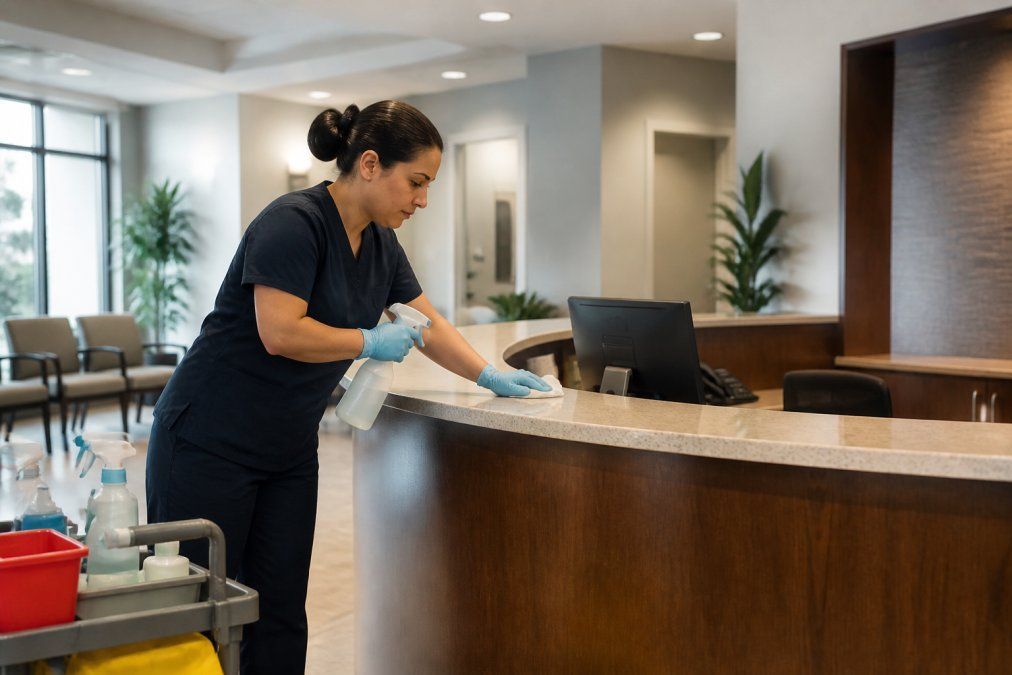
- Daily or weekly dusting, vacuuming, and mopping of common areas
- Restroom sanitization and supply replenishment
- Trash removal and recycling management
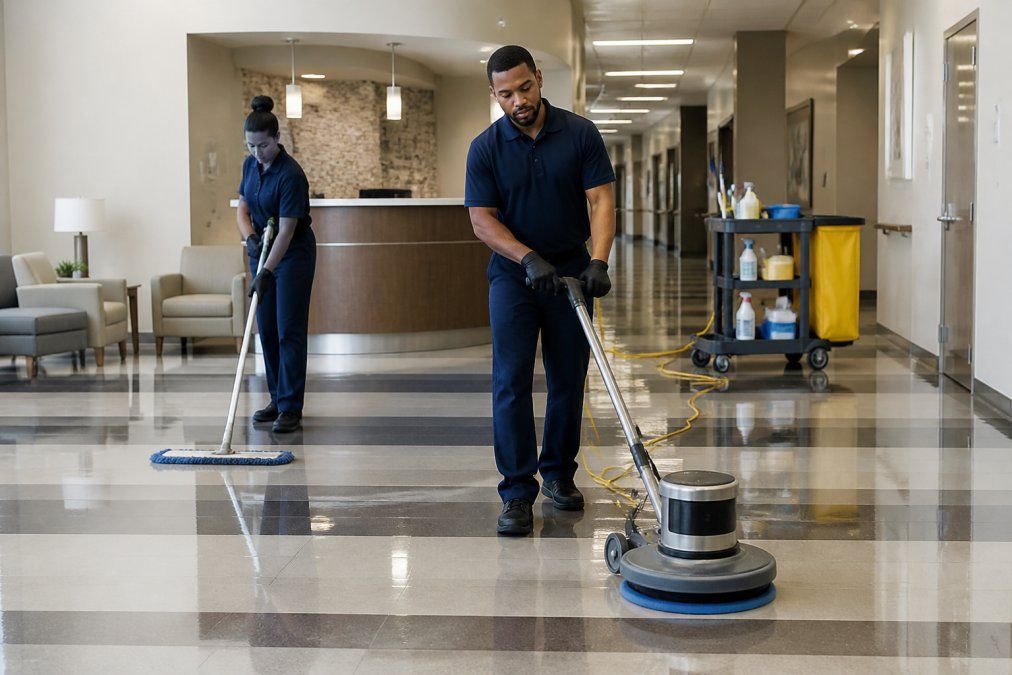
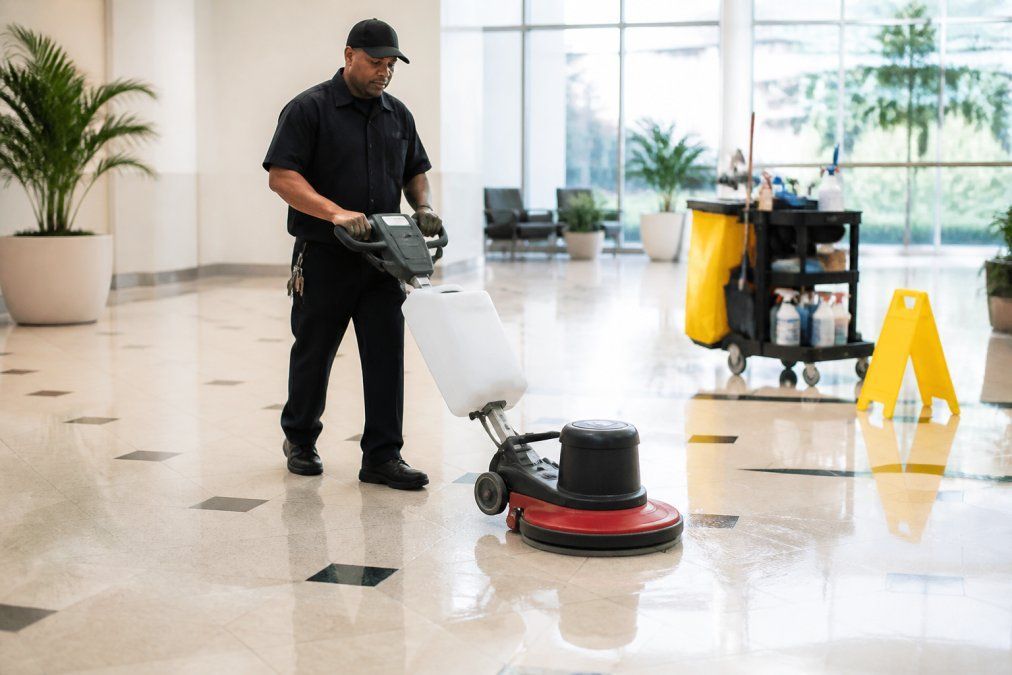
- Floor care ranging from basic maintenance to deep restoration
- Specialized cleaning for high-traffic areas
- Disinfection protocols aligned with workplace hygiene standards
Recurring janitorial services ensure your facility maintains consistent professional standards without requiring your staff to manage cleaning operations.
Commercial Cleaning Frequency Guide for Your Business
Cleaning frequency depends on your industry, foot traffic, and operational needs, there's no one-size-fits-all schedule.
Medical offices and dental practices typically require nightly or post-appointment sanitization. High-traffic areas need attention multiple times per week. Schools often benefit from daily cleaning after hours to maintain hygiene standards for students and staff. Office buildings with moderate traffic may operate effectively with weekly deep cleaning plus daily light maintenance.
A practical approach is to assess your actual needs:
- Nightly programs: Best for medical facilities, food service areas, and high-traffic commercial spaces where sanitation is critical
- Weekly schedules: Suitable for standard office environments and professional spaces with moderate foot traffic
- Monthly deep cleaning: Complements regular maintenance for specialized tasks like floor restoration or carpet care
Cleaning frequency directly impacts workplace hygiene, employee productivity, and professional image. Inconsistent cleaning creates visible problems that affect client and staff perception.
Effective cleaning schedules match actual operational demands, preventing over-servicing and under-servicing.
Commercial Floor Care Services and Restoration
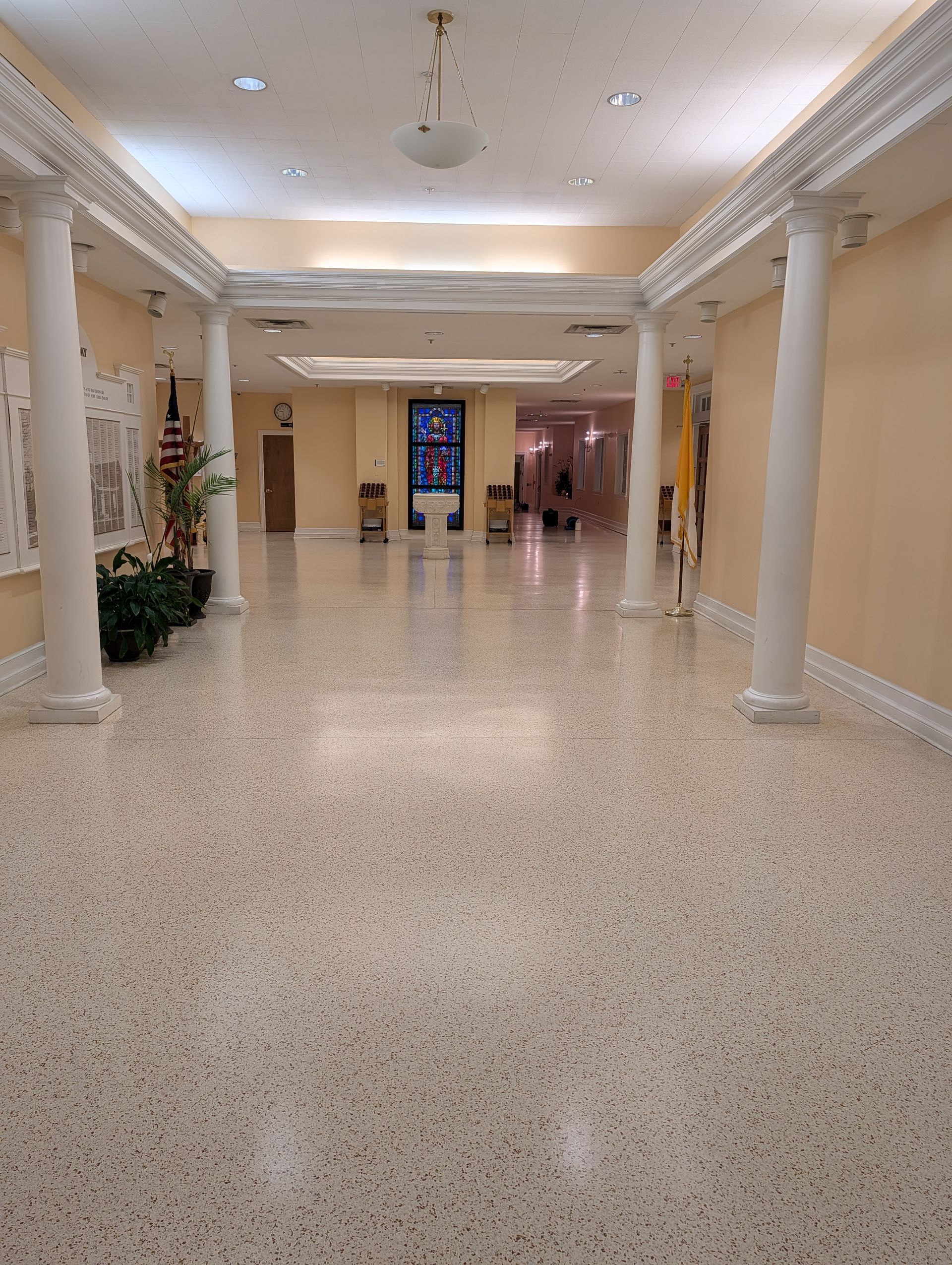
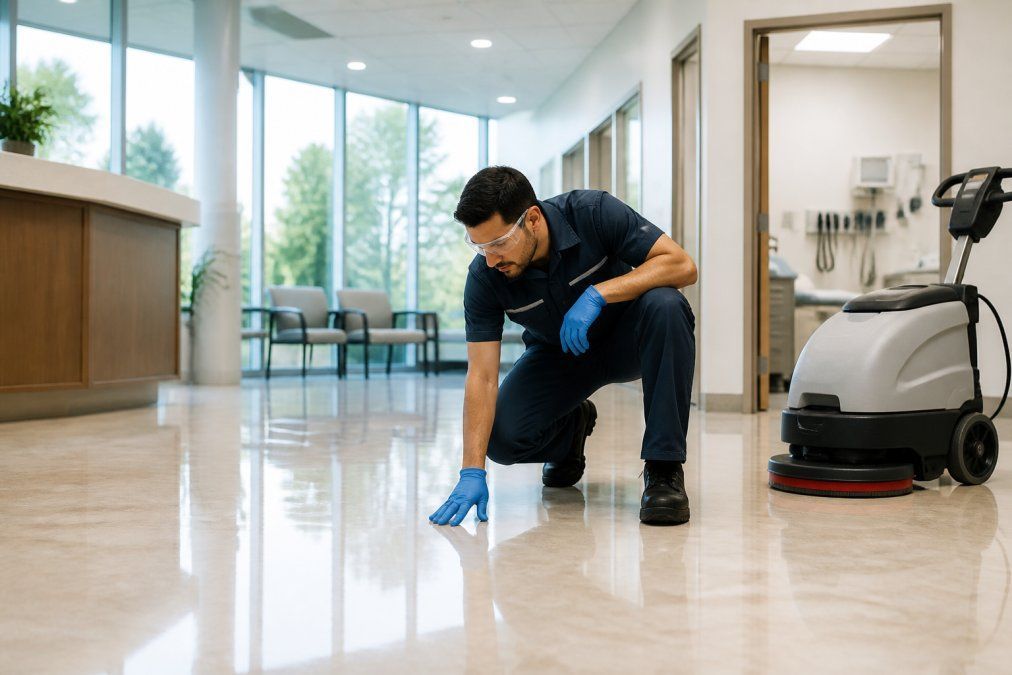
High-traffic floors develop dull spots, scuffs, and stains that basic mopping can't fix. Professional floor care services address these problems, the key decision is whether the investment makes financial sense.
Understanding Floor Degradation and Cost Impact
Floors degrade predictably: year one shows acceptable maintenance, year two reveals visible wear in high-traffic zones, and year three accelerates degradation with discolored grout and worn finishes. Facility managers then face a choice: invest in professional restoration or replace flooring entirely.
Floor replacement costs significantly more per square foot than professional restoration. A restoration investment extends floor life by 3-5 years, deferring replacement costs and maintaining facility appearance.
Common Floor Care Needs and Restoration Approaches
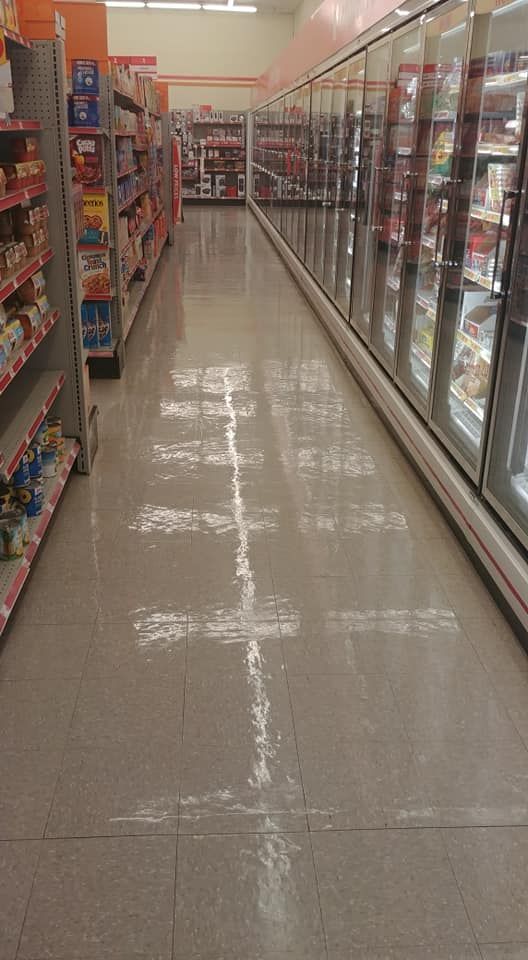
- VCT (vinyl composite tile) stripping and waxing: Removes old wax buildup and applies fresh protective coating. Regular stripping prevents wax buildup that dulls appearance and creates slip hazards.
- LVT/LVP (luxury vinyl) maintenance: Low-moisture cleaning systems preserve luxury vinyl finishes without over-saturating seams. Unlike older vinyl, LVT requires gentler care, aggressive scrubbing or excessive water can damage the wear layer.
- Concrete sealing: Protects concrete floors from staining, moisture penetration, and wear in warehouses, loading areas, and industrial spaces. Sealed concrete is easier to clean and resists oil, chemical, and water damage.
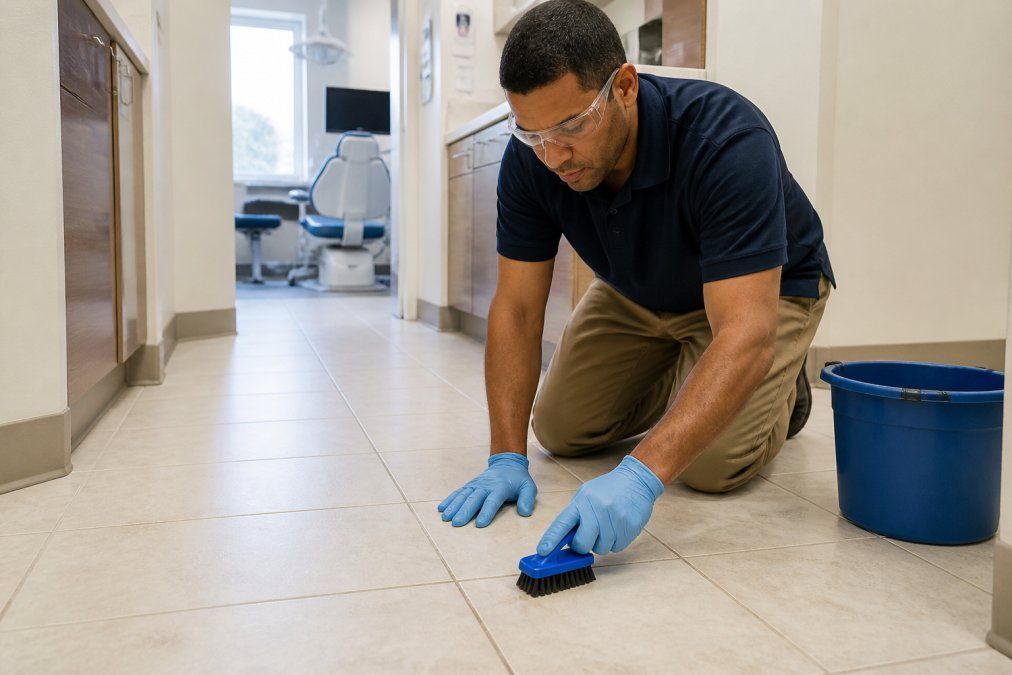
- Tile and grout cleaning: Deep cleaning removes embedded dirt from porous grout lines that standard mopping can't reach, restoring appearance and extending grout life.
- Stone floor restoration: Marble, granite, and limestone require specialized care. Acidic cleaners damage stone; professional restoration uses pH-neutral methods and appropriate sealants.
The Frequency-Cost Trade-Off
Professional floor care is preventative maintenance, not a luxury add-on. Facilities that schedule it regularly maintain appearance and extend floor life; those that skip it face steeper costs and longer downtime.
Professional floor care prevents costly replacement and maintains the professional environment that patients expect.
Scheduling and Operational Impact
Professional floor care can be scheduled during off-hours with minimal operational disruption. The brief disruption is far outweighed by extended floor life and improved appearance.
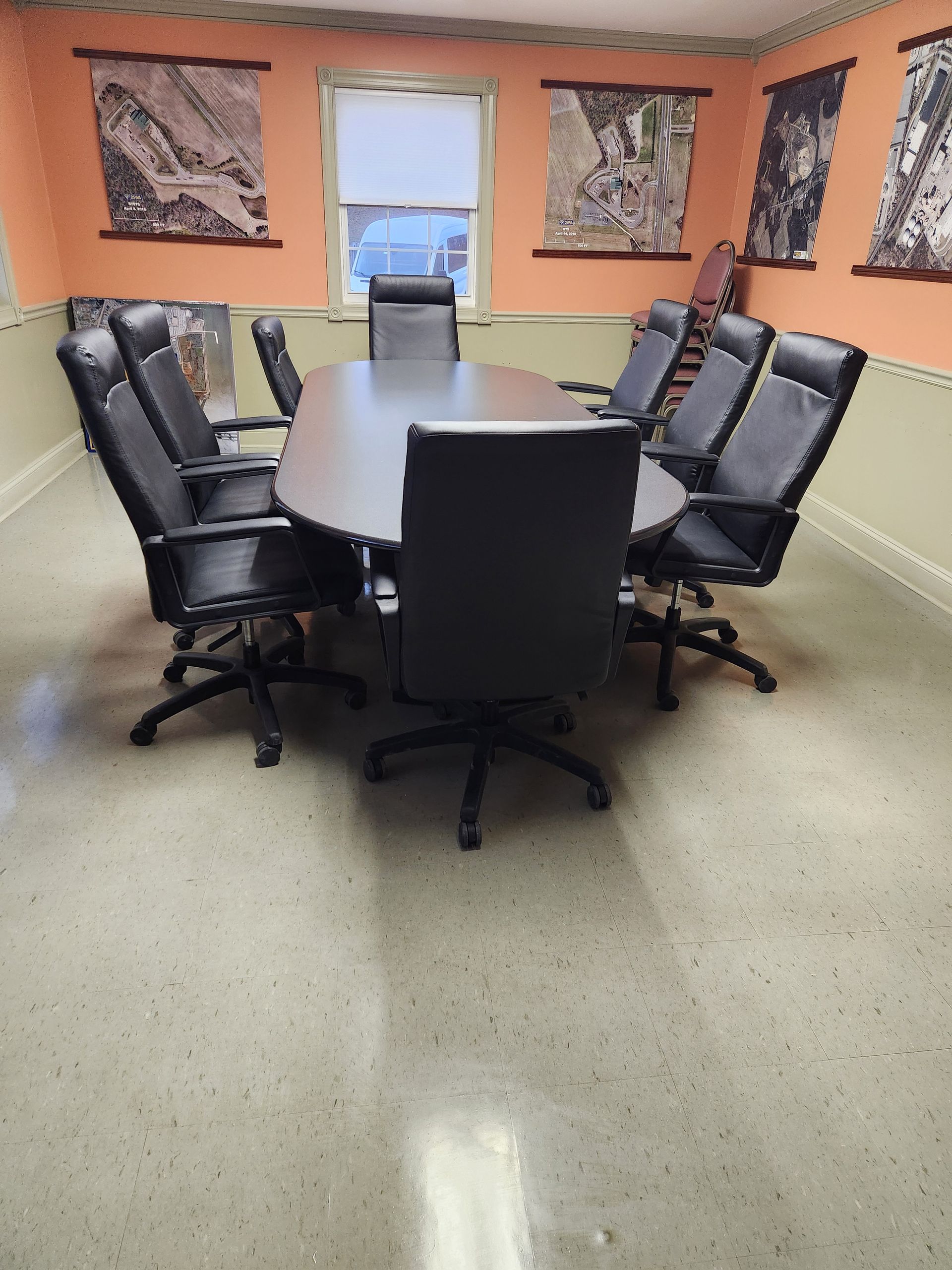
The difference between basic cleaning and professional floor care is measurable. Dull, stained floors signal deferred maintenance and create a poor first impression. Restored floors signal that your facility is well-maintained, professional, and worth the investment, a message that matters to clients, patients, students, and staff.
Why Professional Janitorial Services Matter for Medical Offices and Schools
Medical offices and schools operate under specific compliance and safety requirements that go far beyond standard office cleaning. A general cleaning contractor may not understand these specialized needs, and the cost of non-compliance can be severe.
Medical Office Compliance Standards
Medical facilities must meet infection control standards established by OSHA and the CDC, addressing bloodborne pathogen exposure, cross-contamination risks, and proper disinfection protocols.
OSHA's Bloodborne Pathogens Standard requires facilities to implement controls and work practices to minimize exposure to blood and infectious materials. For janitorial staff, this means:
- Proper handling and disposal of biohazardous waste (sharps containers, contaminated materials)
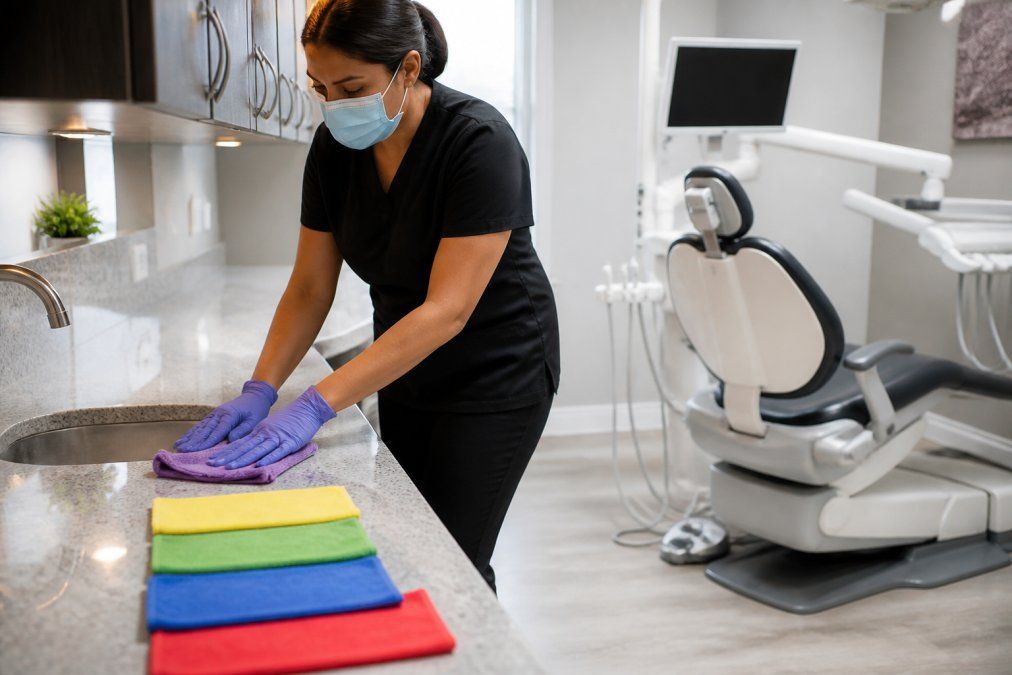
- Use of appropriate personal protective equipment (gloves, eye protection, gowns) when cleaning patient care areas
- Correct disinfection sequences and contact times for medical-grade products
- Documentation of cleaning protocols and staff training
The CDC's Guidelines for Infection Prevention and Control in Dental Settings and similar guidance for medical offices specify that high-touch surfaces (door handles, light switches, patient chairs, examination tables) must be cleaned and disinfected between patients.
School Cleaning and Health Standards
State health departments typically require schools to:
- Clean and disinfect restrooms daily (often multiple times per day in elementary schools)
- Disinfect high-touch surfaces (door handles, handrails, desks) regularly
- Maintain allergen control (dust, mold, pet dander) to protect students with asthma and allergies
- Follow specific protocols for cleaning areas where food is prepared or consumed
- Document cleaning activities for health inspections
Documentation and Compliance Tracking
Professional providers maintain documentation of:
- Cleaning schedules and completion logs
- Products used (with Safety Data Sheets)
- Staff training and certifications
- Incident reports (spills, exposures, equipment issues)
- Quality assurance inspections
Real-World Failure Scenarios
Specialized Training and Product Knowledge
Professional janitorial services provide staff training on:
- Proper use of medical-grade disinfectants and contact times (most disinfectants require 10-15 minutes of surface contact to be effective)
- Bloodborne pathogen protocols and exposure control
- Allergen and mold prevention
- Proper use of personal protective equipment
- Incident reporting and communication with facility management
Janitorial Service Contract Checklist: What to Look For
When evaluating commercial janitorial services providers, a clear contract protects both parties and prevents misunderstandings. Before signing, verify that your agreement covers these essential elements:
- Scope of work: Specific tasks, frequencies, and areas to be cleaned
- Service schedule: Exact days and times, with flexibility provisions for emergencies
- Staffing and consistency: Commitment to consistent crew members or clear protocols for substitutions
- Product standards: OSHA-safe cleaning products and any specific requirements for your facility
- Quality assurance: How problems are reported, response times, and resolution procedures
- Insurance and bonding: Liability coverage and background-checked staff
- Pricing structure: Clear rates, what's included, and what costs extra
- Termination terms: Notice periods and conditions for ending the contract
- Emergency protocols: How urgent cleaning needs (spills, accidents) are handled during business hours
Reliability and Staff Vetting: How Professional Providers Ensure Consistency
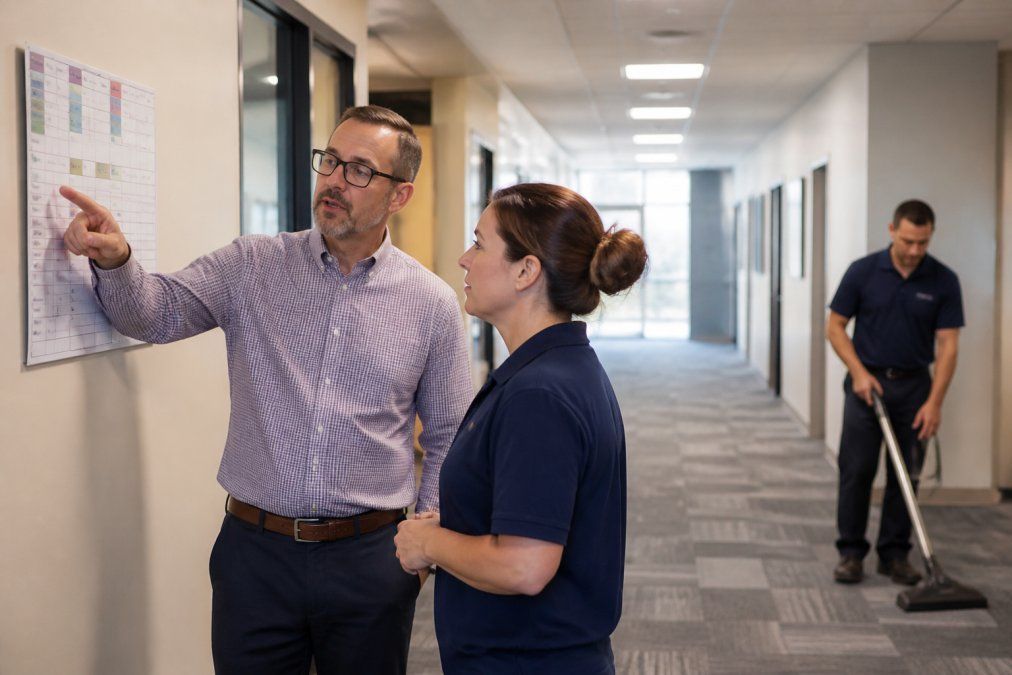
Common complaints about janitorial services include inconsistency, no-shows, rotating staff unfamiliar with your facility, and variable quality.
- Background checks: All staff undergo verification before accessing your facility
- Dedicated crews: Assigning the same team members to your location builds familiarity and accountability
- Training programs: Staff are trained on your facility's specific requirements and safety protocols
- Supervision: Regular oversight ensures quality standards are maintained
- Communication systems: Clear channels for reporting issues and coordinating schedule changes
- Contingency staffing: Backup plans ensure coverage even when primary crew members are unavailable
Choosing the Right Commercial Janitorial Services Provider
Selecting a janitorial services provider is a significant operational decision. Your choice affects facility cleanliness, staff morale, client impressions, and compliance with industry standards.
Evaluate providers on these practical criteria:
| Evaluation Criteria | What to Look For | Why It Matters |
|---|---|---|
| Experience with your industry | Medical offices, schools, warehouses, or offices | Industry-specific knowledge prevents compliance failures |
| Staff vetting and consistency | Background checks, dedicated crews, low turnover | Reliable, trustworthy service protects your facility |
| Service customization | Tailored schedules and cleaning protocols | One-size-fits-all approaches miss your specific needs |
| Communication and responsiveness | Clear contact systems, quick response to issues | Problems get resolved before they affect operations |
| Specialized capabilities | Floor restoration, sanitization protocols | Advanced services prevent costly floor replacement |
| References and track record | Established clients, proven reliability | Real results from similar facilities validate their approach |
| OSHA-safe products | Documentation of product compliance | Protects staff and occupants from chemical hazards |
| Pricing transparency | Clear rates, itemized services, no hidden fees | You understand actual costs before committing |
Frequently Asked Questions
What is the difference between janitorial and commercial cleaning?
Janitorial services focus on routine daily or weekly maintenance, vacuuming, dusting, trash removal, and restroom cleaning, to keep spaces clean and hygienic. Commercial cleaning typically includes deeper, more specialized work like floor stripping and waxing, upholstery care, and restoration services. Many providers offer both, but the scope and frequency differ based on your facility's needs and industry requirements.
How often should a commercial office be professionally cleaned?
Cleaning frequency depends on foot traffic, industry standards, and facility type. Medical offices and schools typically require daily or nightly cleaning for compliance and hygiene. General office buildings often benefit from weekly or bi-weekly service. High-traffic areas may need more frequent attention. A professional provider can assess your space and recommend a schedule that balances cleanliness, safety, and cost-effectiveness for your specific business.
What should be included in a commercial janitorial contract?
A solid contract should specify cleaning frequency, which areas are covered, what tasks are included, response time for emergency requests, staff vetting and insurance details, compliance certifications (like OSHA-safe product use), pricing terms, and cancellation policies. The contract should also outline performance expectations and communication protocols. Before signing, verify that the provider is bonded and insured, and confirm their experience with your industry type, medical offices, schools, and warehouses have different compliance needs.
How do I verify a commercial cleaning company's credentials?
Ask for proof of bonding and insurance coverage, which protects your facility if damage occurs. Request references from similar businesses in your industry. Verify that staff members have background checks and are properly trained. If your facility has specific compliance requirements (medical, educational, or industrial), confirm the provider understands those standards and uses compliant products. A reputable provider will be transparent about their vetting processes and happy to provide documentation.