

Benefits of Low Moisture Carpet Cleaning for Facilities
Table of Contents
- How Low Moisture Carpet Cleaning Works
- Key Benefits of Low Moisture Carpet Cleaning
- Building a Commercial Carpet Maintenance Schedule
- Carpet Cleaning for Medical Offices and Other Sensitive Spaces
- Indoor Air Quality, Moisture Control, and Carpet Longevity
- Carpet Warranty Compliance and Manufacturer Recommendations
- DIY vs. Professional Low Moisture Equipment
- Choosing a Low Moisture Carpet Cleaning Provider
- Frequently Asked Questions
Last Updated: September 24, 2026
How Low Moisture Carpet Cleaning Works
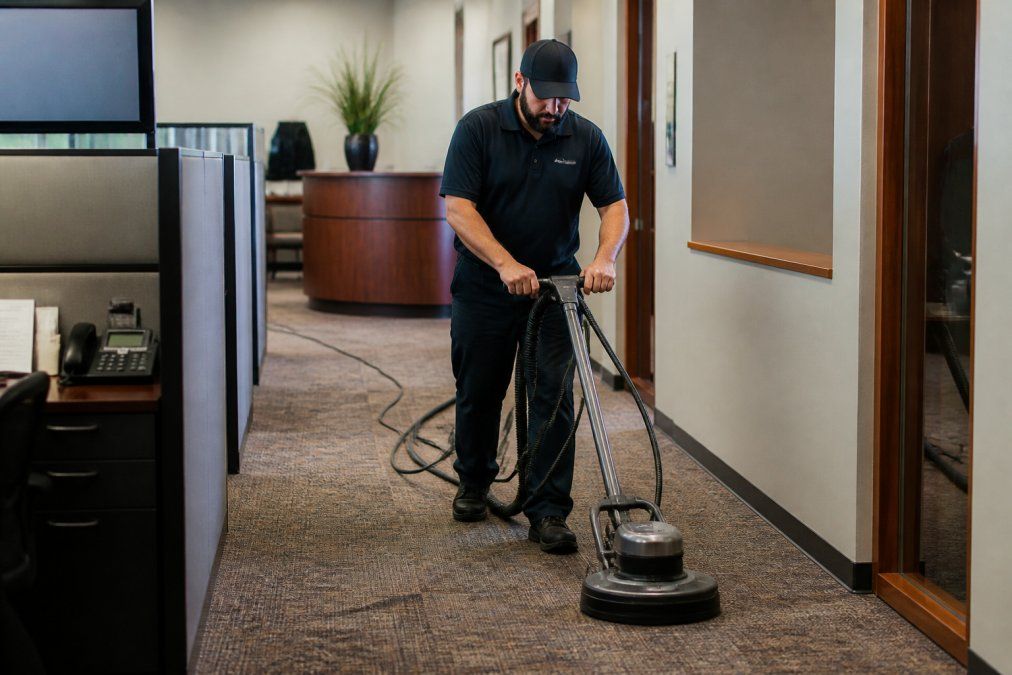
Low moisture carpet cleaning applies a small amount of solution to carpet fibers, agitates it into the soil, then extracts the suspended dirt with a high-powered vacuum, leaving carpet only slightly damp. At A Smarter Clean, we use this approach across Sussex and Kent Counties and Maryland's Eastern Shore because it fits buildings that cannot shut down a wing for a day.
Encapsulation and Soil Suspension
Encapsulation is the chemistry that makes the method work. Detergents use polymer technology that surrounds each soil particle and crystallizes around it as the solution dries, so the soil no longer clings to the pile. A follow-up vacuuming lifts the dried crystals out of the carpet.
Agitation, Dwell Time, and Vacuuming
Three variables decide whether a low moisture job succeeds: agitation, dwell time, and vacuum recovery. A counter-rotating brush works solution through the pile and loosens bonded soil. Dwell time lets the encapsulation chemistry surround that soil before it dries. Vacuuming, immediately and again after drying, removes what the chemistry captured.
Key Benefits of Low Moisture Carpet Cleaning
The core benefit is simple: less water means less downtime, less risk, and fewer callbacks. A low moisture system leaves carpet damp rather than wet, so most commercial spaces return to normal use within a short window instead of closing off an area for most of a day.
Faster Dry Times and Less Downtime
Because so little water reaches the backing, dry time drops sharply compared with saturating methods. Low moisture carpet cleaning generally leaves carpet ready for foot traffic in a fraction of the time, though the exact window depends on humidity, airflow, and carpet density. A facility manager can schedule cleaning for a Tuesday morning and have the space usable by the afternoon.
Lower Risk of Over-Wetting, Wicking, and Residue
Over-wetting is the root cause of most carpet complaints after cleaning. When too much moisture reaches the backing, it wicks back up through the pile as it dries, carrying dissolved soil and leaving brown or gray patches. Excess moisture also creates conditions for mold growth in the backing and padding, particularly in humid coastal climates.
Less Water Used Per Square Foot
One of the quieter benefits is how much water the method avoids. A low moisture pass applies ounces of solution per square foot rather than the volume a saturating method pushes into the pile and backing. Across a large commercial floor plate, that adds up to hundreds of gallons not introduced into the building, less moisture to manage, less load on HVAC dehumidification, and no extra air movers overnight.
Appearance That Holds Between Visits
Encapsulation chemistry leaves soil locked in a brittle crystal that vacuuming lifts away, rather than a sticky film that reattracts dirt. The result is a carpet that looks cleaner longer between visits, which matters most in lobbies, corridors, and waiting rooms where appearance drives first impressions. Facilities on a recurring program often stretch the interval between deep cleans because interim low moisture passes keep soil from settling into the backing.
Suited to Routine Maintenance, Not Just Emergencies
Because the method is low-moisture and fast-drying, it works as a scheduled maintenance tool rather than a once-a-year event. A facility can run low moisture cleaning monthly or quarterly in high-traffic zones without disrupting operations, then reserve deeper attention for problem areas. That cadence protects carpet life by removing soil before it abrades fibers.
The Trade-Off to Understand
Low moisture is not the right answer for every situation. Carpet with heavy, deeply embedded soil, or a facility that has gone years without cleaning, may need a more intensive approach first. The best method depends on carpet type, soil level, facility use, and the manufacturer's written recommendations.
Building a Commercial Carpet Maintenance Schedule
A maintenance schedule is the difference between a carpet that ages gracefully and one that looks worn out in half its expected lifespan. The right cadence depends on traffic volume, soil type, and entryway protection. Most facilities need daily vacuuming, periodic spot treatment, and scheduled deep cleaning rather than a single annual appointment.
Cleaning Frequency by Traffic Level
Use traffic level as your starting point, then adjust for soil load and weather. Buildings near parking lots, entryways without walk-off mats, and food service areas need more frequent attention than a quiet back office.
| Traffic Level | Typical Areas | Interim Cleaning | Deep Cleaning |
|---|---|---|---|
| Light | Private offices, storage | As needed | Every 12-18 months |
| Moderate | Corridors, admin areas | Quarterly | Every 9-12 months |
| Heavy | Lobbies, waiting rooms | Monthly to bi-monthly | Every 4-6 months |
| Extreme | Entrances, cafeterias | Weekly to bi-weekly | Every 3-4 months |
Carpet Cleaning for Medical Offices and Other Sensitive Spaces
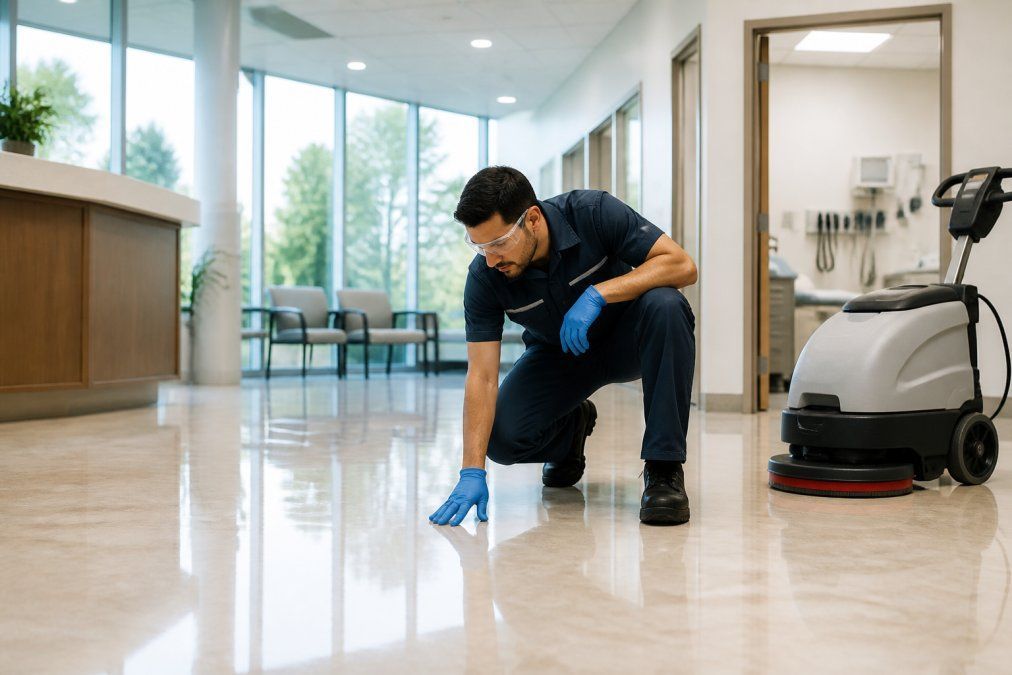
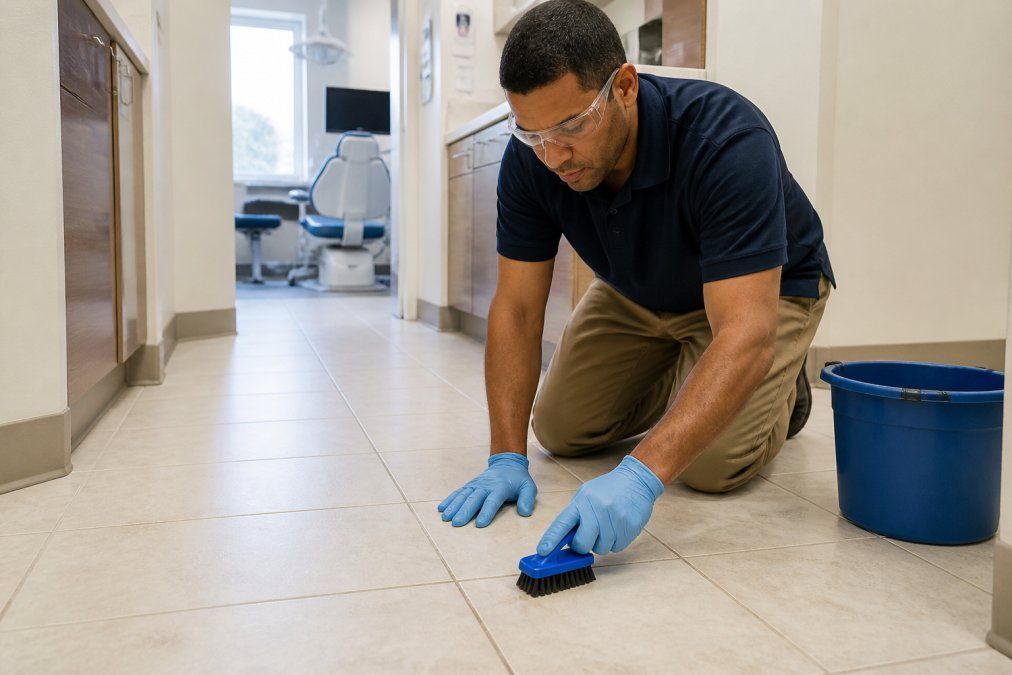
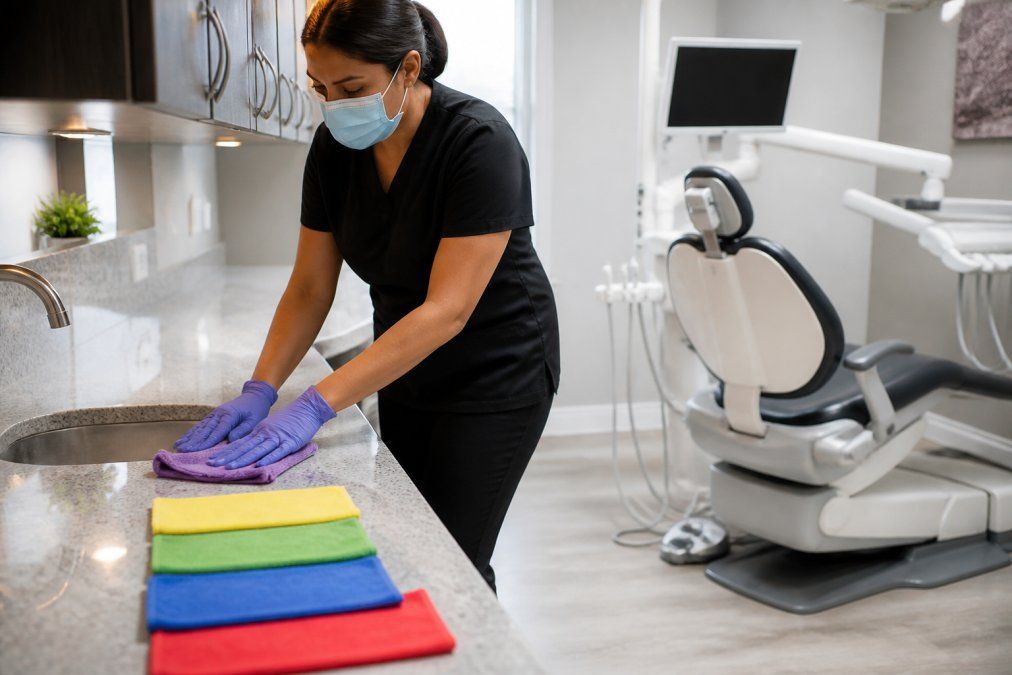
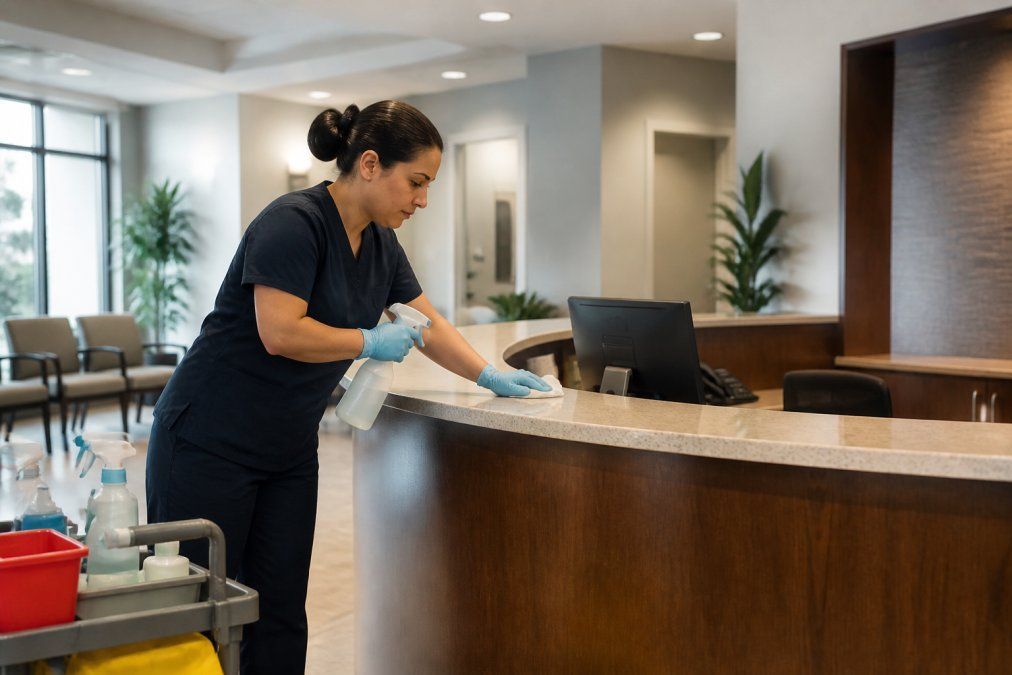
Medical and dental offices, schools, churches, and banks share one requirement: cleaning that does not disrupt operations or leave a space unusable. For a dental practice, that means scheduling around patient appointments; for a school, working around class hours and after-school programs. Low moisture carpet cleaning suits these settings because it limits moisture, odor, and the time a room sits out of service.
Why Moisture Control Matters in Occupied Buildings
In facilities with sensitive populations, the cleaning method is not just an operational question. Carpet traps dust, allergens, and particulate matter, beneficial when cleaned regularly, problematic when not. Excess moisture is the variable that turns a well-maintained carpet into a problem, because damp backing and padding create conditions for mold and mildew that can affect the air people breathe.
Scheduling Around Patients, Students, and Customers
Sensitive facilities rarely have a true after-hours window. A dental office may run evening appointments, a church may have midweek services, a bank branch may open early. Low moisture cleaning lets a provider work in zones during the day, section by section, rather than shutting down a whole floor, a waiting room before the first patient arrives, a classroom between periods, or a lobby during a slow mid-morning stretch.
Product Documentation and Compliance Expectations
Facilities with sensitive populations also care about what is left behind. Using cleaning products that meet OSHA-safe standards, as A Smarter Clean does, keeps the process consistent with the compliance expectations these facilities already manage. Ask your provider to supply product documentation as part of the service agreement, it is also useful when showing maintenance practices to an inspector, an accreditation body, or a manufacturer handling a warranty question.
A Note on Health Claims
If your facility needs a cleaning method that fits around patients, students, or customers, request a walkthrough and we will build a schedule around your actual hours.
Indoor Air Quality, Moisture Control, and Carpet Longevity
Low moisture cleaning addresses this by keeping water out of the backing in the first place. Combined with consistent vacuuming and prompt attention to spills, it supports better indoor air quality and extends carpet longevity. The Environmental Protection Agency's guidance on indoor air quality is a useful reference for facilities building a maintenance plan around occupant health.
Carpet Warranty Compliance and Manufacturer Recommendations
Carpet warranties often hinge on documented maintenance. Most manufacturers specify cleaning methods, frequency, and approved products, and a claim can be denied if the facility cannot show the carpet was maintained according to those terms. This is one of the most overlooked reasons to keep records.
DIY vs. Professional Low Moisture Equipment
Rental machines and consumer-grade extractors can handle light spot cleaning, but they are not built for commercial carpet at scale. The gap comes down to agitation power, vacuum recovery, and chemistry.
- Agitation: Professional counter-rotating brush systems work solution into the pile far more evenly than a rental unit's single brush.
- Vacuum recovery: Commercial equipment pulls moisture and suspended soil out of the carpet with far greater force, which is what prevents residue.
- Chemistry: Encapsulation detergents are formulated for specific soil types and carpet constructions. Consumer products are generalized.
Choosing a Low Moisture Carpet Cleaning Provider
The right provider asks questions before quoting: your carpet type, traffic patterns, operating hours, and manufacturer's requirements. A provider who quotes a flat rate without a walkthrough is guessing, and guessing is how facilities end up with wicking, residue, and callbacks.
Frequently Asked Questions
What is better, dry or wet carpet cleaning?
Neither method wins outright. Low moisture cleaning, sometimes called very low moisture or VLM cleaning, uses encapsulation and agitation with minimal water, so carpet fibers dry quickly and the space reopens sooner. The right choice depends on carpet type, soil level, facility use, and manufacturer recommendations. Many commercial facilities use low moisture cleaning for routine upkeep and reserve deeper methods for periodic restoration.
How does low moisture carpet cleaning minimize business disruption?
Because the process uses very little water, carpet pile dries faster than with wet methods, so offices, clinics, and classrooms can return to normal use sooner. There is also less risk of wicking, residue, or moisture reaching the carpet backing. For facilities that cannot close during the day, this shorter window matters. A Smarter Clean can schedule low moisture carpet cleaning around your operating hours so patients, staff, and visitors are not affected.
Is low moisture cleaning suitable for high-traffic commercial environments?
Yes. Low moisture cleaning works well as part of a routine commercial carpet maintenance schedule in high-traffic areas such as lobbies, corridors, and entrances. Encapsulation polymers surround soil so it can be vacuumed away, and the low water volume keeps carpet backing and adhesive drier. For facilities like schools, banks, churches, and medical offices, this makes it practical to clean more often without long dry times or repeated disruption to daily operations.
What factors should facility managers consider when choosing a carpet cleaning method?
Start with carpet type and manufacturer recommendations, since some warranties require specific cleaning methods. Then weigh soil level, facility use, traffic patterns, and how much downtime your building can tolerate. Ask about moisture control, residue prevention, and how the provider handles wicking. For medical offices, schools, and other sensitive spaces, confirm the products used and the provider's safety practices. A walkthrough with a professional helps match the method to your actual conditions rather than a generic schedule.