


A red metal shed with a white door and window, set against a backdrop of green pine trees and a clear blue sky.

7 Ways to Maintain Commercial VCT Flooring

Editorial Team • October 6, 2026

Table of Contents

Last Updated: October 6, 2026

1. Start With Daily Soil Control on Commercial VCT Flooring

Dirt is the enemy of a vinyl composition tile floor. That is why daily soil control matters more than any deep cleaning task you will ever schedule on commercial VCT flooring. This guide from A Smarter Clean covers the seven habits that keep VCT looking professional year after year.

The good news: the first line of defense takes minutes, not hours. According to ISSA cleaning industry guidance, removing soil before it bonds to the surface is the single most cost-effective step in any floor care program.

Dust Mopping, Sweeping, and Vacuuming

Dust mopping is the fastest way to pull loose debris off a VCT floor. Use a wide microfiber or treated dust mop and work in overlapping lanes so nothing gets missed.

  • Dust mop high-traffic paths at least once daily
  • Sweep or vacuum entrances, break rooms, and lobbies
  • Empty and clean mop heads often so they do not redeposit soil
  • Watch for black marks and scuffs early, before they set

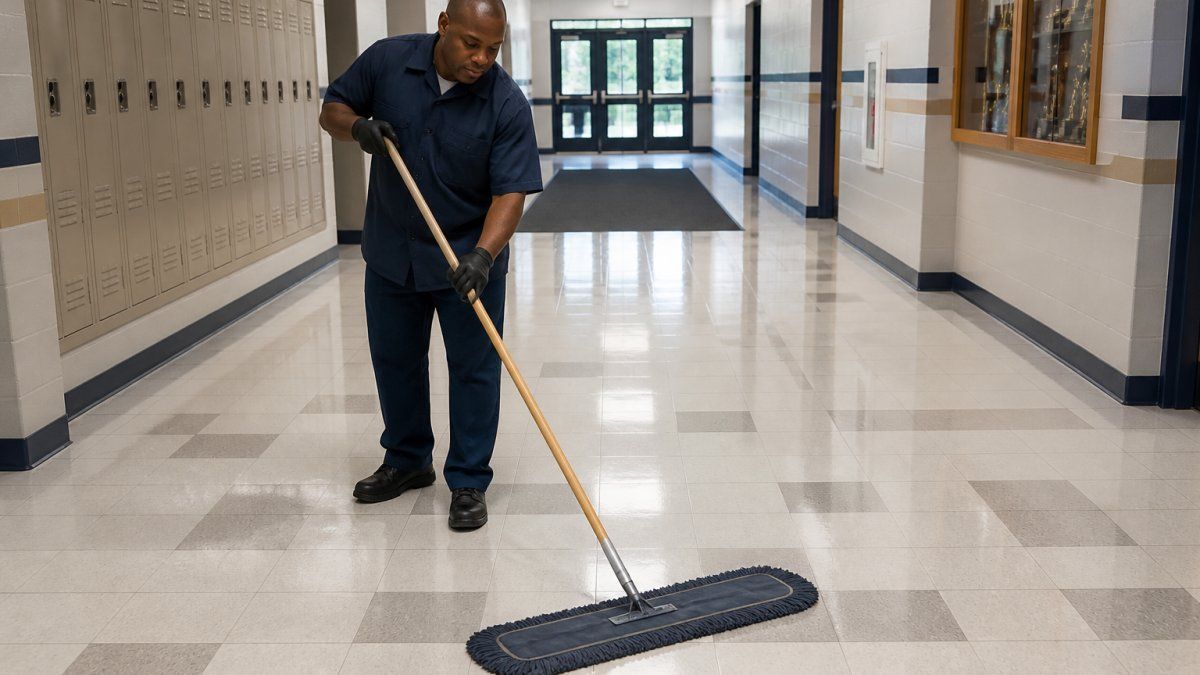
A janitorial worker dust mopping a wide commercial VCT tile floor in a bright school hallway, with a walk-off mat visible near the entrance doors behind them

Walk-Off Mats at Entrances

Walk-off mats stop most tracked-in grit before it ever touches the tile. Place them at every exterior entrance and make sure they are long enough for several footsteps. Clean or vacuum mats daily, and rotate them so the wear is even.

Pro Tip
Mats that are too short let soil walk right past them. A good rule is several steps of matting at each door, and shake or vacuum them daily rather than weekly.

2. Learn How to Clean VCT Flooring With Damp Mopping and Spill Response

Damp mopping removes the soil that dust mopping leaves behind. The key word is damp. A wet mop that leaves puddles can seep into seams and dull the finish over time. Use a neutral-pH cleaner mixed to the label directions, and keep the mop well wrung.

To clean VCT flooring safely, follow these steps:

  1. Dust mop or vacuum the area first
  2. Mix a neutral-pH cleaner with water at the labeled dilution
  3. Damp mop in sections, rinsing the mop often
  4. Let the floor air dry before traffic returns

Getting the Details Right

Small operating choices separate a floor that stays clean from one that dulls early. A few practical points most guides skip:

  • Dilution: Always mix to the label ratio. Over-concentrated cleaner leaves a sticky film that attracts soil; too weak and it will not lift grime. Use a measuring cup, not a guess.
  • Water temperature: Warm water (not hot) helps the cleaner dissolve soil without stressing the finish. Very hot water can soften finish at the edges and seams.
  • Dwell time: Give the cleaner 30 to 60 seconds of contact time before mopping. Letting it sit briefly does more work than scrubbing harder.
  • Mop technique: Work in 10-foot sections, use a figure-eight motion, and flip or rinse the mop head before it gets loaded with soil. A dirty mop just moves dirt around.
  • Rinsing: On heavily soiled floors, follow with a clean-water rinse pass. Residue is the number one cause of premature dulling.

Skip vinegar, oil soaps, abrasive cleaners, and one-step cleaner-polishes. They leave a residue that builds up and traps soil.

Matching the Response to the Spill

Spills need fast attention, but the right response depends on what spilled. Blot liquids with a clean cloth, then clean the spot with the same neutral cleaner. For sticky or sugary spills, a slightly stronger dilution of neutral cleaner and a brief dwell time usually lifts the residue. For oily or greasy spills, blot first, then use the neutral cleaner with a little extra dwell time before wiping.

Pro Tip
Keep a small spill kit on each floor, neutral cleaner, clean cloths, a mop, and a wet-floor sign. The faster a spill is handled, the less chance it has to bond to the finish.

Slip Resistance and Wet-Floor Safety

Wet cleaning changes how a floor behaves underfoot. Residue from over-concentrated cleaner, a finish that has worn thin, and standing water all raise slip risk. A few habits keep the floor safe while it is being cleaned:

  • Place wet-floor signs before mopping begins, not after
  • Mop in small sections so the wet area stays contained
  • Keep traffic off the floor until it is fully dry
  • Check for slick spots near entrances and drinking fountains, where water tends to collect
  • If a floor feels slick even when dry, that usually points to residue buildup, a rinse pass or a scrub will help

A quick walk-through after cleaning, checking for standing water and slick patches, catches most problems before anyone slips.

3. Build a VCT Floor Maintenance Schedule Around Traffic and Facility Use

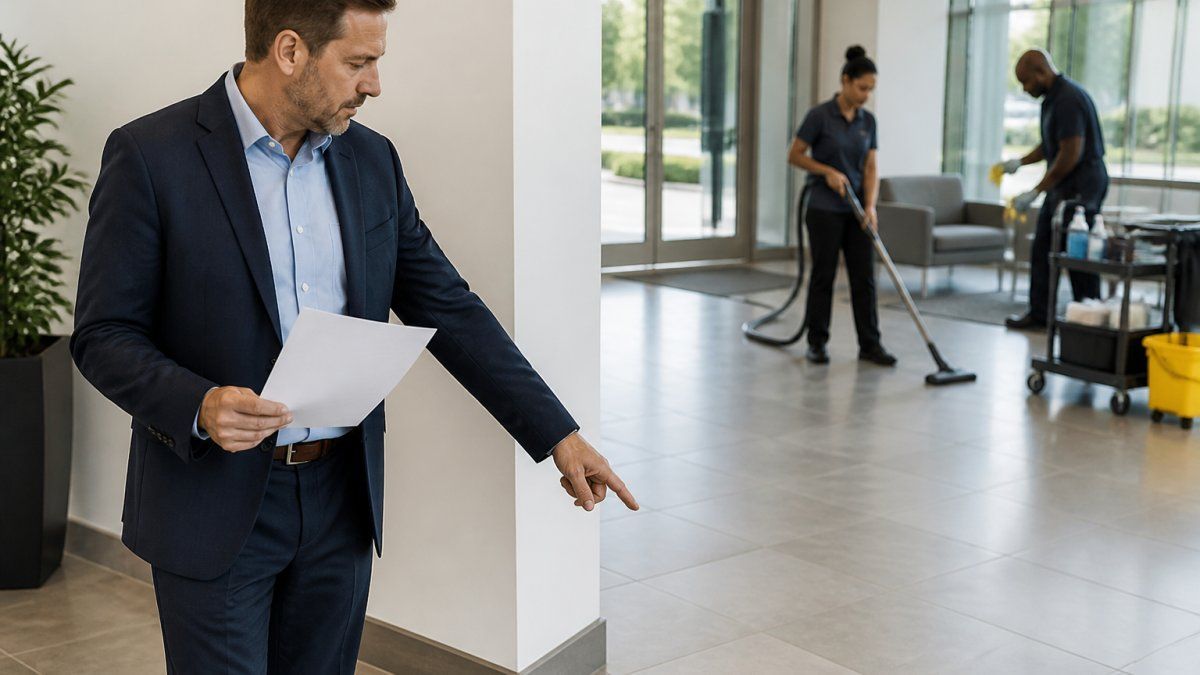
There is no single schedule that fits every building. Frequency depends on traffic, floor condition, finish system, and how the space is used. A busy clinic lobby needs more attention than a storage room.

How to maintain and clean VCT flooring.

Rodriguez Cleaning Services

Here is a simple seven-step plan you can adapt to your facility:

Step Task Frequency
1 Dust mop and spot clean Daily
2 Damp mop with neutral cleaner Daily to weekly
3 Clean entrance mats Daily
4 Machine scrub Monthly to quarterly
5 Burnish or polish As needed
6 Scrub and recoat When finish dulls
7 Strip and refinish When finish fails

Reading the Floor to Adjust the Schedule

The table is a starting point, not a rule. The floor itself tells you when the schedule needs to tighten or loosen. Watch for these signals:

  • Dulling faster than expected , the finish is wearing sooner than the schedule assumes. Add a burnish or move the scrub up.
  • Scuffs and black marks returning within a day , daily soil control is not keeping up. Increase dust mopping frequency in that area.
  • Soil tracked past the mats , the matting is too short or not being cleaned often enough. Extend or replace the mats and vacuum them daily.
  • A patchy or uneven look , finish is wearing unevenly, often in high-traffic lanes. Consider a scrub and recoat before the wear reaches the tile.
  • A floor that feels rough or gritty , embedded soil is building up. Move the machine scrub up on the calendar.

A Simple Inspection and Logging Routine

A written record turns guesswork into a plan. A short inspection log does not need to be complicated:

  • Daily: Note any spills, scuffs, or slick spots found during routine cleaning
  • Weekly: Walk the floor and rate appearance on a simple scale (good, fair, needs attention)
  • Monthly: Check high-traffic lanes, entrances, and under furniture for wear patterns
  • Quarterly: Review the log and adjust frequencies based on what the floor has been doing

Track recurring problem areas, the same corner that scuffs every week, the same entrance that tracks in grit. Those patterns usually point to a fix (a longer mat, a different pad, a tighter schedule) rather than just more cleaning.

Matching the Schedule to the Facility

Different spaces put different demands on VCT:

  • Schools and churches: Heavy bursts of traffic around events and services, with quieter periods between. A flexible schedule that ramps up around events works better than a flat one.
  • Medical and dental offices: Frequent cleaning around patient areas, with attention to entrances and waiting rooms. A daily damp mop in those zones is common.
  • Banks and lobbies: Appearance matters most in the front-of-house areas. Burnishing and spot cleaning in those zones keep the impression sharp.
  • Back-of-house and storage: Lower traffic, so the schedule can be lighter, but spills and grit still need prompt attention.

Key Takeaway
The best schedule is the one you actually follow. Start with the table, watch the floor, and adjust based on what you see. A written log makes those adjustments obvious instead of reactive.

For facilities in Sussex and Kent Counties in Delaware and Maryland's Eastern Shore, A Smarter Clean builds recurring floor-care programs around your traffic, schedule, and facility type. Request a walkthrough and we will help you set a maintenance plan that fits how your building actually gets used.

4. Scrub and Recoat Before the Finish Wears Through

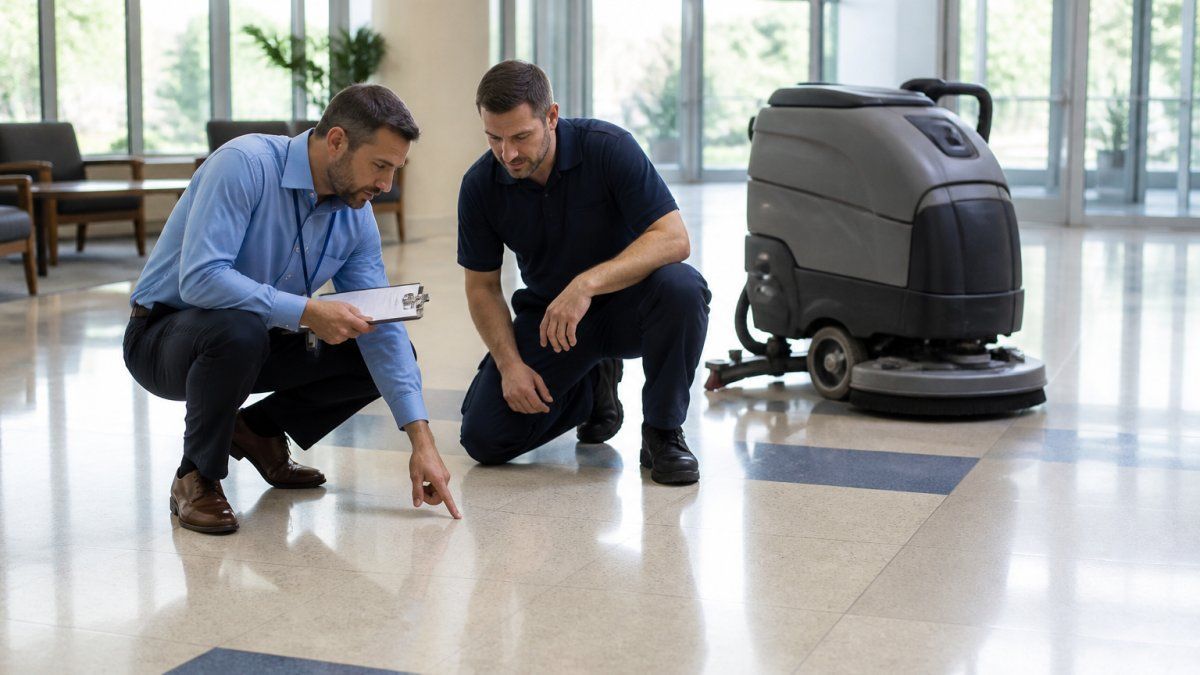
Recoating adds a fresh layer of finish before the old one wears down to the tile. A machine scrubber with a soft pad lifts embedded soil, then a new coat of finish restores the shine. This is the middle ground between routine cleaning and full stripping.

  • Scrub with a neutral cleaner and a soft pad
  • Let the floor dry completely
  • Apply a thin, even coat of compatible finish
  • Keep traffic off until the coat sets

Watch Out
Applying finish over a dirty or damp floor traps soil and causes peeling. Always scrub, rinse, and dry before recoating.

5. Burnish and Polish During Periodic Floor Care

Burnishing is a high-speed buffing step that brings up gloss on a floor with a healthy finish. It does not clean, so it belongs after dust mopping and damp mopping, not instead of them. Use the right pad for your finish system and keep the machine moving.

Polish helps even out appearance in high-visibility areas like lobbies and front desks. Over-burnishing a worn floor just burns the remaining finish. Check the surface first.

6. Know When VCT Floor Stripping and Waxing Is the Right Call

Stripping removes old finish and soil so the floor can start fresh. It is the right move when the finish is too worn, discolored, or damaged to recoat. VCT floor stripping and waxing is a job for trained staff with the proper equipment and ventilation.

Signs it is time:

  • Finish is yellowed or uneven
  • Recoating no longer restores shine
  • Soil is trapped under the finish
  • The floor feels rough or looks patchy

Key Takeaway
Stripping and refinishing is a periodic reset, not a routine task. Done at the right time, it protects the tile and restores a professional look.

7. Plan Labor, Equipment, and Lifecycle Costs Before the Floor Fails

Floor care is cheaper when it is planned. Labor, equipment, and materials all add up, and reactive work costs more than scheduled care. Build a budget that covers daily cleaning, periodic scrubbing, and occasional stripping.

  • Labor: daily, weekly, and periodic tasks
  • Equipment: scrubbers, burnishers, mops, and vacuums
  • Materials: cleaner, finish, pads, and mats
  • Lifecycle: plan for stripping and refinishing over time

For facilities in Sussex and Kent Counties in Delaware and Maryland's Eastern Shore, A Smarter Clean provides recurring floor care and janitorial programs built around your traffic and schedule.

Conclusion: Protect Commercial VCT Flooring With a Plan, Not Guesswork

A VCT floor rewards consistent care. Daily soil control, damp mopping, a realistic schedule, and timely recoating keep it looking sharp and lasting longer. When the finish finally wears out, professional stripping and refinishing brings it back.

If your floors are dull, scuffed, or overdue for deep restoration, A Smarter Clean can help. We offer specialized floor restoration and customizable schedules for medical offices, schools, banks, and commercial buildings across the region.

Frequently Asked Questions

How often should commercial VCT flooring be cleaned?

Frequency depends on traffic, facility use, and floor condition. A typical VCT floor maintenance schedule includes daily dust mopping or sweeping, damp mopping several times per week in high-traffic areas, and periodic machine scrubbing every one to three months. Schools, medical offices, and banks with heavy foot traffic usually need more frequent routine cleaning than low-traffic back offices.

Can you damp mop VCT floors with a neutral cleaner?

Yes. Damp mopping with a neutral-pH cleaner is the standard way to clean VCT flooring without dulling the finish. Avoid abrasive cleaners, acid cleaners, vinegar, and oil soaps, which can damage the finish over time. Use a clean mop, change the cleaning solution when it gets dirty, and let the floor dry before allowing foot traffic.

When should a VCT floor be scrubbed and recoated instead of stripped?

A VCT scrub and recoat is the right choice when the finish is dull, scuffed, or soiled but still intact. If the finish is worn through to the tile in traffic lanes, or has heavy buildup that scrubbing cannot remove, stripping and refinishing may be needed. A walkthrough by a professional floor-care provider can confirm which option fits your floor.

Do VCT floors need to be sealed or waxed?

Most commercial VCT flooring arrives from the manufacturer with a factory finish that should be protected with floor finish, often called wax. Sealing and finishing help resist soil, scuffs, and moisture. The right finish system depends on the manufacturer's guidance and the facility's traffic, so check product compatibility before applying anything new.

By Editorial Team • October 4, 2026
Learn how to vet commercial cleaners in Maryland with a step-by-step checklist covering scope of work, reviews, insurance, and floor care.
By Editorial Team • October 2, 2026
Commercial flooring maintenance explained for facility managers: VCT, LVT, tile, and carpet care, plus schedules that protect your floors.
By Editorial Team • October 1, 2026
Discover why professional janitorial staff matters for consistency, safety, and asset protection in your commercial facility. Learn how to get reliable.
By Editorial Team • September 30, 2026
See what drives stripping and waxing cost in 2026: square footage, floor condition, coats, and access. Learn how a site walkthrough shapes your estimate.
By Editorial Team • September 26, 2026
Commercial tile and grout cleaning services restore floors in high-traffic facilities. Learn methods, schedules, sealing, and how to choose a provider.

By Editorial Team • September 25, 2026
Discover 5 floor care tips for medical offices, from maintenance schedules to LVT best practices. Keep your facility safe and professional. Get a quote.
By Editorial Team • September 24, 2026
Discover the benefits of low moisture carpet cleaning for commercial facilities: faster dry times, less disruption, and better appearance. Get a quote.
By Editorial Team • September 23, 2026
Find reliable commercial janitorial services in Sussex County. Learn what to expect, how to choose, and why professional cleaning matters.
By Editorial Team • September 21, 2026
Professional commercial floor care services for businesses, medical offices, and schools. Learn about floor stripping, waxing, maintenance.
By Editorial Team • September 21, 2026
Practical carpet maintenance tips for facility managers: schedules, stain removal, preventative programs. Discover how to extend carpet life and cut costs.
Show More