

7 Signs Your Commercial VCT Floors Need Scrubbing
Last Updated: November 17, 2026
Quick Summary
Most commercial VCT floors need machine scrubbing every three to six months, with high-traffic facilities moving toward the shorter end of that range. Traffic load, soil type, entrance control, and daily cleaning quality decide the real interval, so watch the floor rather than the calendar.
- Machine scrubbing at 300 rpm or less with a blue pad breaks up polish film effectively.
- Low-traffic areas such as bank branches and offices can go about every six months.
- High-traffic retail floors, cafeterias, and main lobbies need scrubbing every three months or sooner.
- Dull traffic lanes, tracked-in grit, and recurring buildup mean the service should move up.
- Scrub and recoat when the finish is intact; strip and wax when finish is worn through.
Table of Contents
- Why There Is No Single Scrubbing Schedule for VCT Floors
- Routine Mopping, Auto-Scrubbing, Burnishing, and Strip and Wax: What Each One Does
- How Often to Scrub Commercial VCT Floors by Traffic and Facility Type
- Signs Your VCT Floors Need More Frequent Scrubbing
- Scrub and Recoat vs Strip and Wax: Choosing the Right Service
- Building a Commercial VCT Floor Maintenance Schedule That Fits Your Facility
- Request a Floor Walkthrough and Maintenance Estimate
- Frequently Asked Questions
Why There Is No Single Scrubbing Schedule for VCT Floors
Ask ten facility managers how often to scrub commercial VCT floors and you will get ten different answers. That is not confusion. It is the correct answer wearing ten different uniforms.
Vinyl composition tile is a dense, forgiving surface, but its finish is not.
At A Smarter Clean, we evaluate flooring type and condition before recommending any service, because a schedule built for a quiet bank lobby will fail in a school cafeteria.
Below, we break down what each floor-care task actually does, how to match scrubbing frequency to your traffic, and the warning signs that your current schedule has already fallen behind.
Routine Mopping, Auto-Scrubbing, Burnishing, and Strip and Wax: What Each One Does
Those four tasks are not interchangeable, and mixing them up is where most floor-care budgets go sideways.
Daily Cleaning and Routine Mopping
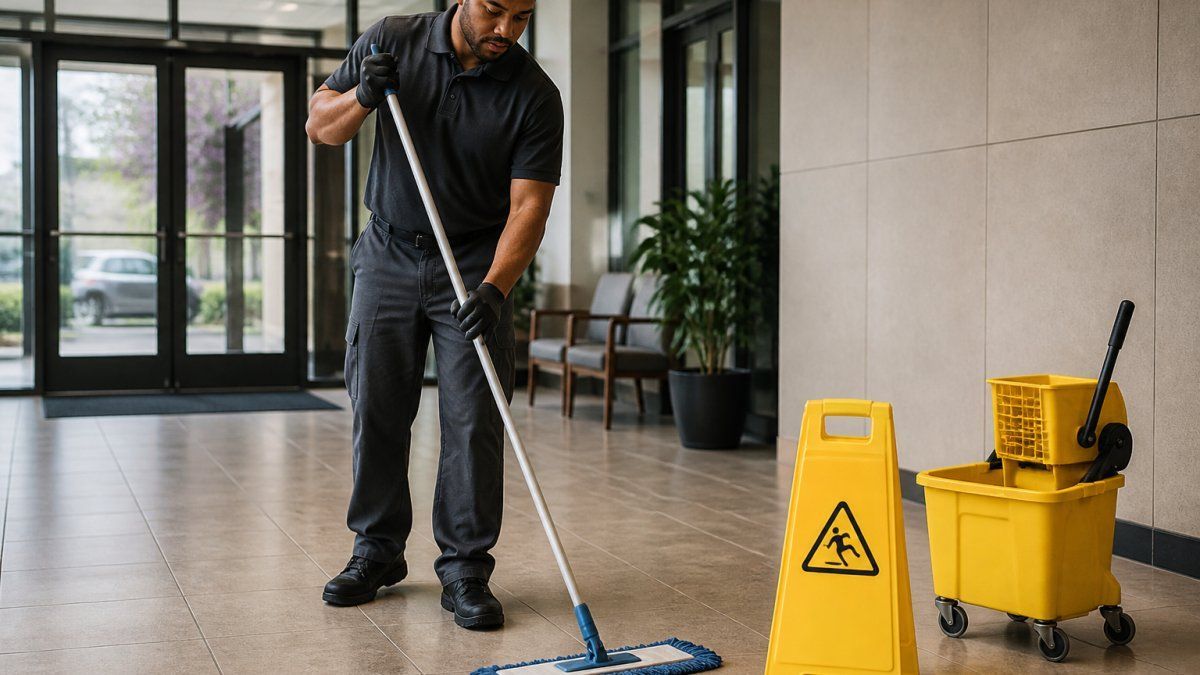
Dust mopping and damp mopping handle the daily load: grit, crumbs, light soil, and the occasional spill. This is the layer of maintenance that protects the finish between deeper services. Skip it, and every other task on this list gets more expensive. Entrance matting matters here too, since most tracked-in soil enters through a handful of doorways.
Machine Scrubbing and Auto-Scrubbing
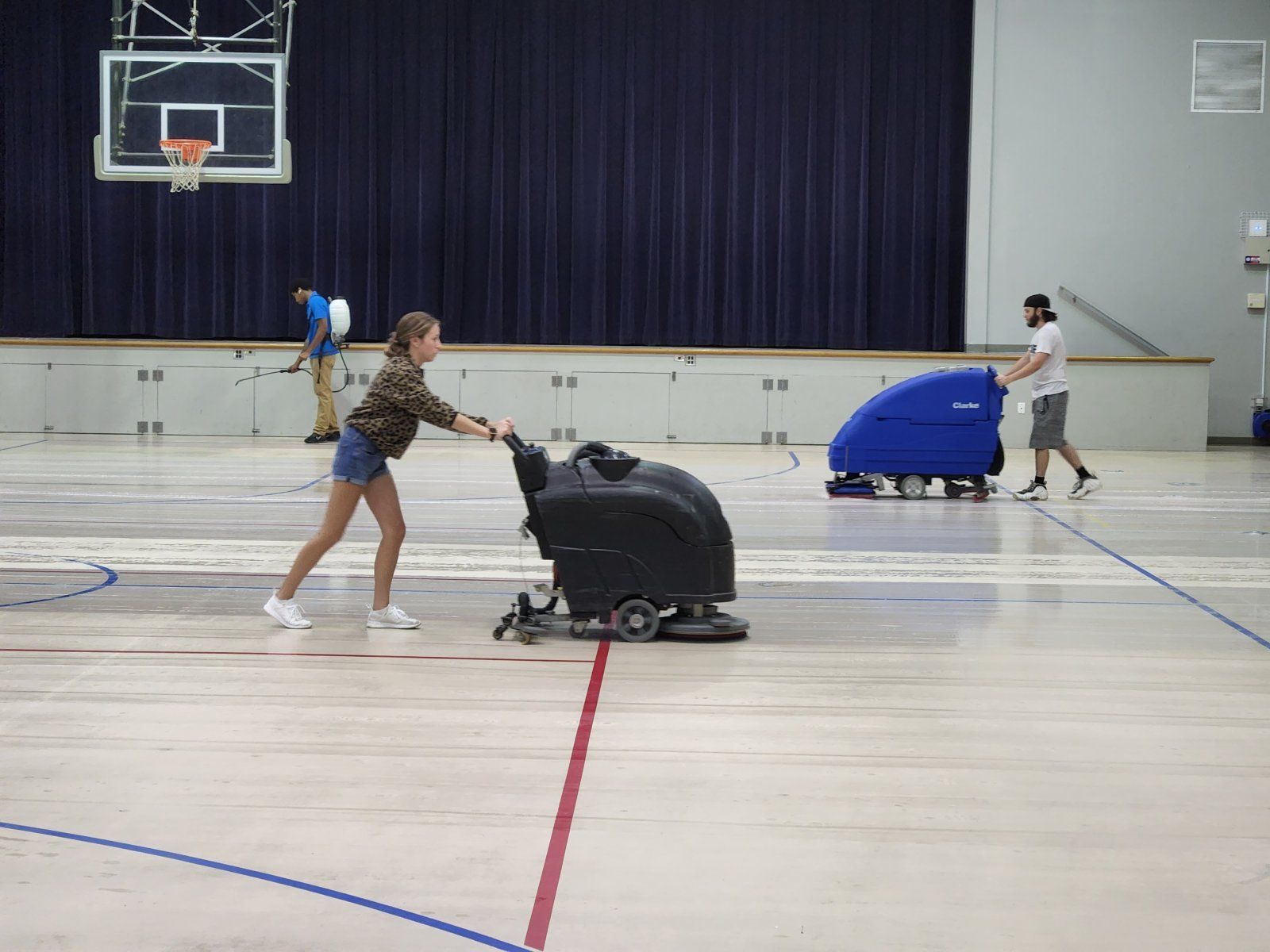
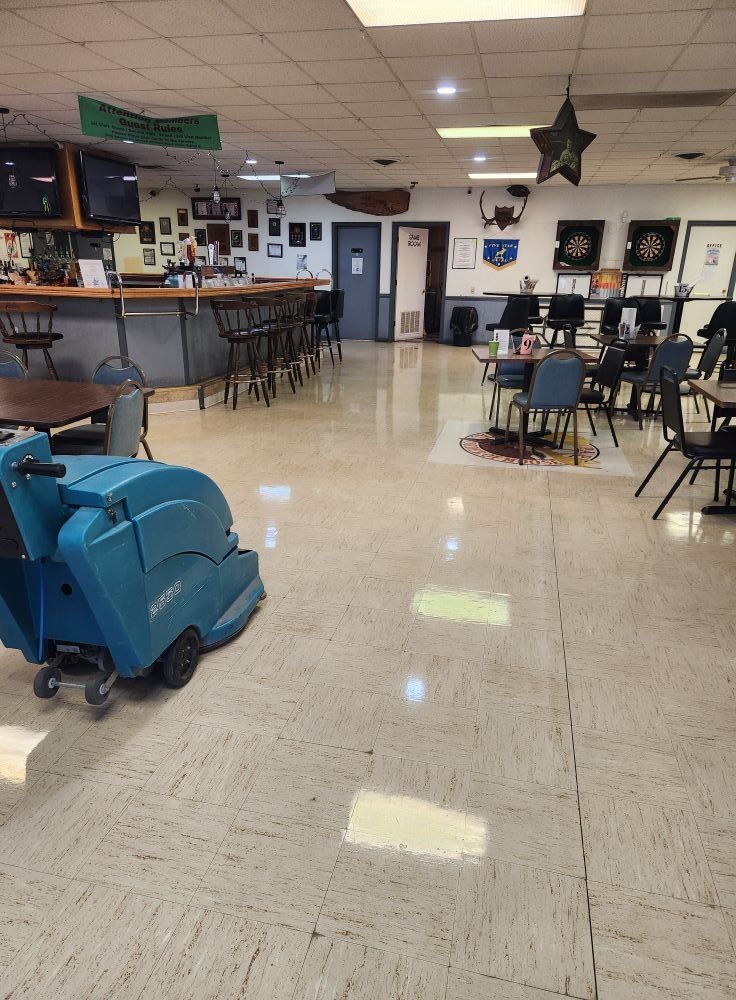
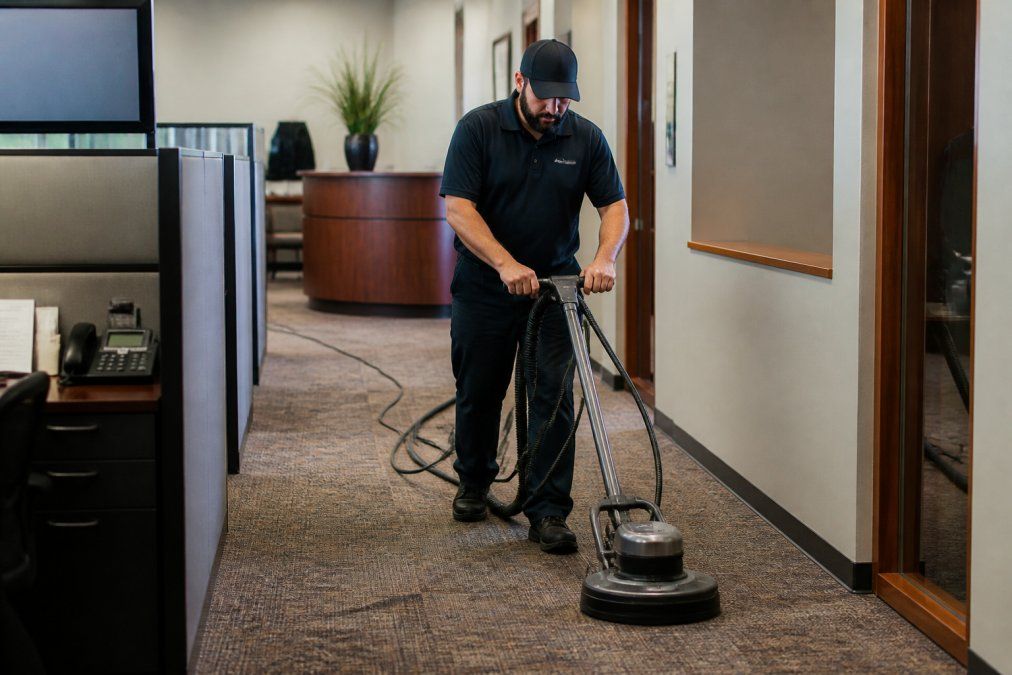
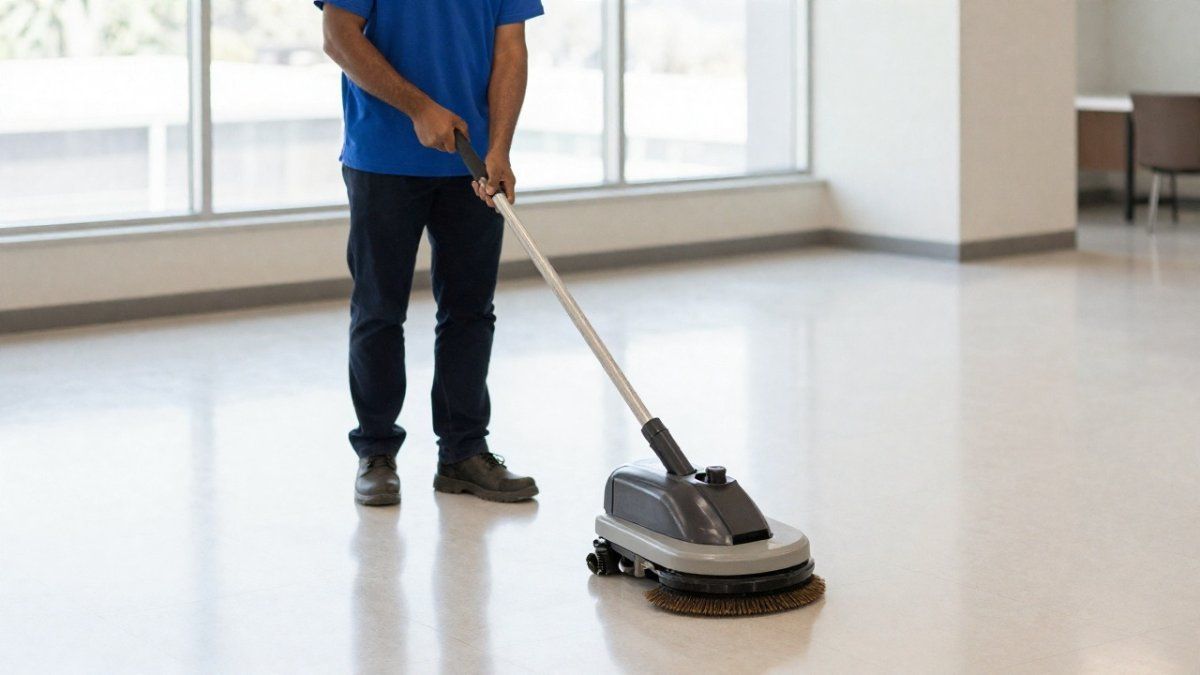
Machine scrubbing is the workhorse of periodic floor care. Armstrong Flooring's technical guidance specifies that machine scrubbing at 300 rpm or less with a blue scrubbing pad is what breaks up polish film effectively. Auto-scrubbers apply solution, agitate, and recover dirty water in one pass, which is why they suit large open areas like corridors and cafeterias.
Burnishing for Gloss and Light Soil
Burnishing is a gloss-restoration step, not a cleaning step. It shines the finish and lifts light surface soil, but it will not remove embedded grit or correct finish buildup. Burnishing on a loop without periodic scrubbing can polish a layer of trapped dirt into the finish.
How Often to Scrub Commercial VCT Floors by Traffic and Facility Type
There is no universal interval, but there is a defensible starting point: most commercial VCT floors need machine scrubbing every three to six months, with high-traffic facilities moving toward the shorter end. The range is a starting line, not a promise, and the facility type only sets the first draft of the schedule. What actually moves the interval is traffic load, soil type, entrance control, and how well daily cleaning is holding up.
Vicor LLC's VCT maintenance guide recommends scrub and recoat service every three to six months depending on traffic and building use. Imperial Dade's maintenance guidance puts low-traffic areas at roughly twice per year. These intervals make it important to track traffic and building use so VCT scrubbing stays on schedule as part of broader office floor maintenance guide practices.
| Facility Type | Traffic Level | Suggested Scrubbing Range | Primary Soil Driver |
|---|---|---|---|
| Bank branch, professional office | Low to moderate | Every 6 months | Paper dust, chair casters, light foot traffic |
| Medical or dental office | Moderate, soil-sensitive | Every 4 to 6 months | Disinfectant residue, cart wheels, patient flow |
| School corridors, church fellowship hall | Moderate to high | Every 3 to 4 months | Gym shoes, cafeteria spills, event traffic |
| Retail floor, cafeteria, main lobby | High | Every 3 months or sooner | Cart wheels, food soil, entrance grit |
| Entryways and vestibules | Highest soil load | Assess monthly | Tracked-in grit, weather, salt |
Turning the Table into a Real Interval
The table is a starting point. To make it fit your building, adjust for four factors that competitors rarely spell out:
- Entrance conditions. A building with one uncontrolled door onto a gravel lot will soil faster than a building with a vestibule and walk-off matting at every entrance. Count your entrances and check matting length before you trust the table.
- Soil type. Food soil, winter salt, and construction dust each behave differently on finish. Grit is abrasive and thins the finish; food soil and spills sit on top and respond to routine cleaning. Match the interval to the soil that actually reaches your floor.
- Routine cleaning quality. If daily dust and damp mopping are inconsistent, the periodic scrub has to carry more load. A facility with strong daily cleaning can often stretch the scrub interval; a facility without it cannot.
A Simple Decision Rule for Adjusting Frequency
The interval should generally shorten when two or more of the following are true: the floor shows dull traffic lanes before the next scheduled service, grit is consistently tracked past the matting, the building has had a seasonal soil event (winter salt, construction, a rainy stretch), or daily cleaning has slipped for more than a few weeks. Conversely, the interval can stretch by one tier when the finish still holds gloss at the scheduled service, entrances are well controlled, and daily cleaning is documented and consistent.
Measuring Whether the Schedule Is Working
A schedule is only as good as the feedback loop behind it. Track four things between services: appearance (dull lanes, scuff recurrence, uneven gloss), how long gloss holds after each scrub, the labor hours spent on daily and periodic care, and the time between recoats.
Your actual interval depends on entrance conditions, soil load, and how well daily cleaning is holding up. If you want the traffic-based reasoning in more depth, our guide on how often commercial VCT floors should be scrubbed and recoated walks through it, and our best practices for high-traffic VCT and LVT floors covers the busiest buildings specifically.
Signs Your VCT Floors Need More Frequent Scrubbing
Watch the floor, not the calendar. VCT tells you when it needs attention, and the signals are consistent across building types.
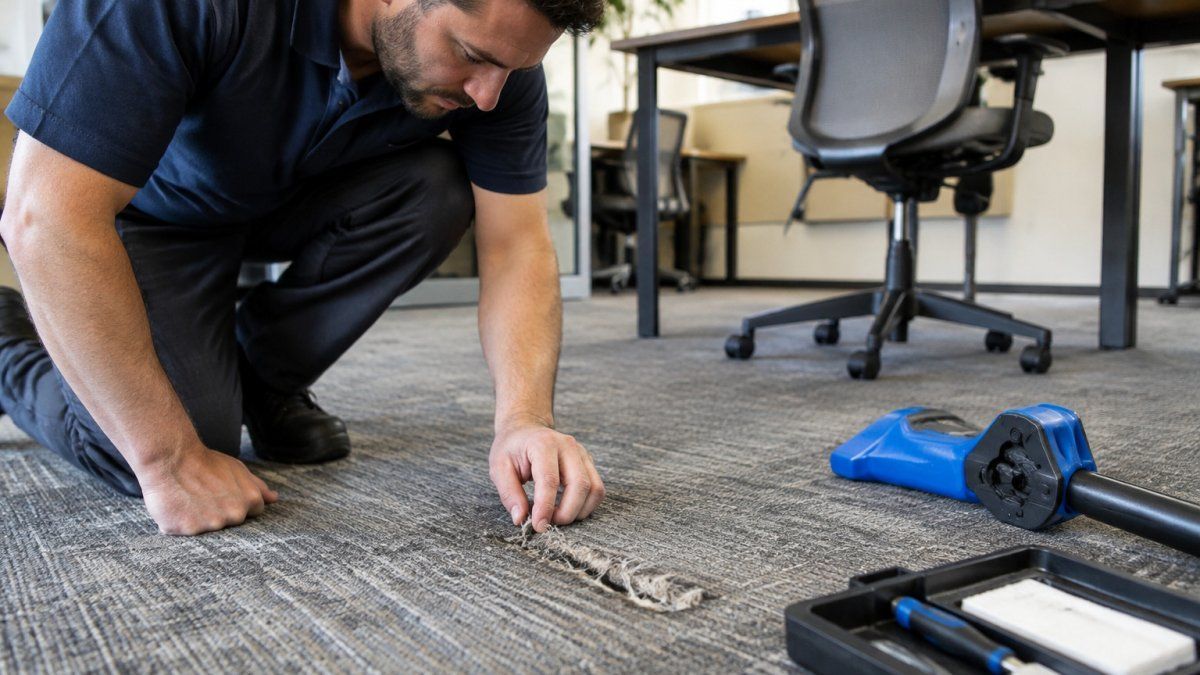
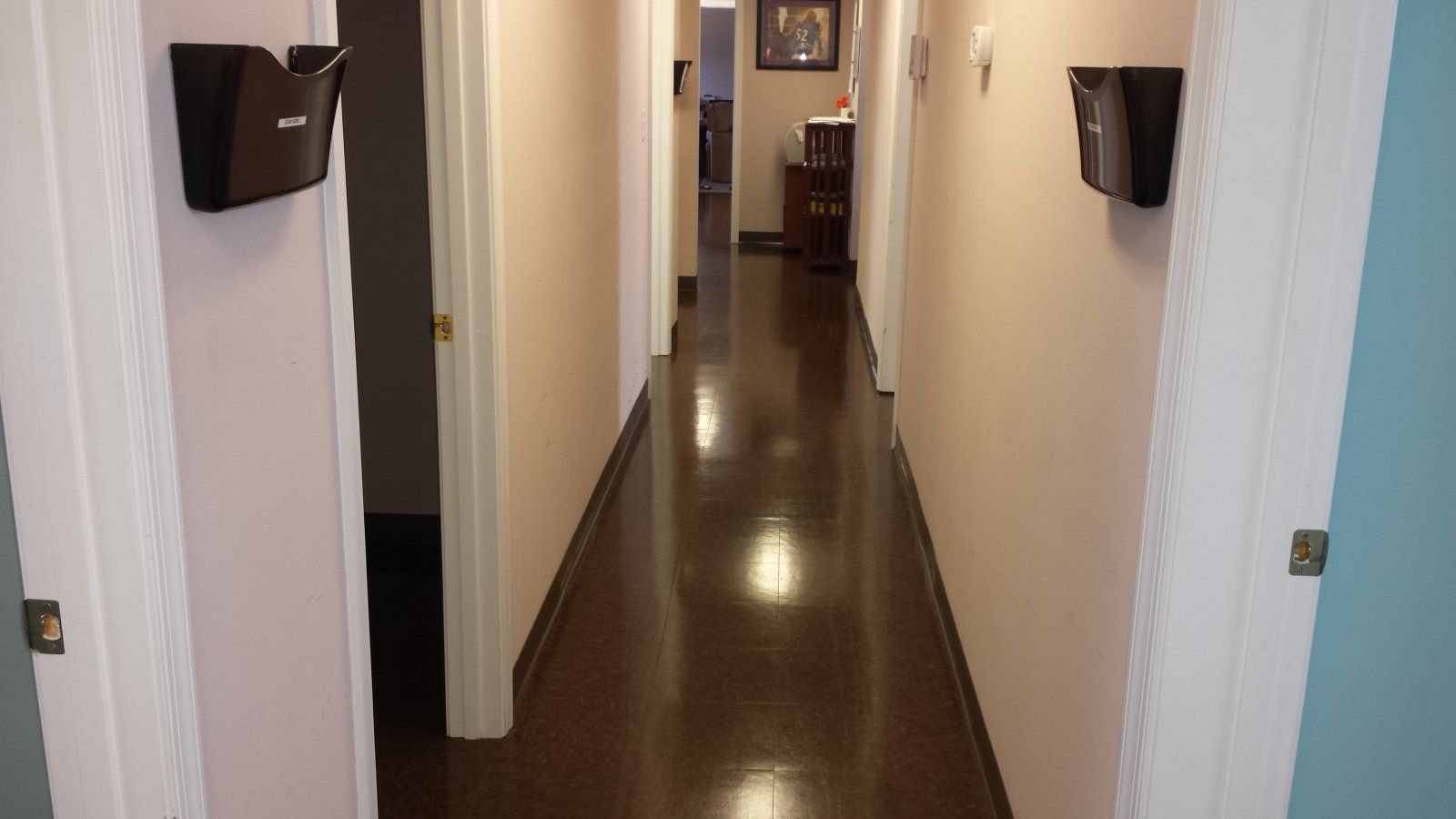
- Dull traffic lanes. A visible path of reduced gloss between doorways and work areas means soil is embedding in the finish.
- Tracked-in grit. Grit underfoot is abrasive. Every day it stays down, it sands the finish thinner.
- Recurring finish buildup. Yellowing or patchy film in corners and along walls points to soil trapped under polish.
- Scuff and black marks that no longer lift with daily cleaning. That is a sign the finish surface is compromised.
If any of these appear before your scheduled service, move the service up. Waiting costs more than scrubbing.
Scrub and Recoat vs Strip and Wax: Choosing the Right Service
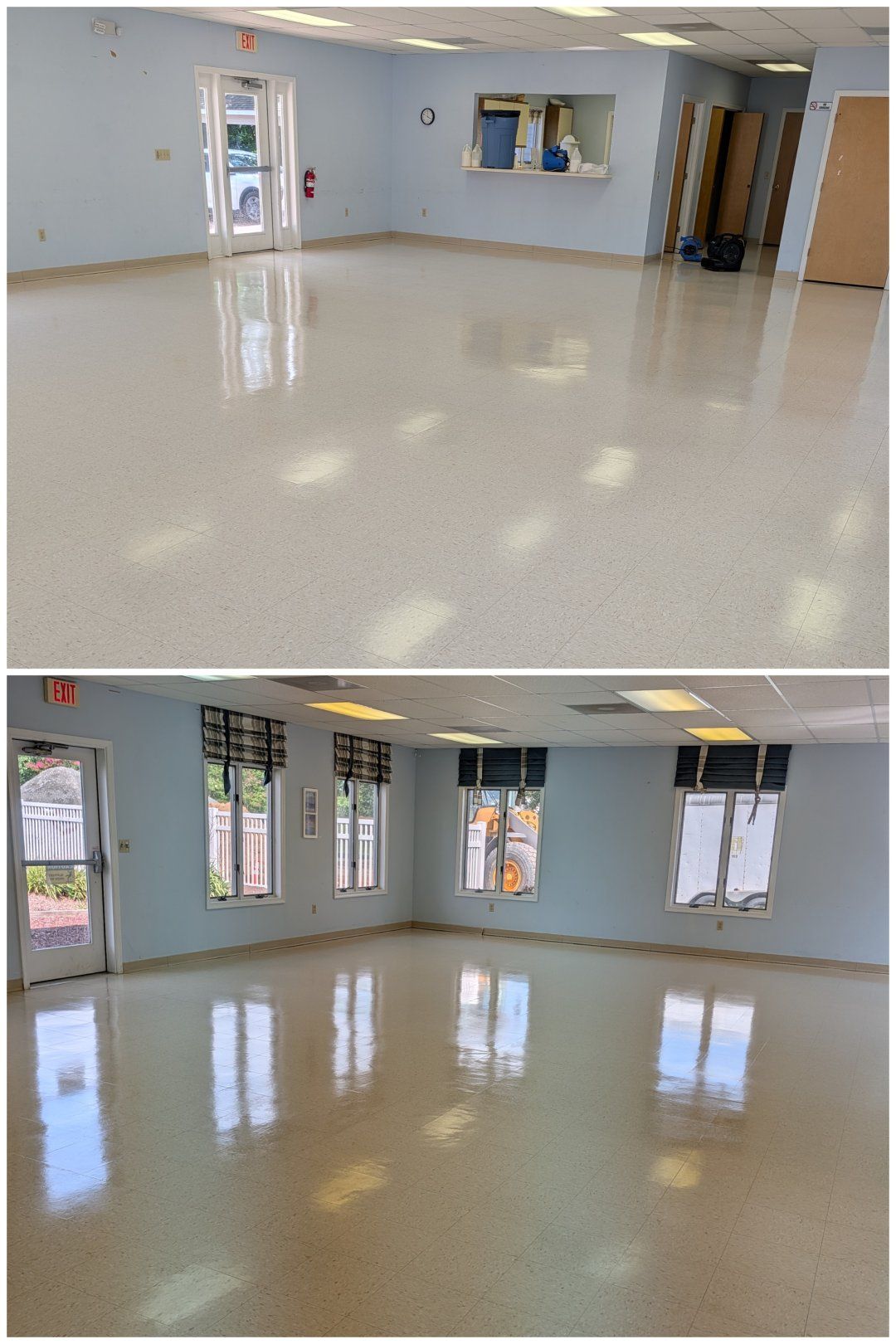
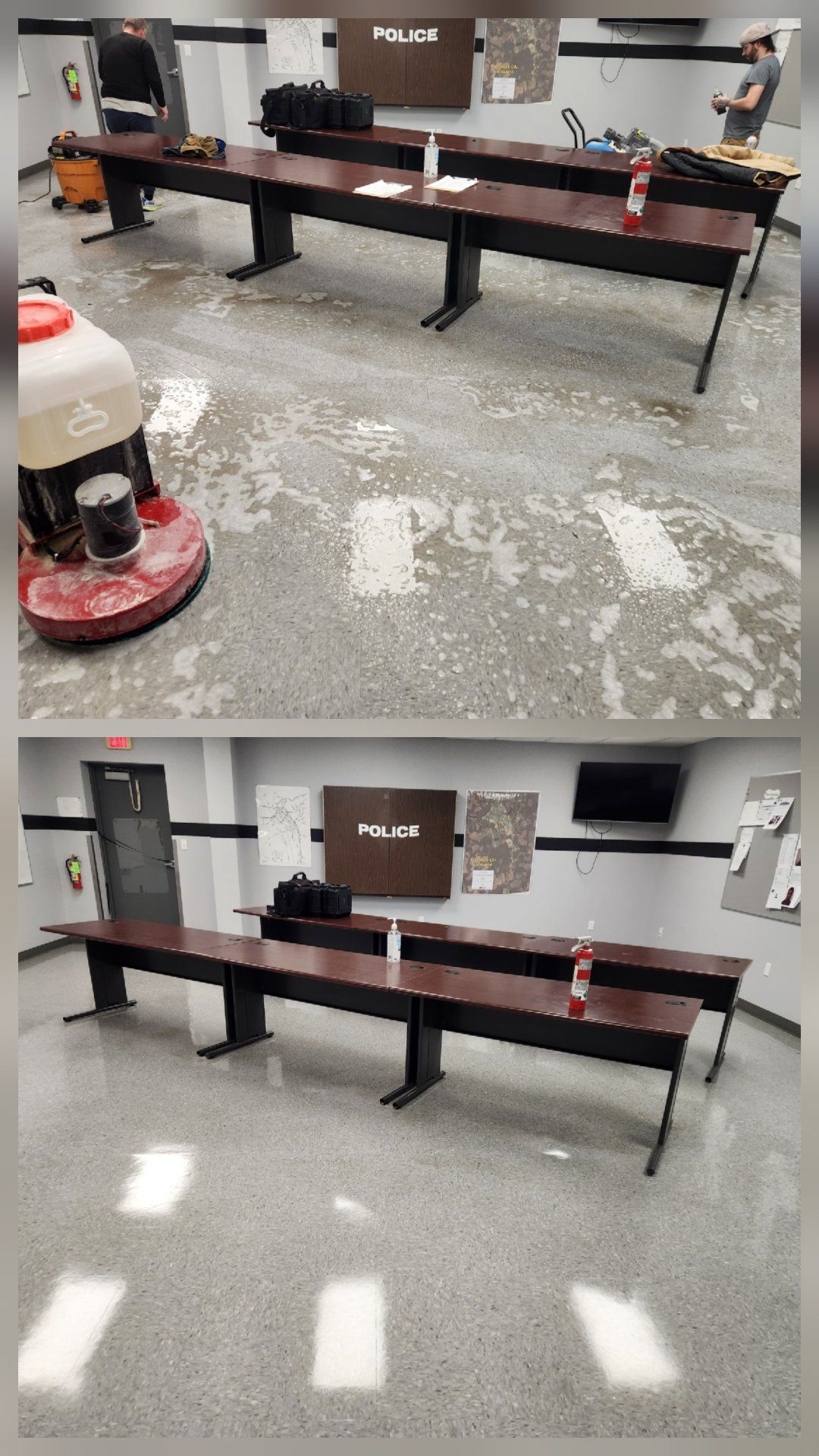
Scrub and recoat is the right call when the finish is intact but soiled. Strip and wax is the right call when the finish itself has failed.
Here is the decision rule we use. If the finish is worn through to the tile in traffic lanes, if buildup is heavy and uneven, or if the floor has gone dull despite regular scrubbing, recoating will not fix it.
The Cost and Labor Trade-Off
Scrub and recoat is the lower-cost, lower-disruption option. It uses less chemical, takes less time, and typically allows the space to return to service faster than a full strip. Full stripping uses more labor and material, requires more dry time, and takes the floor out of service longer. The trade-off is not whether to strip, but when: every scrub and recoat completed on schedule pushes the full strip further out and reduces the number of full strips a floor needs over its life.
A Decision Tree for Scrubbing Versus Stripping
Use the floor's condition, not the calendar, to choose the service:
- Finish intact, soil on top. Scrub and recoat.
- Finish intact, dull lanes but no wear-through. Scrub and recoat, and shorten the interval.
- Finish worn through to tile in traffic lanes. Strip and wax.
- Heavy, uneven buildup that scrubbing does not lift. Strip and wax.
Troubleshooting Common Outcomes
Even a correctly chosen service can produce a floor that does not look right. A common pattern is haze or a sticky residue after a scrub and recoat, which usually points to insufficient rinse water recovery or product left on the surface.
That interim treatment is the cost saver. Every scrub and recoat you complete on schedule pushes the full strip further out. Our guide to the signs your commercial floors need stripping and waxing covers the point where recoating stops helping.
Building a Commercial VCT Floor Maintenance Schedule That Fits Your Facility
A workable schedule has three layers: daily, periodic, and restorative. Get the layers right and the frequency question mostly answers itself.
- Confirm the flooring material and current finish condition
- Map your traffic patterns and entrance soil load
- Set a daily dust and damp mopping routine
- Assign a scrub and recoat interval based on traffic tier
That log is the piece most facilities skip, and it is the one that turns guesswork into a schedule.
For the full method-by-method context, our facility manager's guide to maintaining VCT floors explains how these tasks fit together across a year.
Request a Floor Walkthrough and Maintenance Estimate
Every building has a different floor story, and the schedule should match it.
If your floors are dulling faster than they should, or you have never had a documented maintenance schedule, start with a walkthrough.
Get started with A Smarter Clean and put your VCT floors on a maintenance program built around your building. You can contact our cleaning company to request a walkthrough and floor-maintenance estimate.
Frequently Asked Questions
How often should commercial VCT floors be machine scrubbed?
There is no fixed interval that fits every building. Scrubbing frequency depends on foot traffic, soil levels, entrance conditions, and how well routine cleaning is maintained. Low-traffic areas may only need scrubbing twice a year, while high-traffic entryways and corridors often need it every three to six months. The condition of the floor finish is the best indicator: when traffic lanes look dull or soil builds up between cleanings, it is time to scrub. A professional walkthrough can set a schedule based on your specific VCT floors.
What is the difference between scrub and recoat vs strip and wax?
Scrub and recoat removes surface soil and a thin layer of worn finish, then applies fresh floor polish to restore gloss. It is a periodic maintenance step that extends the life of the finish. Strip and wax removes all old finish and buildup down to the tile, then applies new coats of floor finish. Scrubbing and recoating is less disruptive and costs less, while stripping and waxing is a full restoration. Most facilities alternate between the two based on finish condition rather than a fixed calendar.
How can I tell if my VCT floors need more than a routine scrub?
If the finish is worn through in traffic lanes, if there is heavy finish buildup, or if the floor looks uneven and patchy even after cleaning, scrubbing alone will not fix it. Those signs point to a strip and wax or a more thorough restoration. Recurring scuff marks, black marks, and embedded soil that survive routine mopping also suggest the finish is compromised. A professional assessment can confirm whether scrub and recoat will restore appearance or whether full stripping is the better choice.
What factors influence how often commercial VCT floor scrubbing is needed?
Foot traffic volume, soil load, entrance matting, weather, and building usage all affect how quickly VCT floors soil. A medical office with steady patient flow and a school with heavy daily traffic will need different schedules. Entrances that track in grit and moisture wear finish faster. Routine dust mopping and damp mopping between scrubs also extend the time between deep cleanings. A commercial VCT floor maintenance schedule should be built around these conditions, not a one-size-fits-all interval.