

How Often Should Commercial VCT Floors Be Scrubbed and Recoated?
Last Updated: November 15, 2026
Quick Summary
Time your VCT scrub and recoat by condition, not the calendar: recoat when the finish is dull, scuffed, and worn in traffic lanes but still intact. A VCT scrub and recoat refreshes the top finish, while a full strip is only needed once finish wears through or buildup turns thick and yellowed.
- Dull lanes with glossy edges and light scuffs usually signal a scrub and recoat is due.
- Heavy-traffic facilities often recoat more often and strip less often to protect the finish.
- Walk-off mats at every entrance reduce the grit that grinds finish down.
- Burnishing weekly in high-traffic areas restores gloss and extends time between recoats.
- Strip when finish is worn through to bare VCT or buildup is thick and uneven.
Table of Contents
- Why a Fixed VCT Scrub and Recoat Schedule Fails
- What Shapes Your Commercial Floor Maintenance Schedule
- Signs a VCT Floor Is Ready for Scrub and Recoat
- Scrub and Recoat or Full Strip: A Side-by-Side Comparison
- Where Your VCT Floor Burnishing Schedule Fits
- How Commercial VCT Floor Maintenance Protects the Finish
- When VCT Floor Stripping and Waxing Is the Right Call
- Request a Floor-Care Walkthrough and Estimate
- Frequently Asked Questions
Why a Fixed VCT Scrub and Recoat Schedule Fails
A VCT scrub and recoat schedule cannot be reduced to a calendar.
Most guides hand you a number. Strip every year. Recoat every quarter. That advice ignores the one variable that actually matters: what is happening on your floor.
A VCT floor in a busy hospital corridor and one in a quiet bank branch age at completely different rates. Same tile. Same finish. Totally different maintenance needs.
Below, we break down how to read your floor's condition and build a schedule that fits your building. We also cover the signs that separate a quick scrub and recoat from a full strip.
What Shapes Your Commercial Floor Maintenance Schedule
Your commercial floor maintenance schedule should follow conditions, not the calendar. Traffic, facility type, cleaning frequency, entrance control, and burnishing habits all push the timing in different directions. The most useful way to plan is to combine a traffic tier with a facility-use profile, then watch how the finish actually responds.
Traffic Levels and Facility Type
A school cafeteria and a dental office wear their floors at very different speeds. High-traffic spaces like lobbies, hallways, and entryways need attention far more often than back offices.
- Heavy traffic: main entrances, cafeterias, gyms, retail aisles, hospital corridors
- Medium traffic: hallways, waiting rooms, staff break areas, bank lobbies
- Light traffic: private offices, storage rooms, back corridors, closed classrooms
Facility type matters just as much. Repeated wet cleaning can dull a finish faster than foot traffic alone. A church may sit quiet all week and then take heavy use on Sunday, which concentrates wear into short bursts. A bank branch combines a polished public lobby with light back-office traffic, so the front of the house often drives the schedule.
A Practical Planning Table by Traffic and Facility Type
Use this as a starting framework, not a fixed rule. The right interval for your building will shift with finish type, cleaning discipline, and entrance control, and no provider should promise a set number of months.
| Traffic tier |
Typical facility examples |
Routine cleaning focus |
Burnishing cadence |
Scrub-and-recoat watch point |
|---|---|---|---|---|
| Heavy |
Entrances, cafeterias, gyms, retail aisles, hospital corridors |
Daily dust mop, frequent damp mop, regular auto scrub |
Often weekly in peak lanes |
Inspect walk lanes frequently; dullness appears first in the main path |
| Medium |
Hallways, waiting rooms, break areas, bank lobbies |
Daily dust mop, regular damp mop, periodic auto scrub |
Every couple of weeks in visible areas |
Check edges versus center; fading shine in lanes signals a recoat |
| Light |
Private offices, storage, back corridors |
Dust mop and damp mop on a routine cycle |
Less often, as gloss fades |
Recoat may be needed only when scuffs and dull patches spread |
A common pattern is that heavy-traffic facilities recoat more often and strip less often, because frequent recoats keep the finish from wearing through. Light-traffic facilities may go much longer between recoats but still need a full strip when buildup or yellowing appears. The table is a conversation starter for a walkthrough, not a guarantee.
Entrance Matting, Routine Cleaning, and Facility Use
Walk-off mats at every entrance are one of the cheapest ways to protect a finish.
Routine cleaning keeps the finish alive between services. Daily dust mopping and regular damp mopping remove the abrasives that grind a finish down. Skip those steps and even a light-traffic floor ages fast.
Facility use also changes the plan. A space that hosts events, receives deliveries through a main door, or sees rolling carts will wear faster than its square footage suggests.
For a deeper VCT-specific reference, our facility manager's guide to maintaining VCT floors walks through planning around your building's traffic and use.
Signs a VCT Floor Is Ready for Scrub and Recoat
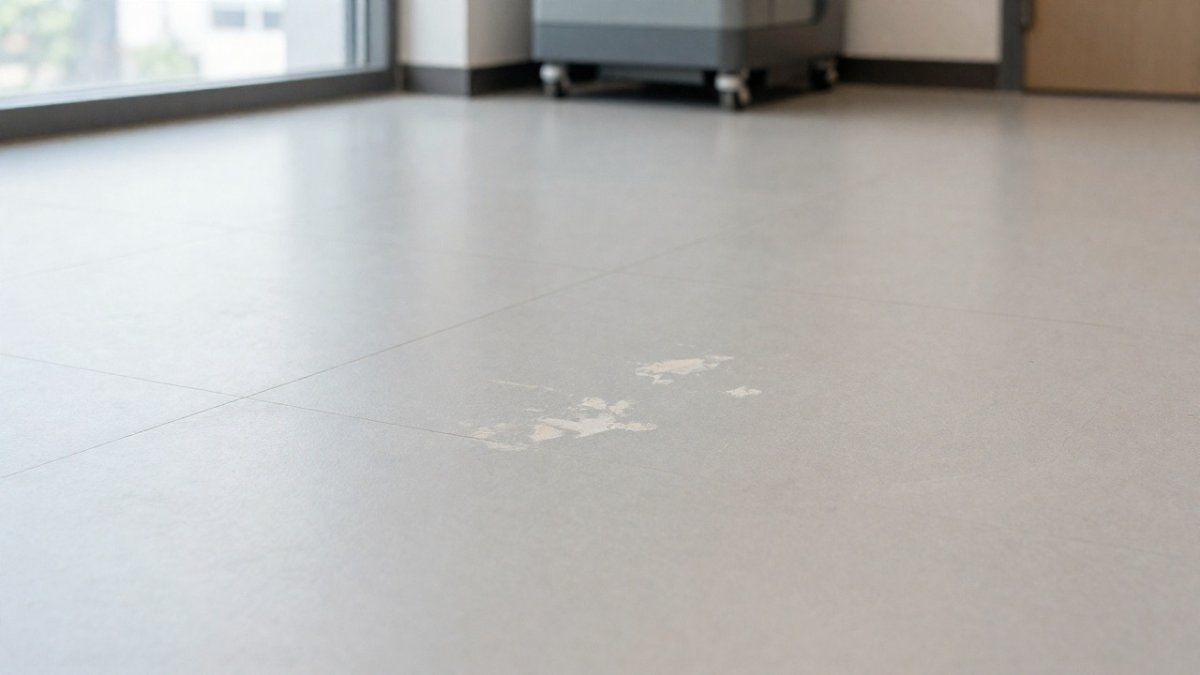
A VCT floor is usually ready for a scrub and recoat when the finish looks dull, shows scuffs and light wear, but is still largely intact. That is the sweet spot: the protective layer needs refreshing, not full removal.
Look for these signals:
- Dullness in high-traffic lanes while edges stay glossy
- Light scuffs, heel marks, and fine scratches
- Finish that is worn but not worn through to bare VCT
- Dirt that sits on top rather than ground into the tile
- A finish that responds to burnishing but loses gloss again quickly
What most guides miss is the comparison test. Stand at the edge of the room and look across the floor toward a light source.
A Symptom-Based Decision Guide
Use this matrix to sort what you are seeing into a likely next step. It is a planning aid; a walkthrough confirms the call.
| What you observe |
Likely condition |
Probable next step |
|---|---|---|
| Dull lanes, glossy edges, light scuffs |
Top of finish is worn but intact |
Scrub and recoat |
| Scuffs and heel marks that clean up but return fast |
Finish is thin in traffic lanes |
Scrub and recoat, then review burnishing cadence |
| Patchy shine that burnishing restores briefly |
Finish is thinning unevenly |
Scrub and recoat; inspect entrance matting |
| Tile pattern visible in main walkway |
Finish worn through to bare VCT |
Full strip and wax |
| Thick, yellowed, or uneven buildup |
Layered finish and embedded soil |
Full strip and wax |
| Deep stains or embedded dirt that cleaning cannot lift |
Contamination below the surface |
Full strip and wax |
Two failure modes are common. Recoating a finish that is already worn through traps dirt and produces a patchy result that fails within weeks. Stripping a finish that only needed a refresh adds labor, downtime, and unnecessary disruption.
Watch out: a floor that looks dull everywhere but cleans up well may simply need a better routine cleaning and burnishing cadence rather than a recoat, so confirm the finish is actually thin before scheduling service.
If you are unsure whether your floor's dullness actually calls for stripping, our guide to the signs your commercial floors need stripping and waxing helps you check.
Scrub and Recoat or Full Strip: A Side-by-Side Comparison
Scrub and recoat refreshes the top of the finish. Full strip and wax removes the finish entirely and starts over. Choosing between them comes down to how much of the finish is still healthy.
Floor Care Maintenance - Scrub & Recoat Procedure
Triple S Facility Maintenance Solutions
| Factor |
Scrub and Recoat |
Full Strip and Wax |
|---|---|---|
| What it does |
Cleans and refreshes the top finish |
Removes all finish down to bare VCT |
| Best when |
Finish is dull but intact |
Finish is worn through or badly built up |
| Downtime |
Shorter |
Longer |
| Labor |
Lower |
Higher |
| Frequency |
More often |
Less often |
| Result |
Restored shine and protection |
Clean slate with new finish coats |
The mistake we see most is jumping to a full strip when a recoat would do. It costs more, takes longer, and pulls the floor out of service for longer than it needs to be. When you are weighing whether a complete strip is truly needed, our article on VCT stripping and waxing focuses on exactly that decision.
Where Your VCT Floor Burnishing Schedule Fits
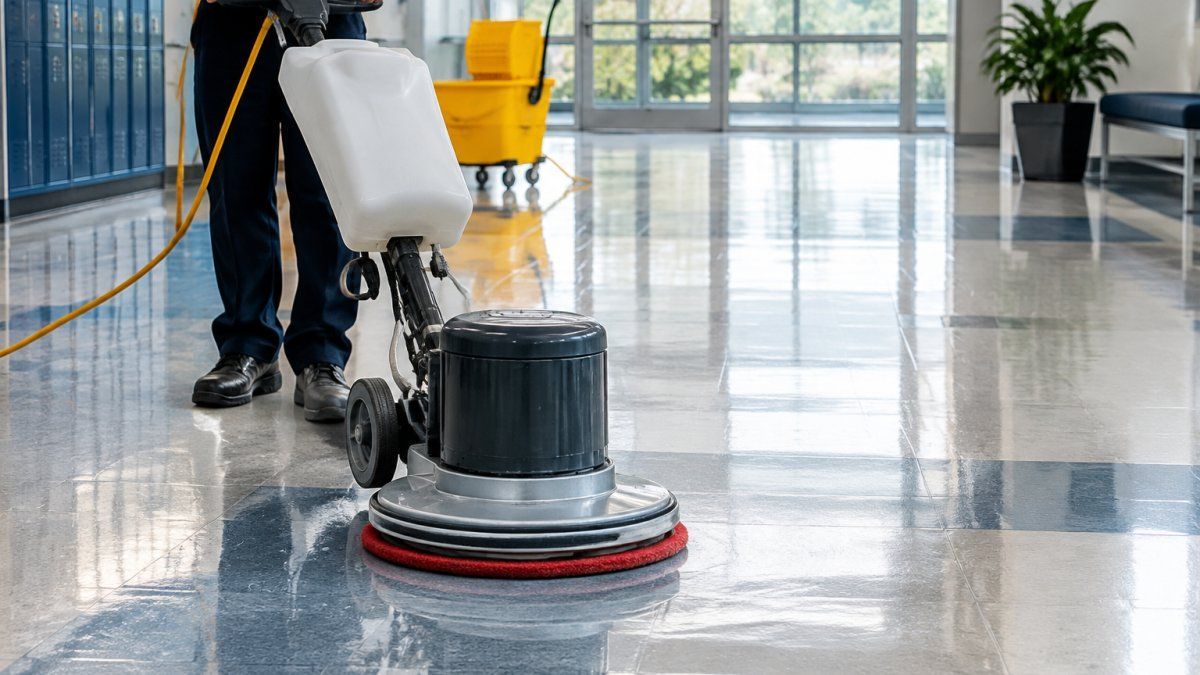
Burnishing is the step between recoats that keeps a finish looking sharp. A high-speed burnish brings back gloss without adding finish, and it extends the time between scrub and recoat cycles.
How often? It depends on traffic and finish type. High-traffic areas may need burnishing weekly, while lighter spaces can go longer. Burnishing too aggressively on a thin finish can do more harm than good, so match the pad and speed to the condition.
If you are deciding whether to add professional burnishing between recoats, our piece on whether professional floor buffing is worth the cost covers the trade-offs.
How Commercial VCT Floor Maintenance Protects the Finish
Commercial VCT floor maintenance is really a chain of small habits that keep the finish intact. Each step protects the next, and skipping one shortens the life of the whole system.
- Daily: dust mop to lift grit before it scratches
- Regular: damp mop with a pH-appropriate cleaner
- Periodic: auto scrub for a deeper clean
- As needed: burnish to restore gloss
- Scheduled: scrub and recoat when wear shows
The finish is your floor's armor. Every coat you preserve is a coat you do not have to strip and replace. That is the cost argument for a condition-based schedule: it protects the asset instead of reacting to it.
When VCT Floor Stripping and Waxing Is the Right Call
VCT floor stripping and waxing is the right call when the finish can no longer be saved. If you see finish worn through to bare tile, heavy buildup, or severe unevenness, a recoat will only hide the problem for a few weeks.
Signs it is time to strip:
- Finish worn through in walkways, exposing bare VCT
- Thick, yellowed, or uneven buildup
- Deep stains and embedded dirt that cleaning cannot lift
- Patchy shine that a recoat does not fix
A full strip removes everything and lets you build fresh finish coats on clean tile. It is more work, but done at the right time it resets the floor and buys a longer stretch before the next strip.
Request a Floor-Care Walkthrough and Estimate
Every building wears differently, so a walkthrough is a practical way to time your next service.
A Smarter Clean provides professional commercial cleaning and specialized floor care services in Sussex and Kent Counties in Delaware and Maryland's Eastern Shore. We use OSHA-safe cleaning products, offer flexible nightly, weekly, or monthly programs, and focus on educating clients on safer, cost-effective cleaning processes.
If you are ready to book strip-and-wax or recoat service, our Rehoboth Beach strip and wax page is where to start.
Timing a VCT scrub and recoat schedule is not about finding the perfect calendar. It is about reading your floor and acting on what it tells you.
Frequently Asked Questions
How often should commercial VCT floors be scrubbed and recoated?
There is no universal interval. A VCT scrub and recoat schedule depends on foot traffic, facility type, routine cleaning, entrance matting, and how much finish remains on the tile. A busy medical office lobby may need attention far sooner than a lightly used church hall. Instead of a fixed calendar, base timing on floor condition: dullness, scuffing, and light wear over finish that is still intact point to a recoat, while heavy buildup or worn-through finish calls for a full strip.
How can you tell when a VCT floor needs a scrub and recoat?
Look for dullness that burnishing no longer brings back, light scuffing and surface soil, and wear that has not reached the tile itself. If the finish is still generally intact and the floor is level, a scrub and recoat can restore shine without the downtime of a full strip. Walk the space at different times of day, since glare and lighting change how wear reads on vinyl composition tile.
When should a VCT floor be stripped and waxed instead of recoated?
A full strip is the better choice when finish has worn through to bare VCT, when soil and old finish have built up in layers, or when the floor is severely uneven. Multiple recoats over a failing base add weight without fixing the problem. If you see patchy color, exposed tile at doorways and pivot points, or finish that lifts in sheets, plan for VCT floor stripping and waxing rather than another recoat.
How do traffic levels affect VCT floor-care timing?
Traffic decides where wear lands first. Entrances, checkout lanes, corridors, and nurses' stations take the most grit and scuffing, so those zones may need spot attention between whole-floor services. A commercial floor maintenance schedule should weigh peak occupancy, cart and equipment traffic, and weather exposure at doors. Higher traffic shortens the useful life of any finish, while consistent daily cleaning and walk-off mats slow that wear.