

Choosing the Right Cleaning Products for Commercial LVT Floors
Last Updated: November 18, 2026
Quick Summary
LVT floor care product compatibility means matching neutral cleaners, soft to medium pads, and coatings to the flooring manufacturer's approved list, because LVT's factory wear layer is the finish itself. Most LVT should not be stripped and waxed like VCT, and incompatible products can dull, cloud, or void warranties.
- Choose pH-neutral cleaners labeled safe for vinyl, with no wax, gloss enhancers, or silicone.
- Patch test any new cleaner on a small low-visibility area and re-check after 24 hours.
- Use white, beige, red, tan, blue, or green pads; never brown, black, or stripping pads.
- Dry-clean grit first and rinse with clean water, since dirty rinse water redeposits soil.
- Treat VCT and LVT as two separate maintenance programs with different products and pads.
Table of Contents
- Why LVT Floor Care Product Compatibility Matters in Commercial Facilities
- Choosing an LVT Neutral Cleaner That Protects the Wear Layer
- LVT Floor Maintenance Pads: Matching Abrasion to the Surface
- Machine Scrubbing LVT Flooring Without Damaging the Finish
- LVT Floor Coating Compatibility: Why Strip-and-Wax Habits Fail
- Daily Routine, Spills, and Scuffs: Practical LVT Floor Maintenance
- Request an LVT Floor-Care Walkthrough for Your Facility
- Frequently Asked Questions
Why LVT Floor Care Product Compatibility Matters in Commercial Facilities
Luxury vinyl tile has become the default hard surface in many commercial buildings, and that shift has created a quiet problem.
Here is the core issue. LVT is a finished product, not a raw surface waiting for a coating.
The Resilient Floor Covering Institute's guidance on resilient flooring maintenance is blunt about this: follow the manufacturer's care instructions for the specific product.
So why does compatibility matter so much in a commercial setting?
- Traffic is heavy and constant, so mistakes compound fast
- Cleaning crews rotate, so habits travel between buildings
- One wrong product can affect thousands of square feet at once
- Replacing LVT is far more expensive than maintaining it correctly
For facility managers new to LVT, our commercial LVT cleaning and maintenance service explains how professional care is scoped for these floors.
Choosing an LVT Neutral Cleaner That Protects the Wear Layer
The right cleaner for LVT is pH-neutral and labeled safe for vinyl.
Why neutral? Vinyl responds poorly to strong alkaline or acidic products over time. High-alkaline cleaners can dull the wear layer and leave a film that traps soil. Acidic products can attack edges and seams.
What to look for on the label:
- "pH neutral" stated clearly
- "Safe for vinyl" or "LVT/LVP approved"
- No wax, no gloss enhancers, no silicone
- Dilution ratio printed on the bottle
- A manufacturer that lists compatible surfaces
What to avoid: abrasive cleaners, ammonia-heavy glass cleaners used as a shortcut, and anything marketed as a "heavy-duty degreaser" for general floor use. These are the products that create detergent buildup and hazy residue.
A common mistake is over-diluting or under-diluting. Too weak and the floor stays soiled. Too strong and you leave residue that attracts dirt.
Run a Patch Test Before the First Full Mop
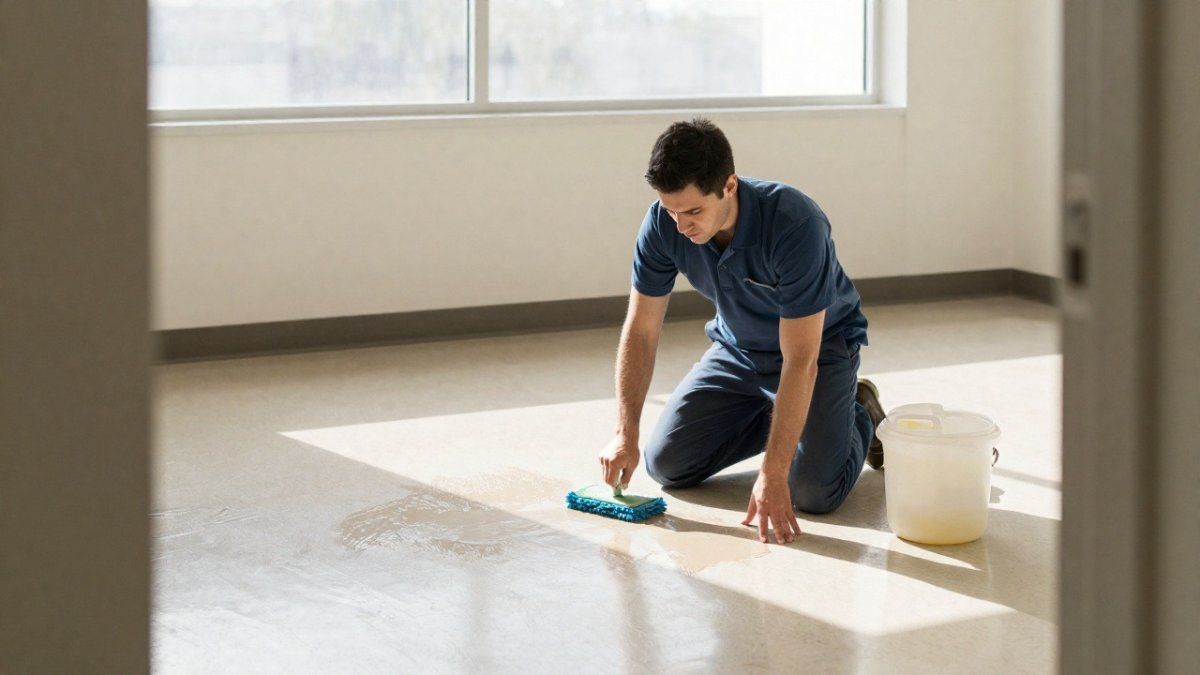
Most guides skip this step, and it is the one that protects both the floor and the warranty. Before a new cleaner touches a full room, test it on a small, low-visibility area, a corner behind a door, a section under a desk, or a spare plank if the installer left one.
A workable patch-test protocol:
- Clean a roughly one-square-foot area with the product at label dilution.
- Let it dry completely, at least an hour, longer in humid conditions.
- Compare the test patch to the surrounding floor under the same lighting.
- Look for clouding, dulling, tackiness, edge lift, or a color shift.
- Re-check the same spot after 24 hours to catch slow reactions.
Watch out: a cleaner can look fine wet and only reveal a reaction after it dries or after a second application, so a single wet pass is not a passing test.
Why the Flooring Manufacturer's List Wins
Cleaner makers market to many surfaces at once. Flooring manufacturers approve products for their specific wear layers. When the two disagree, the flooring manufacturer's guidance is the one that governs, and in many cases the one a warranty claim will be measured against.
Keep the floor's spec sheet and the manufacturer's care instructions on file with the chemical inventory. When a crew rotates or a new product is introduced, the spec sheet is the reference, not the habit.
For a deeper walkthrough of dilution and mopping technique, see our guide on how to clean commercial LVT flooring properly.
LVT Floor Maintenance Pads: Matching Abrasion to the Surface
Pad choice decides whether machine scrubbing cleans a floor or scratches it. For routine LVT work, soft to medium pads are the safe zone; aggressive stripping pads are not.
Think of pads on a scale. The higher the abrasion, the more material you remove. On VCT that is often acceptable, because you plan to recoat.
A practical starting point:
| Pad Type |
Abrasion Level |
Use on LVT |
Notes |
|---|---|---|---|
| White or beige |
Very light |
Yes, for polish and light soil |
Best for routine buffing |
| Red or tan |
Light |
Yes, for spray buffing |
Good for scuffs and light marks |
| Blue or green |
Medium |
Yes, with care |
Watch dwell time and passes |
| Brown or black |
Heavy |
No |
Reserved for stripping VCT |
| Stripping pads |
Very heavy |
No |
Can dull or damage the wear layer |
The rule we use: if the pad is designed to remove finish, it does not belong on an LVT floor unless the manufacturer says otherwise.
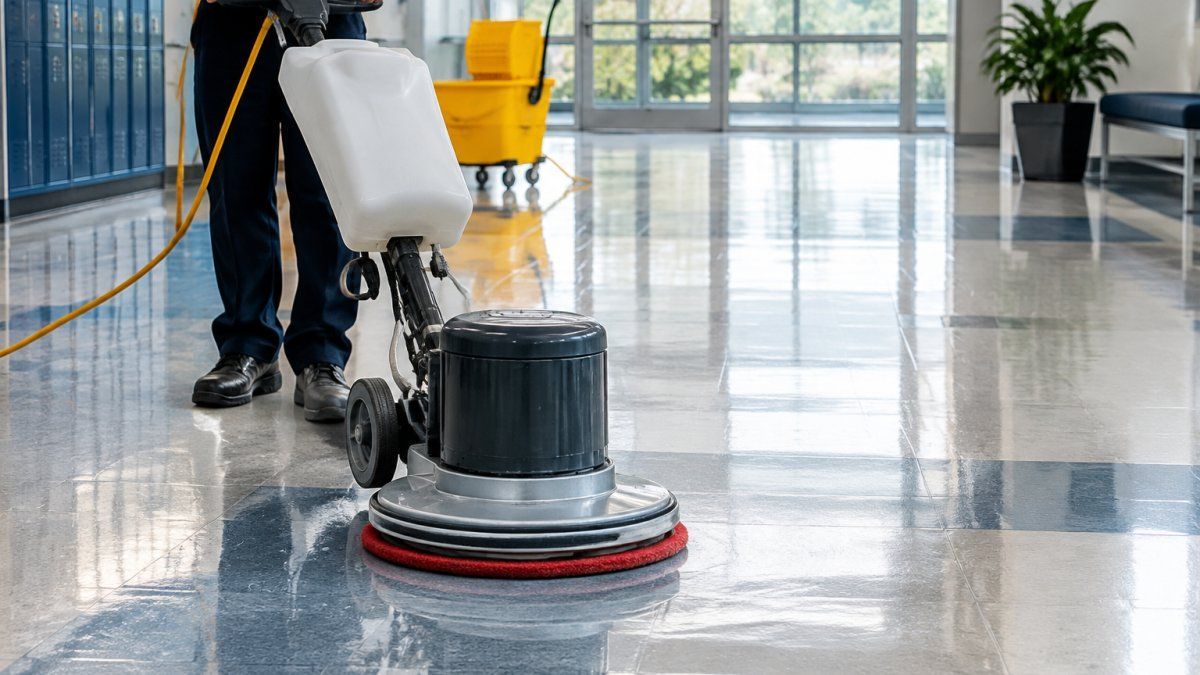
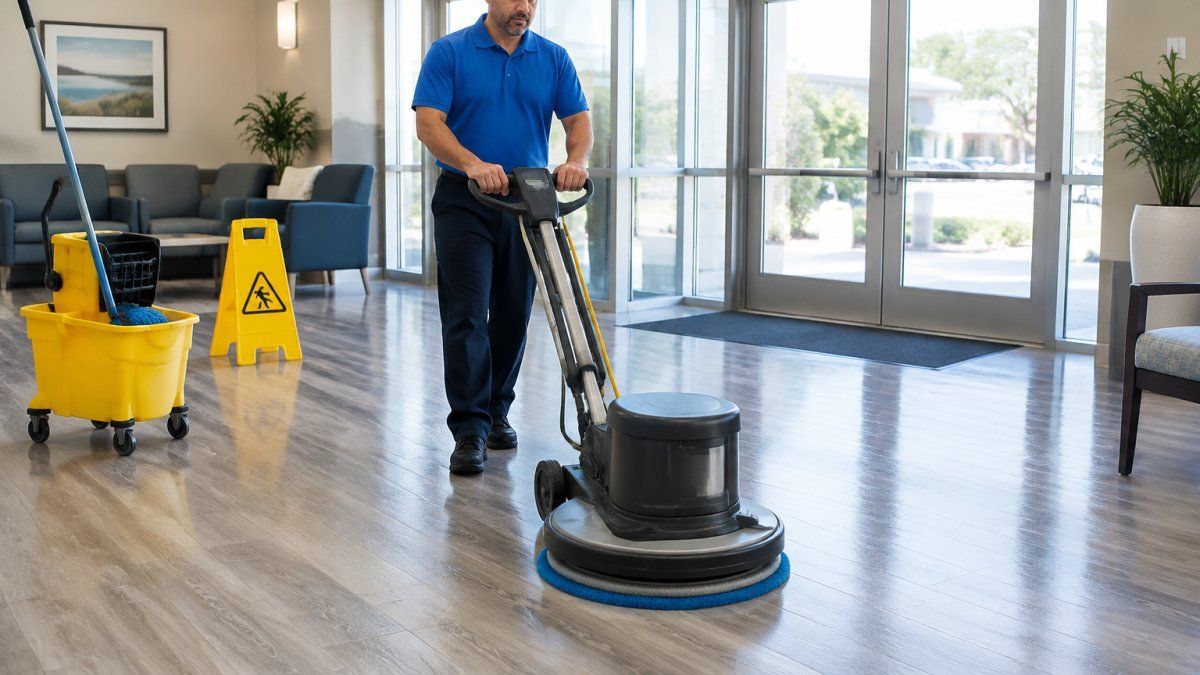
Tool compatibility matters here too. A rotary floor machine with a soft pad behaves very differently from a high-speed burnisher.
Machine Scrubbing LVT Flooring Without Damaging the Finish
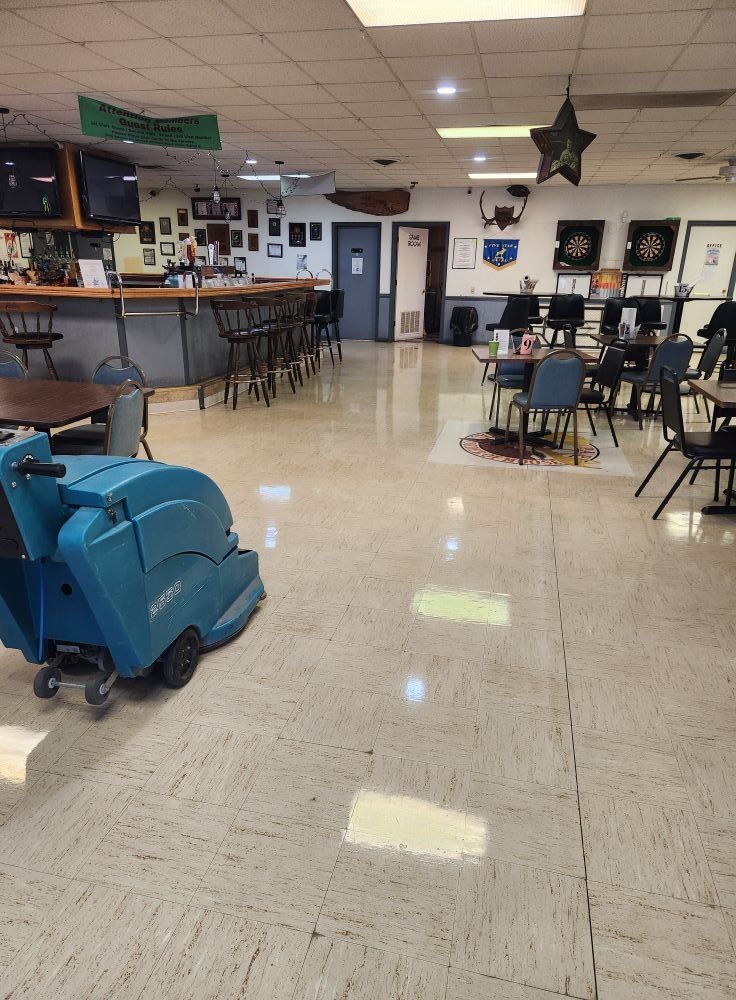
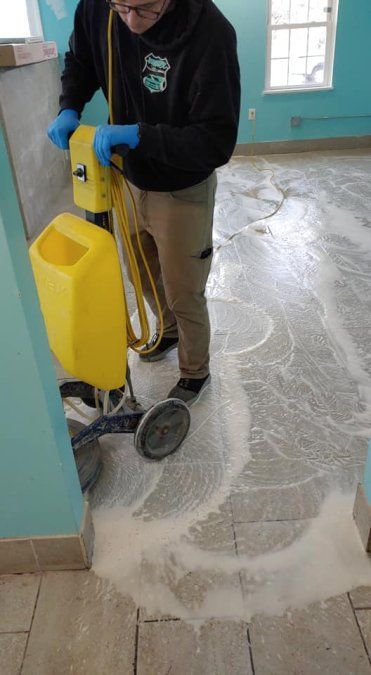
Machine scrubbing LVT flooring works well when the machine, pad, and chemical are matched to the floor. Get one of those three wrong and you create a problem that costs more to fix than the cleaning was worth.
A workable sequence for most commercial LVT:
- Dry-clean first with a dust mop or microfiber pad to remove grit
- Pre-spray neutral cleaner at label dilution on heavy soil areas
- Give the chemical its dwell time, usually a few minutes, not seconds
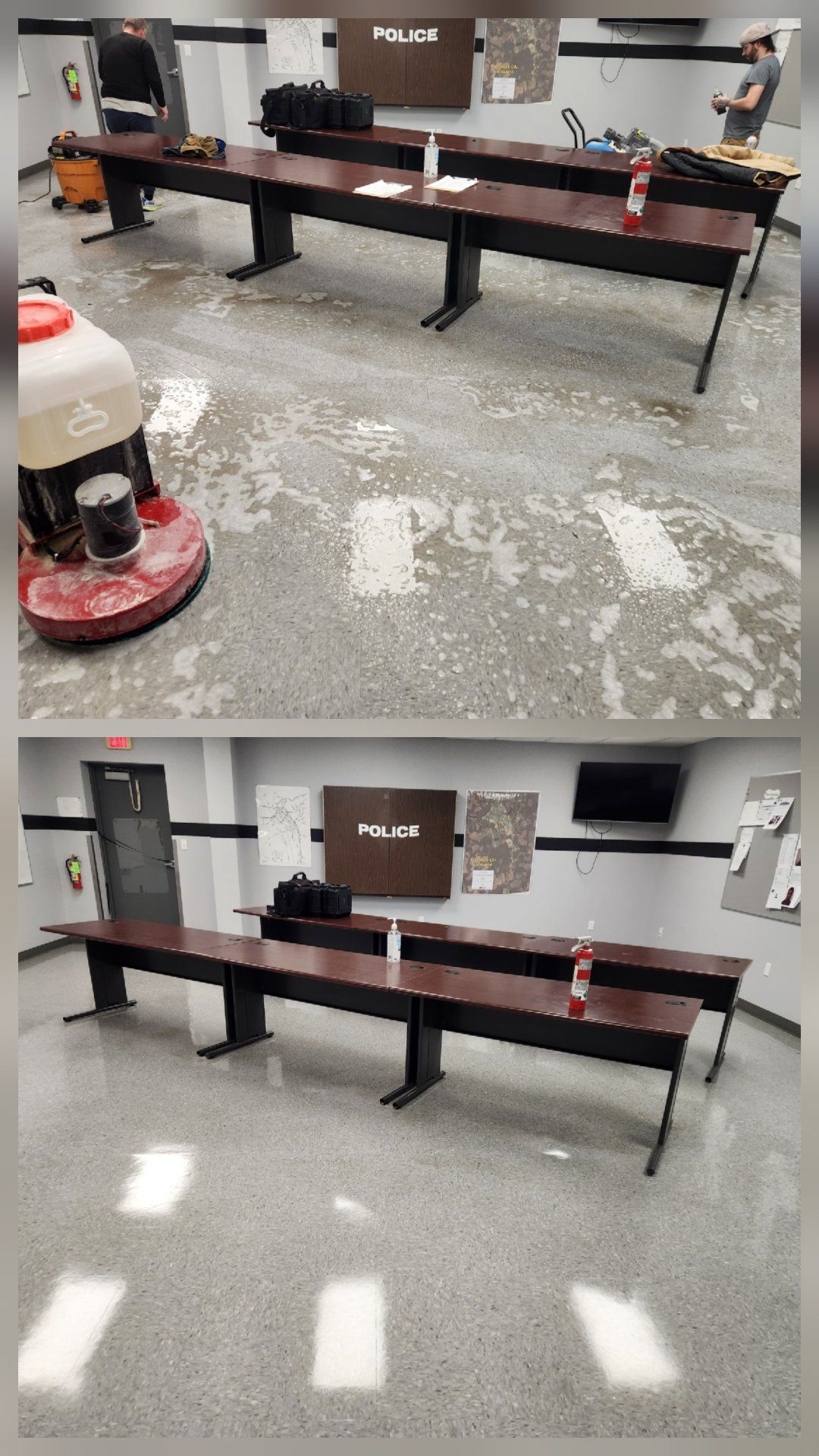
- Run the scrubber with a soft or medium pad at moderate pressure
- Pick up the solution fully, then rinse with clean water
- Dry the floor before traffic returns
Two details get skipped constantly. First, grit. Dry soil under a scrubber acts like sandpaper. Second, rinse water. Dirty rinse water redeposits soil and leaves streaks.
We recommend testing any new combination on a small, low-visibility area before running it across a whole floor. Manufacturers publish care guidance for a reason, and the vinyl flooring maintenance guidance from the World Floor Covering Association is a useful starting reference when a specific product's documentation is unclear.
LVT Floor Coating Compatibility: Why Strip-and-Wax Habits Fail
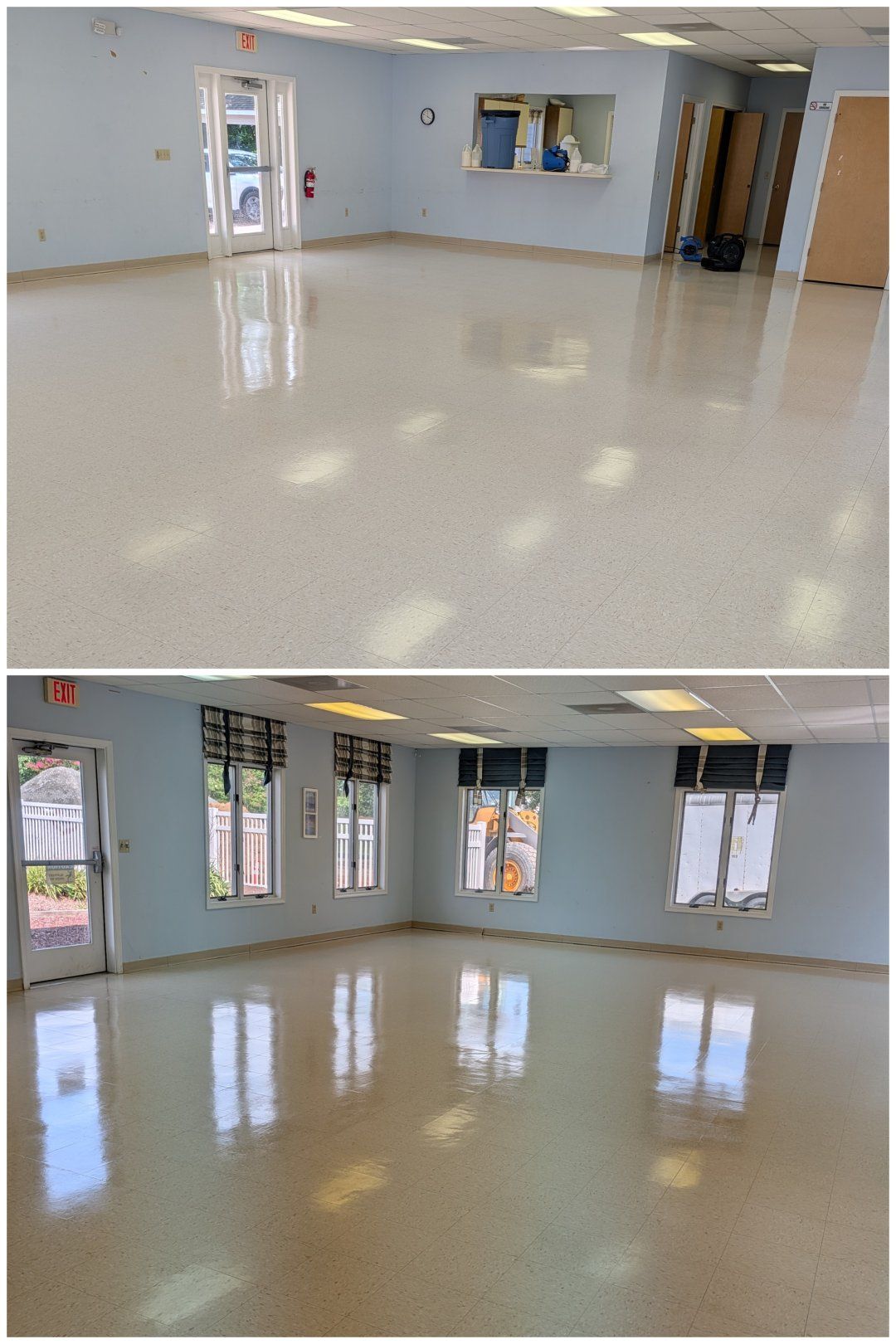
Most LVT should not be stripped and waxed the way VCT is. That habit is the single biggest compatibility failure we encounter in commercial buildings.
Here is why. VCT is a porous tile that needs a sacrificial finish to look good and survive traffic. You apply finish, it wears, you strip and recoat.
LVT is different. The wear layer is the finish. Adding a traditional floor finish on top often creates problems:
- Finish that will not bond properly and peels
- Yellowing or clouding over time
- Trapped moisture and haze between layers
- A surface that scuffs more, not less
- Voided manufacturer warranties in some cases
Many LVT and LVP products carry manufacturer guidance that specifically discourages wax and gloss-enhancing products. Matte finishes, increasingly common in commercial design, are especially poor candidates for anything that adds shine.
What about coatings? Some products are marketed as compatible with vinyl. That claim needs checking against the specific flooring manufacturer's approved list, not the coating maker's marketing.
Tool Compatibility: Steam Mops, Burnishers, and Microfiber
Coating decisions do not happen in isolation, the tools used around them matter just as much, and this is where crews most often go wrong.
- Steam mops: popular for residential use, but heat and moisture under pressure can stress seams and edges on commercial LVT. Confirm against the manufacturer's guidance before routine use; many commercial products discourage them.
- High-speed burnishers: generate heat, and heat plus a finish-sensitive vinyl surface is a combination to test on a small area first. Burnishing a coated LVT can soften or smear an incompatible coating.
- Microfiber mops and flat mops: the recommended default for damp mopping and spot work. They control solution and avoid the standing water that stresses seams.
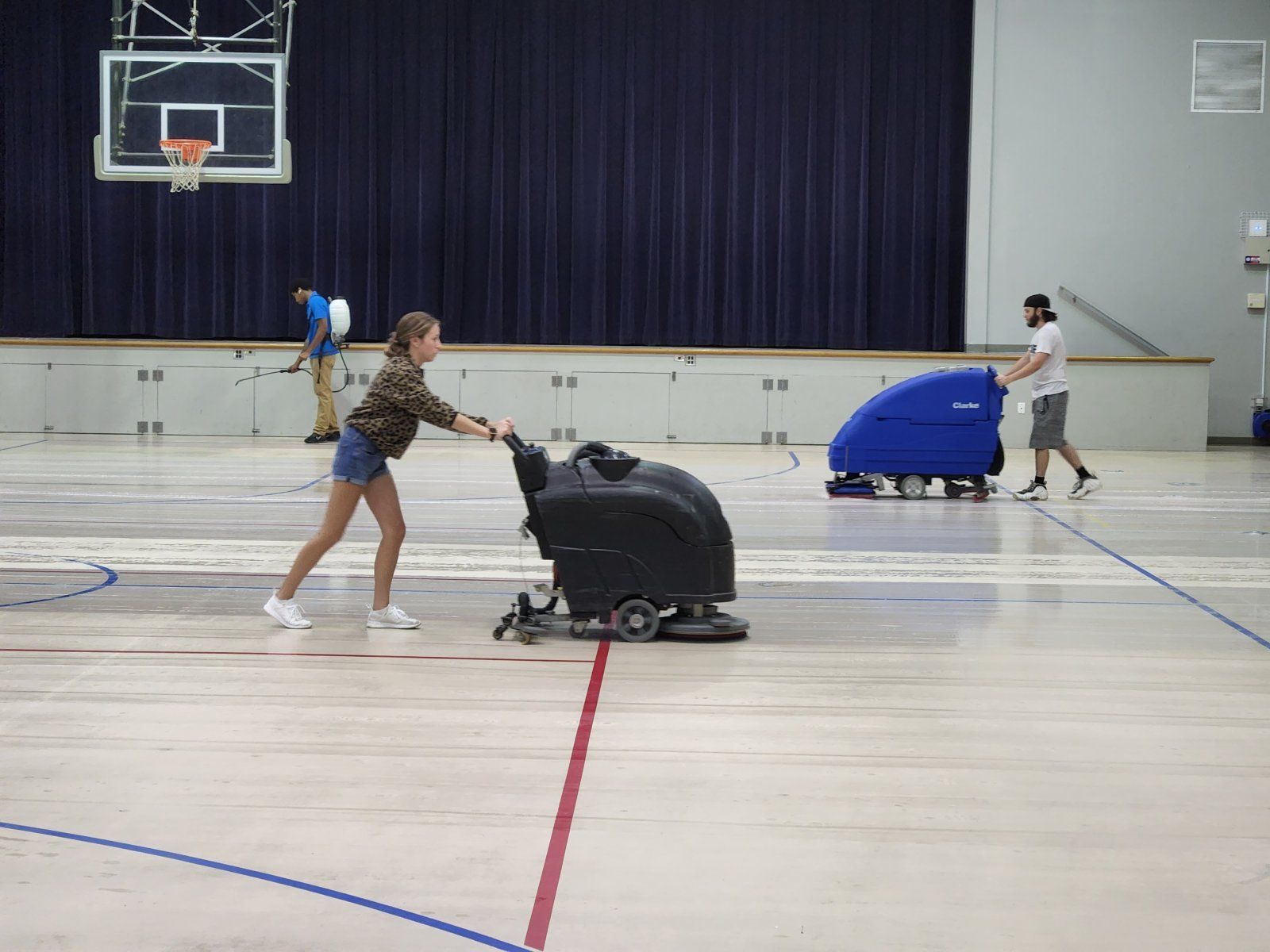
- Auto-scrubbers: work well with soft or medium pads at moderate pressure, but only after dry soil is removed.
Switching from a microfiber mop to a steam mop can introduce moisture at seams, so confirm the approach with the manufacturer first.
Warranty Protection Is the Real Reason to Check
Using a non-compatible coating or an aggressive tool is not just an appearance risk. In many cases it is a warranty risk. Manufacturer care documents often state that wax, gloss enhancers, and certain coatings are not approved. Keeping the approved-product list with the floor's spec sheet is a sound maintenance practice.
If your building has both VCT and LVT, treat them as two separate maintenance programs. Same crew, same building, different products and different pads. For the finish side of that split, our article on choosing the right floor finish for VCT and LVT covers the decision in more detail.
Daily Routine, Spills, and Scuffs: Practical LVT Floor Maintenance
Daily habits protect LVT more than any periodic deep clean. The routine is simple, and it is the part most facilities let slide.
A workable daily and weekly rhythm:
- Daily: dust mop or sweep high-traffic areas; damp mop with neutral cleaner
- Daily: spot clean spills promptly, before they set
- Weekly: machine scrub light-traffic zones and entryways
- Weekly: inspect for scuffs, edge lifting, and dull patches
- Monthly: review pad and chemical stock against the floor's spec sheet
Entrance matting deserves a mention. Most soil arrives on shoes. Good matting at every entrance cuts the load on the floor and on your crew.
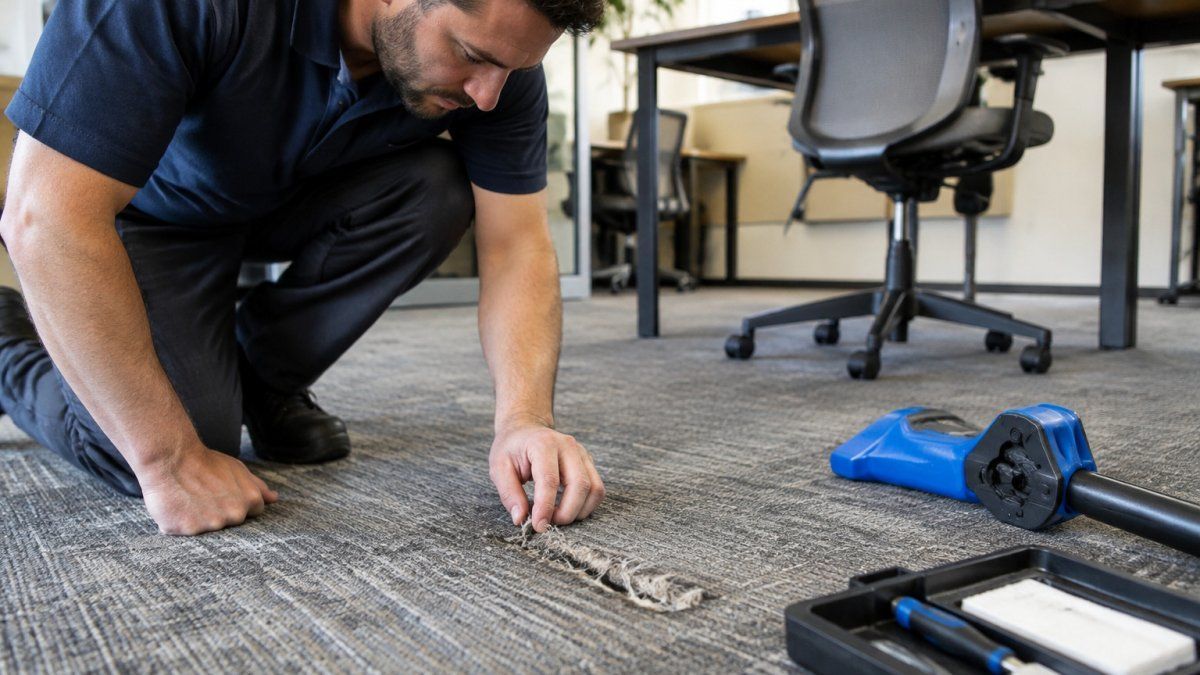
For scuffs, start gentle. A microfiber cloth with neutral cleaner removes many marks.
Moisture matters too. LVT has good moisture resistance at the surface, but standing water at seams and edges is a different story. Damp mopping, not wet mopping, is the standard.
For high-traffic buildings, our article on maintaining high-traffic VCT and LVT floors expands this routine into a full schedule.
Request an LVT Floor-Care Walkthrough for Your Facility
The gap between a floor that lasts and one that dulls early usually comes down to product choices made months earlier. Correct chemicals, correct pads, correct coatings, and a routine that respects the wear layer.
A Smarter Clean provides commercial LVT and LVP floor care for facilities across Sussex and Kent Counties in Delaware and Maryland's Eastern Shore. We evaluate the floor type and its condition before recommending any service.
Bring us your dullest corridor or your most scuffed lobby. We will walk the floor with you, identify the surface and its condition, and outline a maintenance plan that fits your schedule.
Request a commercial floor care walkthrough for your facility.
Frequently Asked Questions
What floor cleaner is safe for LVT?
A pH-neutral cleaner labeled safe for vinyl flooring is the standard choice for LVT floor care. It lifts everyday soil without attacking the wear layer or leaving detergent buildup that dulls the surface. Avoid abrasive cleaners, high-alkaline degreasers, and anything not intended for resilient flooring. Before rolling a product out across a facility, test it in an inconspicuous area and follow the flooring manufacturer's written guidance, since matte and textured finishes can respond differently to the same product.
Can commercial LVT be machine scrubbed, and which pads are appropriate?
Commercial LVT can be machine scrubbed when the machine, pad, and chemical are matched to the flooring. Use a soft or non-abrasive pad and a neutral cleaner, keep the machine moving, and avoid aggressive pressure or high-speed burnishing pads that can scuff the wear layer. LVT floor maintenance pads designed for resilient flooring reduce the risk of surface dulling. Confirm the pad spec with the flooring manufacturer and test on a small area first, especially on matte finishes where marks show easily.
Can you apply a coating or finish to LVT flooring?
Many LVT and LVP products should not receive a traditional floor finish or wax. Modern LVT typically ships with a factory wear layer and polyurethane coating, and adding incompatible coatings can create buildup, hazy residue, and uneven gloss that is hard to remove. LVT floor coating compatibility depends on the specific product and manufacturer guidelines. Ask the flooring maker before applying anything, and if a coating is permitted, use only the product they name.
Can LVT be stripped and waxed like VCT?
LVT should not automatically be treated like VCT. Vinyl composition tile is designed for stripper and wax cycles; many LVT and LVP products are not, and harsh strippers can damage the wear layer or factory finish. When a commercial LVT floor looks dull, the cause may be worn finish, embedded soil, detergent buildup, or traffic wear rather than a need for full stripping. Auto-scrubbing, burnishing where appropriate, or a scrub-and-recoat may restore appearance without a full strip.