


How to Maintain VCT Floors in High-Traffic Commercial Areas
Last Updated: November 24, 2026
Quick Summary
You maintain VCT floors in high-traffic areas by removing grit daily, protecting entrances with matting, and matching every service to the floor's actual condition instead of a fixed calendar. Treating VCT floor maintenance as an ongoing program, rather than a once-a-year event, is the approach that protects the finish.
- Daily soil removal is the highest-value habit, since most finish damage comes from grit ground underfoot.
- Entrance matting traps grit, dust, and moisture before it reaches the tile at every exterior door.
- Burnishing restores gloss on intact finish and is the cheapest way to keep floors looking professional.
- Scrub and recoat refreshes a sound but dull finish, skipping the strip entirely.
- Inspect each zone weekly and log every service with date, products, and condition observed.
Table of Contents
- How do you maintain VCT floors in high-traffic areas?
- How to Clean VCT Flooring: Daily Soil Removal That Protects Finish
- Why Traffic Lanes Wear Faster Than Low-Traffic Zones
- VCT Floor Burnishing: Restoring Shine Between Deep Services
- VCT Scrub and Recoat: When Refresh Beats Full Replacement
- VCT Floor Stripping and Waxing: When It Is Actually Necessary
- Building a Condition-Based VCT Floor Maintenance Schedule
- Request a VCT Floor Walkthrough and Custom Maintenance Plan
- Frequently Asked Questions
How do you maintain VCT floors in high-traffic areas?
You maintain VCT floors in high-traffic areas by removing grit daily, protecting entrances with matting, and matching every service to the floor's actual condition instead of a fixed calendar.
That distinction matters more than any single product. Vinyl composition tile is a forgiving surface, but its finish takes the abuse. Once the wear layer is gone, soil reaches the tile itself, and restoration gets expensive fast.
Below, the maintenance steps are laid out so you can see how they fit together, from daily dust mopping to full stripping and waxing. First, here's what most guides get wrong: they treat every dull floor as a strip-and-wax job.
| Step |
Frequency Signal |
What It Protects |
|---|---|---|
| Entrance matting |
Daily check |
Keeps grit off the finish |
| Dust mopping |
Daily in traffic lanes |
Stops scratches before they start |
| Damp mopping |
Daily to several times weekly |
Lifts film and light soil |
| Auto-scrubbing |
As soil load builds |
Deep-cleans without stripping |
| Burnishing |
When shine fades |
Restores gloss, removes scuffs |
| Scrub and recoat |
When finish dulls but holds |
Adds a fresh coat, skips the strip |
| Strip and wax |
When finish is worn or built up |
Resets the whole system |
| Inspection and logging |
Weekly walkthrough |
Catches wear early |
How to Clean VCT Flooring: Daily Soil Removal That Protects Finish
Daily soil removal is the highest-value habit in VCT floor maintenance. Most finish damage comes from grit that gets walked in and ground underfoot, not from cleaning mistakes.
A common mistake is treating mopping as the whole job. Dry soil removal comes first. If you wet-mop over grit, you push it around and dull the finish faster.
Entrance Matting and Walk-Off Zones
Entrance matting is your first line of defense. A proper walk-off zone traps grit, dust, and moisture before it reaches the tile.
- Place mats at every exterior door
- Extend coverage along the main path of travel
- Vacuum or shake out mats often, since a loaded mat stops trapping
- Replace worn mats before they curl or flatten
Dust Mopping, Damp Mopping, and Auto-Scrubbing
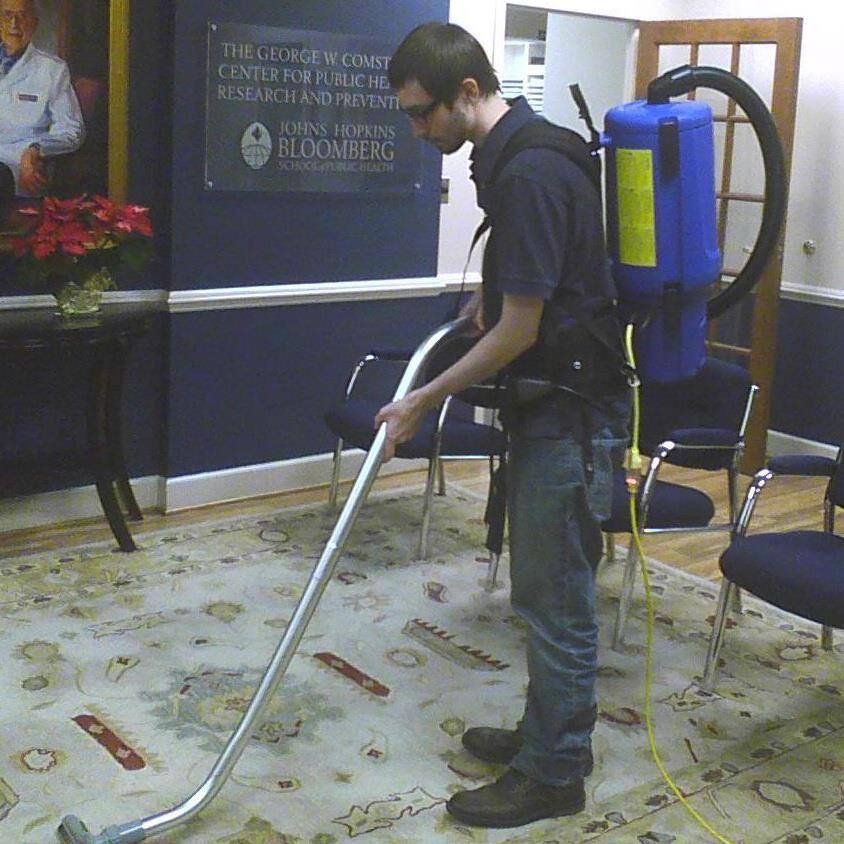
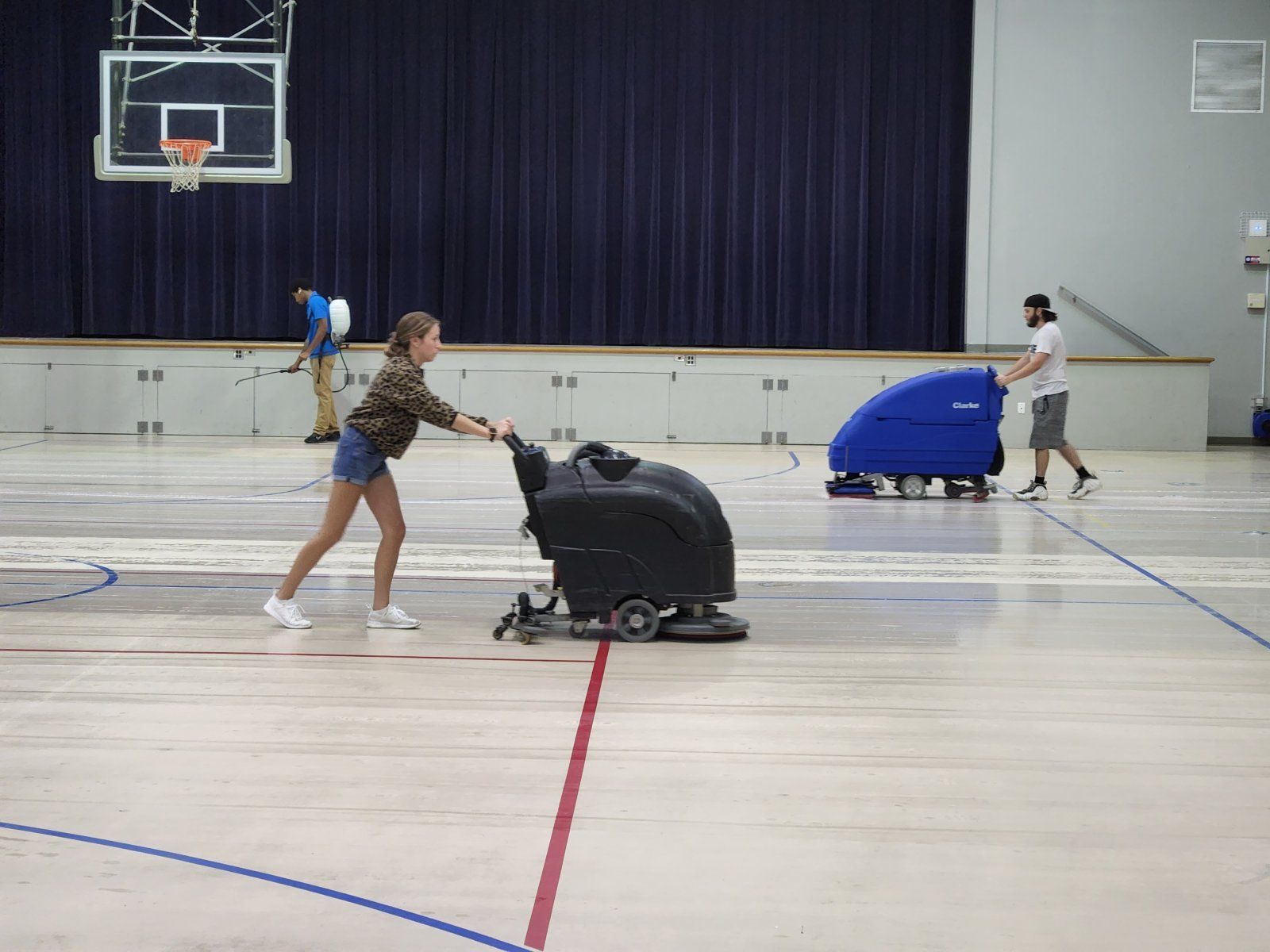
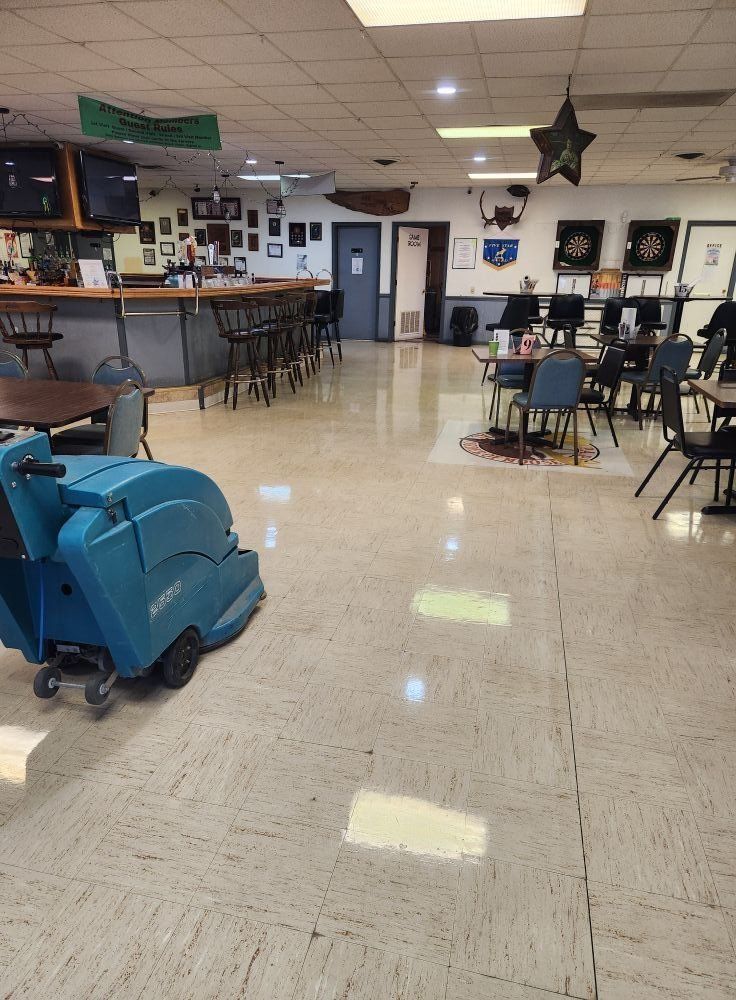
Dust mopping lifts loose grit from traffic lanes. Damp mopping removes film and light soil. Auto-scrubbing handles larger areas when soil load builds.
Use a neutral cleaner matched to the finish. Avoid flooding the floor or leaving standing water. Excess water can seep into seams and under edges, and it dulls finish over time.
For a broader look at high-traffic floor care across VCT and LVT, see our guide to maintaining high-traffic VCT and LVT floors.
Why Traffic Lanes Wear Faster Than Low-Traffic Zones
Traffic lanes wear faster because they take concentrated foot traffic, grit, and turning motion. A corridor might see thousands of passes a day while a corner sees a dozen.
That means a single calendar schedule rarely fits. The path from the front door to the service counter needs attention far more often than the back of the room.
Watch out: if you only service the whole floor on one schedule, the traffic lanes will wear through long before the rest of the room looks tired.
VCT Floor Burnishing: Restoring Shine Between Deep Services
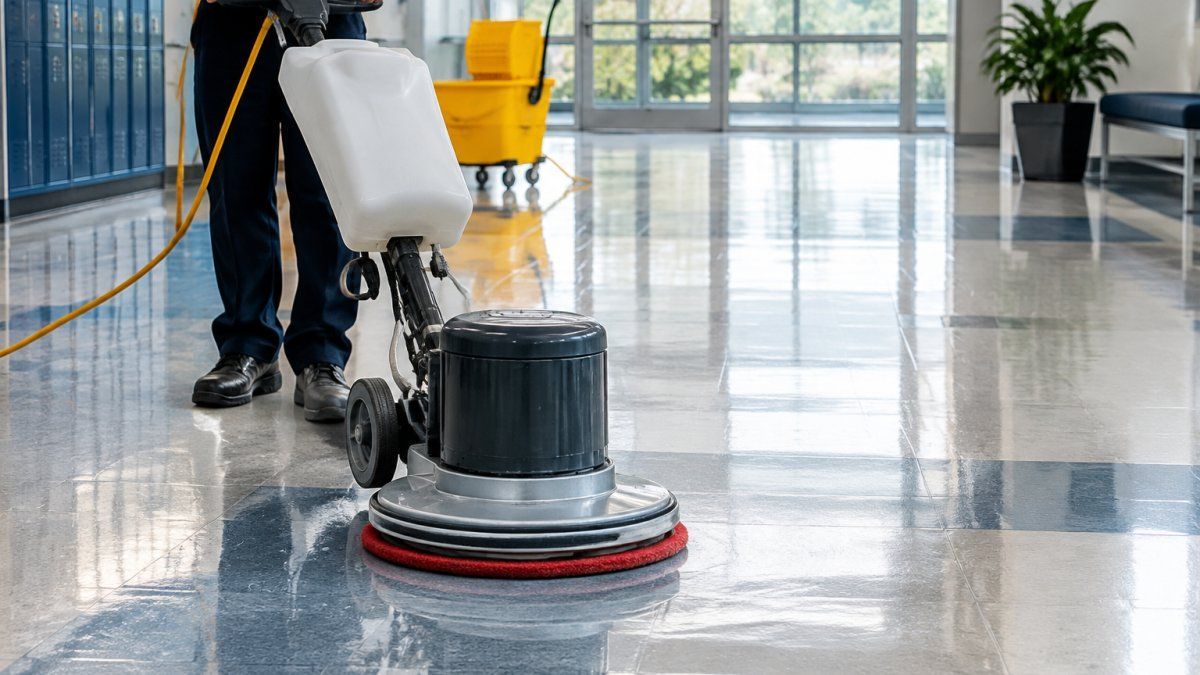
VCT floor burnishing restores gloss when the finish is intact but looks tired. It is a maintenance step, not a repair, and it is the cheapest way to keep a floor looking professional between deeper services.
Burnishing uses a high-speed rotary machine to polish the finish, buffing out light scuffs and heel marks without adding product.
- Burnish when shine fades, not on a fixed date
- Keep pads clean and matched to the finish and machine speed
- Skip burnishing on worn-through areas, since it will not fix missing finish
Dust mopping or auto-scrubbing before burnishing keeps loose grit from being ground into the finish.
Burnishing vs. Scrub and Recoat
These two steps get confused, and the difference matters. Burnishing polishes the finish that is already there, while scrub and recoat cleans the surface and adds a fresh coat of finish. When shine fades again quickly or the lanes look worn through, a recoat is usually the better step than another burnish.
Troubleshooting Common VCT Floor Problems
Most floor complaints trace back to a small set of causes. Matching the symptom to the likely cause keeps you from over-servicing:
- Dullness that returns quickly after burnishing , thin finish in the traffic lane; time for scrub and recoat
- Black marks and scuff clusters , heel and cart marks on sound finish; burnishing usually lifts them
- Sticky or tacky residue , cleaner residue or over-application; rinse and switch to a neutral cleaner matched to the finish
- Yellowing or patchy gloss , incompatible or over-applied finish, or finish buildup; a full strip may be the right reset
- Uneven sheen between lanes and edges , lanes are wearing faster; adjust frequency by zone rather than treating the whole floor the same
- Slick spots after service , over-polishing or residue; verify slip resistance and recheck the pad and product used
If a symptom keeps coming back after the lighter steps, the floor is telling you the finish, not the cleaning, is the issue. That is the point to evaluate scrub and recoat or a full strip rather than repeating burnishing.
VCT Scrub and Recoat: When Refresh Beats Full Replacement
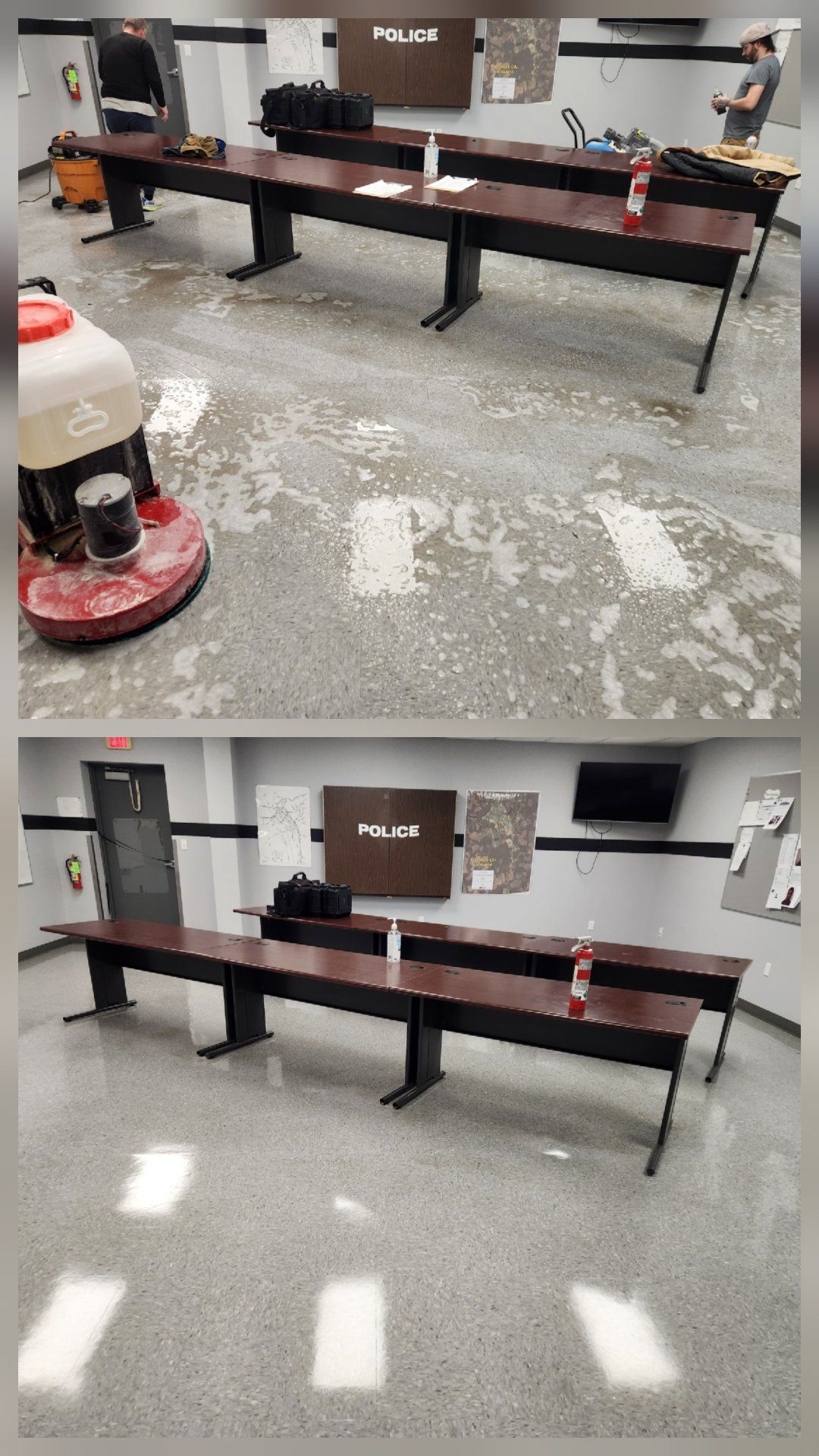
Scrub and recoat refreshes a floor when the finish is still sound but dull or lightly soiled. It cleans the surface and adds a new coat, skipping the strip entirely.
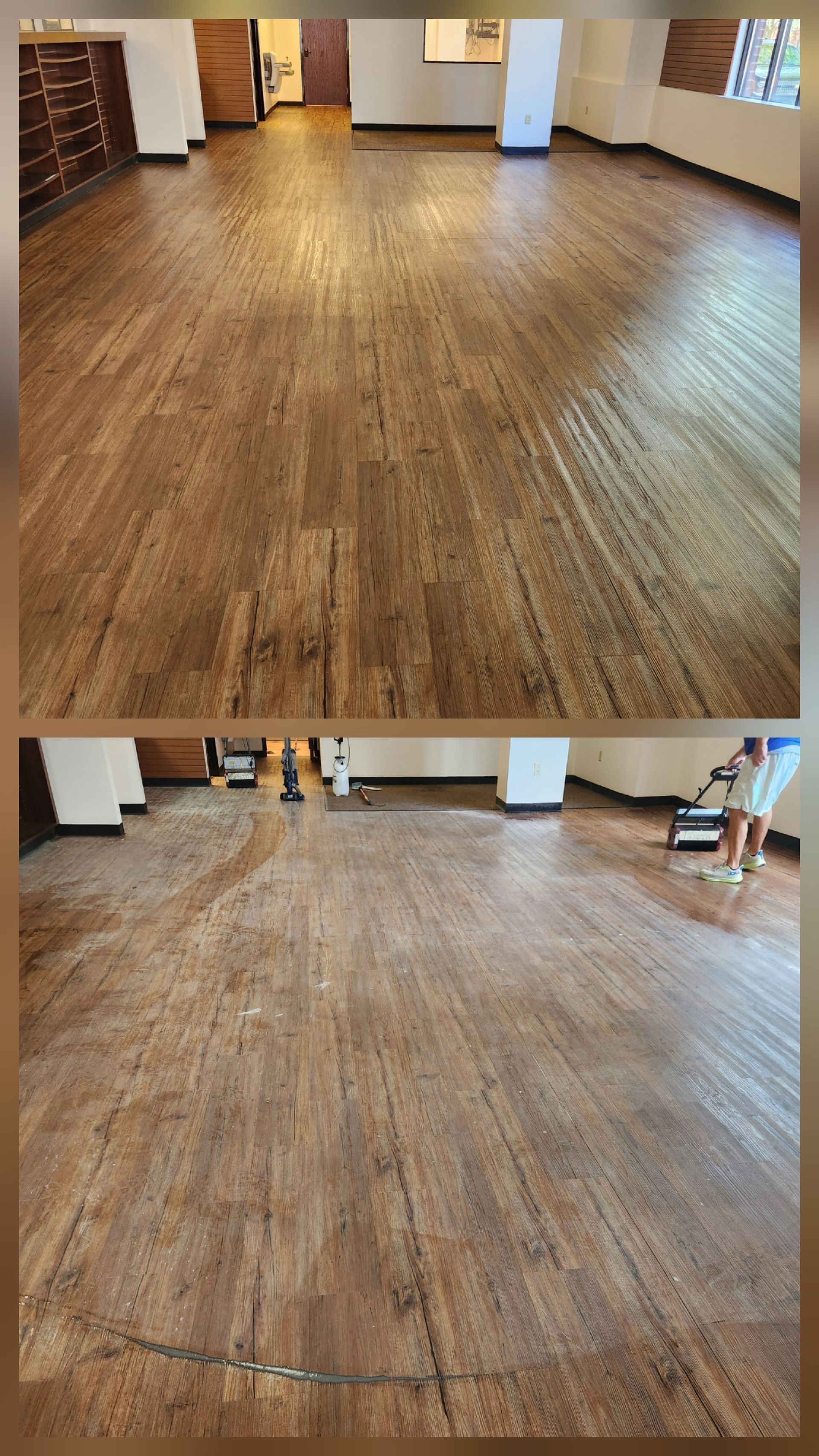
Many floors that get stripped may not have needed it, and a scrub and recoat can restore appearance and add protection with less disruption.
Not sure whether your floor is a candidate? Our article on signs your commercial VCT floors need scrubbing walks through the warning signs.
VCT Floor Stripping and Waxing: When It Is Actually Necessary
VCT floor stripping and waxing is necessary only when the finish is worn through or built up enough that lighter services can't fix it.
A common myth is that every dull floor needs stripping. Sometimes auto-scrubbing, burnishing, or a scrub and recoat is enough, and a full strip is appropriate when finish is patchy, yellowed, or peeling.
For a deeper look at when a strip is truly warranted, read our guide on VCT stripping and waxing.
Building a Condition-Based VCT Floor Maintenance Schedule
A condition-based schedule ties service frequency to what the floor actually needs.
Start by mapping your facility by traffic level. Most commercial buildings break down into four rough zones:
- Primary entrances and vestibules , the heaviest grit load, plus moisture on wet days
- Main corridors and traffic lanes , concentrated foot traffic and turning motion
- Checkout, service counters, and common areas , standing traffic, cart wheels, and chair movement
- Low-traffic zones , back offices, storage, perimeter edges, and corners
Each zone gets its own baseline frequency and its own condition triggers. A common pattern in busy retail and medical spaces looks like this:
| Zone |
Baseline Routine Care |
Escalate When |
|---|---|---|
| Entrances and vestibules |
Dust mop and mat check daily; damp mop as soil shows |
Mats stay loaded, grit tracks past the walk-off zone, finish dulls at the door line |
| Main corridors |
Dust mop daily in lanes; auto-scrub as film builds |
Lane dulls noticeably against edges; scuffs cluster in turning spots |
| Checkout and common areas |
Dust mop daily; damp mop several times weekly |
Sticky residue, cart marks, or finish wear at counter fronts |
| Low-traffic zones |
Dust mop and damp mop on a lighter cycle |
Only when visible soil or finish wear appears |
From there, set the escalation ladder. Routine dust removal and damp mopping protect the finish. When the finish dulls but still holds, scrub and recoat.
Inspect each zone weekly for dullness, scuffs, black marks, and finish wear.
Watch out: if you only service the whole floor on one schedule, the traffic lanes can wear through long before the rest of the room looks tired.
Product Compatibility and Manufacturer Care Limits
Different flooring needs different care. VCT is not the same as LVT/LVP, tile and grout, concrete, or wood, and each has its own limits.
Match the cleaner to the finish, not just to the tile. Neutral cleaners are the default for routine damp mopping and auto-scrubbing because they are less likely to attack the finish.
Before you standardize a product across a building, check the tile and finish manufacturer's instructions.
Slip Resistance, Safety Verification, and Maintenance Logs
Safety is part of maintenance, not a separate concern. Over-applied finish can create slick spots, and residue left by incompatible cleaners can reduce traction. Wet floors need clear signage and time to dry before traffic returns.
- Verify slip resistance after any finish application, especially at entrances and on ramps
- Keep a maintenance log with dates, products, dilution, and conditions
- Use wet-floor signage during cleaning and until the floor is dry
- Confirm products meet the safety requirements that apply to your facility
- Recheck high-traffic lanes after burnishing, since over-polishing can leave a slick film
A written log does double duty: it shows what was done and when, and it gives you the evidence to adjust frequency when a zone starts wearing faster than expected.
Request a VCT Floor Walkthrough and Custom Maintenance Plan
A common mistake is waiting until a floor is badly worn before addressing it. Preventive maintenance can help keep a facility looking professional between deeper services.
A Smarter Clean LLC offers professional commercial VCT floor care across Delaware and Maryland's Eastern Shore, with floor condition evaluated before any service is recommended.
Get a walkthrough and a custom maintenance plan built around your facility's traffic and floor condition. Visit our floor restoration service page to get started.
Your floors are telling you something.
Frequently Asked Questions
How often should you wax a VCT floor in a busy building?
There is no fixed calendar answer that fits every facility. In high-traffic areas, VCT floor maintenance should be driven by condition: how much finish remains, whether soil is embedded, and whether traffic lanes look dull or worn. A full strip and wax is generally reserved for worn-through or heavily built-up finish, while lighter services address less severe wear. A walkthrough evaluation is the most reliable way to set the right interval for your building.
Why do traffic lanes wear faster than other parts of a VCT floor?
Traffic lanes take repeated foot traffic in the same path, so grit, dust, and debris get ground into the finish in those zones far more than in low-traffic corners. That concentrated abrasion wears the finish down faster and makes soil harder to remove. Entrance matting, frequent dust mopping in lanes, and targeted burnishing help slow that wear. Condition-based scheduling that treats lanes differently from back corners keeps the whole floor looking consistent.
When should a VCT floor be scrubbed and recoated instead of stripped?
Scrub and recoat is usually the better choice when the existing finish is still intact but looks dull, scuffed, or soiled. It removes surface soil and buildup, then adds a fresh layer of finish. A full strip and wax is appropriate when the finish is worn through, heavily built up, or damaged beyond what lighter maintenance can fix. Having the floor evaluated before choosing a service prevents unnecessary stripping and protects the tile.
Do entrance mats really make a difference for VCT floor maintenance?
Yes. Walk-off mats at entrances capture grit, moisture, and debris before they reach the VCT, which reduces scratching and soil tracked into traffic lanes. Mats work best when kept flat and cleaned or swapped regularly. Combined with routine dust mopping and damp mopping, matting is a practical way to help protect the finish in high-traffic areas.