



A red metal shed with a white door and window, set against a backdrop of green pine trees and a clear blue sky.

Commercial Carpet Maintenance for Schools and Educational Facilities.

Editorial Team • November 25, 2026

Last Updated: November 25, 2026

Quick Summary

Carpet maintenance for school hallways means removing soil before it works into the pile, protecting entries with matting, and scheduling professional deep cleaning around the school calendar. Vacuum main traffic lanes daily, inspect mats weekly, and book low-moisture extraction during summer and winter breaks.

  • Vacuum heavy-traffic main hallways daily and moderate-traffic side corridors two to three times weekly.
  • A three-zone matting setup uses a scraper mat outside, a walk-off mat in the vestibule, and a runner inside.
  • Blot spills from the outside in rather than scrubbing, which pushes liquid deeper into the pile.
  • Keep a spot log recording date, hallway zone, spill type, and whether the spot returned.
  • Deep cleaning fits best during summer break, winter break, and other agreed-upon low-traffic periods.

Is your hallway carpet on a real schedule? We build custom carpet maintenance plans for schools across Delaware and Maryland's Eastern Shore.
Request a Free Carpet Plan

Table of Contents

How Do You Maintain Carpet in School Hallways?

Carpet maintenance for school hallways means removing soil before it works into the pile, protecting entries with matting, and scheduling professional deep cleaning around the school calendar. A steady maintenance routine is worth protecting, because soil left in carpet shortens its useful life ( How to Extend the Life of Carpet in Your Facility).

Hallways are the hardest-working carpet in the building. Every student, cart, and delivery crosses them several times a day. Hallway carpet often ages faster than classroom carpet because soil gets walked in and not lifted out.

Below, we break down the schedule, the vacuuming cadence, and the entry controls that keep hallway carpet in service longer.

Building a School Carpet Maintenance Schedule

A school carpet maintenance schedule is a written plan that assigns each cleaning task a frequency and an owner. It turns carpet care from a summer scramble into routine work.

The strongest plans follow the school calendar, not the fiscal year. Heavy soil builds during the wet months and during winter salt season. Summer break is when the deep work fits. A hallway-specific schedule also has to account for the fact that a single corridor can contain three different traffic zones: the main lane, the locker edges, and the intersection where two corridors meet.

Daily, Weekly, Monthly, and Seasonal Tasks

Task

Frequency

Who Handles It

Purpose

Spot cleaning

Daily

Custodial staff

Remove spills before they set

Vacuum main traffic lanes

Daily

Custodial staff

Lift loose debris and grit

Vacuum locker edges and corners

Weekly

Custodial staff

Reach the soil the lane pass misses

Entry mat inspection and rotation

Weekly

Custodial staff

Replace or rotate loaded mats

Inspect corridor intersections

Monthly

Facility manager

Flag recurring soil patterns

Review spot log and traffic notes

Monthly

Facility manager

Adjust frequencies before soil sets

Professional low-moisture extraction

Per plan

A Smarter Clean

Pull embedded soil from the pile

Seasonal soil review

Fall and spring

Facility manager

Plan deep work around breaks

Condition review

Annual

Facility manager

Decide repair, recoat, or replace

A common mistake is treating every hallway the same. The lane down the center of a corridor takes far more traffic than the edges. Aim vacuuming at the lanes first, then schedule the edge and corner pass on a lighter cycle.

Zoning Hallways by Traffic

A hallway can be divided into three practical zones. The entry zone runs from the exterior doors to the first turn and takes the heaviest tracked-in soil. The main lane carries the bulk of daily foot traffic and needs the most frequent vacuuming. The perimeter zone along lockers, doorways, and wall edges collects soil that gets pushed aside rather than walked on. Assigning each zone its own frequency keeps the schedule honest and prevents the main lane from absorbing all the attention. Keeping the entry, main lane, and perimeter on their own schedules makes it easier to target cleaning where soil and friction are greatest and prevent carpet wear.

Planning Around the Academic Calendar

Deep work fits best during summer break, winter break, and other agreed-upon low-traffic periods, subject to availability. Build the calendar backward from those windows: identify the hallways with the heaviest visible soil, book the work, and leave a buffer before students return. Wet-weather months and winter salt season are when tracked-in soil peaks, so schedule extra mat inspection and spot response during those stretches rather than waiting for the summer window.

school facility maintenance knowledge study found that building administrators' understanding of facility upkeep varies widely, which is why a written plan beats memory. A plan that names the zone, the task, the frequency, and the owner is far easier to defend than a verbal routine.

Setting Commercial Carpet Vacuuming Frequency

Commercial carpet vacuuming frequency should match traffic, not square footage. A main hallway may need daily passes while a quiet office corridor can run on a lighter cycle.

Use this traffic-based rule of thumb:

  • Heavy traffic (main hallways, entrances): vacuum daily
  • Moderate traffic (side corridors, libraries): vacuum two to three times weekly
  • Light traffic (administrative offices): vacuum weekly

Tracked-in dirt acts like sandpaper on carpet fibers. Every pass with a vacuum lifts grit before feet grind it deeper.

For a deeper look at how traffic patterns shape a cleaning calendar, read our guide on how often commercial carpet should be cleaned.

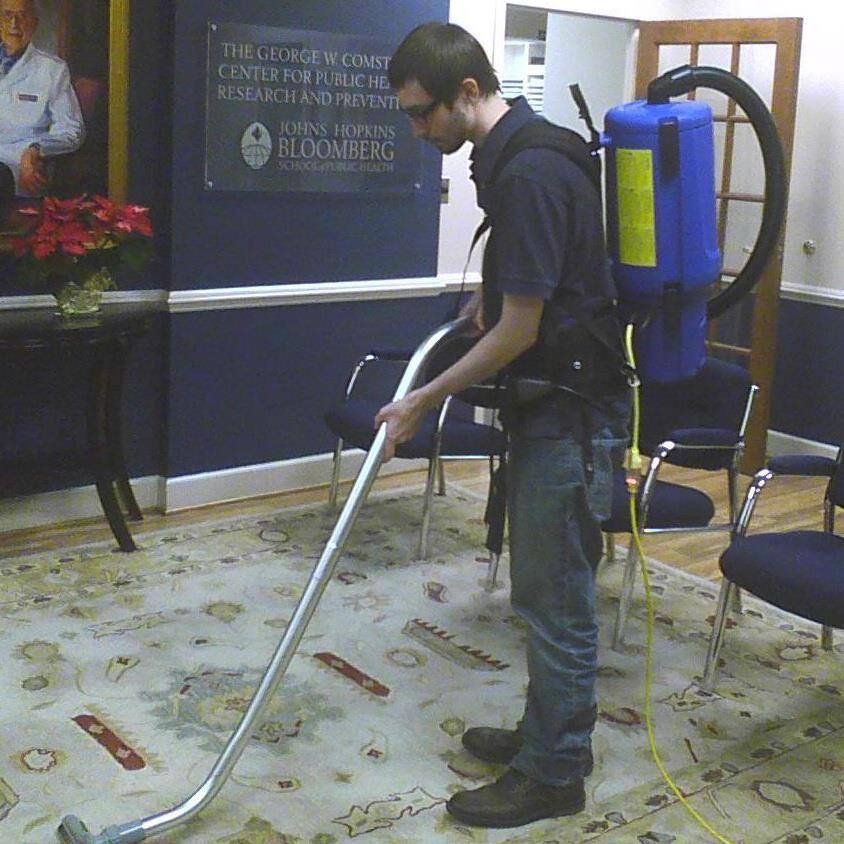
Custodial worker vacuuming a school hallway to ensure effective carpet maintenance for school hallways

Entrance Matting for Schools: Stopping Dirt at the Door

Entrance matting for schools is the cheapest soil control a facility can buy. Mats intercept dirt and moisture before they reach hallway carpet ( How To Choose the Right Entryway Mat).

Edu How to Clean - Carpet Care in Schools

NilfiskU

Soil stopped at the door never reaches the hallway carpet.

A workable matting setup has three zones:

  • Outside: a scraper mat that removes grit from shoes
  • Vestibule: a walk-off mat that absorbs moisture
  • Inside: a longer runner that catches what is left

Inspect mats weekly. A loaded mat stops absorbing and starts spreading.

Why Low-Moisture Carpet Extraction Fits School Operations

Low-moisture carpet extraction uses less water than some traditional deep cleaning methods, which can suit busy school buildings.

Here is why facility managers choose it:

  • Less moisture in the building: the carpet is not left soaked
  • Potentially shorter drying windows: timing varies by condition and airflow
  • Strong soil removal: agitation lifts embedded dirt from the pile
  • Less disruption: work can run during breaks, weekends, or other low-traffic periods, subject to availability

We do not promise a set drying time or a fixed result. Carpet condition, humidity, and airflow all affect the outcome.

Want the full method breakdown? Read our article on the benefits of low moisture carpet cleaning for facilities, or go straight to deep carpet cleaning to request service.

Spot Cleaning and Stain Response in High-Traffic Hallways

Spot cleaning should start the moment a spill happens. The longer a stain sits, the more it sets into the pile. In a school hallway, the spill is rarely a single event: a juice carton tips at the locker bank, a marker bleeds onto the carpet in the art corridor, and a cafeteria tray drips along the main lane. Each one needs a response that matches the substance.

Vacuuming dry soil first keeps it from being pushed into the carpet by liquid.

A School-Spill Response Chart

Spill Type

First Move

What to Avoid

Why It Matters

Water-based drinks and juice

Blot from the outside in, then apply a mild detergent suited to the carpet type

Scrubbing, which pushes the liquid deeper

Sugar residue can re-attract soil if not lifted

Ink and marker

Blot, then use a solvent suited to the carpet type

Rubbing, which spreads the pigment

Pigment can wick back up as the area dries

Food and grease

Remove solids, then blot with a mild detergent

Hot water, which can set the grease

Grease left in the pile darkens over time

Mud and tracked-in soil

Let it dry, vacuum, then blot any remaining moisture

Wet-scrubbing while still wet

Wet mud grinds grit into the fiber

Unknown or chemical spills

Blot, isolate the area, and consult the product label

Mixing cleaners

Incompatible products can discolor the pile

A simple response sequence for any spill:

  1. Blot the spill with a clean cloth, working from the outside in
  2. Remove dry soil around the spot with a vacuum
  3. Apply a mild detergent suited to the carpet type
  4. Blot again and let the area air dry
  5. Log the spot so patterns show up over time

Blot rather than scrub, because scrubbing can push a spill deeper and spread the stain.

Tracking Spots to Find Patterns

A spot log is the simplest maintenance tool a school can keep. Record the date, the hallway zone, the spill type, and whether the spot came back. Over a semester, the log shows which corridors generate recurring spots, which products leave residue, and which entrances let in the most tracked-in soil. That evidence lets a facility manager adjust mat placement, vacuum frequency, and extraction scheduling before the next break.

We do not guarantee stain removal. Some stains, especially set-in dye or chemical spills, may not come out fully. For damage that goes beyond staining, see our guide on how to spot and repair common commercial carpet damage.

Request a Free Carpet Maintenance Plan for Your School

Every school building has its own traffic patterns, floor types, and calendar constraints. A generic plan rarely fits.

A Smarter Clean LLC is insured, and our team members are background-checked before they are assigned to customer job sites. We provide professional commercial carpet cleaning and floor care for schools, offices, and facilities across Delaware and Maryland's Eastern Shore. We offer flexible nightly, weekly, or monthly programs, and we use OSHA-safe cleaning products.

We start by evaluating your carpet type and condition, then recommend the service that actually fits. That may be scheduled extraction, a spot-response routine, or a broader maintenance plan for your facility.

A preventive approach protects your investment. For a wider set of tactics, read our commercial carpet maintenance tips for facility managers.


Hallway carpet takes more abuse than any other surface in your building, and it will not wait for a convenient moment to fail. Let us evaluate your hallways and build a plan around your calendar. Get started with A Smarter Clean and put a maintenance schedule in place before the next school year begins.

Frequently Asked Questions

How often should carpeted school hallways be vacuumed?

Hallways usually need daily vacuuming on school days because they carry the heaviest foot traffic in the building. Set commercial carpet vacuuming frequency by zone: daily for main corridors and entrances, two to three times a week for lighter side halls, and a full pass before any scheduled break. Heavily trafficked and dirtier areas should be prioritized first, then the rest of the run. A written schedule keeps the routine from slipping when staffing changes.

How can schools reduce dirt tracked onto hallway carpets?

Entrance matting for schools is the first line of defense. A long walk-off run at every exterior door intercepts soil and moisture before it reaches the carpet. Pair matting with prompt spill cleanup, regular vacuuming, and a check of mats for saturation. When mats are full, they stop trapping soil and start spreading it, so clean or replace them on a set interval.

When is the best time to schedule professional carpet care at a school?

Summer break, holiday closures, weekends, and other agreed-upon low-traffic periods give the best window for professional low-moisture carpet extraction. Low-moisture methods reduce moisture exposure and can mean shorter drying times, which limits disruption to school operations. Work with your provider to map hallway sections to the calendar so no single corridor is out of service during arrival, dismissal, or testing days. Availability varies, so book the window early.

What are the benefits of low-moisture carpet extraction in schools?

Low-moisture carpet extraction uses less water than conventional deep cleaning, which reduces moisture exposure in the building and can shorten drying times. The process also removes embedded soil that routine vacuuming leaves behind. A Smarter Clean schedules work around your building's low-traffic periods, subject to availability.

By Editorial Team • November 24, 2026
VCT floor maintenance in high-traffic areas starts with condition-based schedules, not fixed calendars. Learn how to protect finish and plan recoat timing.
By Editorial Team • November 23, 2026
A floor maintenance program protects commercial flooring and cuts premature wear. Learn what a scheduled plan includes and get a walkthrough.
By Editorial Team • November 21, 2026
Learn how to extend the lifespan of commercial tile and grout with 7 practical habits, from matting to sealing. Request a walkthrough from A Smarter Clean.
By Dawn Stewart • November 20, 2026
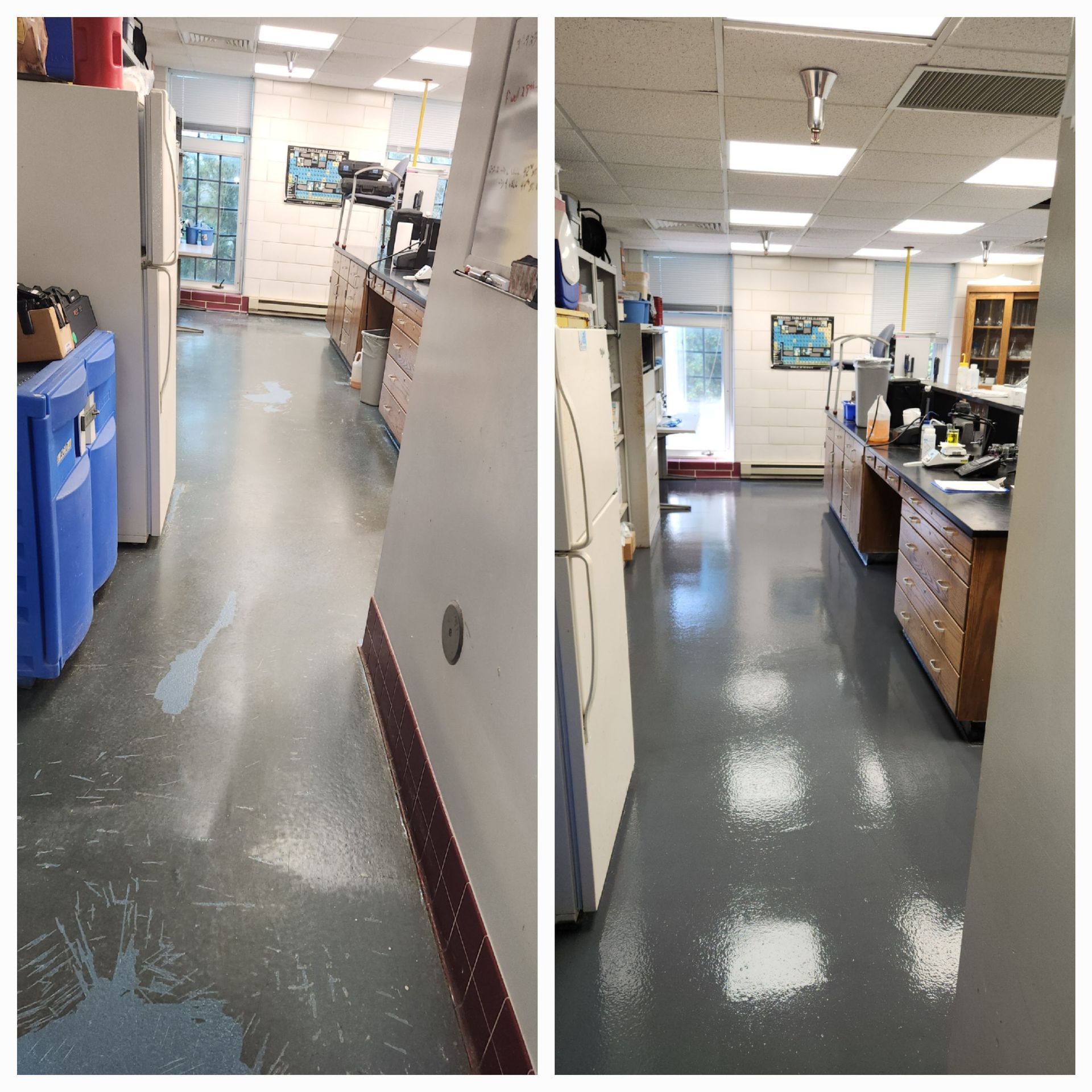
Flake and Solid-Color Epoxy: Different Surfaces - Similar Care
By Editorial Team • November 20, 2026
Commercial floor care keeps high-traffic facilities looking consistent. Learn material-specific cleaning steps, schedules, and when to call a professional.
By Editorial Team • November 19, 2026
Choosing cleaning solutions for porous commercial tile starts with knowing the surface. Learn how pH, dwell time and rinsing protect grout and tile.
By Editorial Team • November 18, 2026
LVT floor care product compatibility decides how your commercial floors look and last. Learn which cleaners, pads, and coatings are safe for LVT.
By Editorial Team • November 17, 2026
Learn how often to scrub VCT floors and spot the signs your commercial floors need attention. Get a practical maintenance schedule for your facility.
By Editorial Team • November 15, 2026
Learn when a VCT scrub and recoat beats a full strip and wax, and how traffic, wear, and burnishing set your schedule. Request a floor-care walkthrough.
By Editorial Team • November 13, 2026
Build a carpet maintenance schedule by traffic level with this 7-step plan. Learn vacuuming frequency, matting, spot response, and interim cleaning timing.
Show More