

Why Responsive Commercial Cleaning Helps Maintain a Cleaner, More Professional Facility
Table of Contents
- Why Cleaner, Safer Environments Matter for Your Facility
- Building a Facility Cleaning Plan That Works
- Commercial Cleaning Communication Procedures That Keep Operations Running
- Using a Janitorial Service Checklist for Consistency
- Commercial Restroom Cleaning: Frequency, Standards, and Best Practices
- Handling Spills and Unexpected Messes
- Equipment, Training, and Workforce Reliability
- Frequently Asked Questions
Last Updated: October 11, 2026
Why Cleaner, Safer Environments Matter for Your Facility
Cleaner safer environments aren't just about appearance, they directly affect how your facility operates, how staff and visitors perceive your business, and your ability to respond quickly when unexpected messes occur. Whether you manage a medical office, school, bank, or commercial building, maintaining consistent cleanliness protects your reputation and reduces operational disruption.
The real challenge isn't routine cleaning, it's handling unexpected spills, restroom issues, weather-related dirt, or sudden messes that demand immediate attention. You need a cleaning partner who communicates fast and responds reliably.
A Smarter Clean works with facilities across Delaware and Maryland's Eastern Shore to build cleaning systems that balance routine maintenance with responsive support. The difference between quick recovery and prolonged disruption comes down to planning, clear communication, and the right team.
Building a Facility Cleaning Plan That Works
A solid facility cleaning plan is the foundation for maintaining cleaner safer environments consistently. Without one, cleaning becomes reactive, and you'll spend more time managing crises than preventing them.
Define Your Facility's Cleaning Priorities
Identify which areas matter most to operations and visitor experience. High-touch surfaces in restrooms, entryways, and common areas rank highest, they influence first impressions and require frequent attention. Patient-care areas in medical offices and waiting rooms deserve extra focus.
Assess traffic patterns: high-traffic areas (hallways, lobbies, break rooms) need daily cleaning; lower-traffic zones need weekly attention. Assign frequency based on actual usage, not assumptions.
Document special considerations: floor types, surface sensitivity, and product restrictions. This ensures your team uses appropriate methods for each surface.
Set Response Expectations
Define what responsive support means for your facility. Standards vary by facility type and risk.
Communicate expectations upfront. Ask how they handle urgent requests during and outside scheduled service times, what communication channels they offer (phone, text, email), and how they confirm receipt and arrival time.
Create a simple protocol: who calls, what information they provide, and the expected arrival window. This prevents confusion and ensures faster resolution.
Commercial Cleaning Communication Procedures That Keep Operations Running
Establish a single point of contact and ensure your provider knows who it is. Share phone, email, and after-hours protocols. For multi-building facilities, clarify which team covers which areas.
Use a simple tracking system (spreadsheet or app) to log requests, requestor, time, and completion. This creates a record and reveals patterns over time: high-problem areas, common issues, and whether response times meet expectations.
Schedule monthly check-ins with your provider to discuss what's working, what isn't, and needed adjustments. These conversations build the relationship that enables responsive support.
Using a Janitorial Service Checklist for Consistency
A janitorial checklist transforms cleaning into a documented system, ensuring nothing is missed and creating accountability.
Daily and Weekly Cleaning Tasks
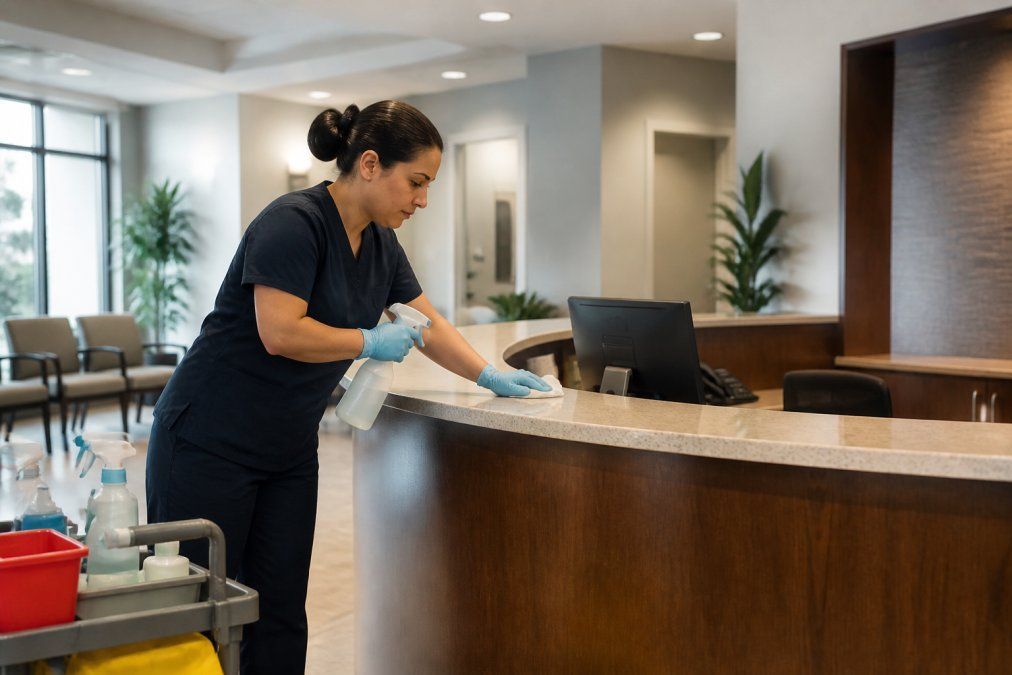
Daily tasks: empty trash, wipe high-touch surfaces, sweep/vacuum high-traffic areas, restock restroom supplies. Assign to specific team members and times (e.g., "Morning team empties trash by 10 a.m.").
Weekly tasks: mop floors, clean break-room refrigerators, wipe baseboards, disinfect office equipment. Specify which areas and which day.
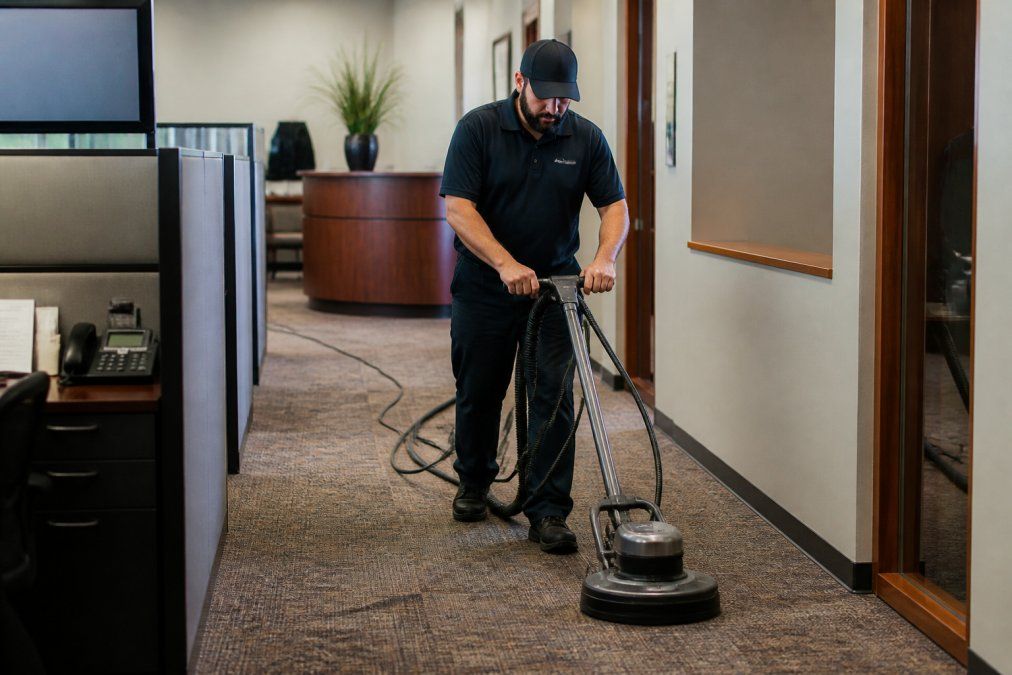
Seasonal tasks: window cleaning, floor stripping and waxing, cleaning high shelves and vents. These maintain professional appearance long-term.
Tracking Completion and Quality
Have your cleaning team sign off on the checklist daily. This creates accountability and alerts you immediately to incomplete tasks.
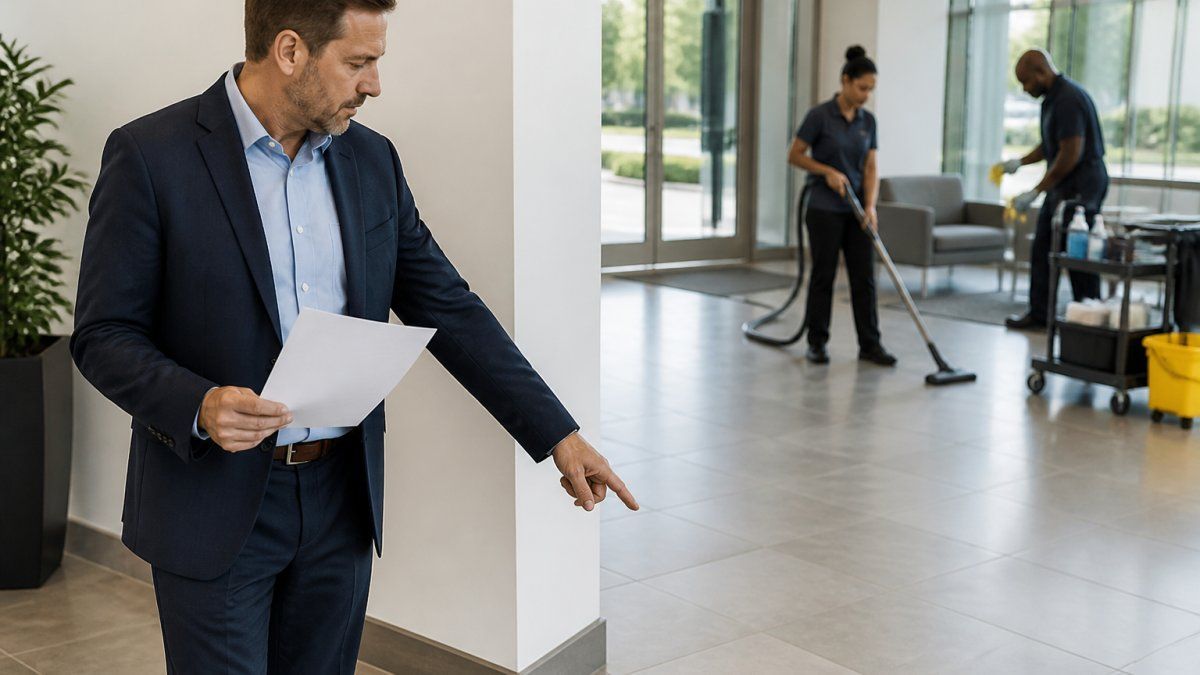
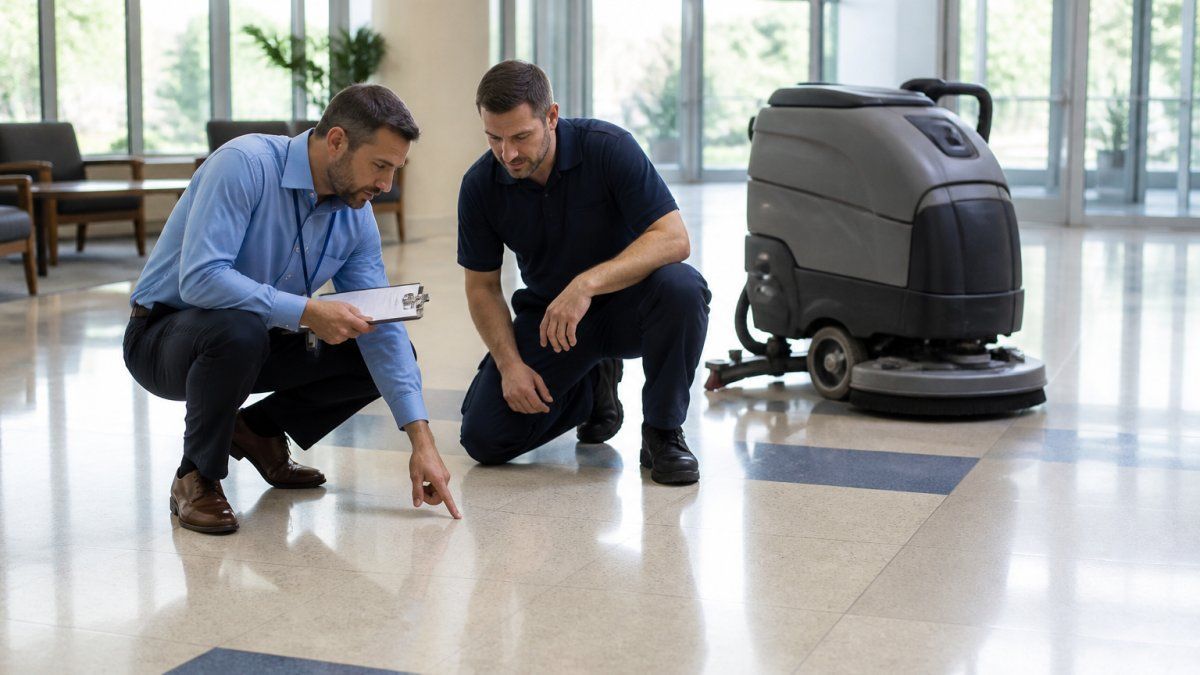
Include a quality-check section where you or a designated staff member verifies standards with a quick walk-through. Feed feedback back to your provider for adjustment.
| Task Category |
Frequency |
Owner |
Status Check |
|---|---|---|---|
| Trash removal & restocking |
Daily |
Morning/Evening team |
Initials required |
| High-touch surface sanitizing |
Daily |
Assigned staff |
Initials required |
| Restroom cleaning |
Daily |
Assigned staff |
Initials required |
| Floor mopping |
Weekly |
Evening team |
Weekly sign-off |
| Deep surface cleaning |
Weekly |
Assigned day/team |
Weekly sign-off |
| Floor care (strip/wax) |
As scheduled |
Specialized provider |
Completion date |
Commercial Restroom Cleaning: Frequency, Standards, and Best Practices
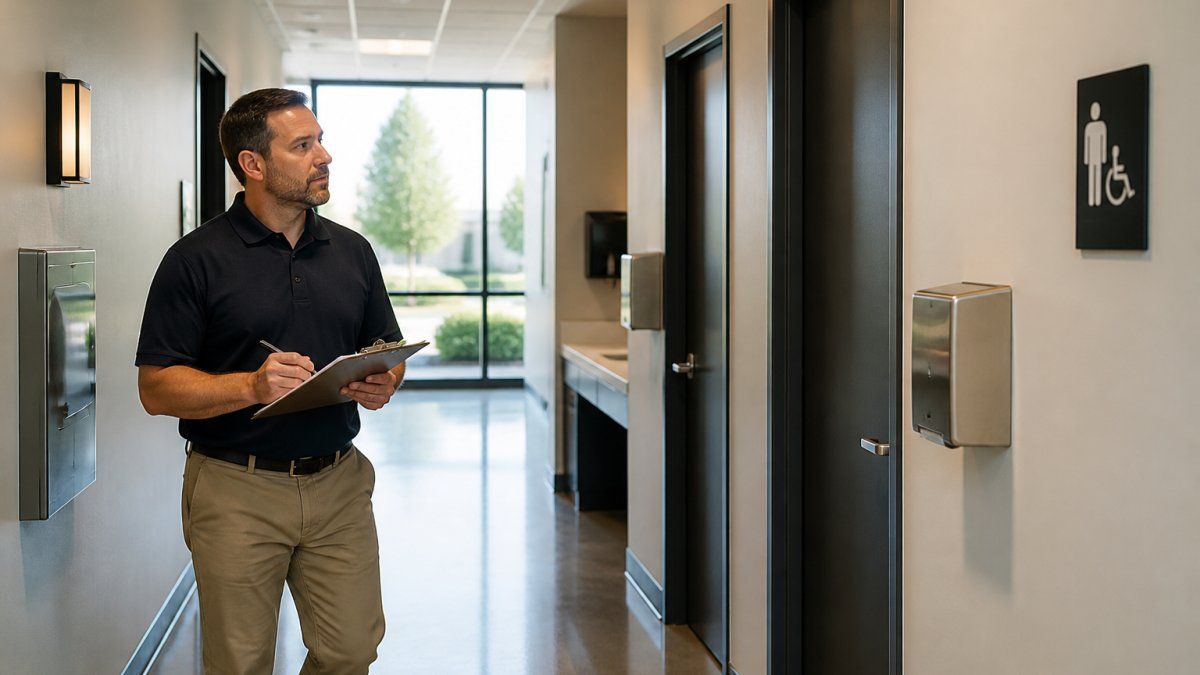
Restrooms directly impact how people perceive your entire facility. A clean restroom suggests professional management.
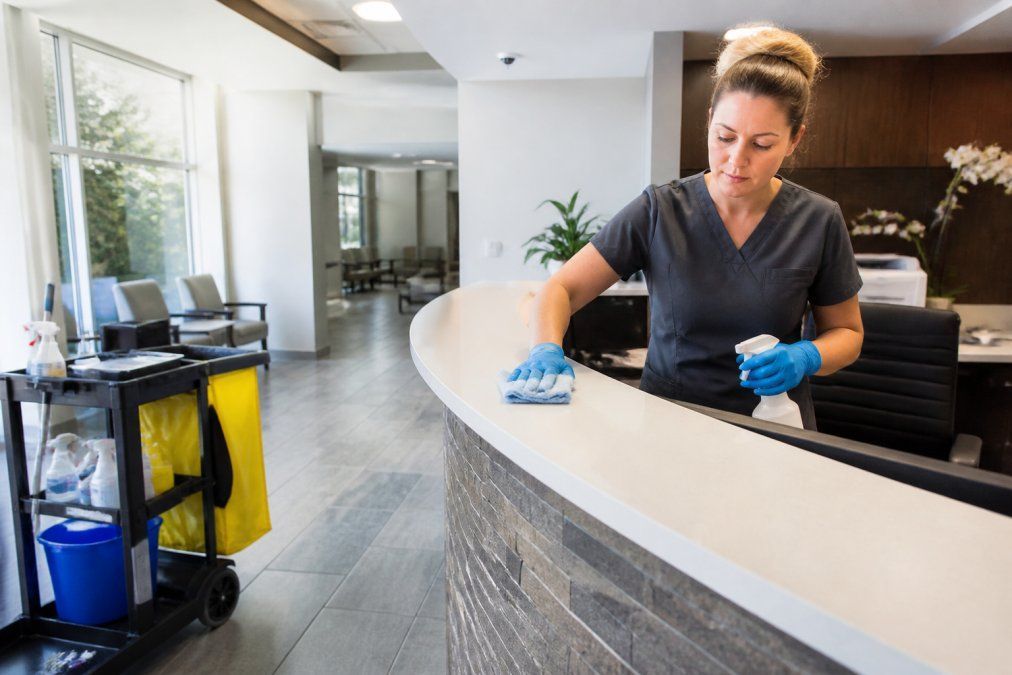
Daily restroom cleaning: empty trash, wipe sinks and counters, sanitize high-touch surfaces (door handles, faucet handles), restock supplies. High-traffic facilities may need twice-daily cleaning.
Weekly deep cleaning addresses grout, tile, and hard-to-reach corners. Use products safe for occupied spaces and aligned with occupational safety standards.
Stock restrooms with soap, paper towels, toilet paper, and hand sanitizer. Assign someone to check supplies daily and restock as needed.
Handling Spills and Unexpected Messes
Your response to spills and unexpected messes determines whether they become minor disruptions or major problems. Fast response minimizes operational impact. The difference between quick recovery and prolonged disruption comes down to a clear workflow and defined roles.
Triage and Containment
When a spill is reported, triage immediately: assess what was spilled, the affected area size, and whether the space is occupied. This determines your response.
For routine spills (water, coffee, food debris, dirt): cordon off with caution signage, alert occupants, and notify your cleaning team.
For spills involving bodily fluids or biohazardous materials : restrict access immediately, alert your provider with specific details. Your provider should have trained staff and appropriate protocols.
For weather-related dirt or debris : assess slip hazard risk. If high-risk, place caution signage and request support. Low-traffic areas can wait for the next scheduled cleaning.
Cleaning and Disinfection Sequence
The cleanup sequence:
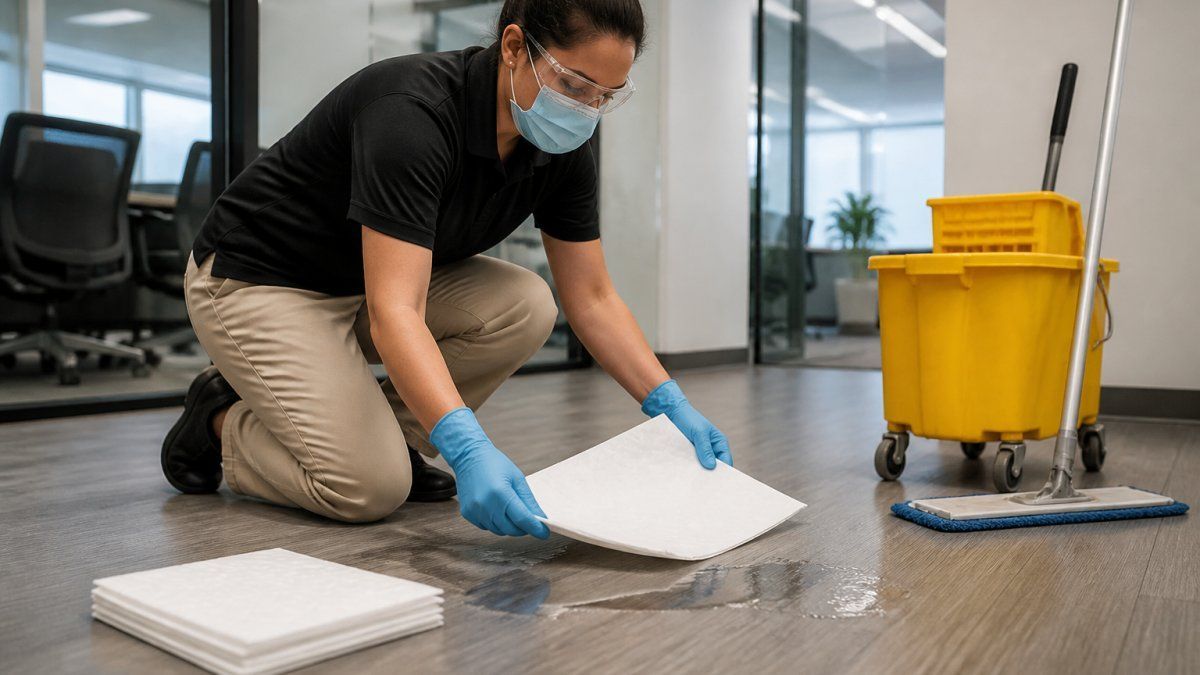
- Preparation : Don PPE (gloves, eye protection) and gather supplies.
- Removal : Remove bulk of spill with absorbent materials.
- Cleaning : Clean with appropriate cleaner for surface and spill type.
- Disinfection : Apply disinfectant per label directions if warranted.
- Drying : Dry to prevent slip hazards.
- Restoration : Remove signage and return area to use.
Your provider should communicate progress and confirm when the area is safe.
Post-Response Verification and Documentation
Inspection : Confirm all contamination is gone, surfaces are dry, and the space is ready for use.
Documentation : Log the incident (date, time, spill type, area, method, verification) in your tracking system. Over time, patterns emerge, high-spill areas, common incidents, seasonal trends, that inform preventative measures.
Corrective action : If the same spill repeats in the same location, discuss preventative steps: relocate a beverage station, improve drainage, or adjust cleaning frequency.
Spill Kit and Staff Readiness
Keep a spill kit in a central, marked location: absorbent materials, cleaners, gloves, and caution signage. Train staff on basic response: contain, alert your cleaning team, and cordon off until fully cleaned and verified.
Your provider should have equipment and products for quick spill response. When you call, they should ask: what was spilled, area size, and occupancy status. Establish this protocol upfront to avoid confusion during urgent moments.
Equipment, Training, and Workforce Reliability
Cleaning effectiveness depends on three factors: right equipment, trained staff, and consistent staffing so the team becomes familiar with your priorities and layout.
Equipment and Tools
Modern equipment delivers better results and faster response. Key items include:
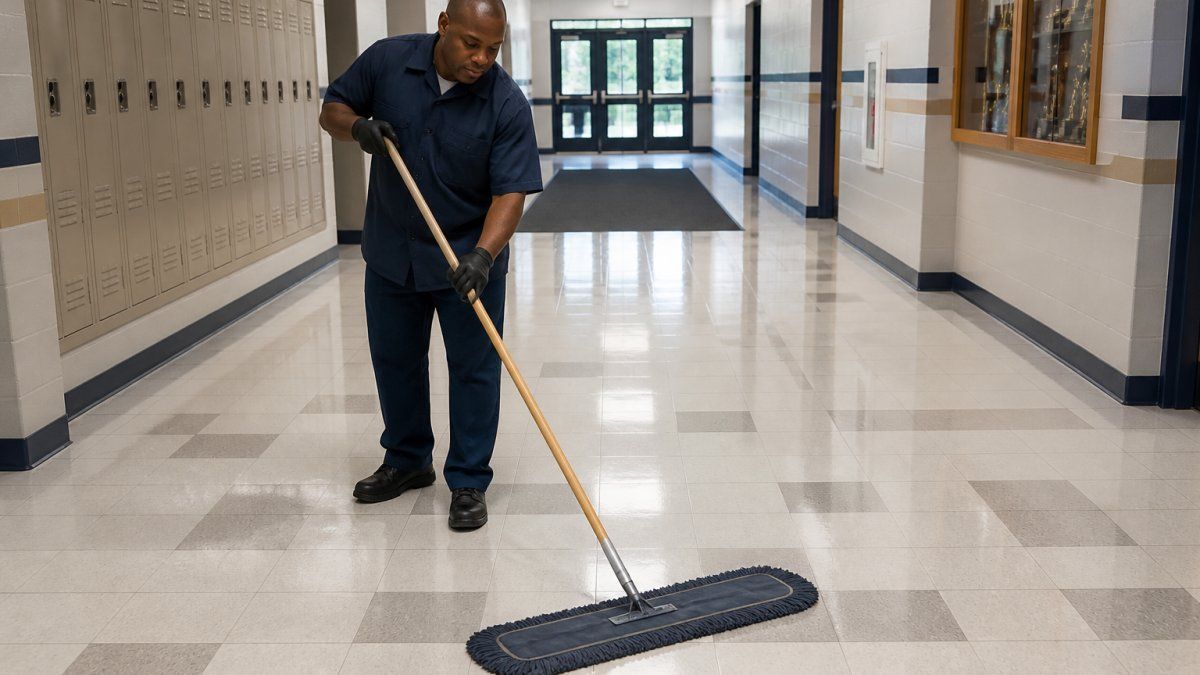
- Microfiber mops and cloths : Capture more dirt and bacteria than cotton mops, require less water, reduce drying time.
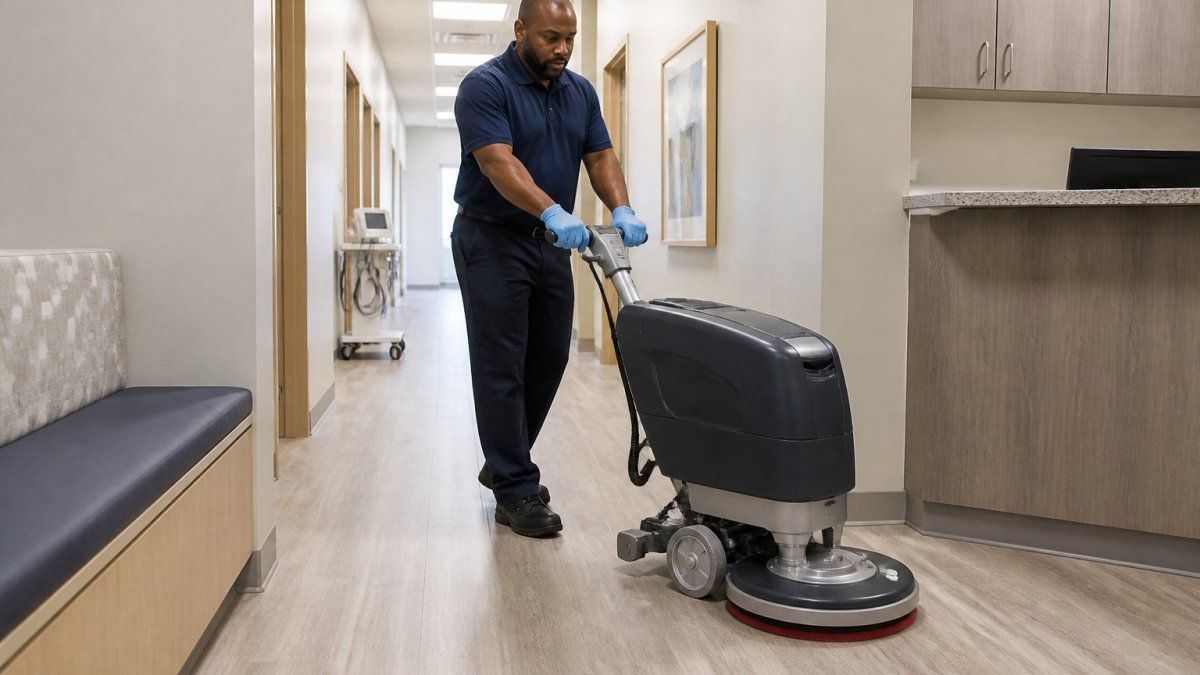
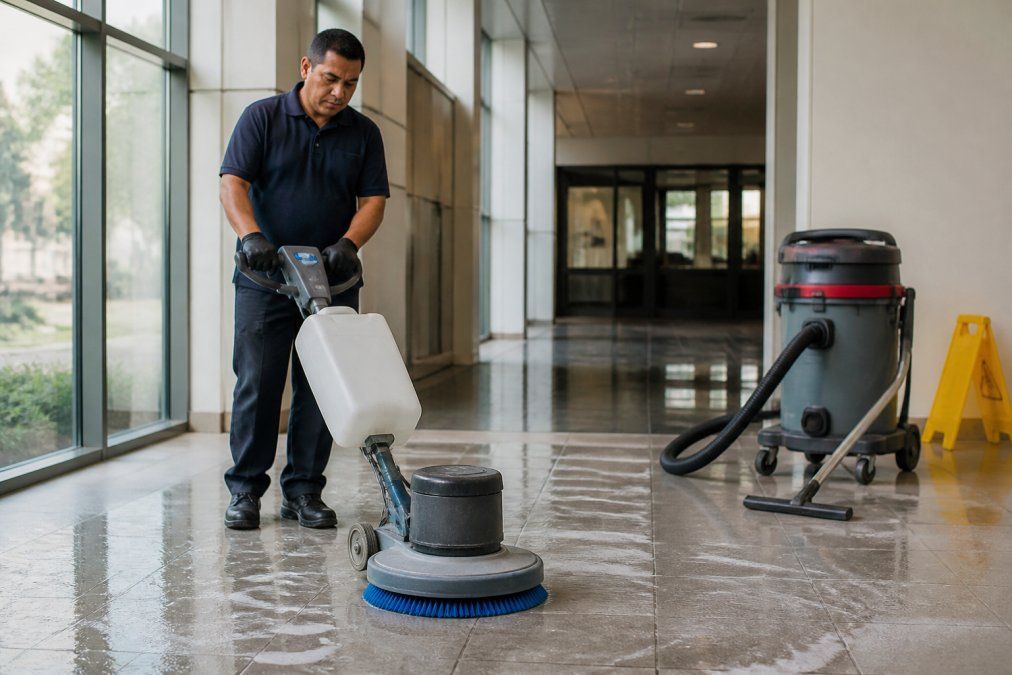
- Floor-care equipment : Suited to your facility's surfaces (tile, vinyl, concrete, sealed wood).
- Cleaning and disinfection solutions : Matched to the task and OSHA-safe for occupied spaces.
- Absorbent and containment materials : Enable faster spill response.
- Personal protective equipment : Gloves, eye protection, respiratory protection used per label directions.
Ask your cleaning provider what equipment they use and why. A provider who can explain their tool choices and how they match your facility's needs demonstrates professional competency.
Training and Competency
Cleaning staff need training in three areas: your facility's specific layout and priorities, safe product handling and application, and incident response procedures.
Facility-specific training ensures your cleaning team knows which areas are highest priority, where supplies are stored, how to access different zones, and any special considerations (for example, which surfaces require specific products or techniques). When the same team cleans your facility regularly, they become familiar with these details and catch small issues before they become problems.
Safety and product training covers proper handling of cleaning solutions, including reading and following product label directions, understanding contact time (how long a disinfectant must remain wet to be effective), ensuring adequate ventilation, and using PPE correctly.
Incident response training prepares staff to handle spills, contamination, and other urgent situations safely and effectively. Staff should know how to triage an incident, when to restrict access, how to contain a spill, and when to escalate to a supervisor or your facility manager. Regular refresher training (at least annually) keeps these skills current.
Ask your cleaning provider about their training program: Do they provide initial training to all staff? How often do they refresh training? Can they provide training specific to your facility? A provider who invests in training demonstrates commitment to quality and safety.
Workforce Consistency and Accountability
Staff turnover in cleaning services is high across the industry, but your facility benefits when your cleaning team remains consistent. When the same people clean your space regularly, they become familiar with your priorities, your layout, and your expectations. They notice when something is out of place or when an area needs extra attention.
Ask your cleaning provider about their staffing approach:
- How do they handle turnover? Do they have a process to quickly onboard replacement staff so service doesn't suffer?
- Do they provide training on your facility's specific needs? New staff should receive the same facility-specific orientation as the original team.
- Can you request specific team members? Some providers allow you to build continuity by requesting the same crew. Others rotate staff. Understand their approach and whether it aligns with your needs.
- How do they measure performance? Do they track completion of daily tasks, respond to feedback, and adjust their service based on your input?
Verification and Accountability Systems
A professional cleaning provider should have systems in place to verify that work meets your standards and to address gaps quickly.
Daily sign-off : Your cleaning team should initial or sign off on the checklist each day, confirming that assigned tasks were completed. This creates accountability and gives you a record to review.
Quality checks : You or a designated staff member should perform periodic walk-throughs to verify that cleaning meets your standards. This doesn't require hours of inspection, a quick review noting any missed spots or incomplete tasks is enough. Feed this feedback back to your provider so they can adjust.
Response to feedback : A reliable provider responds promptly when you report an issue. If a task was missed or done poorly, they should correct it within one business day and discuss how to prevent it from happening again.
Incident documentation : Your provider should maintain records of spill responses, special cleaning requests, and any issues that arise. This documentation helps you track patterns and supports continuous improvement.
Confirm that your cleaning provider uses OSHA-safe products and follows occupational safety practices. Ask about the specific products they use, their safety data sheets, and how they ensure staff are trained on proper handling and application. A provider who can answer these questions confidently and provide documentation demonstrates professional standards and commitment to safety.
Frequently Asked Questions
What should a commercial facility cleaning plan include?
A solid facility cleaning plan outlines daily, weekly, and monthly cleaning tasks, assigns responsibility for each area, defines response procedures for urgent needs, and establishes communication channels between your facility and your cleaning provider. It should cover high-traffic zones, restrooms, patient-care or customer-facing areas, and specialized surfaces like floors. The plan ensures consistency and helps your cleaning team understand priorities so your facility stays cleaner, safer, and more professional.
How often should commercial restrooms be cleaned?
Commercial restroom cleaning frequency depends on foot traffic and facility type. High-traffic restrooms in medical offices, schools, or commercial buildings typically need cleaning multiple times daily, with spot checks between scheduled cleanings. Lower-traffic facilities may need twice-daily or daily cleaning. A janitorial service checklist helps track completion and ensures restrooms maintain hygiene standards and professional appearance throughout the day.
How can I report an urgent cleaning need to my service provider?
Establish clear commercial cleaning communication procedures with your provider before an issue arises. This includes a direct phone number or text line, email contacts, and response-time expectations. Document your preferred method and the best person to contact at your facility. Reliable providers acknowledge urgent requests quickly and dispatch a team equipped to handle spills, restroom issues, or weather-related messes without disrupting your operations.
What makes a cleaning service reliable and professional?
A professional cleaning service combines responsive communication, background-checked staff, proper equipment, and adherence to a detailed janitorial service checklist. They arrive consistently, complete work to your specifications, use OSHA-safe cleaning products, and follow your facility cleaning plan. Reliability means showing up as scheduled, responding quickly to urgent needs, and maintaining cleaner, safer environments that reflect well on your business or organization.