
Why Professional Janitorial Staff Matters for Your Facility
Table of Contents
- The Real Cost of Inconsistent Cleaning: Why Professional Janitorial Staff Matters
- Commercial Janitorial Services Benefits: Consistency, Safety, and Asset Protection
- Commercial Cleaning Communication Best Practices for Facility Managers
- Commercial Floor Care Maintenance: Protecting Your Facility's Largest Asset
- Managing Commercial Cleaning Contracts: What to Look For and What to Avoid
- Compliance, Liability, and Sustainability in Professional Janitorial Services
- Conclusion: Choosing a Janitorial Partner That Delivers
- Frequently Asked Questions
Last Updated: October 1, 2026
The Real Cost of Inconsistent Cleaning: Why Professional Janitorial Staff Matters
Professional janitorial staff turn cleaning from a task someone squeezes in after hours into a managed, repeatable system. That distinction shows up in how a facility looks, how long its floors and fixtures last, and how confident staff and visitors feel walking through the door. At A Smarter Clean, we work with medical offices, schools, banks, and commercial buildings across Sussex and Kent Counties in Delaware and Maryland's Eastern Shore.
Walk into a building with an inconsistent cleaning program and you can usually spot it in thirty seconds: trash cans a little too full, restroom fixtures showing water spots, entryway floors carrying a dull film no amount of mopping seems to fix.
The real cost of inconsistent cleaning isn't the visible mess. It's the slow erosion of appearance, the quiet buildup of maintenance problems, and the staff and visitors who notice without saying anything. A poorly managed program rarely fails loudly; it fails in small, compounding ways.
That's the argument for professional janitorial staff in a nutshell: consistency is a system, not a person who happens to show up.
Commercial Janitorial Services Benefits: Consistency, Safety, and Asset Protection
The core benefits of commercial janitorial services come down to three things: consistency, safety, and protection of the physical assets inside your building. A professional program delivers all three because it's built around documented routines, proper equipment, and accountability.
What separates a professional program from an inconsistent one is the mechanism behind each benefit. Consistency comes from a written scope and a fixed schedule. Safety comes from matching products and methods to the surface and the space. Asset protection comes from routine maintenance that keeps finishes and fixtures from degrading between periodic services.
Employee Productivity and Morale
Employee productivity and morale are tied to the condition of the workplace. When restrooms are clean, break rooms are stocked, and common areas look cared for, people notice. When they aren't, complaints start and morale drops.
Indoor Air Quality and Allergen Control
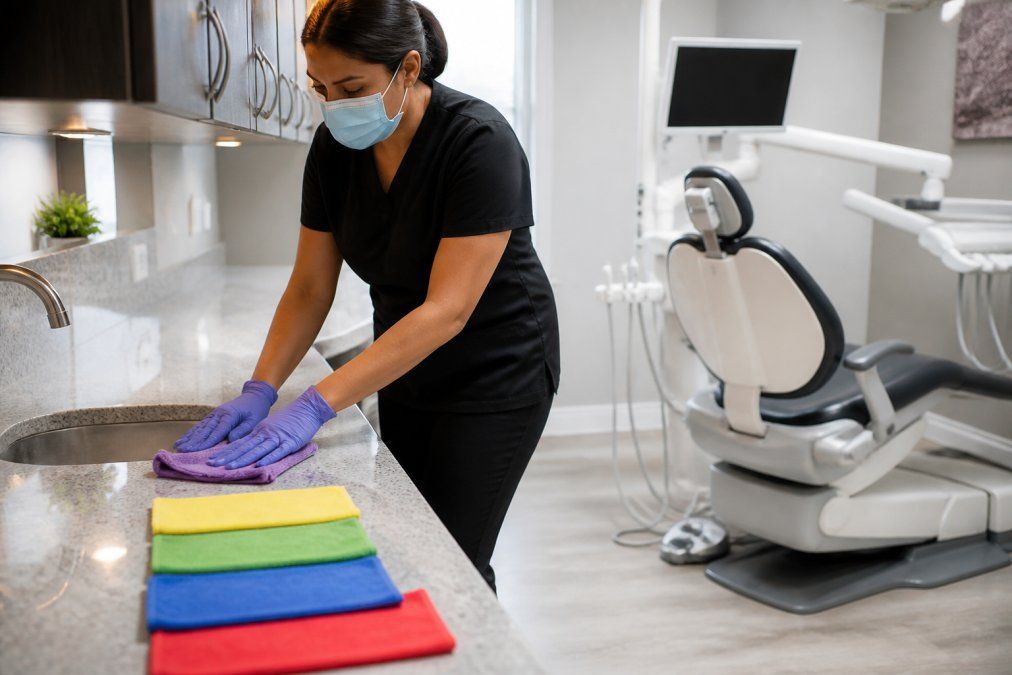
Indoor air quality and allergen control depend on how well a facility handles dust, debris, and high-touch surfaces. Professional janitorial staff use the right equipment and products for the surface, which matters for allergen control and reducing the spread of germs.
Extending the Lifespan of Facility Assets
The asset-protection benefit is the one most often overlooked because it's invisible until it's expensive. Floor finishes, fixtures, and furnishings degrade faster when routine care is skipped. A floor that's mopped but never buffed loses its finish sooner, and a fixture that isn't cleaned on schedule develops buildup that's harder to remove later.
The Hidden Cost of DIY Cleaning
The hidden cost of DIY cleaning rarely shows up on a budget sheet, but it's real. When office staff or an internal hire handle cleaning, they're pulled away from the work you actually hired them for. That's an opportunity cost, not a line item, which is why it's easy to miss.
Compliance and Liability
Compliance and liability are where a professional janitorial program earns its keep in ways that don't show up on a cleaning checklist. Cleaning products, methods, and documentation all carry risk if handled carelessly.
Sustainability and Green Cleaning
Sustainability has moved from a nice-to-have to a real consideration for many facilities. Low-moisture cleaning methods use less water, dry faster, and reduce the risk of moisture damage to carpets and flooring. That's better for the building and easier to justify to ownership.
Commercial Cleaning Communication Best Practices for Facility Managers
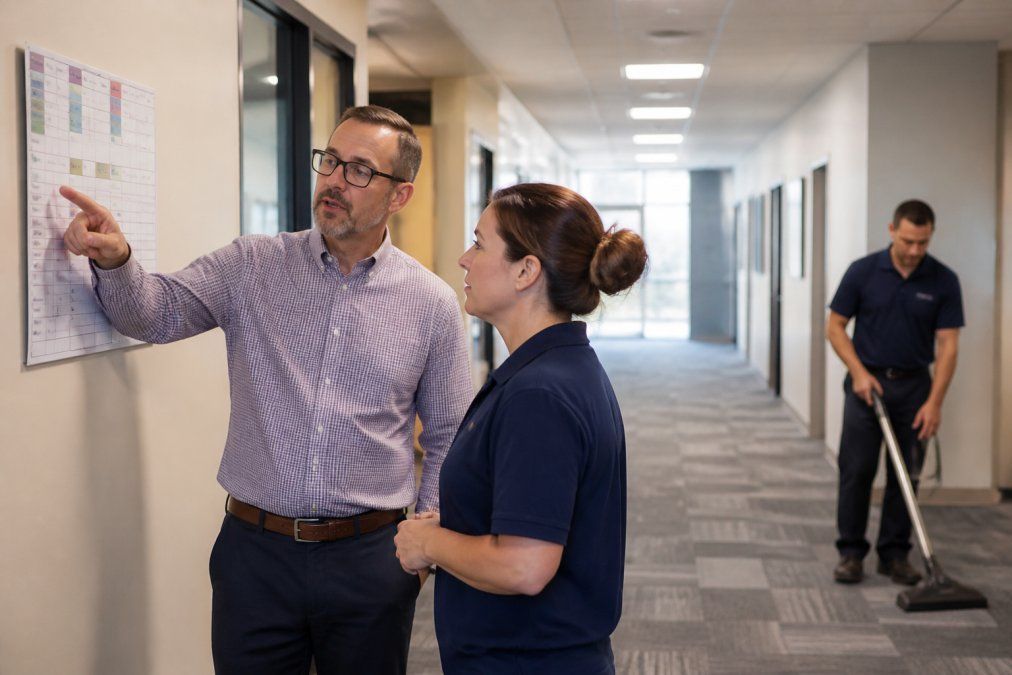
Commercial cleaning communication best practices start with a simple rule: no surprises. Facility managers should know who is coming, when, and what they're responsible for, and have one clear channel to raise issues.
A workable communication structure looks like this:
- A named point of contact on both sides, not a general phone number
- A written scope that lists exactly what's cleaned and how often
- A simple way to report issues that doesn't require chasing anyone
- A regular check-in to review quality and adjust the plan
- A documented escalation path for issues that aren't resolved on the first report
What a Written Scope Should Actually Contain
A written scope is the backbone of the program. It should name every area, the frequency for each task, and who provides supplies and equipment. It should also state what's excluded, because exclusions are where most disputes start.
Reporting and Escalation
A reporting process only works if it's simple enough that people actually use it. A shared email address or a single point of contact is usually enough. What matters is that reports are acknowledged and the fix is confirmed, not just promised.
Quality Checks and Documentation
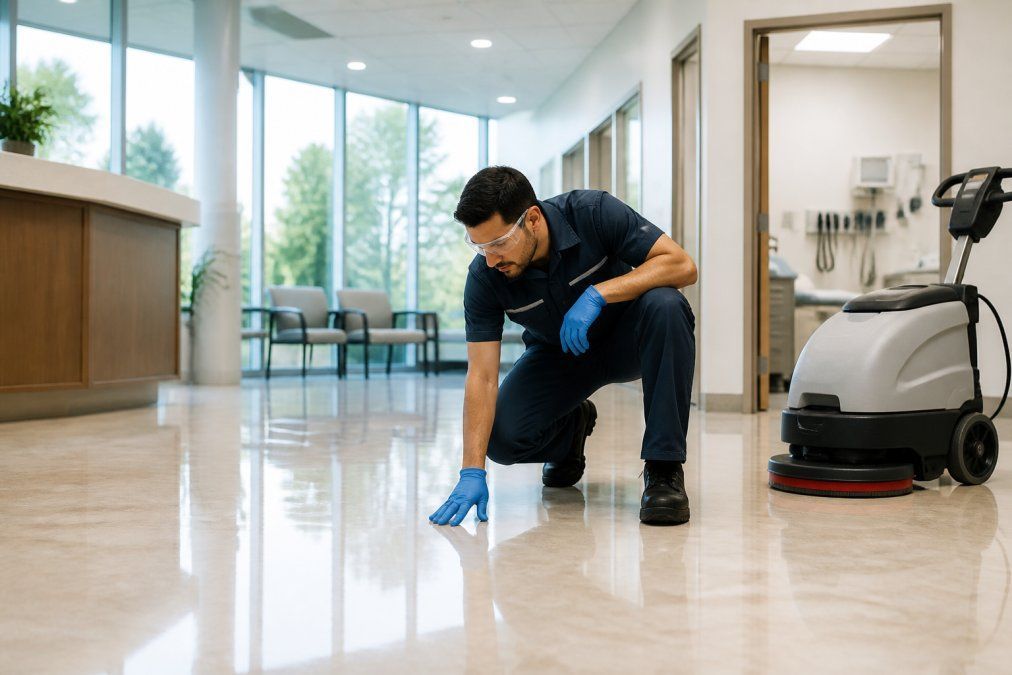
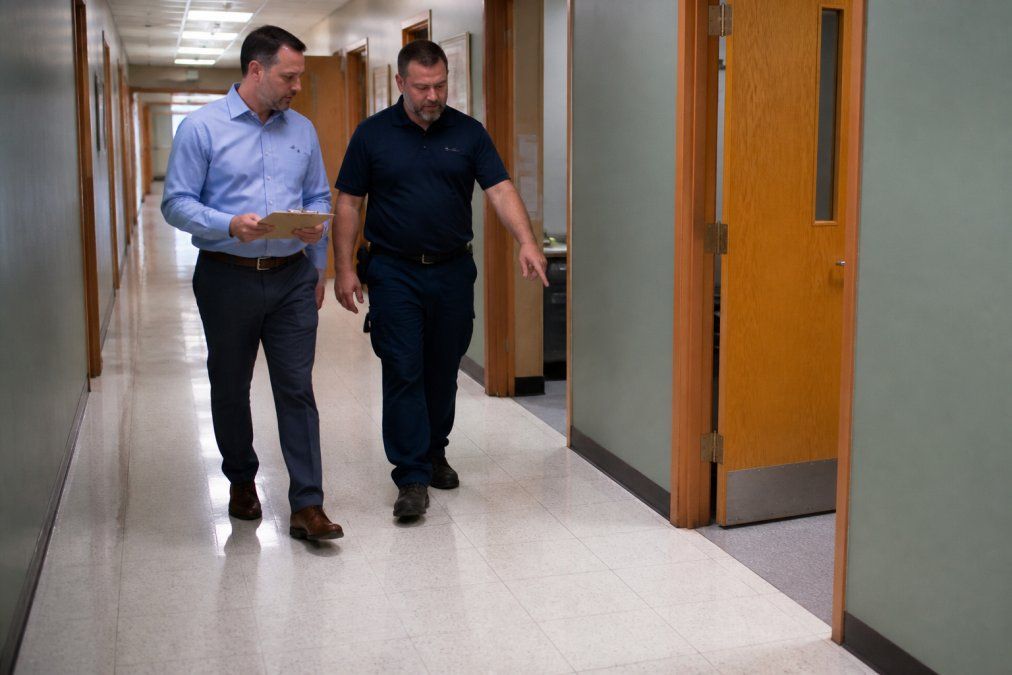
Quality checks turn a scope into a program. A periodic walkthrough with a checklist, done by the provider and reviewed with the facility manager, catches drift before it becomes a complaint pattern. Documentation is also useful when ownership or a tenant asks how the program is run.
Communication as a Differentiator
Two providers can offer the same scope and schedule and still feel completely different to work with. The difference is usually communication: whether issues are acknowledged, whether the point of contact is consistent, and whether the facility manager has to chase anyone for an answer.
Commercial Floor Care Maintenance: Protecting Your Facility's Largest Asset
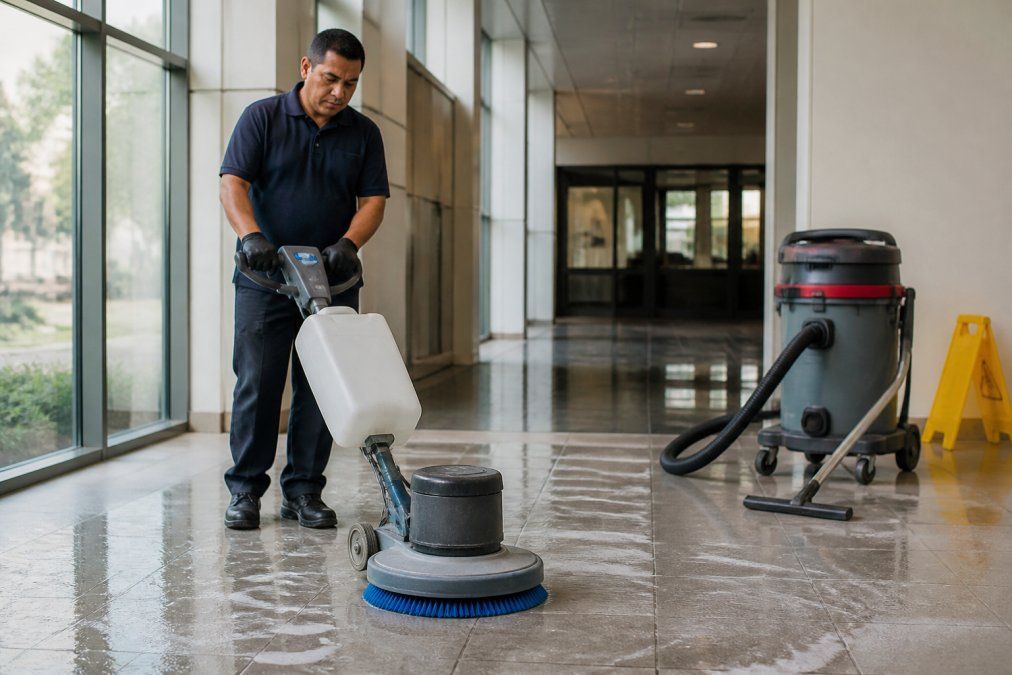
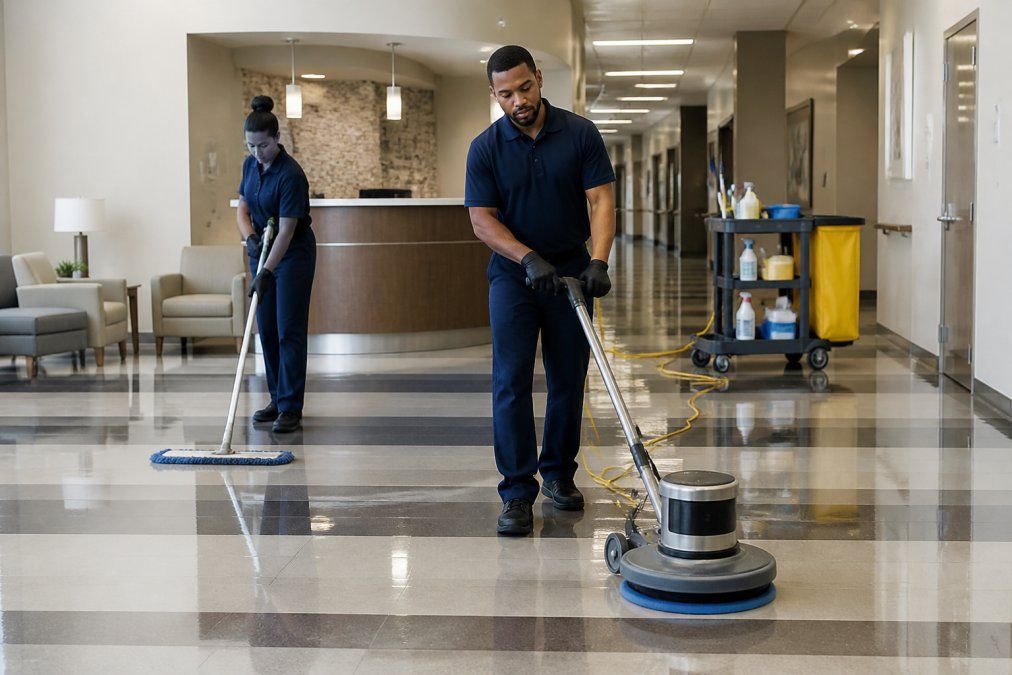
Commercial floor care maintenance protects the single largest surface investment in most facilities. Floors take more abuse than any other part of a building, and they're the first thing visitors judge.
| Floor Type | Routine Care | Periodic Service | What Goes Wrong Without It |
|---|---|---|---|
| VCT | Dust mop, damp mop, buff | Strip and wax | Yellowing, scuffs, worn finish |
| LVT/LVP | Dust mop, damp mop | Deep clean, protectant | Dulling, edge wear, scratches |
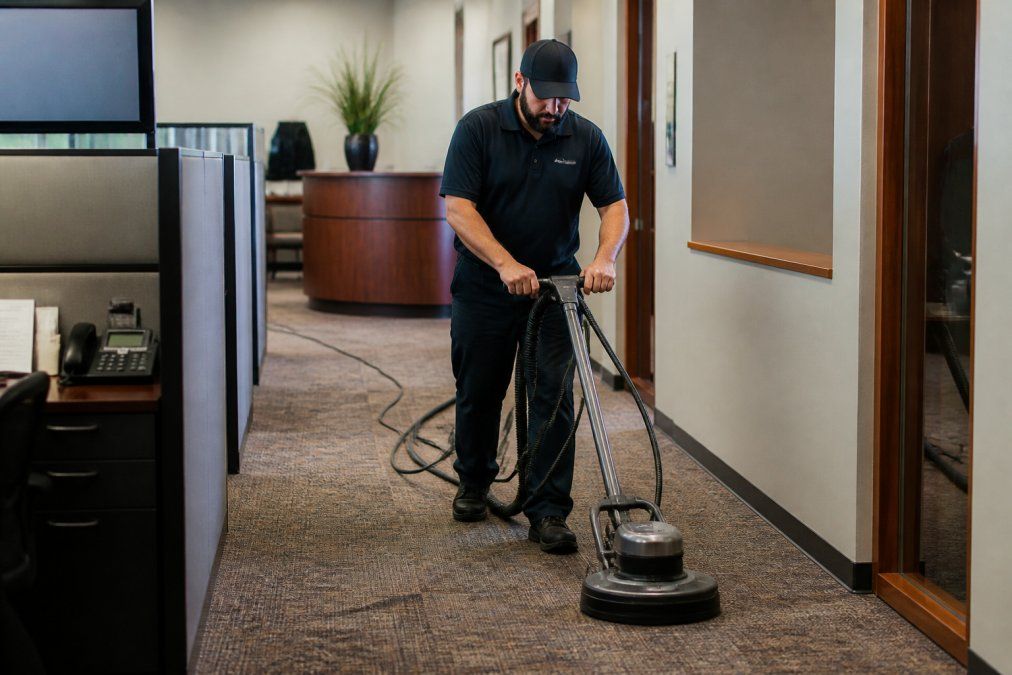
| Carpet | Vacuum, spot treat | Low-moisture agitation, steam | Matting, embedded soil, odor |
| Concrete | Sweep, scrub | Clean and seal | Dusting, staining, surface wear |
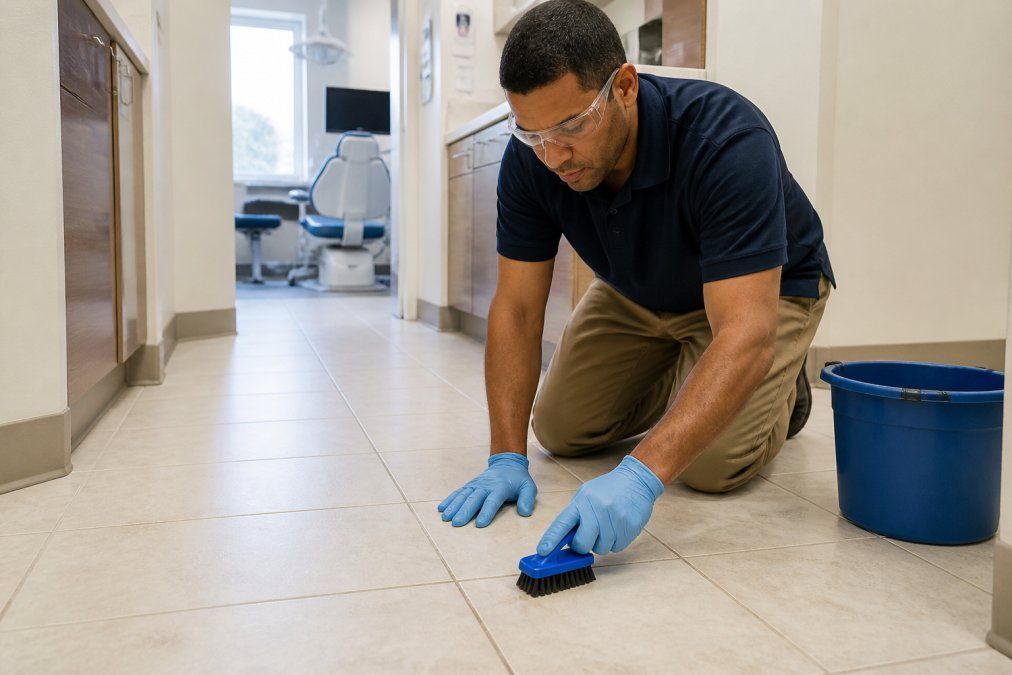
| Tile and grout | Mop, spot clean | Grout cleaning | Discoloration, buildup in grout lines |
Managing Commercial Cleaning Contracts: What to Look For and What to Avoid
Managing commercial cleaning contracts well means knowing what you're buying and what you're not. Vague scopes, unclear frequency, and no quality checks are the three most common sources of frustration.
Look for these in any contract:
- A written scope that names every area and its frequency
- Clear expectations for supplies, equipment, and who provides them
- A stated process for handling missed items or complaints
- Flexible scheduling that matches your building's actual hours
- A provider willing to walk the facility with you before signing
The Hidden Cost of DIY Cleaning
The hidden cost of DIY cleaning rarely shows up on a budget sheet, but it's real. When office staff or an internal hire handle cleaning, they're pulled away from the work you actually hired them for.
Compliance, Liability, and Sustainability in Professional Janitorial Services
On the compliance side, facilities should be able to confirm what products are being used and that they're appropriate for the space. The OSHA Hazard Communication Standard requires employers to maintain safety data sheets and label hazardous chemicals properly, which is a shared responsibility between the facility and its cleaning provider.
Conclusion: Choosing a Janitorial Partner That Delivers
The hardest part of hiring a janitorial provider isn't finding one. It's finding one that stays consistent after the first month, when the walkthrough is over and the routine sets in.
Frequently Asked Questions
Why is professional janitorial service important for commercial facilities?
Professional janitorial service matters because it delivers consistency that in-house or informal arrangements rarely match. A dedicated crew follows documented cleaning protocols, uses industrial-grade equipment correctly, and shows up on schedule. That reliability protects your facility's appearance, extends the life of floors and furnishings, and reduces hygiene-related complaints from staff and visitors. For medical offices, schools, and banks, that consistency directly supports a safer, more professional environment.
What is the difference between inconsistent cleaning and professional janitorial management?
Inconsistent cleaning means missed visits, skipped tasks, and no clear point of contact when something goes wrong. Professional janitorial management means scheduled service, documented cleaning protocols, responsive communication, and quality checks. The difference shows up in details: high-touch surfaces actually disinfected, floors maintained on a preventative maintenance schedule, and a provider who answers when you call. That structure is what separates dependable service from a rotating cast of cleaners.
How does professional floor care maintenance protect commercial property assets?
Floors are one of the most expensive assets in any commercial facility. Regular commercial floor care maintenance, including stripping and waxing VCT, cleaning and sealing concrete, and low-moisture carpet cleaning, prevents premature wear that leads to costly replacement. A professional team identifies the right process for each surface type, from LVT/LVP to tile and grout, and follows a preventative maintenance schedule. That approach extends floor lifespan and keeps your facility looking professional.
What should facility managers look for when managing commercial cleaning contracts?
When managing commercial cleaning contracts, look for clear scope of work, defined cleaning schedules, named points of contact, and a process for handling complaints or special requests. Ask how the provider communicates, what equipment and products they use, and how they handle quality control. A contract that specifies these details prevents the finger-pointing that happens when expectations are vague. Request a walkthrough before signing so both sides agree on what 'clean' means for your facility.